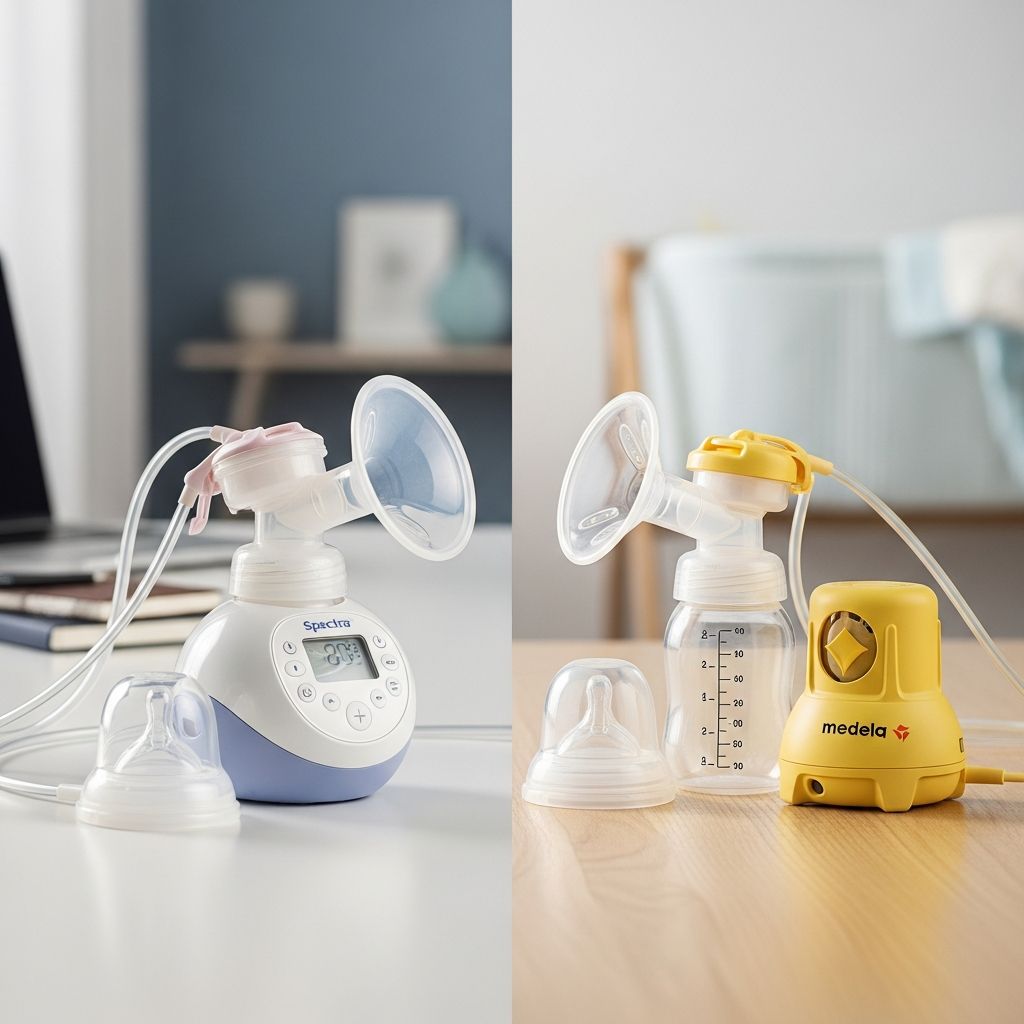
Choosing a breast pump is one of those decisions that feels oddly high stakes. You want something comfortable, efficient, quiet enough for real life, and reliable enough to support your feeding goals. Spectra and Medela are two of the most popular brands, and both can absolutely get the job done. The key is understanding how they differ so you can match the pump to your body, your schedule, and your lifestyle.
Why Spectra and Medela Stand Out
There are more breast pump brands on the market than ever before, but Spectra and Medela consistently sit at the top because they offer medical-grade performance, a range of models, and strong reputations for durability. Each brand has dedicated fans, and the “better” choice is usually the one that fits your specific needs rather than the one with the loudest reviews.
Instead of hunting through dozens of product pages, this guide breaks down how Spectra and Medela differ in comfort, suction style, noise level, portability, cost, and daily usability. By the end, you should have a clear idea of which brand fits your life right now.
Core Differences at a Glance
Before diving into details, it helps to see how the brands generally compare. Remember that individual models vary, but the table below reflects common patterns in popular electric double pumps, such as the Spectra S1/S2 and Medela Pump In Style–type models.
| Feature | Spectra (e.g., S1/S2) | Medela (many Pump In Style–type models) |
|---|---|---|
| Suction feel | Often described as gentler, more rhythmic and customizable, with separate control of speed and vacuum. | Tends to feel more “pulling” and strong, often using preset patterns closely tied to let-down and expression modes. |
| Noise level | Generally quieter, with a soft hum that can blend into background noise. | Often louder and more noticeable, particularly in older or more basic models. |
| Interface | Digital display, timer, and clear buttons for mode and strength; often backlit for night pumping. | Varies by model; some have simple buttons and indicator lights, others more advanced controls. |
| System type | Frequently closed system, keeping milk out of tubing and motor for easier cleaning. | Some models are closed systems, while others are open systems that may require more careful cleaning. |
| Portability | S1/S2 are bulkier but powerful; smaller Spectra models exist for travel, often with rechargeable batteries. | Many Medela units are lighter and designed with on-the-go pumping in mind, especially with bag-style kits. |
| Price range | Typically mid to high range, but often covered or partially covered by insurance plans. | Similar mid to high range with wide insurance availability and hospital connections. |
How the Suction Feels: Comfort vs Power
The way a pump feels on your body is arguably the most important factor. Some parents are drawn to a powerful, firm suction that reminds them of a strong nursing session. Others prefer a gentler, more gradual rhythm that feels less aggressive on sensitive nipples.
Many users describe Spectra pumps as having a smoother, more natural-feeling pattern thanks to adjustable cycle speeds and vacuum levels you can tweak separately. Medela pumps, especially those built around a two-phase expression system, often use a structured approach: a lighter, faster stimulation phase followed by a deeper expression phase that feels more like distinct pulls.
Questions to Ask Yourself About Suction
- Are your nipples already sensitive, cracked, or prone to vasospasms? A gentler-feeling pump may help you tolerate frequent sessions.
- Do you respond best to a strong, firm pull? A pump that mimics that sensation may help you trigger let-down faster.
- Do you like to micro-adjust settings or would you rather hit start and let a preset program do the work?
Noise Level and Discretion
Noise may not seem like a big deal until you are pumping next to a sleeping baby, in a shared office, or on a video call. Some pumps are quiet enough to blend into background sounds, while others have a distinctive, mechanical rhythm that can make you feel conspicuous.
Spectra’s larger electric pumps are known for being relatively quiet, with a soft motor sound that many people find easy to ignore. Medela’s traditional electric models vary, but are often a bit louder, producing a more noticeable pattern that might be heard across a quiet room. Whether that matters depends on where and when you pump.
When a Quieter Pump Really Matters
- You frequently pump during work calls, meetings, or in a cubicle.
- You share a bedroom with a partner or baby and pump late at night.
- You feel self-conscious about others hearing the pump in public spaces or in the car.
Portability, Weight, and Power Options
Think about where pumping will happen most often. If you mostly pump at home, size and weight might not be a deal-breaker. If you carry your pump on trains, through airports, or between classrooms, compact design and battery flexibility quickly become essential.
Several Spectra models, like the S1, include a built-in rechargeable battery, which allows cordless pumping without juggling a separate battery pack. The trade-off is that the pump body tends to be larger and less discreet in a tote bag. Many Medela models lean into portability and integrated bags, sometimes using external battery packs or specific power adapters to keep the unit lighter and easier to carry.
Portability Checklist
- Will you walk long distances with your pump, or mainly move it from one room to another?
- Do you need a built-in battery for pumping in the car, on planes, or where outlets are scarce?
- Is it important that the pump fits into a regular backpack or purse instead of a dedicated pump bag?
Closed vs Open Systems and Hygiene
Breast pumps are often described as either “closed system” or “open system.” In a closed system, there is a barrier that prevents milk from backing up into the tubes and motor. In an open system, milk and condensation can move more freely, which requires more meticulous cleaning and drying of tubing.
Spectra’s popular electric models are usually designed as closed systems, making it less likely that milk will enter the tubing or pump body. Some Medela models are closed, while others are open, so it is important to check the description of the specific pump you are considering. Regardless of the brand, following cleaning and sterilizing instructions carefully is essential for safety and performance.
Hygiene Tips for Any Pump
- Wash parts that touch milk after every use with warm soapy water and allow them to air dry fully.
- Sterilize parts periodically, especially in the early newborn stage or if your baby was born prematurely.
- Inspect valves, membranes, and backflow protectors regularly, replacing worn pieces to maintain suction.
Interfaces, Controls, and Learning Curve
The user interface can have a surprising impact on how often and how happily you pump. A clear screen, a built-in timer, and intuitive buttons make it easier to track sessions and return to settings that work for your body. Confusing controls, on the other hand, can leave you guessing at what level felt best last time.
Spectra’s digital displays commonly show time, mode, and suction level at a glance, often with a soft backlight that is gentle during night sessions. Some Medela models offer simple controls and indicator lights without a full screen, while others are more advanced. If you prefer “set it and forget it,” you might like Medela’s more guided patterns. If you enjoy fine-tuning settings, a more detailed Spectra interface could feel empowering.
Features That Make Pumping Less Stressful
- Automatic timer so you are not watching the clock.
- Easy-to-find let-down button to switch between stimulation and expression modes.
- Ability to save or remember your favorite settings for future sessions.
Comfort: Flanges, Fit, and Body Feel
Even the most powerful pump will struggle if the flange size is wrong. Both Spectra and Medela offer a range of flange sizes, and many parents end up purchasing additional sizes beyond what comes in the box. Having the right diameter can affect milk output, nipple health, and overall comfort more than the brand name on the motor.
Some Medela flanges are designed with flexible edges meant to contour to the breast for a softer seal. Spectra flanges, especially the standard hard ones, can feel more rigid but pair well with inserts or aftermarket options. Many parents mix and match silicone inserts, cushions, or third-party flanges to get the best fit regardless of which motor they own.
Signs Your Flange Size Needs Adjusting
- Nipple rubbing painfully along the tunnel while pumping.
- Areola being pulled too far into the tunnel, causing swelling or blanching.
- Persistent discomfort, pinching, or visibly damaged skin after sessions.
- Milk output noticeably improving or declining when you experiment with different sizes.
Cost, Insurance, and Long-Term Value
Both Spectra and Medela pumps typically fall within a similar mid-to-high price range, especially for double electric models aimed at daily use. However, the real cost over time includes replacement parts, extra flanges, bottles, coolers, and bags. Shopping only by sticker price can be misleading if ongoing expenses are higher for one setup than another.
In many countries, including the United States, health insurance plans often cover at least one electric pump per pregnancy, frequently from Spectra, Medela, or other mainstream brands. Checking which models are fully or partially covered can significantly narrow your choices and ease the financial burden. If you plan to pump for a long time or for multiple children, investing in a durable pump with readily available spare parts can be more economical than buying a cheaper but less reliable option.
Budget-Smart Strategies
- Confirm which models your insurance will supply and whether upgrades are available for an additional fee.
- Price out replacement valves, membranes, and flanges before committing to a brand.
- Consider resale or hand-me-down value for the pump body, while always replacing personal-use parts.
Which Brand Fits Which Mom?
Every parent’s experience is different, but some patterns tend to emerge when people compare Spectra and Medela. Rather than thinking in terms of better or worse, it is often more helpful to think about fit: which combination of suction style, noise, portability, and interface supports your life.
Here are a few common scenarios and which brand might feel more aligned with each one. These are generalizations, not strict rules—plenty of parents love the “opposite” of what would be predicted for them.
When Spectra Might Be the Better Fit
- You want a quiet motor and plan to pump near a sleeping baby or in shared living spaces.
- You like being able to customize suction strength and speed independently.
- You appreciate a digital display with a built-in timer and night-friendly backlight.
- You want a closed system design to simplify cleaning and reduce the chance of milk in the tubing.
When Medela Might Be the Better Fit
- You value brand familiarity and hospital-grade associations, and you may have already used a Medela in the hospital.
- You prefer structured, preset suction patterns that guide you through stimulation and expression phases.
- You need a pump that is easy to carry, often with slim profiles or bag-style kits tailored for commuting.
- You want broad compatibility with accessories available at many local stores and pharmacies.
Practical Tips for Getting the Most Out of Any Pump
Whether you end up with Spectra, Medela, or even both at different stages, small tweaks can significantly improve your pumping experience. Consistency, comfort, and smart routines matter just as much as the logo on the pump motor.
Think of your pump as part of a larger system that includes your schedule, your support network, and your own physical recovery. The right strategies can help you protect your mental health while meeting your feeding goals, whether that means exclusive pumping, combo feeding, or just building a small backup stash.
Simple Optimization Strategies
- Experiment with settings over several sessions before deciding a pump “doesn’t work” for you.
- Use a hands-free pumping bra so you can read, scroll, work, or rest your shoulders while pumping.
- Keep a small kit of spare parts (valves, membranes, backflow protectors) to quickly fix weak suction.
- Pair pumping with a soothing ritual, like a podcast or favorite show, to reduce stress and support let-down.
FAQs: Spectra vs Medela
Is one brand always better for milk supply?
No single brand guarantees a better supply. Milk production depends more on effective, frequent milk removal than on a specific logo. Both Spectra and Medela offer pumps capable of emptying the breast well when the flange size is correct and the settings are properly adjusted. If output is low, it is often worth reevaluating fit, frequency, and overall breastfeeding or pumping strategy before assuming the pump is at fault.
Can I use Spectra parts on a Medela pump or vice versa?
Some parents do successfully combine parts from different brands using adapters, but compatibility is not universal. Differences in tubing size, connector style, and system type (closed vs open) can make mixing parts risky if it alters suction or cleaning safety. If you plan to mix and match, research carefully and make sure the setup does not compromise hygiene or the integrity of backflow protection.
Which is better for exclusive pumpers?
Exclusive pumpers often favor models that are comfortable for multiple daily sessions, quiet, and easy to customize. Spectra’s quieter operation and closed system design are popular in exclusive pumping circles, but some exclusive pumpers swear by particular Medela models that match their bodies very well. The best choice is the one you can tolerate using frequently without dread or discomfort.
What if I end up hating the pump I chose?
It happens more often than most people admit. If the pump is truly not working for you, consider trading, selling the pump body, or keeping it as a backup while you try another model that better fits your needs. In the meantime, experimenting with different flange sizes, replacing worn parts, and adjusting settings methodically may still yield surprising improvements.
Do I need a portable wearable pump as well?
Not necessarily. A strong, reliable Spectra or Medela plugged into a wall can serve as your main workhorse pump. Some parents later add a smaller wearable or portable pump for commuting and errands. The decision depends on your lifestyle, budget, and how often you need to pump away from private spaces with outlets.
Making Your Final Choice
If you are torn between Spectra and Medela, step back and think about where and how you will pump most: at home, at work, in the car, at night, or all of the above. Then match the brand strengths to that reality. A quieter, highly customizable option may be worth a slightly bulkier design, while a lighter, bag-integrated pump might be invaluable if you are constantly on the move.
Most importantly, remember that a pump is a tool to support you, not a test you can pass or fail. Whether you choose Spectra, Medela, or both at different times, the right pump is the one that helps you protect your health, your time, and your feeding goals while fitting as smoothly as possible into the rest of your life.