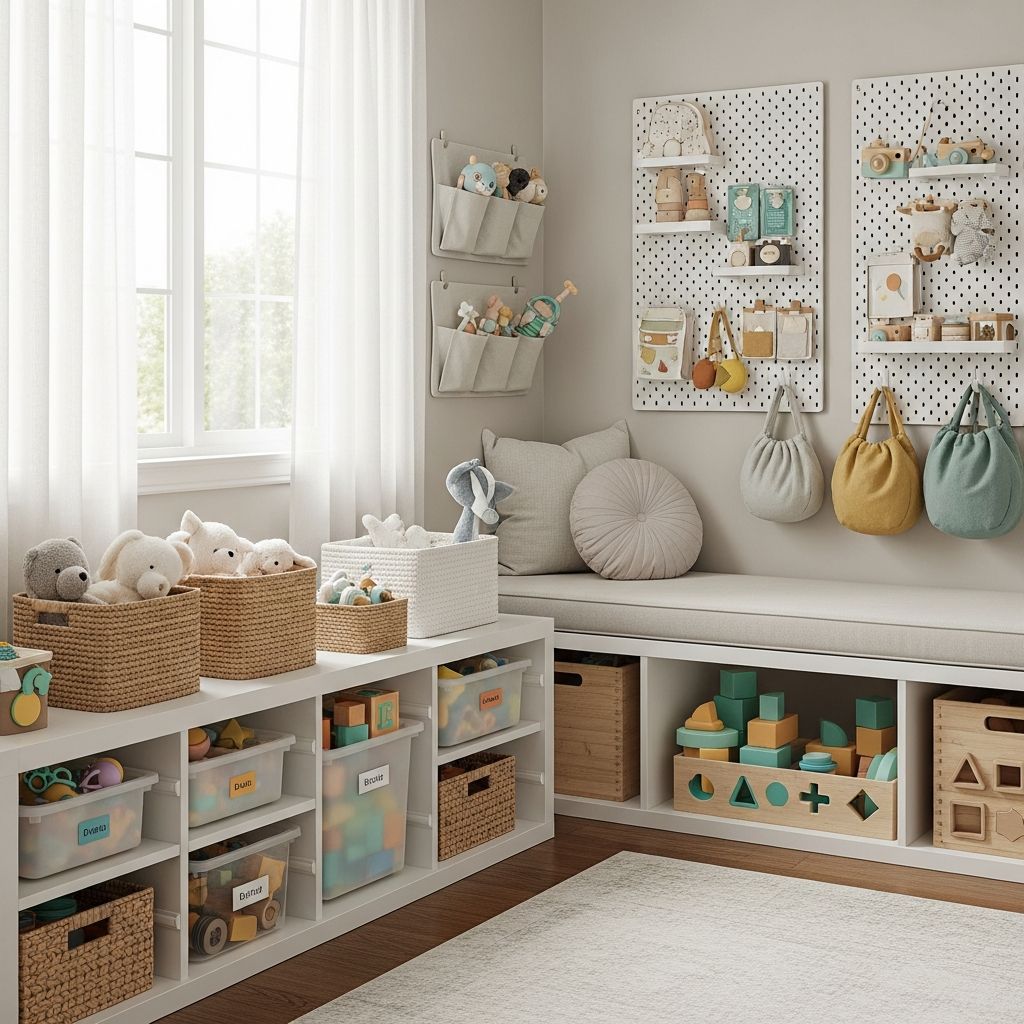
Nursery toy storage is about much more than finding a place to toss stuffed animals at the end of the day. Thoughtful storage turns chaos into calm, gives every toy a home, and makes it easier for both adults and kids to reset the space in just a few minutes. With a bit of planning, your nursery can feel cozy and inviting instead of crowded and overwhelming.
Why Toy Storage Matters So Much in a Nursery
Baby toys are deceptively small, but they multiply fast: rattles, soft books, blocks, stacking cups, shape sorters, and plush toys seem to appear overnight. Without a plan, the nursery floor can quickly become a minefield of tiny pieces and tripping hazards. Smart storage systems help you stay ahead of the clutter while still keeping toys visible and easy to grab for playtime.
Good toy organization has benefits beyond aesthetics. It supports safe movement, encourages independent play as your child grows, and makes daily routines like bedtime and cleaning up faster and less stressful. When you decide where toys live before the baby arrives—or at least early on—you prevent bad habits from forming and create a room that works well for your whole family.
Planning Your Nursery Toy Zones
Before buying baskets or bins, take a step back and think about how you use the room. Every nursery naturally divides into activity zones, even if the space is small. Connecting your toy storage to these zones makes the room feel intuitive and keeps clutter from spreading everywhere.
As a starting point, consider these common nursery zones and how toys might live in or near each area:
- Sleep zone: The crib or bassinet area where toys should be kept to a minimum for safety, with only a small nearby basket for bedtime books or one comfort item.
- Changing zone: The dresser or changing table area, where a small bin of distraction toys or soft books can help during fussy diaper changes.
- Play zone: A soft rug, play mat, or corner of the room where most toys are stored in accessible containers within a child’s reach.
- Parent zone: A chair, side table, or shelf that may hold a few special books, sentimental toys, or items that are for supervised play only.
Types of Toy Storage That Work Well in Nurseries
Not every storage solution is ideal for a baby’s room. Some pieces are better suited to older kids, while others shine in small, multipurpose spaces like nurseries. Mixing a few different storage types usually works best.
Open Bins and Baskets
Open containers are the workhorses of nursery organization. They make it easy to toss toys in quickly without worrying about lids, and babies eventually learn to reach in and pull things out on their own. Soft-sided baskets, fabric cubes, or shallow crates all work well along a wall or under a window.
- Choose soft materials (canvas, rope, felt) to prevent bumps and bruises.
- Opt for wide openings so you can see what’s inside at a glance.
- Use a variety of sizes: small bins for blocks, larger baskets for stuffed animals.
Low Shelving Units
Short, sturdy shelves are perfect for displaying a limited number of toys and books. They double as decor by showing off pretty board books and favorite plush friends, while hiding less attractive items in bins below. Look for furniture that is low enough for a toddler to reach safely.
- Always secure shelves to the wall to prevent tipping.
- Reserve top shelves for decor or parent-only items, and bottom shelves for everyday toys.
- Use matching bins on lower shelves to create a unified, uncluttered look.
Drawers and Hidden Storage
If you prefer a minimalist, streamlined nursery, drawers and hidden compartments are essential. A dresser can easily double as toy storage, especially in small rooms where there is no separate playroom. Hidden storage keeps visual clutter low for adults while toys remain organized inside.
- Dedicate one or two dresser drawers specifically to toys, not clothes.
- Use small internal boxes or dividers inside drawers to keep sets together.
- Mark drawers subtly with icons or labels for easy access.
Wall Storage and Hooks
When floor space is limited, the walls become valuable real estate. Wall shelves, peg rails, and hooks can hold lightweight toys, dress-up accessories, or fabric bags filled with small items. Keeping some toys off the floor also frees up space for crawling and playing.
- Hang shelves outside of the crib’s reach to keep loose items away from sleeping areas.
- Use wall hooks for frequently used accessories like dress-up capes or toy bags.
- Choose rounded hooks and lightweight shelves to keep everything safe in a nursery.
Grouping Toys in a Way That Actually Works
Even the best storage system will fail if it does not match the way you and your child naturally play. Group toys in simple, obvious categories and avoid overcomplicating the organization. The goal is to make clean-up easy enough that you will actually stick with it at the end of a long day.
Here is a simple way to sort toys into practical nursery-friendly categories:
| Toy Category | Examples | Best Storage Type | Notes |
|---|---|---|---|
| Soft toys | Plush animals, loveys, cloth dolls | Large open basket or bin | Easy to toss in; often kept visible for decor. |
| Books | Board books, fabric books | Front-facing shelf or low book rack | Covers face outward so toddlers can see and choose. |
| Noise & music toys | Rattles, shakers, small instruments | Small bin or tray | Store together so you can rotate in and out to control noise. |
| Blocks & stackers | Wooden blocks, stacking rings, cups | Medium bin with low sides | Low bins help babies see pieces and practice putting them back. |
| Bath & water toys | Rubber toys, cups for pouring | Perforated bin in bathroom | Keep separate from nursery toys to dry properly. |
| “Parent-only” toys | Messy kits, small parts | High shelf box or lidded bin | Out of reach, used during supervised play only. |
Safety First: Toy Storage in a Baby’s Room
Safety should always come before style when organizing toys around babies and toddlers. Storage pieces that are perfectly safe in a school-age child’s room may not be appropriate in a nursery where a newly mobile infant is pulling up and exploring everything. Build safety checks into your organization plan from the start.
- Anchor furniture: Secure all shelving units and tall furniture to the wall, even if they seem heavy.
- Avoid heavy lids: Traditional toy chests with heavy lids can pinch little fingers; look for soft-close hinges or choose open bins.
- Watch small parts: Keep any toy with tiny pieces in a labeled bin stored high up, out of reach.
- Leave the crib clear: Skip storing toys or stuffed animals inside the crib; keep it for sleep only.
- Check materials: Choose non-toxic, easy-to-wipe materials for baskets and bins when possible.
Designing Storage That Grows With Your Child
Your newborn will not stay tiny for long, and a nursery that only works for the baby stage will quickly feel limiting. When choosing toy storage, aim for pieces that can evolve from infant to toddler to preschooler. This saves money and reduces waste over time.
Look for furniture and containers that can transition to older uses:
- A low bookshelf that first holds baskets of baby toys can later display picture books and puzzles.
- Neutral bins that blend into nursery decor can later move to a playroom, closet, or living room.
- A bench with storage underneath can shift from a parent’s feeding chair companion to a child’s reading nook.
Space-Saving Tips for Small Nurseries
Many families work with compact nurseries or even shared spaces. When every square inch counts, toy storage must be both efficient and discreet. Fortunately, a few strategic choices can make a small room feel organized instead of overcrowded.
- Use vertical height: Install shelves or rails higher up on the walls to hold decor and less-used toys.
- Think under and behind: Use flat bins under the crib (once it is safely adjusted) or behind doors for occasional-use toys.
- Choose double-duty pieces: Ottomans with storage, benches with cubbies, and dressers that act as changing tables reduce furniture count.
- Rotate, don’t stockpile: Keep only a small selection of toys in the nursery and store extras in a separate closet or bin elsewhere.
Labeling and Visual Cues for Easy Clean-Up
Labels are not just for adults; they are also a powerful teaching tool for toddlers. Clear labels help caregivers stay consistent and reassure kids that every toy has a home. Over time, children learn to match toys to the right container, which supports independence and responsibility.
There are several ways to label toy storage in a nursery without making it feel like a classroom:
- Use picture labels (photos or simple drawings) on bins so even non-readers know what goes where.
- Combine text and icons on small tags tied to basket handles for an understated look.
- Color-code categories: for example, blue bins for blocks, green bins for stuffed animals, and white bins for miscellaneous items.
Creating Simple Toy Rotation Systems
Too many toys available at once can overwhelm young children and lead to more mess than meaningful play. A toy rotation system keeps the nursery feeling fresh while using less storage space in the room itself. It also helps kids rediscover old favorites with renewed excitement.
- Start by decluttering: Remove broken or outgrown toys and donate those your family no longer loves.
- Divide into sets: Group toys into balanced collections—each set might include a building toy, a fine-motor toy, a pretend-play item, and a few books.
- Store extras elsewhere: Keep the off-duty sets in a labeled bin in a closet or another room.
- Rotate regularly: Every week or two, swap one set of toys in the nursery for another, involving your child in the process as they grow.
Daily Habits That Keep Nursery Toys Under Control
Even the most beautiful storage system will fail without simple daily habits. The good news is that you do not need an elaborate routine to keep a nursery tidy—just a few consistent moments built into your day. When everyone in the household knows the routine, cleanup becomes faster and less emotional.
- Set a mini clean-up time: Take five minutes before nap and bedtime to return toys to their homes.
- Model the behavior: Narrate what you are doing—“Blocks go in this bin”—so your child connects actions with storage locations.
- Keep it realistic: Aim for “good enough” organization rather than perfection; as long as everything has a home, you can fine-tune later.
Frequently Asked Questions About Nursery Toy Storage
How many toys should be in the nursery at one time?
There is no perfect number, but fewer, thoughtfully chosen toys usually work better than an overflowing collection. A good rule of thumb is to keep enough options for variety—perhaps a handful of soft toys, a few favorite books, and a small selection of developmental toys—while storing extras outside the nursery or in a toy rotation system.
Where should I store loud or flashing toys?
Place noisy, light-up toys in a dedicated bin that can be moved in and out of the nursery as needed. Keeping them grouped lets you control when they are used, which is especially helpful during wind-down times or late-night wakeups when overstimulation can make it harder for your baby to settle.
How do I organize toys in a nursery that doubles as a guest room?
For shared spaces, lean on hidden storage like lidded baskets, under-bed bins, and dressers to keep toys out of sight when guests are visiting. Choose storage pieces that match your overall decor so the room still looks cohesive once the toys are put away.
Should I keep all toys in the nursery?
Not necessarily. Many families find it easier to limit nursery toys to quiet or soothing items and keep more active or messy toys in a living room, playroom, or outdoor space. Splitting toys by activity type can make each space feel purposeful and easier to keep organized.
How often should I sort and declutter nursery toys?
Plan a quick review every few months to remove broken toys, outgrown items, or things your child has clearly lost interest in. Regular maintenance keeps your storage system manageable and ensures the toys remaining in the nursery are safe, age-appropriate, and well loved.
Bringing It All Together
Nursery toy storage does not need to be complicated or expensive to be effective. With a few well-chosen containers, some basic safety checks, and consistent daily habits, you can create a room that feels peaceful for adults and inviting for your child. Start small, adjust as your baby grows, and remember that the most successful systems are the ones you can maintain even on the most sleep-deprived days.