Some four-year-olds seem to have no brakes: they talk to anyone, run toward new situations, and barely notice risks that make adults nervous. For many parents, this combination of charm and fearlessness is both delightful and deeply alarming because safety suddenly feels harder to manage.
This article offers a practical, emotionally sensitive roadmap for raising a bold preschooler who approaches life with enthusiasm while still learning to respect boundaries, understand danger, and stay safe around strangers and new situations.
Understanding Fearless Temperaments in Young Children
A “fearless” four-year-old is not a bad child or a careless child; they simply experience lower levels of inhibition and anxiety in new situations. This means they are more likely to rush toward people and activities rather than hang back to observe, which can look like confidence, impulsivity, or both.
In temperament terms, these children typically score high in approach and activity, and relatively low in fearfulness or shyness, which often makes them adventurous explorers who love novelty and social interaction.
Why Fearlessness Can Be Both Strength and Vulnerability
Fearless kids tend to embrace challenges, recover quickly from setbacks, and adapt well to new environments such as preschool, playdates, and extracurricular activities. Their boldness can later translate into leadership, creativity, and resilience if it is guided rather than suppressed.
At the same time, the absence of hesitation means they may underestimate physical danger, ignore social red flags, or treat all adults as equally trustworthy, which increases the risk of accidents or unsafe interactions if they are not taught clear rules and skills.
Signs Your Four-Year-Old Has Low Caution Around Strangers
Not every outgoing child is genuinely fearless, but there are some recurring patterns that suggest unusually low caution around unfamiliar people. Recognizing these patterns early allows parents to respond with structure instead of panic or constant scolding.
- Greets or hugs unfamiliar adults without prompting or permission.
- Wanders away from caregivers in public places to approach other adults or children.
- Readily shares personal details (address, parents’ names, routines) with people they just met.
- Shows little distress when briefly separated from a caregiver in a new environment.
- Resists rules about staying close, saying “I’m fine” or “Nothing will happen.”
These behaviors do not mean something is wrong with your child; they signal that natural caution is not doing much of the safety work, so intentional teaching and consistent boundaries must do more of it.
Balancing Safety and Independence: Core Parenting Goals
The central challenge is to protect your child without teaching them that the world is purely dangerous or that other people are inherently bad. Instead of aiming to make them fearful, the goal is to gradually build a thoughtful sense of caution, body autonomy, and problem-solving.
Healthy boundaries for a fearless four-year-old should aim to:
- Preserve their innate confidence and curiosity.
- Teach clear, simple safety rules they can remember and apply.
- Encourage them to notice their own feelings and “warning signs” in their body.
- Ensure they always know when they must involve a trusted adult.
Rethinking the Concept of “Stranger Danger”
Traditional “stranger danger” messages often fail with fearless kids because they already like strangers and do not feel anxious around them, so the warning does not match their experience. Some children also interpret the phrase too literally, believing that anyone who seems friendly or familiar is automatically safe.
A more effective message for preschoolers focuses on behaviors and rules, not on labels like “stranger” or “good person”: children do not decide safety; adults they trust make those decisions and must be present when new people are involved.
Key Safety Rules to Teach a Fearless Preschooler
Safety rules need to be concrete, easy to remember, and reinforced frequently through practice and play, not just in moments of panic. Keeping the tone calm but firm helps your child take the rules seriously without feeling ashamed of their natural friendliness.
- “Always ask first.” Your child must get permission from their caregiver before going anywhere with anyone, even people they know.
- “Stay where your grown-up can see you.” Use clear boundaries: a line, a bench, a tree, or a specific area.
- “Your body belongs to you.” No one touches private areas, and you can say no to any touch that feels uncomfortable, even from familiar adults.
- “No secrets about touching, surprises, or presents.” Surprises are revealed; secrets about bodies or gifts from adults are always shared with a trusted caregiver.
- “If you feel unsure, find your safe grown-up.” Reinforce that when in doubt, they return immediately to you or another agreed-on safe adult.
Sample Safety Expectations in Common Situations
Different environments require different levels of supervision and different kinds of rules. The table below offers examples of age-appropriate expectations for a bold four-year-old.
| Situation | Realistic Rule for a Fearless 4-Year-Old | How to Explain It |
|---|---|---|
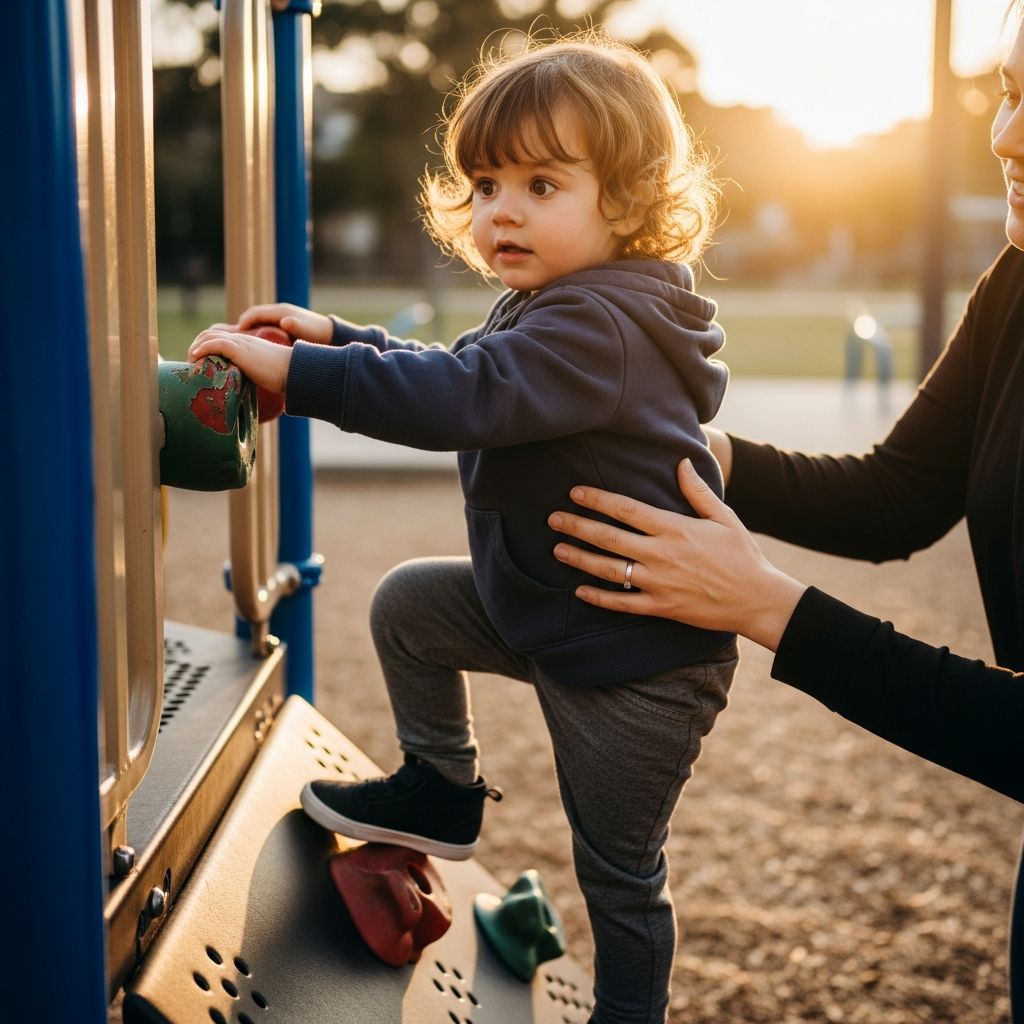
| Playground | Child may play freely but must stay within a clearly defined area and check in visually every few minutes. | “You can go anywhere between this bench and that tree. If you can’t see me, you’ve gone too far.” |
| Store or mall | Child holds the cart or caregiver’s hand; if allowed to walk ahead, they must stay within a set number of steps. | “You can walk three big steps ahead, but no more, and you stop when I say your name.” |
| Family gathering | Child may talk with relatives but asks a caregiver before going to another room or outside. | “You can go play in the living room, but you have to ask me before you go anywhere else.” |
| Public events (fairs, parks) | Child stays within arm’s reach in crowds; parent identifies a meeting spot in case of separation. | “You stay close enough to touch my arm, and if we get lost, we meet at that big sign.” |
Using Role-Play to Teach Safety Skills
Four-year-olds learn best through repetition and pretend play, not long lectures, so turning safety lessons into games can make them both memorable and enjoyable. Role-play allows your child to practice words, body language, and decision-making in a low-pressure way.
- “Ask First” Game: Pretend to invite your child to go somewhere; they practice saying, “I have to ask my grown-up first” before answering.
- “No, Go, Tell” Practice: Your child rehearses saying a clear “No,” moving away quickly, and finding their caregiver to tell what happened.
- Costume Role-Plays: Use stuffed animals or puppets to act out safe and unsafe situations, asking your child what each character should do.
Setting Boundaries Without Shaming Your Child’s Personality
Fearless children quickly internalize labels like “too much” or “wild,” which can create unnecessary shame about traits that are actually neutral or even strengths when guided well. The message they need is, “Your energy and boldness are wonderful; my job is to keep you safe and teach you how to use them wisely.”
When correcting unsafe behavior, focus on the choice, not the temperament:
- Say: “Running out of the yard is not safe; you must stay where we agreed.”
- Avoid: “You are so reckless; you never listen.”
- Say: “Talking is fine, but you may not go anywhere with someone unless I say yes.”
- Avoid: “You’re too friendly; you can’t trust anyone.”
Positive Discipline Strategies that Work for Fearless Kids
Traditional discipline methods that rely heavily on fear—like repeated threats of danger or harsh punishment—may either overwhelm a sensitive child or bounce off a fearless one who does not feel easily intimidated. What tends to work better is a mix of clear structure, immediate consequences, and strong emotional connection.
- Consistent, predictable rules: Keep safety rules simple and repeat them often; change them only when your child is ready for more responsibility.
- Natural and logical consequences: If your child repeatedly runs off at the park, the logical consequence is leaving early or moving to a smaller, contained space.
- Rehearsal before outings: Before entering a store or playground, quickly review two or three key rules and ask your child to repeat them.
- High warmth and attention for safe choices: Notice and praise moments when your child checks in, stays close, or asks permission.
Building Internal Safety Awareness (Not Just Obedience)
While obedience to rules is important at age four, parents also want to plant seeds of internal awareness so the child later recognizes unsafe situations even when adults are not nearby. This involves helping your child notice physical sensations, emotions, and social cues that signal discomfort or danger.
- Ask reflective questions: “How did your tummy feel when that person came very close?”
- Name emotions: “You looked unsure when he asked you to go with him. That’s your feeling helping you be careful.”
- Link body signals to action: “When your heart beats fast or you feel tight inside, come find me right away.”
Working with Caregivers, Teachers, and Family Members
A fearless child’s safety plan only works if the adults in their life apply similar expectations and language across settings such as preschool, grandparents’ homes, and extracurricular activities. Calm, proactive communication with other caregivers helps avoid mixed messages that confuse your child.
- Share a short list of your child’s key safety rules and phrases (for example, “always ask first” and “no secrets about touching”).
- Explain that your child is very outgoing and may approach strangers or wander; request active supervision and specific boundaries.
- Invite teachers or caregivers to tell you when your child follows safety rules well so you can reinforce this at home.
When to Seek Additional Support
Many fearless preschoolers simply need time, maturity, and consistent guidance to develop better judgment, but there are situations where extra support may be helpful. Trust your instincts if you feel that something about your child’s behavior is beyond what you can address with everyday strategies.
- Your child repeatedly engages in extremely risky behavior (running into streets, climbing very high structures) despite consistent consequences.
- They show little emotional response when others are hurt, scared, or upset and seem uninterested in the impact of their actions.
- Safety challenges are creating intense conflict at home or school, leaving you feeling constantly overwhelmed or fearful.
In these cases, consulting a pediatrician, child psychologist, or developmental specialist can provide tailored strategies, reassurance, or further evaluation if needed.
Frequently Asked Questions
Is it normal for my four-year-old to talk to everyone?
Many four-year-olds go through a very social phase, especially in familiar, safe settings such as playgrounds, preschools, and family events. What matters most is not that they talk to people, but that they follow clear rules about where they can go and who decides what is safe.
How do I keep my child safe without making them afraid of everyone?
Focus on behaviors and rules rather than judging entire categories of people. Teach your child that most people are fine, but only trusted adults can decide when it is okay to go somewhere, accept something, or be touched, and that they can always come to you with questions or concerns.
Should I stop my child from being friendly with adults?
You do not need to shut down your child’s friendliness, but you can shape it. Encourage polite greetings and conversation in your presence while keeping firm limits on physical contact, sharing personal information, or going anywhere with adults without your permission.
What if other adults think I am overreacting about safety?
You are responsible for your child’s safety, not for others’ opinions, and it is appropriate to set firm boundaries even if some people see your caution as unnecessary. Calmly explain your rules and expectations, and if someone consistently disregards them, reassess how much access they have to your child.
Will my child outgrow this fearless stage?
Some children naturally become more cautious as they gain experience and develop a better sense of cause and effect, while others remain adventurous and high-energy into later childhood. Your guidance, structure, and emotional connection will shape how that temperament expresses itself over time, helping your child become both brave and wise.
Helping Your Child Grow Brave and Wise
Raising a fearless four-year-old is demanding because the traits that make them delightful also keep caregivers on high alert. With patient teaching, consistent boundaries, and respectful communication, that raw boldness can gradually transform into thoughtful courage and responsible independence.
When your child learns that their bravery is valued, their feelings are respected, and their safety rules are nonnegotiable, they gain a powerful message: it is possible to love the world, explore it with enthusiasm, and still take care of themselves in the process.