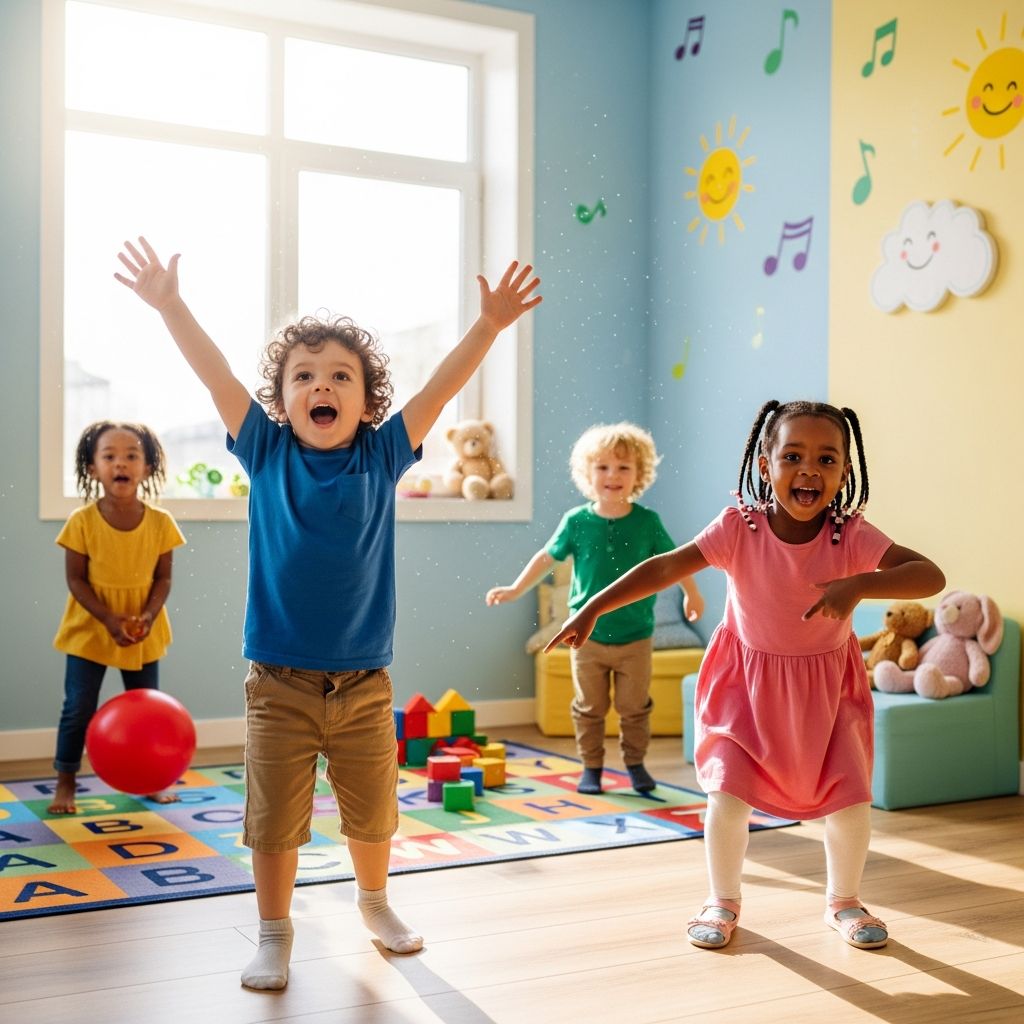
Nursery rhymes are more than sweet little songs; they are powerful tools for early learning when paired with simple actions and movement. When children clap, stomp, spin, and gesture along with familiar verses, they are building language, coordination, memory, and social skills in a playful, stress-free way.
This guide shows how to transform everyday rhymes into engaging learning experiences. You will find ideas for full-body movements, quiet finger plays, and gentle action games that fit into busy family life or early childhood classrooms.
Why Add Actions to Nursery Rhymes?
Adding physical actions to rhymes helps children connect language with their bodies. Instead of just hearing words, they feel them, see them, and act them out, which strengthens understanding and recall.
- Language becomes concrete: Words like “up,” “down,” “fast,” and “slow” make sense when children move that way.
- Attention increases: Movement breaks keep children focused and make it easier to repeat rhymes many times.
- Confidence grows: Predictable motions and repeated verses give shy children an easy way to join in.
Core Benefits for Young Children
Nursery rhymes with actions support multiple areas of early development at the same time. A short, playful rhyme can nurture speech, thinking, physical strength, and emotional well-being in just a few minutes.
- Language and speech: Repeated patterns of sound help children hear rhymes, syllables, and rhythm, laying the foundation for later reading and writing.
- Motor skills: Gross motor actions like jumping, marching, and stretching build strength and balance, while small gestures and finger plays refine fine motor control.
- Social-emotional growth: Singing together encourages turn-taking, teamwork, humor, and emotional expression.
Types of Action Rhymes
Not all rhymes look the same in motion. You can choose different styles depending on the energy level, time of day, and the group of children you have.
- Big-movement rhymes: Encourage running in place, dancing, spinning, or hopping to release energy.
- Finger plays: Use only hands and fingers to act out tiny stories—perfect for circle time, story time, or calming transitions.
- Partner and group rhymes: Include holding hands, forming circles, or mirroring each other’s moves to promote cooperation.
Designing Your Own Actions
You do not need formal choreography. Simple, repeatable actions are best, especially for toddlers and preschoolers. Choose one or two movements per line and keep them consistent.
- Match verbs to actions: reach up when the lyrics say “up,” crouch when they say “down,” or tiptoe for “quiet” words.
- Use facial expressions: encourage children to look surprised, happy, sleepy, or grumpy to match the story in the rhyme.
- Add rhythm tools: gentle claps, pats on knees, or simple percussion (like tapping spoons on a cushion) can emphasize the beat.
Sample Movement Ideas for Common Themes
The exact words you choose for your rhymes can vary, but many children’s songs involve similar themes like animals, vehicles, or weather. Below is a set of movement suggestions you can apply to almost any rhyme with these topics.
| Rhyme Theme | Suggested Actions | Skills Highlighted |
|---|---|---|
| Animals | Crawl like a cat, flap arms like a bird, stomp like an elephant, hop like a frog. | Imagination, gross motor control, vocabulary (names and sounds of animals). |
| Vehicles | Drive an imaginary steering wheel, sway like a train, zoom arms like airplanes. | Coordination, spatial awareness, descriptive language. |
| Weather | Wiggle fingers like raindrops, spin slowly like the wind, curl up in a ball for thunder. | Sensory awareness, understanding of nature words. |
| Counting | Tap each finger for each number, step forward with each count, clap a set number of times. | Early math, one-to-one correspondence, focus. |
| Bedtime & Calm | Slow rocking motions, gentle swaying, soft hand movements and stretching. | Relaxation, emotional regulation, body awareness. |
Creating Your Own Action Rhyme
You can easily invent a short action rhyme tailored to your child’s interests. Start with a tiny, four-line verse about a favorite topic (like a pet, a favorite food, or a beloved toy), then layer in matching actions.
- Pick a subject your child loves, such as trains, dinosaurs, or rainbows.
- Draft a simple chant with strong rhythm and repeated words (for example, repeating key action words or sounds).
- Assign one clear movement to each line and practice performing it in sync with the words.
- Repeat often and invite your child to add new motions, sound effects, or verses.
Practical Tips for Everyday Use
Action rhymes fit naturally into the rhythm of a day at home or in a classroom. Short, repeated moments are more effective than rare, long sessions.
- Use them as transitions: Sing a quick rhyme while tidying toys, washing hands, or moving from outdoor play to quiet time.
- Match energy levels: High-energy rhymes work well before outdoor play; slower, gentle rhymes are best before nap or bedtime.
- Repeat consistently: Children feel safer and more confident when the same rhymes appear in predictable parts of the day.
Adapting for Different Ages and Abilities
Action rhymes are easily adaptable. You can modify the pace, complexity, and expectations so that everyone can participate comfortably.
- Babies: Gently move their arms and legs or bounce them on your lap while you sing, keeping movements slow and soothing.
- Toddlers: Focus on simple, big actions—clapping, stomping, spinning, and reaching—and do not worry about perfect timing.
- Preschoolers: Introduce more detailed sequences, such as two or three motions in a row, and allow children to suggest their own choreography.
- Mixed abilities: Offer seated versions of actions, use visual cues (like picture cards), and emphasize participation over precision.
Encouraging Participation and Confidence
Some children jump in eagerly, while others prefer to watch before joining. A supportive environment helps every child feel safe to participate in their own way.
- Model the movements enthusiastically, even if you feel a little silly—children respond to your energy.
- Allow children to choose the next rhyme or the next action, giving them a sense of ownership.
- Celebrate effort rather than performance; praise ideas, creativity, and trying new motions.
Linking Rhymes With Early Learning Goals
While these activities feel like pure fun, they naturally support goals in language, literacy, math, and social skills. You can highlight these connections without turning play into a formal lesson.
- Language and literacy: Emphasize rhyming words, initial sounds, and new vocabulary introduced in the verses.
- Math readiness: Count beats, claps, steps, or characters; compare quantities (more/less) and order (first, next, last).
- Social learning: Practice turn-taking, listening, and following group directions within the rhyme.
Ideas for Home, Classroom, and Outdoors
Action rhymes are flexible enough to fit any setting. A few thoughtful adjustments can make them work just as well in a small living room as they do in a large playground.
- At home: Use rhymes to make routines playful—sing a tooth-brushing chant or a quick tidy-up verse with sweeping motions.
- In the classroom: Begin circle time with a familiar action rhyme and end the day with a calming finger play.
- Outside: Take advantage of space for bigger actions like running, jumping, and forming large circles.
Safety and Comfort Considerations
While movement is important, safety and emotional comfort should always come first. Children enjoy rhymes more when they feel secure and respected.
- Check the area for obstacles before starting high-energy activities, keeping floors clear of toys and slippery spots.
- Offer alternatives for children who do not want to be touched or held; they can mirror your movements from a comfortable distance.
- Keep volume reasonable and avoid overstimulation, especially with very young children or in echoing spaces.
Simple Structure for Any New Rhyme
When introducing a brand-new rhyme with actions, a clear routine helps children catch on quickly. Use the same pattern each time you teach a new one.
- Say the rhyme once slowly without actions so children can hear the words.
- Repeat it with you doing the actions while they watch.
- Invite them to try the actions with you, even if they do not say the words yet.
- Finally, perform it together at a comfortable pace, repeating several times over a few days.
Frequently Asked Questions
How many action rhymes should I use with my child?
Quality matters more than quantity. A small set of familiar rhymes that you repeat often will be more effective for learning and comfort than constantly introducing new ones. Start with three to five favorites and add more slowly over time.
Do I need to be musical to lead nursery rhymes?
Technical musical skills are not necessary. Children respond most to your warmth, expression, and willingness to participate. Speak-singing, chanting, or even rhythmic talking works just as well as perfect singing.
What if my child only wants to watch and not join in?
Observing is also a form of participation, especially at the beginning. Keep modeling the fun, offer small, low-pressure invitations to join, and allow your child to participate in their own time.
Can action rhymes help children who are learning more than one language?
Yes. The strong rhythm, repetition, and physical actions make it easier for children to connect sounds and meanings across languages. You can alternate verses between languages or use the same motions with different sets of words.
How long should each nursery rhyme session last?
Short bursts are ideal for young children. One to five minutes of focused movement and singing, repeated several times during the day, can be more beneficial than a single long session.
Bringing It All Together
Action-packed nursery rhymes weave movement, music, and language into one joyful experience. With just a bit of creativity and consistency, you can turn everyday songs into powerful tools that support your child’s development while strengthening your relationship through shared play.
Whether you are dancing in the kitchen, chanting during cleanup, or using finger plays at bedtime, these small, repeated moments of rhythm and motion give children a solid foundation for learning—and create warm memories that last far beyond the early years.