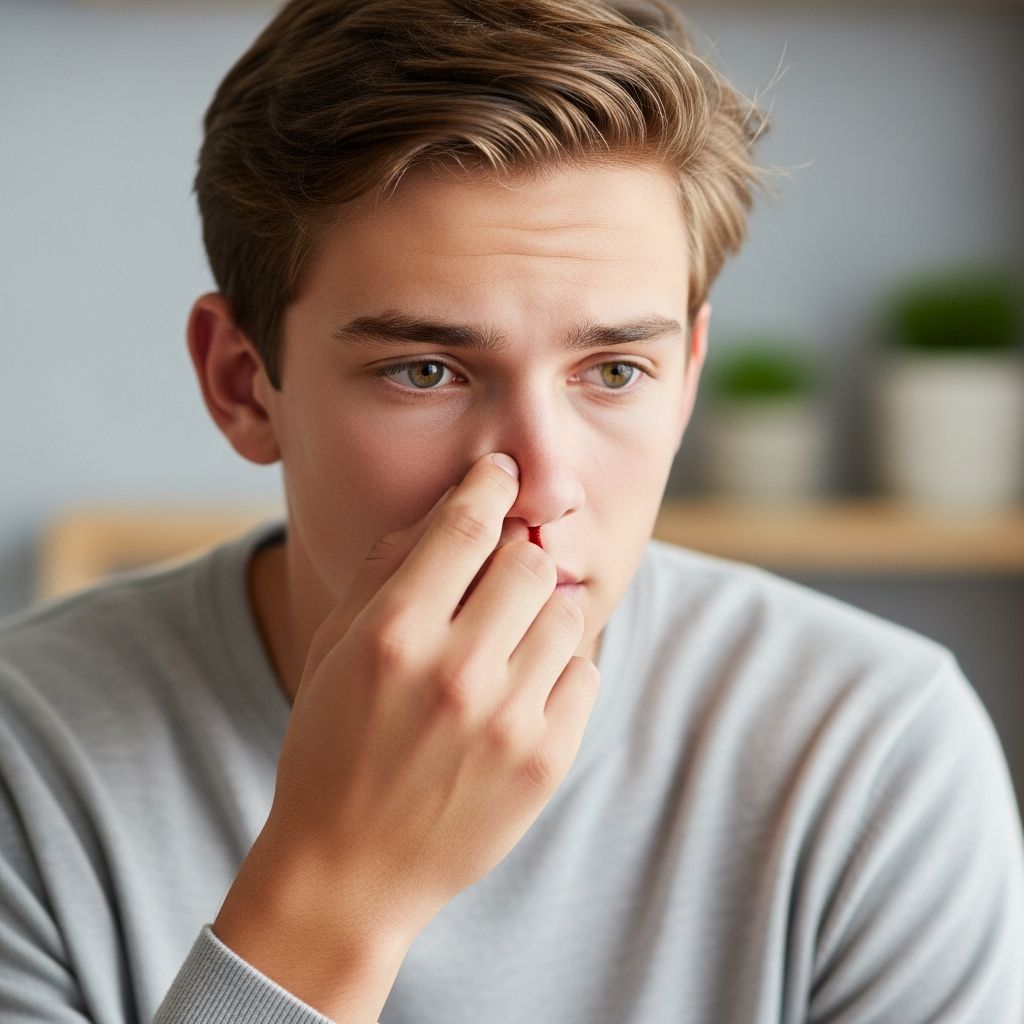
Nosebleeds can be sudden, messy, and a little scary, especially if they happen in public or wake you up at night. For most teens, though, nosebleeds are harmless, short-lived, and easy to manage with basic first-aid steps.
This guide explains why nosebleeds happen, how to stop them correctly, what you can do to prevent them, and how to recognize the warning signs of something more serious.
What Exactly Is a Nosebleed?
A nosebleed (the medical term is epistaxis) happens when a tiny blood vessel inside your nose breaks and leaks blood out the nostril or down the back of your throat.
Inside your nose are many delicate blood vessels that sit very close to the surface. Their job is to warm and humidify the air you breathe, but that also makes them easy to irritate or injure.
Types of Nosebleeds
- Front (anterior) nosebleeds – start in the front of the nose, usually along the septum (the wall between the nostrils). These are the most common in children and teens and are usually mild.
- Back (posterior) nosebleeds – come from deeper, further back in the nose. They are less common in teens but can be heavier, harder to control, and more likely to need emergency care.
Common Reasons Teens Get Nosebleeds
Most nosebleeds in otherwise healthy teens have simple, everyday triggers. Often, more than one factor is involved at the same time.
Usual Triggers
- Dry air – Heated indoor air in winter or very hot, dry weather can dry out the lining of your nose. Dry tissue cracks more easily and is more likely to bleed when rubbed or blown.
- Nose picking or rubbing – Directly scratches fragile blood vessels inside the nostrils, especially near the septum.
- Blowing the nose too hard – Strong pressure can burst small vessels or dislodge a fragile scab from a recent bleed.
- Minor injuries – Bumps from sports, fights, or accidents can trigger a bleed even if the impact doesn’t break the nose.
- Colds and sinus infections – Inflammation, frequent blowing, and sneezing all irritate the nasal lining.
- Allergies – Itchy, runny noses often lead to constant rubbing, blowing, and use of sprays, all of which add irritation.
Less Common or Medical Causes
Sometimes nosebleeds are linked to an underlying medical issue or medicine. These are less common but important to know.
- Blood-thinning medicines – such as warfarin, heparin, or daily aspirin can make even small bleeds last longer.
- Bleeding or clotting disorders – like hemophilia or low platelets (immune thrombocytopenia) can cause frequent, hard-to-stop bleeding, including from the nose.
- Abnormal blood vessels or rare genetic conditions – for example, hereditary hemorrhagic telangiectasia can cause recurring nosebleeds and visible small red spots on the skin or inside the mouth.
- Nasal polyps or benign growths – non-cancerous tissue in the nasal passages may bleed more easily.
- Rare tumors in the nose or sinuses – such as juvenile nasal angiofibroma in adolescent boys can cause repeated heavy nosebleeds, nasal blockage, or facial swelling.
- Frequent use of some nasal sprays – overuse of certain medicated sprays can irritate the lining of the nose and increase bleeding risk.
Everyday Risk Factors at a Glance
| Risk factor | How it contributes to nosebleeds |
|---|---|
| Dry indoor heating | Dries nasal lining, causing cracking and crusting that can bleed with minor irritation. |
| Winter colds and flu | Increases blowing and sneezing; inflamed tissue is more fragile and bleeds more easily. |
| Sports and contact activities | Higher chance of blows to the face or nose during practice, games, or accidental collisions. |
| Allergy flare-ups | Trigger constant rubbing, wiping, and sometimes overuse of sprays, all of which irritate blood vessels. |
| Habitual nose picking | Directly injures delicate vessels near the nostril openings, leading to repeated bleeds. |
How to Stop a Nosebleed Safely
What you do in the first few minutes matters. Some common “home remedies” are outdated and can make bleeding worse. Use the following steps instead.
Step-by-step First Aid
- Stay calm. A racing heart can increase blood flow. Trying to relax helps you follow the steps correctly.
- Sit up and lean slightly forward. This reduces blood pressure in the nose and keeps blood from running down the throat, which can cause nausea or coughing.
- Pinch the soft part of your nose. Use your thumb and index finger to firmly squeeze the soft area just below the bony bridge. Keep your mouth slightly open so you can breathe.
- Hold steady pressure for at least 10 minutes. Time it. Resist the urge to check every few seconds, because releasing too soon can restart the bleeding.
- Spit out blood instead of swallowing it. Swallowing a lot of blood can make you feel sick or cause vomiting.
- Use a cold compress across the bridge of your nose or cheeks if available. Cool temperature may help blood vessels tighten, but pressure is more important than ice.
What Not to Do
- Do not lean your head back – this sends blood into your throat and can make you cough, choke, or vomit.
- Do not stuff a large amount of tissue or cotton deep into your nose – pieces can break off or be hard to remove.
- Do not blow your nose right after the bleeding stops – this can dislodge the forming clot and start the bleed again.
- Do not use any nasal sprays (other than those your doctor instructs for stopping bleeding) during an active bleed.
After the Bleeding Stops
- Avoid heavy lifting, straining, or vigorous exercise for several hours.
- Try not to pick or blow your nose for at least 12 hours, or as long as possible.
- If you need to sneeze, keep your mouth open to decrease pressure in the nose.
When Is a Nosebleed an Emergency?
Most nosebleeds can be handled at home, but some situations need urgent medical care. Do not wait it out if any of the following happen.
Call Emergency Services or Go to an ER Immediately If:
- The bleeding does not stop after 20 minutes of firm pressure.
- You are losing a large amount of blood or feeling light-headed, weak, or like you might faint.
- You have trouble breathing, or blood is flowing rapidly down the back of your throat.
- You recently had major facial or head trauma, such as a car crash or hard sports injury.
- You are on blood thinners or have a known bleeding disorder and the bleed seems heavier than usual.
Arrange a Doctor’s Visit Soon If:
- You get frequent nosebleeds (for example, several times a week or many episodes in a short period).
- Bleeds mainly come from one side of the nose and are often heavy.
- You also notice easy bruising, bleeding gums, or very heavy menstrual periods.
- You have nasal blockage, facial swelling, or decreased sense of smell, along with nosebleeds.
- You recently started a new medicine and bleeding episodes are new or worsening.
How Doctors Treat Repeated or Severe Nosebleeds
If your nosebleeds are hard to control or happen often, a healthcare professional can examine your nose and recommend treatment based on the cause.
Possible Clinic or Hospital Treatments
- Topical medicines – such as prescription ointments or gels to moisturize and protect the nasal lining or help blood vessels constrict.
- Cauterization – applying a chemical (like silver nitrate) or heat to seal a specific bleeding vessel. This procedure is usually quick and done under local anesthesia.
- Nasal packing – placing a special sponge or gauze inside the nostril to put pressure on the bleeding site. This may be used in the emergency department for more serious bleeds.
- Treating underlying problems – such as adjusting blood-thinning medicines, treating sinus infections or allergies, or evaluating for bleeding disorders.
- Surgery or other procedures – rarely, for tumors, major structural problems, or very stubborn cases, ENT (ear, nose, and throat) specialists may recommend more advanced procedures.
Everyday Tips to Prevent Nosebleeds
You can’t always stop a nosebleed from happening, but you can lower your risk by taking care of your nose and your environment.
Moisturize the Inside of Your Nose
- Use a saline nasal spray a few times a day, especially during winter or in air-conditioned rooms.
- Ask your doctor about a thin layer of petroleum jelly or nasal gel in the nostrils at bedtime to keep the lining from drying out.
Improve the Air You Breathe
- Consider a cool-mist humidifier in your bedroom when the air is dry. Clean it regularly to avoid mold or bacteria.
- Avoid cigarette smoke and strong chemical fumes that can irritate your nose.
Be Gentle With Your Nose
- Try to break nose-picking habits. If dryness or crusting makes it tempting, talk with a healthcare provider about better moisturizing strategies.
- When you blow your nose, do it gently, one side at a time.
- Use protective gear, such as face guards or masks, for sports where facial injury is more likely.
Manage Allergies and Infections
- Follow your allergy plan and use medicines exactly as prescribed.
- Do not overuse over-the-counter decongestant sprays; long-term use can damage the nasal lining and increase bleeding risk.
Frequently Asked Questions (FAQs)
Are nosebleeds dangerous for most teens?
For most healthy teens, occasional nosebleeds are not dangerous and stop on their own or with basic first aid. They usually don’t cause enough blood loss to be harmful.
Can stress or anxiety cause nosebleeds?
Stress by itself doesn’t usually make a vessel burst, but it can raise heart rate and blood pressure slightly, which may worsen a bleed that has already started. People under stress may also rub or pick at their nose more often.
Do nosebleeds mean I have high blood pressure?
According to major medical centers, nosebleeds are generally not a direct result of high blood pressure. However, if you are older or already diagnosed with hypertension, your clinician may still check your blood pressure during an evaluation.
What if my nosebleeds only come from one side?
Many simple nosebleeds start on one side, especially near the septum. But if they are frequent, heavy, or always from the same nostril, a doctor should examine your nose to rule out polyps, a deviated septum, or (rarely) growths like juvenile nasal angiofibroma.
Can I go back to sports right after a nosebleed?
If the bleed was mild and stopped quickly, you usually can return once the bleeding has been fully controlled and you feel well. Avoid contact or high-intensity activity for a short period, and talk with your coach or athletic trainer if bleeds happen often.
When should I ask for testing for a bleeding disorder?
You should talk to a healthcare professional about testing if you have repeated nosebleeds plus other signs like easy bruising, frequent gum bleeding, prolonged bleeding from small cuts, or strong family history of bleeding problems.
References
- Juvenile angiofibroma — MedlinePlus Medical Encyclopedia, U.S. National Library of Medicine. 2023-04-15. https://medlineplus.gov/ency/article/001572.htm
- Nosebleeds (Epistaxis): Causes, Prevention and How to Treat — Nationwide Children’s Hospital. 2022-08-01. https://www.nationwidechildrens.org/conditions/nosebleeds
- What causes nosebleeds in children? — Michigan Medicine, University of Michigan Health. 2023-03-20. https://www.michiganmedicine.org/health-lab/what-causes-nosebleeds-children
- Nosebleeds – Causes — Mayo Clinic. 2022-10-11. https://www.mayoclinic.org/symptoms/nosebleeds/basics/causes/sym-20050914
- Nosebleeds (Epistaxis) — Children’s Hospital of Philadelphia. 2021-06-30. https://www.chop.edu/conditions-diseases/nosebleeds-epistaxis
- Nosebleeds – Symptoms, Causes and Management — Better Health Channel, State Government of Victoria. 2021-09-01. https://www.betterhealth.vic.gov.au/health/conditionsandtreatments/nosebleeds
- Nosebleeds (Epistaxis) — Cleveland Clinic. 2023-05-02. https://my.clevelandclinic.org/health/diseases/13464-nosebleed-epistaxis
- Nosebleeds in Teens: Care Instructions — MyHealth Alberta, Government of Alberta. 2022-01-01. https://myhealth.alberta.ca/Health/aftercareinformation/pages/conditions.aspx?hwid=ce1000