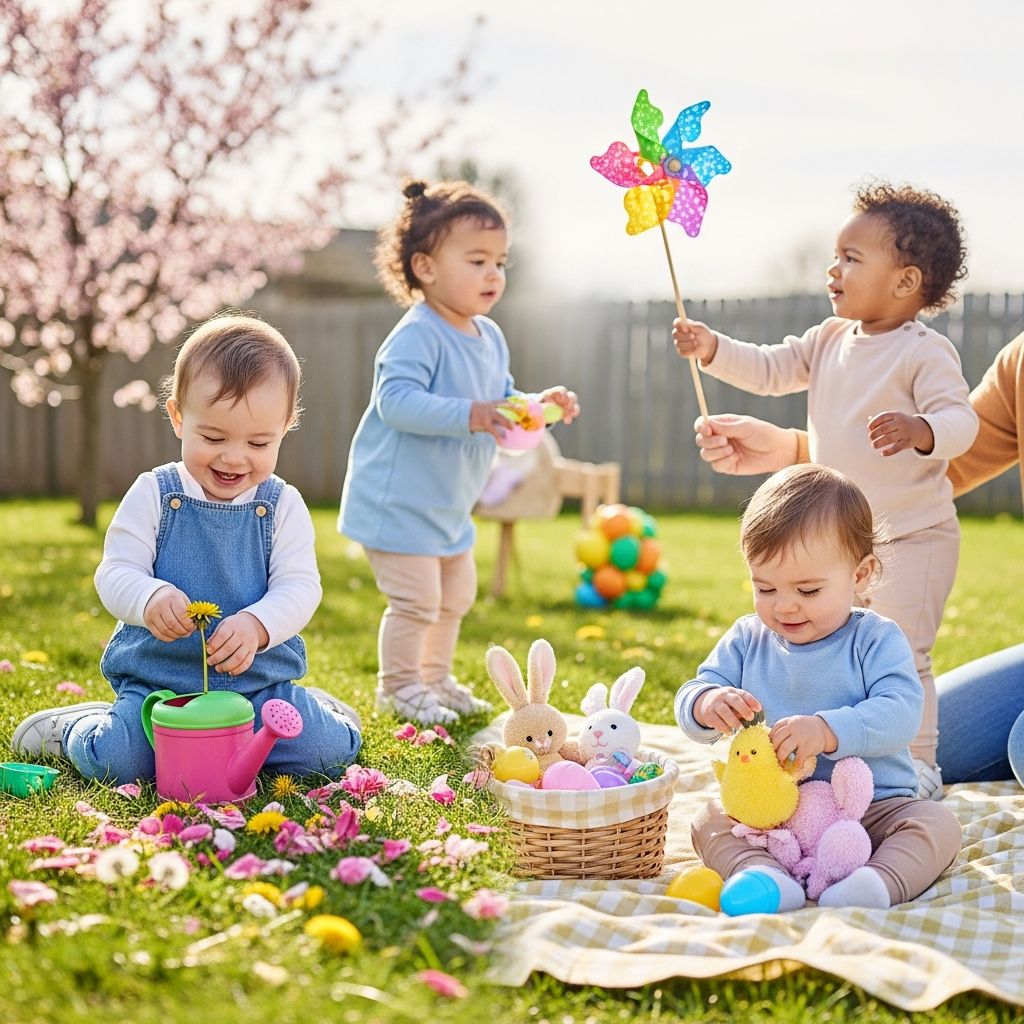
Easter with a toddler does not need to be picture-perfect or complicated. What young children remember most is the time, warmth, and playful moments shared with the adults they love. This guide offers simple, development-friendly Easter activities that are easy to set up, gentle on your schedule, and fun for even the littlest family members.
Why Easter Feels Magical to Toddlers
For toddlers, Easter is less about formal traditions and more about new sights, textures, and routines. The bright colors, soft toys, and chances to explore indoors and outdoors all come together to create a holiday that feels exciting and safe at the same time.
Thoughtful Easter activities can support your child’s development while still feeling like pure play. As they hunt for eggs, scoop rice, or press stickers, they quietly practice skills such as coordination, language, problem-solving, and sharing.
Planning a Low-Stress Toddler Easter
Before choosing specific activities, it helps to think about what matters most for your family. A calm, predictable day with a few special moments is usually better than a packed schedule that leaves everyone overtired.
- Keep plans short and flexible so you can stop if your child is overwhelmed.
- Repeat favorite activities instead of trying to fit in everything you see online.
- Focus on connection, not perfection: crooked crafts and half-finished games still count as success.
Indoor Easter Play That Builds Skills
Indoor activities are ideal for young toddlers or families who want a calm start to the day. These ideas use simple materials and can be adapted for different ages and attention spans.
Soft & Safe Egg Hunt at Home
Instead of starting with a full backyard egg hunt, consider a small, gentle search indoors. Use a confined area such as the living room, playroom, or one bedroom so your toddler can easily see and reach the eggs.
- Use large plastic eggs or fabric eggs that are too big to swallow.
- Place eggs in obvious, low spots: on a chair, next to a toy, or peeking from a basket.
- Fill with non-food surprises for very young toddlers, such as pompoms, stickers, or mini animal figures.
Easter Basket Exploration Station
Turn the traditional Easter basket into a safe “discovery basket” filled with different textures and colors. Your child can pull items out, shake them, and hand them to you as you name each one.
- Include items such as a soft bunny, a crinkly scarf, a wooden egg, and a board book.
- Avoid shredded paper grass for children who still mouth objects; try a small blanket or fabric napkins instead.
- Model language as they explore: “You found the yellow egg. It feels smooth.”
Simple Easter Crafts for Little Hands
Easter crafts for toddlers should be about the process, not the result. Expect messy fingers, abstract art, and short bursts of attention. Choose materials that are safe to taste, tear, and smear.
No-Dye Paper Eggs
Dyeing real eggs can be tricky with wiggly toddlers, so consider flat paper eggs instead. Cut large oval shapes from cardstock, then offer easy-to-use decorating supplies.
- Provide large stickers, dot markers, crayons, or torn pieces of colored paper with a glue stick.
- Tape the paper eggs to the table to keep them from sliding while your child works.
- Hang the finished eggs on a wall or window at your toddler’s eye level so they can admire their work.
Handprint Spring Garden
Handprint art is a sweet way to capture your child’s current size while creating a seasonal keepsake. Instead of focusing on bunnies or chicks, you can make a whole spring garden scene.
- Paint your child’s palm and fingers with washable paint, then press onto paper to form flowers or grass.
- Once dry, add simple details like stems, leaves, or tiny eggs drawn with a marker.
- Let older toddlers help paint their own hands, reinforcing independence and body awareness.
Messy Play and Toddler Sensory Bins
Sensory play is a perfect fit for Easter themes: think soft, squishy, bumpy, and colorful materials. Always supervise closely, especially with children who still put objects in their mouths.
Spring Sensory Tub
Create a simple spring-themed bin using a shallow container and a few themed items. The goal is to encourage scooping, pouring, hiding, and discovering.
- Use a base like dry oats, uncooked pasta, or water for younger toddlers who are prone to tasting.
- Add items such as plastic eggs, large toy flowers, chunky spoons, and small cups.
- Show your child how to bury an egg and then “discover” it again to extend play.
Foamy Egg Wash Station
If your toddler enjoys water play, create a mini “egg car wash” in the kitchen or bathroom. This works well with plastic eggs or other washable Easter toys.
- Fill one bin with a small amount of water and a drop of mild soap to make bubbles.
- Place a second bin with clean water for rinsing and offer a dish brush or sponge.
- Lay a towel on the floor and let your child wash, rinse, and line up eggs to “dry.”
Toddler-Friendly Egg Hunts Outdoors
Outdoor egg hunts can be exciting, but they work best when scaled to toddler size. Large groups, loud crowds, and competitive older kids can easily overwhelm young children.
Backyard Hunt Made Easy
A small, private hunt in your yard, building courtyard, or a quiet corner of a park is often ideal. Keep the expectations clear and the rules simple.
- Hide only a limited number of eggs so your child can realistically find them all.
- Place eggs on the ground in plain sight or slightly tucked behind objects at toddler height.
- Walk alongside your child, pointing out nearby eggs and cheering their discoveries.
Color-Match Egg Search
For older toddlers who know basic colors, turn the hunt into a gentle learning game. This can help slow the pace and give them a clear goal.
- Give your child a small basket or tray and tell them to look for one color at a time, such as “Find the blue eggs.”
- Use colored stickers or tape on the basket to match the eggs they are collecting.
- Once they have one color, switch to another, or trade roles so your child hides eggs for you.
Active Easter Games for Wiggly Kids
Many toddlers experience big feelings and extra energy on holidays. Simple movement games give them a healthy outlet and can prevent meltdowns later in the day.
Bunny Hops and Chick Walks
Turn your living room or backyard into a playful movement course. You can model each action first and then invite your child to try.
- Ask your toddler to hop like a bunny, flap like a chick, or waddle like a duck from one end of the room to the other.
- Place tape lines or cushions as “lily pads” to jump to and from.
- Keep rounds short and silly, pausing for water and cuddles as needed.
Gentle Egg Relay (Without Pressure)
Traditional egg-and-spoon races can feel frustrating for toddlers if the egg keeps falling. Adjust the rules to set them up for success.
- Use a wide spoon and a large plastic egg, and let them hold the egg with the other hand if needed.
- Walk side by side rather than racing, and celebrate every step instead of focusing on speed.
- For very young children, simply invite them to carry eggs from one basket to another at their own pace.
Toddler-Friendly Easter Snacks and Treats
Sweet treats are often part of Easter, but toddlers do not need a large amount of candy to enjoy the day. A small selection of age-appropriate snacks can feel just as special.
Colorful but Simple Snack Plates
Arrange everyday foods into fun shapes or patterns to create an Easter theme without extra sugar. This can help picky eaters explore new items in a low-pressure way.
- Use sliced fruit to form a rainbow, with a few round cereal pieces as “eggs” at the bottom.
- Offer carrot sticks or soft steamed carrot coins with a favorite dip.
- Add a small seasonal treat, such as one mini chocolate egg, if appropriate for your child’s age.
Build-Your-Own Bunny Plate
Invite your toddler to help assemble a snack that looks like a bunny face. The goal is interaction, not a perfect design.
- Use a round cracker or mini pancake for the face and banana slices or cucumber rounds for cheeks.
- Add thin strips of fruit or vegetables as whiskers and a berry or grape half as a nose, cut appropriately to reduce choking risk.
- Let your child move pieces around, taste them, or create their own version of a “silly bunny.”
Creating Gentle Family Traditions
Easter traditions do not need to match what other families do. Small, repeatable rituals that feel manageable today can grow alongside your child year after year.
Morning Rituals to Start the Day
A short, predictable routine can ground your toddler before the excitement begins. Keep it simple, cozy, and easy to repeat annually.
- Read the same spring or Easter story each year while sharing breakfast.
- Play a specific song or playlist as you open curtains and say “Happy Easter!” together.
- Let your child help place a small decoration, such as a paper egg or flower, on a chosen spot in your home.
Meaningful Keepsakes Over Many Gifts
Instead of a large haul of toys, consider one or two thoughtful items you can build on over time. This approach cuts down on clutter and helps your child appreciate what they receive.
- Choose a new book, puzzle, or art supply each year for the basket.
- Collect one small ornament, figurine, or photo each Easter to display the following spring.
- Invite older toddlers to help create a photo album or digital slideshow of Easter memories.
Sample Toddler Easter Schedule
The table below illustrates one possible rhythm for a toddler-friendly Easter. Adjust times and activities to match your child’s nap, feeding schedule, and temperament.
| Time of Day | Focus | Suggested Activity |
|---|---|---|
| Morning | Connection & Calm | Read a spring story, explore Easter basket items, soft indoor egg hunt. |
| Late Morning | Movement | Short backyard egg search, bunny hop game, or stroller walk to see decorations. |
| Early Afternoon | Rest & Quiet Play | Nap time, quiet coloring, or simple crafts like paper egg decorating. |
| Late Afternoon | Sensory & Snacks | Small sensory bin, egg wash station, and colorful toddler-friendly snack plate. |
| Evening | Wind-Down Ritual | Family walk, warm bath, and a favorite bedtime story to close the holiday. |
Safety Tips for Toddler Easter Fun
With a few precautions, Easter activities can stay joyful and accident-free. Young children explore with all their senses, including taste, so supervision is essential.
- Avoid small candies, coins, and tiny toy parts that could pose a choking risk.
- Skip breakable decorations or glass eggs in areas where toddlers are playing.
- Check outdoor areas for hazards such as sharp objects, animal droppings, or plants your child might try to eat.
Frequently Asked Questions About Easter With Toddlers
How many activities should I plan for my toddler on Easter?
Most toddlers do best with just a few focused activities spread throughout the day. Choose one craft, one movement game, and one quiet sensory or reading moment instead of trying to do everything at once.
What if my toddler is afraid of the Easter Bunny costume?
Many toddlers find life-size costumes confusing or scary, and that is completely normal. You can skip visits with costumed characters and instead explore bunnies through books, stuffed animals, and simple drawings.
How can I include my toddler in religious or cultural traditions?
Involve your child through simple, sensory-rich experiences like lighting a candle with supervision, singing a short song, or sharing a story in age-appropriate language. Keep gatherings short and allow a quiet space if they need a break.
Is it okay if my toddler skips the egg hunt?
Yes. Some children prefer crafts, cuddles, or exploring toys to organized games. Offer the egg hunt as an option, but let your toddler observe, join later, or create their own way to play with the eggs instead.
How do I manage sugar and candy with young children?
You can choose how much candy, if any, fits your family’s values and your child’s health needs. Many parents focus on small toys, books, and practical items for baskets, then serve a few festive snacks and a modest portion of sweets.
Making Easter Meaningful at Toddler Pace
The best Easter activities for toddlers are the ones that feel manageable for adults and magical for children. By keeping plans simple, focusing on sensory play and connection, and following your child’s cues, you can shape a holiday that everyone actually enjoys.
Over time, these small choices become the traditions your child remembers: the way you read together, the way you laughed when eggs rolled away, and the feeling of being loved and safe in the middle of all the springtime excitement.