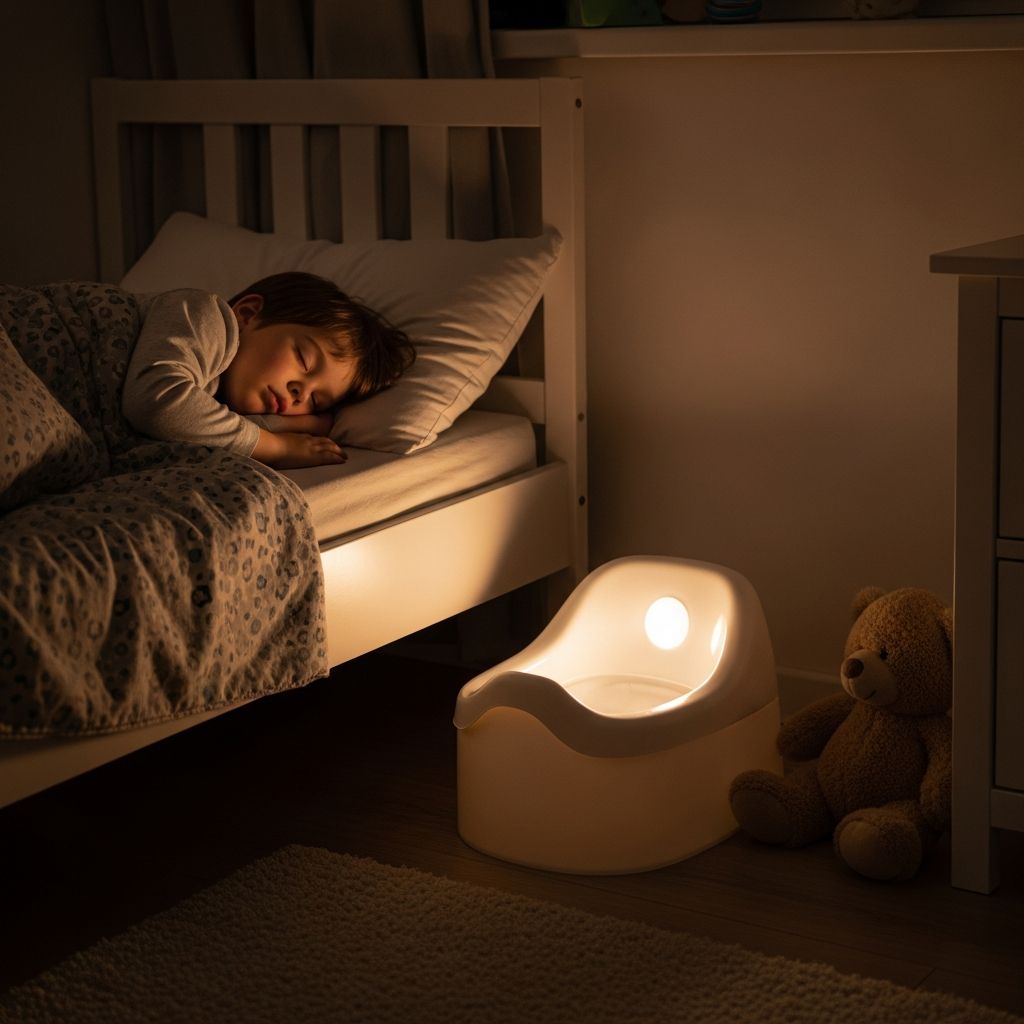
Nighttime potty training represents a significant milestone in a child’s development, often occurring after daytime mastery. This phase requires understanding physiological maturity, as many children achieve consistent dryness between ages 3 and 5, with bedwetting considered normal up to age 6.
Understanding Readiness for Overnight Training
Determining when a child is prepared for nighttime potty training is crucial to avoid frustration. Key indicators include waking up dry after naps or mornings for several consecutive days, showing discomfort with wet diapers, or independently using the potty during the day.
- Track patterns: Monitor diaper or pull-up wetness for 7-10 days to identify dry nights, signaling natural bladder control development.
- Age considerations: While daytime training may start at 2, overnight readiness typically emerges around 3-3.5 years, varying by individual maturation.
- Physical cues: A child who holds urine longer during the day or has fewer nighttime accidents demonstrates emerging control.
Resist pressure to rush; premature attempts can prolong the process. If signs are absent by age 4, gentle interventions like bottomless sleeping can accelerate awareness without force.
Building a Supportive Bedtime Framework
A consistent evening routine fosters relaxation and bladder emptying, reducing accident likelihood. Begin 1-2 hours before sleep with calming activities.
| Routine Step | Purpose | Timing |
|---|---|---|
| Bath or warm wash | Relaxes muscles, signals wind-down | 60-90 min before bed |
| Light snack, no fluids | Prevents overload without hunger | 45 min before bed |
| Story reading | Promotes drowsiness | 30 min before bed |
| Double potty trip | Ensures full bladder empty | 15 min and lights-out |
The “double void” technique—urinating twice within 30 minutes—maximizes emptying. First during routine start, second at final tuck-in. Limit fluids 2 hours prior, avoiding dehydration but curbing excess.
Optimizing the Sleep Environment for Success
Transform the bedroom into a user-friendly zone for independent potty access, minimizing disruptions.
- Potty station: Place a low-profile potty chair beside the bed for quick, dark access; pair with a dim nightlight to avoid full arousal.
- Bottomless option: Allow diaper-free sleeping to heighten wetness sensation, strengthening bladder-brain signals.
- Monitor support: Use audio/video monitors for crib-bound toddlers needing parental aid without fear.
Empower children by granting permission to wake parents if needed, building confidence during transition. Avoid mid-night bathroom treks, as they overstimulate and hinder return to sleep.
Protective Bedding and Accident Management
Accidents are inevitable; preparation preserves sanity and sleep. Layering creates a quick-recovery system.
- Standard mattress protector under fitted sheet.
- Absorbent potty training pad or thick changing pad atop sheet.
- Fitted sheet over pad.
- Light blankets, no sleep sack for mobility.
Post-accident: Calmly guide to potty for re-emptying, change layers swiftly (pad swaps in seconds), and resume sleep without scolding. Praise dry mornings lavishly to reinforce positives.
Transition from diapers to training pants like pull-ups once daytime succeeds; their underwear-like feel motivates while containing leaks. Retain until 10-14 consecutive dry nights.
Addressing Common Challenges and Long-Term Strategies
Patience underpins success; full control may take months or years as anti-diuretic hormone stabilizes overnight urine production.
- Morning protocol: Wake promptly, straight to potty for victory start.
- Positive reinforcement: Sticker charts for dry nights, not punishment for wets.
- Health checks: Persistent wetting past 5-6 years warrants pediatric consultation for issues like UTIs or sleep disorders.
For reluctant toddlers, dream talks (“Your body knows how to stay dry!”) plant subconscious suggestions. Maintain daytime consistency to bolster night skills.
Frequently Asked Questions (FAQs)
What if my 4-year-old still wets the bed regularly?
Normal up to age 5-6; track patterns and implement tips like double voids. Consult doctor if sudden onset or daytime issues.
Should I wake my child for nighttime potty trips?
No—disrupts sleep cycles. Pre-bed empties and accessible potties suffice; wake-ups often backfire.
How long until dry nights become consistent?
Varies: weeks for some, years for others. 80% dry by age 5 naturally. Patience key.
Are pull-ups counterproductive?
They aid transition but switch to underwear once ready to feel wetness fully.
Does limiting drinks harm hydration?
No, if daytime intake sufficient; curb only evening excess 2 hours pre-bed.
Real Parent Experiences and Expert Insights
Parents report success after 2-4 weeks of consistent routines, with bottomless nights accelerating awareness. Pediatric guidelines emphasize developmental pacing over timelines.
Combine strategies: 70% saw improvement with potty proximity and layering per anecdotal aggregates.
References
- 13 Tips and Tricks for Nighttime Potty Training — Pampers. 2023-06-15. https://www.pampers.com/en-us/toddler/potty-training/article/tips-and-tricks-for-night-time-potty-training
- How to nighttime potty train: 10 tips to succeed — Huckleberry. 2024-02-20. https://huckleberrycare.com/blog/pro-tips-for-night-time-potty-training
- Night Time Potty Training Tips: How to Layer the Bed — Oh Crap Potty Training. 2023-11-10. https://www.ohcrappottytrainingmetoyou.com/post/night-time-potty-training-tips
- Nighttime Potty Training — Newton Baby. 2024-05-05. https://www.newtonbaby.com/blogs/parenting-kids/nighttime-potty-training
- Ready For Nighttime Potty Training? — Bella Luna Family. 2023-09-12. https://bellalunafamily.com/nighttime-potty-training/