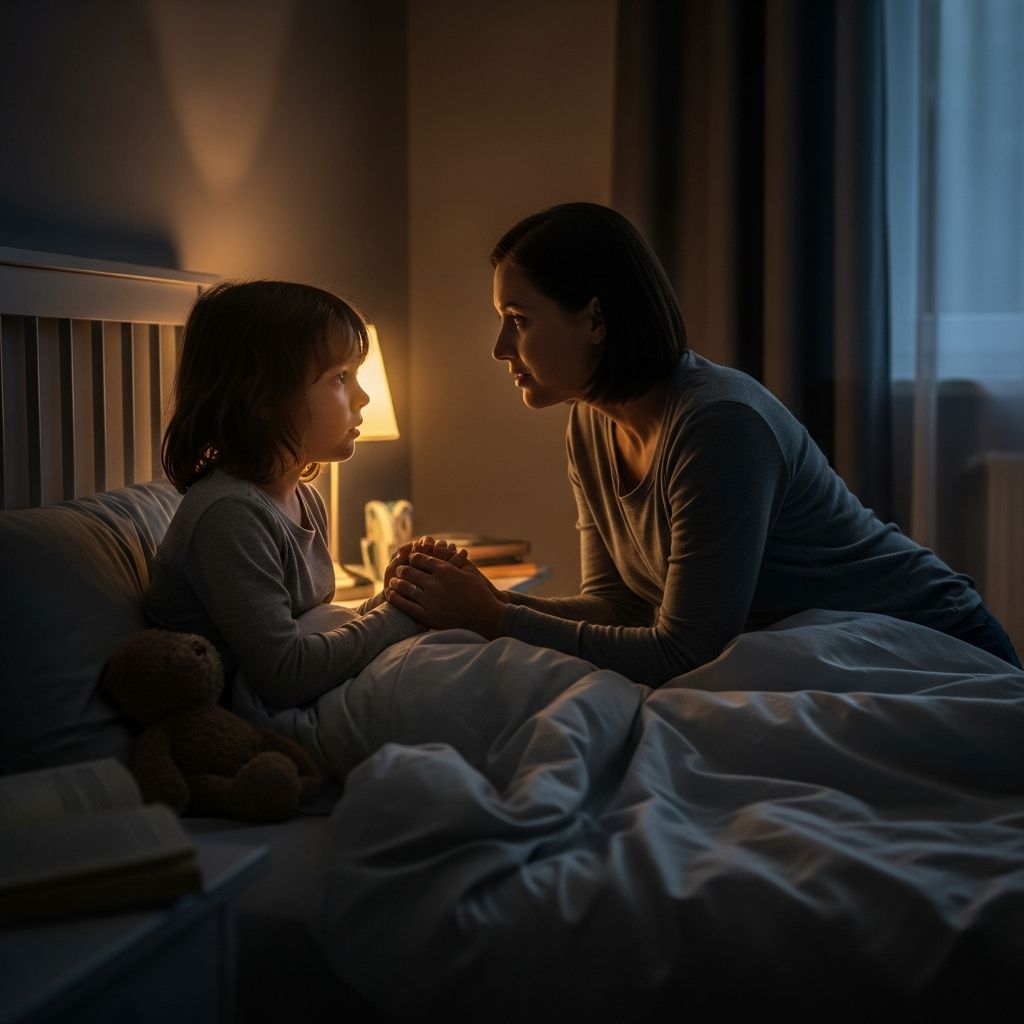
Most children have scary dreams at some point, and many wake up frightened, confused, or crying. For parents, it can be upsetting to see a child so scared, especially in the middle of the night. Understanding what nightmares are, why they happen, and how to respond calmly can make nights easier for everyone.
What Exactly Is a Nightmare?
A nightmare is a bad dream that usually happens during a stage of sleep called rapid eye movement (REM) sleep, when the brain is very active and vivid dreaming is common. Nightmares can wake a child up and often leave strong feelings of fear, sadness, or worry.
After a nightmare, most children:
- Wake up fully and can talk to you
- Remember at least some of the dream
- Might be afraid to go back to sleep or sleep alone
- Want comfort, a hug, or reassurance that they are safe
Nightmares are part of normal development. Many children have occasional bad dreams, especially between preschool and early school years.
Nightmares vs. Night Terrors: How Are They Different?
Parents often confuse nightmares with night terrors, but they are not the same and are handled differently.
| Feature | Nightmares | Night Terrors (Sleep Terrors) |
|---|---|---|
| Sleep stage | Happen in REM sleep, often in the second half of the night | Happen in non-REM deep sleep, usually 1–3 hours after falling asleep |
| Awakening | Child wakes up, can respond, knows you are there | Child looks awake (eyes open) but is not fully aware; hard to comfort |
| Memory of event | Often remembers the bad dream in the morning | Usually no memory or only vague recall in the morning |
| Typical behaviors | Crying, calling out, wanting a parent, clinging | Screaming, thrashing, fast breathing and heartbeat, very upset but unreachable |
| Who is affected | Children and adults of all ages | Most common in children ages about 3–7 years |
Nightmares can often be soothed in the moment with comfort and reassurance. Night terrors are usually brief and best handled by making sure the child is safe and allowing the episode to pass.
Why Do Kids Have Nightmares?
There is rarely just one cause. Nightmares often come from a mix of a child’s imagination, daily experiences, and how well they are sleeping.
Common Triggers for Nightmares
- Stress or worry during the day – arguments, school changes, bullying, or family conflict can show up as scary dreams.
- Frightening media – scary movies, intense video games, or upsetting news before bed can fuel bad dreams.
- Big changes or life events – moving, divorce, a new sibling, or starting a new school may increase nightmares as kids adjust.
- Illness and fever – being unwell or having a raised temperature can disturb normal sleep and lead to more vivid dreams.
- Lack of sleep – going to bed late, irregular bedtimes, or too little total sleep make dreams more intense.
- Traumatic experiences – accidents, abuse, or frightening events can cause repeated nightmares that replay parts of what happened.
- Certain medicines or medical conditions – some medicines and sleep-related problems like obstructive sleep apnea can lead to disturbing dreams.
For many children, occasional nightmares need no medical treatment. They are simply a sign that the brain is processing emotions and events from the day.
What Do Kids Commonly Dream About?
The themes of nightmares often match a child’s age and stage of development.
- Toddlers
Nightmares may focus on separation from parents or caregivers, getting lost, or loud, overwhelming noises. - Preschoolers
Kids often dream of monsters, the dark, or imaginary creatures that feel very real in the moment. - School-age children
Dreams may involve burglars, accidents, natural disasters, or harm coming to themselves or loved ones.
These themes may reflect common worries at each age, like safety, independence, or understanding danger.
How Nightmares Affect Children (and Families)
A single bad dream now and then is usually not a problem. Frequent nightmares, however, can affect a child’s mood and sleep quality and may disrupt the whole household.
Possible effects include:
- Bedtime resistance – fear of having another nightmare can make kids stall or refuse to go to bed.
- Clinginess at night – wanting a parent to stay, sleep in the parent’s bed, or keep the light on.
- Daytime tiredness – repeated awakenings can lead to sleepiness, irritability, or difficulty concentrating in school.
- Increased anxiety – some kids begin to worry about sleep itself, creating a cycle of stress and more bad dreams.
If nightmares are frequent and clearly linked to a traumatic event or to strong anxiety, professional support can be helpful.
Calm Ways to Help a Child After a Nightmare
Your reaction right after a nightmare can shape how your child feels about sleep. A calm, steady response teaches that scary dreams are upsetting, but manageable.
Steps to Comfort Your Child
- Go to them promptly
Hearing a child cry or call out is distressing. Go to their room and respond in a matter-of-fact, calm way. - Offer physical reassurance
If your child wants it, give a hug, hold their hand, or sit on the bed. Physical contact can quickly lower fear. - Use simple, soothing words
Keep your voice gentle and steady. Short phrases like “You’re safe. That dream is over now” help separate dream from reality. - Invite them to talk if they want
Some kids feel better after telling you the dream. Others prefer not to repeat it. Let your child choose. - Adjust the environment
Turn on a small night-light, open the bedroom door, or let a comfort object (favorite toy or blanket) stay nearby. - Help them resettle in their own bed
Once they are calmer, encourage your child to fall back asleep in their regular sleeping space whenever possible, so their bed still feels safe.
What to Avoid
- Long, intense questioning about every detail of the dream, which can make it feel more powerful.
- Teasing, dismissing, or saying the child is “being silly,” which can increase shame and secrecy.
- Using nightmares as punishment or a threat (for example, suggesting they happen because the child misbehaved).
Preventing Nightmares: Building Better Sleep Habits
Although you cannot stop every bad dream, you can lower how often they occur by supporting healthy sleep and reducing stress.
Healthy Sleep Routine
- Regular bed and wake times
Try to keep sleep times similar on weekdays and weekends to support the body’s internal clock. - Calming pre-bed activities
Choose quiet, pleasant routines like reading, simple drawing, gentle music, or a warm bath. - Screen limits before bed
Avoid exciting games, intense shows, or scary videos in the hour before sleep. - Comforting sleep space
Keep the bedroom fairly dark and quiet with a comfortable temperature. A small night-light is fine if it helps your child feel safe.
Managing Stress and Worries
- Talk about feelings during the day
Give children time to share worries after school or at dinner so fears do not build up at night. - Create a “worry time”
With older kids, set aside a short time earlier in the evening when they can write or draw worries, then close the notebook to symbolically set concerns aside. - Relaxation skills
Teach slow breathing, gentle stretching, or imagining a favorite place as part of the bedtime routine.
Reviewing Daytime Content
- Check that media (shows, games, videos) is age-appropriate and not too intense.
- Avoid scary or violent content, especially close to bedtime.
- Be mindful of adult news and conversations that children may overhear.
When Should Parents Talk to a Doctor?
Most children’s nightmares are harmless and fade with time. Seeing a health professional is a good idea if:
- Nightmares happen several times a week for weeks in a row.
- Your child is very sleepy, irritable, or struggling in school because of poor sleep.
- The dreams seem clearly linked to a traumatic or abusive situation.
- There are signs of other sleep problems, such as loud snoring, breathing pauses, or unusual movements at night.
- Night episodes look more like night terrors (screaming, thrashing, not recognizing you) and are frequent or severe.
A doctor may ask about your child’s sleep schedule, daytime stress, medications, and family history of sleep issues. In some cases, families may be referred to a sleep clinic, mental health professional, or pediatric specialist for further help.
Helping Kids Feel Powerful Over Their Dreams
One helpful message for children is that dreams, even scary ones, come from their own minds—and that they can learn ways to feel more in control.
- “Rewrite” the ending
During the day, invite your child to imagine a new, happier ending to a common nightmare (for example, the monster becomes friendly or shrinks). This can reduce fear at the next bedtime. - Use creative outlets
Drawing the dream and then changing or “fixing” it in the picture can help some kids feel braver. - Choose a comfort item
A special stuffed animal, blanket, or small object that “guards” the bed may be reassuring, especially for younger children. - Practice positive images before sleep
Ask your child to picture something they love (a favorite place, pet, or activity) as they close their eyes. Ending the day with pleasant thoughts can sometimes shape sleep more positively.
Frequently Asked Questions (FAQs)
How common are nightmares in children?
Occasional nightmares are very common in childhood. Many kids have bad dreams at times, especially between the preschool and early school years, and most do not need medical treatment.
Do nightmares mean something is wrong with my child?
Not usually. Single or infrequent nightmares are a normal part of growing up. However, very frequent, intense, or trauma-related nightmares can signal stress or mental health concerns and are worth discussing with a health professional.
Should I wake my child during a night terror?
During a night terror, children are not fully awake and may become more confused or upset if you try to wake them. Experts generally recommend keeping the child safe (so they do not fall or run into anything) and staying nearby until the episode ends.
Can changing bedtime help reduce nightmares?
Yes. A regular sleep schedule and enough total sleep can reduce both nightmares and night terrors. Being very tired or having interrupted sleep makes these problems more likely.
Will my child outgrow nightmares?
Many children have fewer nightmares as they get older and learn more ways to handle fears and stress. Some people still have occasional nightmares as adults, but persistent, distressing nightmares can be treated with help from a doctor or mental health professional.
References
- Night terrors and nightmares — NHS. 2021-11-24. https://www.nhs.uk/conditions/night-terrors/
- Bad dreams and nightmares in children — Raising Children Network (Australia). 2023-05-01. https://raisingchildren.net.au/preschoolers/sleep/nightmares-night-terrors-sleepwalking/nightmares
- Nightmares in children — Children’s Hospital Colorado. 2022-04-15. https://www.childrenscolorado.org/conditions-and-advice/conditions-and-symptoms/conditions/nightmares/
- Night Terrors — Nemours KidsHealth. 2022-08-01. https://kidshealth.org/en/parents/terrors.html
- Sleep terrors (night terrors) – Symptoms and causes — Mayo Clinic. 2023-03-18. https://www.mayoclinic.org/diseases-conditions/sleep-terrors/symptoms-causes/syc-20353524
- Night Terrors: What They Are, Causes, Symptoms & Treatment — Cleveland Clinic. 2023-06-21. https://my.clevelandclinic.org/health/diseases/night-terrors