Few things are more unsettling for a parent than hearing a child scream in the night, rushing in, and finding them inconsolable yet seemingly not fully awake. Night terrors can make even confident caregivers feel helpless, but understanding what is happening and how to respond can restore a sense of calm and control. This guide explains night terrors in simple terms, shows how they differ from nightmares, and offers practical strategies to protect your child’s sleep and safety.
What Are Night Terrors?
Night terrors are a type of sleep disturbance that happens during deep non-dream sleep, usually in the first few hours after a child falls asleep. Unlike nightmares, which occur during dream sleep and are often remembered, night terrors usually leave the child with no memory of the event the next morning.
During a night terror, a child may suddenly sit up in bed, cry out, appear terrified, or thrash around while still being largely unaware of the surroundings. From the outside, it can look and sound like utter panic, but the child is typically still asleep and not consciously experiencing the episode the way an awake person would.
Night Terrors vs. Nightmares
Because both involve fear and disrupted sleep, it is easy to confuse night terrors with nightmares. However, they differ in when they occur during the sleep cycle, how the child behaves, and what the child remembers.
| Feature | Night Terrors | Nightmares |
|---|---|---|
| Stage of sleep | Deep non-dream sleep (usually early in the night) | Dream sleep (REM), often later in the night or toward morning |
| Child’s awareness | Appears awake but is actually still mostly asleep and hard to rouse | Fully awake after the dream and able to respond and talk |
| Memory afterward | Typically has no memory of the event | Usually remembers the dream and can describe it |
| Typical behaviors | Screaming, thrashing, sweating, fast breathing, wide eyes, pushing caregiver away | Crying, seeking comfort, may cling to caregiver and talk about the scary dream |
| Parent experience | Very distressing to watch; child seems unreachable | Emotional but consolable; child clearly wants reassurance |
What Night Terrors Look Like
Night terrors tend to follow a recognizable pattern, though not every child shows every sign. An episode may last only a few minutes, but in some cases it can feel much longer. Understanding common features can make the episodes slightly less frightening for adults witnessing them.
Common Signs During an Episode
- Sudden screaming, gasping, or a loud cry shortly after falling asleep.
- Child sits upright or jumps out of bed with a frightened expression.
- Fast heartbeat, rapid breathing, sweating, and flushed or pale skin.
- Eyes may be open or partially open, but the child seems confused or “not really there.”
- Thrashing, kicking, or pushing away anyone who tries to comfort them.
- Difficulty waking the child fully, even with gentle shaking or calling their name.
- Sudden return to quiet sleep once the episode ends, often without any memory later.
Why Do Night Terrors Happen?
Night terrors do not mean a child is emotionally damaged or experiencing trauma, and they are usually not a sign of a serious medical problem. Instead, they are often linked to how the brain transitions between different stages of sleep. In children, these transitions are still maturing, which can make their sleep less stable.
Certain conditions can make night terrors more likely by disrupting sleep or increasing arousal during deep sleep. These factors do not necessarily cause terrors on their own, but they can act as triggers in a child who is prone to them.
Possible Triggers and Risk Factors
- Overtiredness: Late bedtimes, inconsistent schedules, or missed naps can make the brain’s sleep transitions more abrupt.
- Stress or change: New school, family conflict, travel, a new sibling, or other big changes may show up as restless sleep.
- Illness or fever: Being sick or running a fever can fragment sleep and increase the chance of partial arousals.
- Sleep environment: Too much noise, light, or stimulation near bedtime can prevent smooth settling into deep sleep.
- Genetic tendency: Night terrors and sleepwalking can run in families; parents who had them as children sometimes see them in their own kids.
- Other sleep problems: Snoring, breathing pauses, or restless legs can disturb sleep and trigger arousals.
How Common Are Night Terrors?
Night terrors most often appear in children between about 3 and 8 years old, though they can occur a little earlier or later. Many children will have only a handful of episodes, while a smaller group may experience them more regularly during certain periods.
In most cases, night terrors fade as the child’s nervous system and sleep-wake regulation mature. The pattern is often that episodes recur for weeks or months and then gradually become less frequent, eventually disappearing altogether without any specific treatment.
Immediate Steps During a Night Terror
When a night terror occurs, a parent’s first instinct is usually to wake the child fully and stop the episode. However, trying to force a child awake often backfires, making them more confused or distressed. The focus should instead be on safety, staying nearby, and letting the episode pass.
What to Do in the Moment
- Stay calm. Your composure helps create a sense of safety, even if the child is not fully aware of you.
- Protect from injury. Gently guide your child away from sharp edges, block access to stairs, and ensure they cannot fall out of bed.
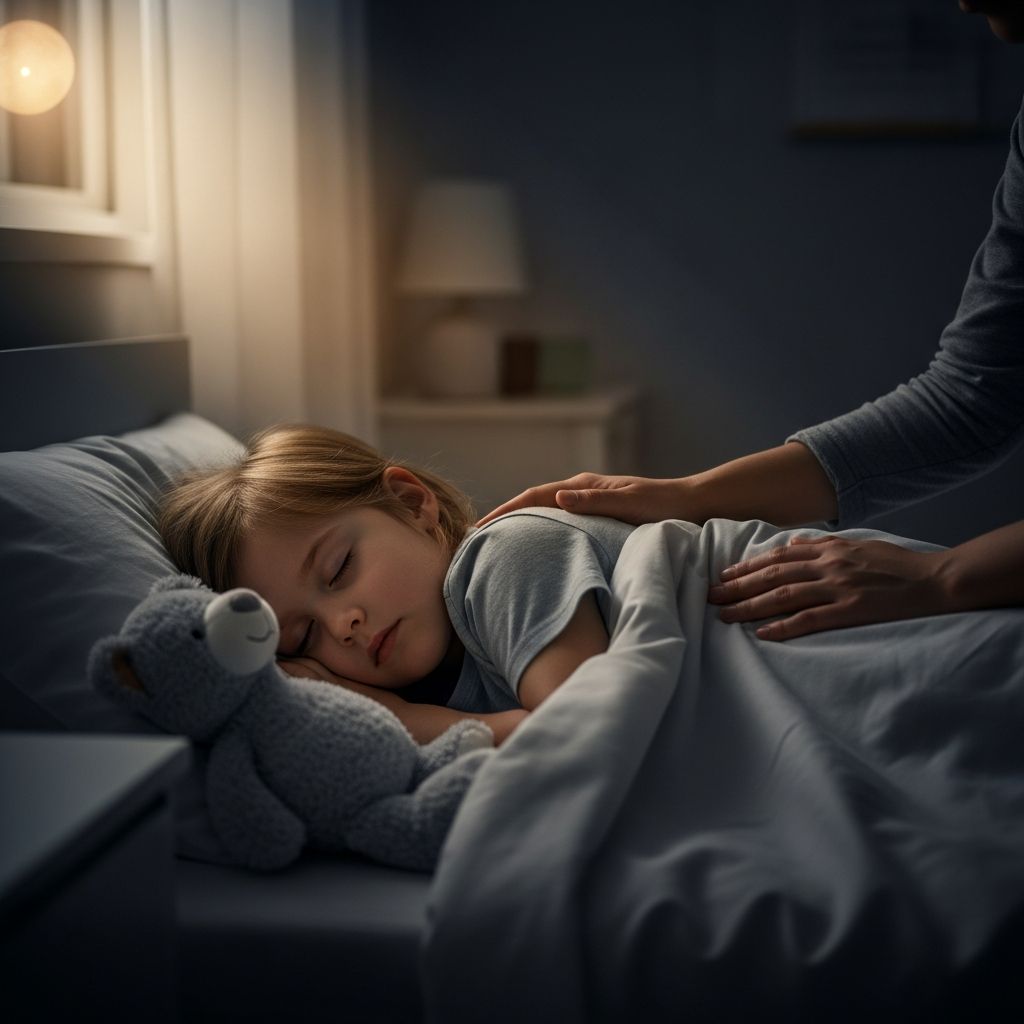
- Use a soothing presence. Speak softly, if at all; sometimes just being there quietly is more effective than repeated talking.
- Avoid shaking or yelling. Sudden loud attempts to wake a child can worsen agitation and prolong the episode.
- Let it run its course. Most night terrors end on their own in a few minutes, followed by a return to deeper sleep.
What Not to Do
- Do not try to reason with your child; they are not fully awake and cannot process explanations.
- Do not switch on bright lights unless necessary for safety, as this can further disrupt sleep.
- Do not punish or scold; the child is not in control of the behavior and often will not remember it.
- Do not ask them to describe what they are seeing or feeling during the episode; save conversation for the following day if they remember anything.
Creating a Sleep-Friendly Environment
A predictable, soothing bedtime and a calm sleep space can reduce the chances of partial awakenings that contribute to night terrors. While no routine can guarantee that episodes will disappear, small changes often add up to more stable and restful nights.
Elements of a Helpful Bedtime Routine
- Consistent bedtime and wake time, even on weekends, within about the same 30–60 minute window.
- Wind-down period of 20–40 minutes with quiet, relaxing activities such as reading or gentle music.
- Avoidance of screens (phones, tablets, TVs) for at least an hour before bedtime to prevent overstimulation.
- Comfortable room temperature, low light, and minimal noise.
- Predictable rituals, such as brushing teeth, putting on pajamas, and saying good night in a specific order.
Safety Checks for the Bedroom
- Use a bed that minimizes the risk of falling; consider safety rails for younger children if appropriate.
- Remove or pad sharp furniture corners near the bed.
- Keep toys and clutter off the floor to prevent tripping if the child gets up suddenly.
- Use a gate at the bedroom door or top of stairs if your child is prone to getting out of bed during episodes.
- Ensure windows are locked or have child-safe latches.
Long-Term Strategies to Reduce Night Terrors
Beyond handling individual episodes, many parents want to know how to decrease how often night terrors happen. Because episodes are linked to sleep quality and arousal, the goal is to make sleep as regular and undisturbed as possible.
Everyday Habits That Help
- Protect sleep time: Aim for age-appropriate total sleep, including naps for younger children, and avoid very late nights.
- Watch daytime stress: Build in relaxing activities, outdoor play, and unstructured time when possible.
- Respond to illness early: Treat colds, allergies, or other conditions that might interfere with breathing or comfort at night.
- Limit stimulating content: Avoid frightening shows, games, or stories close to bedtime that could add to nighttime arousal.
- Communicate with caregivers: Make sure teachers, babysitters, and relatives know about the episodes and how to respond calmly.
Scheduled Awakenings (When Advised)
Some health professionals may recommend a technique known as “scheduled awakenings” for children with frequent night terrors. This involves gently waking the child about 10–15 minutes before the usual time the episode occurs, keeping them awake for a few minutes, and then allowing them to fall back asleep. The idea is to interrupt the pattern of sleep that leads to terrors.
This method should be used only under guidance from a healthcare provider, especially if the episodes are intense or associated with other sleep issues. It is not needed for every child and is typically reserved for more persistent cases.
When to Talk to a Doctor
Many children with night terrors do not need medical treatment, but certain signs mean it is wise to speak with a pediatrician or sleep specialist. Early evaluation is particularly important if episodes are frequent, severe, or accompanied by other concerning symptoms.
Situations That Deserve Medical Advice
- Night terrors happen several times a week or multiple times in one night.
- Your child is extremely sleepy or irritable during the day, suggesting poor sleep quality.
- You notice loud snoring, gasping, pauses in breathing, or very restless sleep.
- Your child or others have been injured during an episode.
- Episodes begin for the first time in adolescence or adulthood.
- You are concerned about anxiety, mood changes, or behavior difficulties that seem linked to sleep.
A healthcare provider can rule out other sleep disorders, screen for breathing issues, and offer tailored advice. In some cases, they may refer your child for a sleep study or suggest additional behavioral strategies.
Supporting Your Child Emotionally
Even though children usually do not remember night terrors, the atmosphere around bedtime can still influence how safe they feel. A calm, reassuring approach helps reinforce that sleep is a secure and predictable part of the day.
Talking About Nighttime Fears
- If your child remembers feeling scared, validate their feelings without focusing on frightening details.
- Explain, in age-appropriate language, that sometimes the brain gets a bit mixed up during sleep but that their body is safe.
- Avoid labeling your child as “a bad sleeper” or repeatedly telling others about the episodes in front of them.
- Use positive routines like a brief bedtime chat, gratitude sharing, or a comforting phrase you repeat each night.
Taking Care of Yourself as a Parent
- Recognize that feeling anxious or frustrated about disrupted sleep is normal.
- Share responsibilities with another caregiver if possible so one person is not always on night duty.
- Seek social support from friends, family, or parent groups to talk about your experiences.
- Remember that most night terrors are temporary and improve with time and maturation.
Practical Checklist for Parents
For quick reference, here is a brief checklist you can review when dealing with night terrors. Saving or printing a list like this can make it easier to remember what to do during a stressful moment.
- ✔ Keep bedtime and wake time consistent.
- ✔ Create a calming wind-down routine without screens.
- ✔ Make the bedroom safe by minimizing hazards and securing exits.
- ✔ During an episode, stay near, protect your child, and wait for it to pass.
- ✔ Avoid trying to fully wake or reason with your child in the middle of an episode.
- ✔ Track how often terrors occur and any patterns (time of night, illness, stress).
- ✔ Consult a healthcare professional if episodes are frequent, severe, or concerning.
Frequently Asked Questions (FAQs)
Are night terrors harmful to my child’s brain?
Night terrors are frightening to watch, but they are not known to damage the brain or cause long-term harm in otherwise healthy children. They reflect how the sleep system functions, not a lasting injury.
Should I wake my child during a night terror?
Fully waking a child in the middle of a night terror is usually difficult and can make them more confused and upset. It is generally more helpful to ensure they are safe and allow the episode to end naturally.
Will my child outgrow night terrors?
Most children gradually outgrow night terrors as they get older and their sleep patterns mature. Episodes often decrease in frequency over months or years without specific medical treatment.
Can stress or anxiety cause night terrors?
Stress and emotional tension can contribute to unsettled sleep and may make night terrors more likely in some children. However, many children with night terrors are otherwise well-adjusted and not experiencing major emotional problems.
Is medication ever needed?
Medication is rarely necessary and is typically considered only in severe or complex cases where other sleep disorders or significant distress are present. Most families manage night terrors successfully through routines, safety measures, and guidance from a healthcare provider when needed.
Key Takeaways for Parents
Night terrors can be alarming, but knowledge and preparation reduce fear for both children and adults. Understanding that episodes are brief, usually harmless, and often outgrown helps parents shift from panic to purposeful support.
By focusing on safety, consistent sleep routines, and open communication with healthcare professionals, families can navigate night terrors with greater confidence and protect the restful sleep that growing children need.