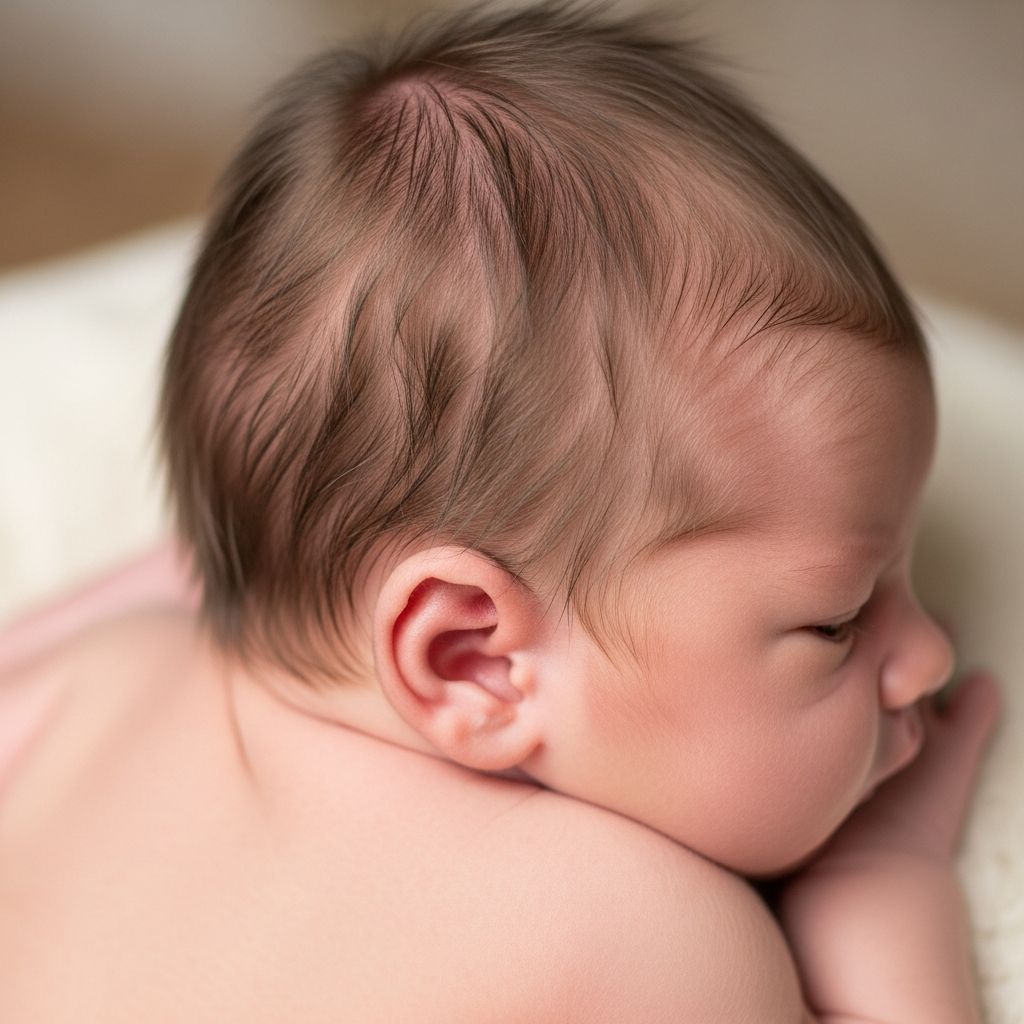
Many parents are surprised when they first meet their baby and notice fine hair on the shoulders, back, or even the ears. Others expect a full head of thick hair and instead are greeted by a perfectly smooth scalp. Both situations are usually completely normal and reflect how hair develops before and after birth, not how your child will look forever.
This guide unpacks why newborns grow body hair, what lanugo is, how baby hair changes in the first year, and how to tell the difference between normal variation and rare warning signs.
How Fetal Hair Develops Before Birth
Hair growth begins long before delivery. By the time your baby arrives, their hair has already gone through several stages inside the uterus.
Key stages of hair development in the womb
- Hair follicles form early: Hair follicles start developing during the first and second trimesters of pregnancy. Once formed, these follicles last for life and no new hair follicles are created after birth.
- Lanugo appears in the second trimester: Around 16–20 weeks of pregnancy, a layer of very fine, soft hair called lanugo begins to cover the fetus’s skin.
- Lanugo usually sheds before term: In the last 8 weeks of pregnancy, most fetuses shed lanugo, which then mixes with the amniotic fluid and later appears in the baby’s first bowel movement (meconium).
- Vellus hair replaces lanugo: After lanugo falls out, it is replaced by vellus hair, the light, peach-fuzz type hair that helps with temperature regulation until thicker terminal hair develops later in childhood.
Because not all babies follow the exact same timeline, some are still covered with lanugo at birth, especially those born prematurely.
What Is Lanugo and Why Do Babies Have It?
Lanugo is a medical term for the first hair produced by fetal hair follicles. It is usually:
- Extremely fine and soft
- Often light-colored or unpigmented
- Spread across much of the body, including the back, shoulders, and sometimes the face
The purpose of lanugo
Lanugo plays several important roles in the womb:
- Helps vernix stick to the skin: Vernix caseosa is the white, creamy coating that covers newborn skin. Lanugo helps this protective layer cling to the baby’s body.
- Protects the skin: Vernix and lanugo together shield the skin from constant exposure to amniotic fluid, reducing irritation and helping maintain skin integrity.
- Supports temperature regulation: Lanugo acts as a fine insulating layer, especially earlier in pregnancy when the fetus has limited body fat.
- Stimulates growth: As lanugo moves in the amniotic fluid, its tiny vibrations activate sensory receptors in the skin, which help stimulate fetal growth. When lanugo sheds, this stimulation decreases, signaling that the intense growth phase can slow down.
Because lanugo is a normal part of development, its presence at birth—particularly in preterm babies—is typically not a sign of disease.
Why Some Newborns Look “Hairier” Than Others
Parents often compare babies and wonder why one newborn has visible hair on the back and shoulders while another appears completely smooth. Several factors explain this difference.
Gestational age: preterm vs. full-term
| Gestational Age | Lanugo at Birth | Typical Appearance |
|---|---|---|
| Preterm (< 37 weeks) | More likely to still have lanugo | Noticeable fine hair on shoulders, back, sometimes face and ears |
| Full-term (37–41 weeks) | Lanugo often already shed | May have small patches of fine hair or mostly smooth skin |
| Post-term (> 41 weeks) | Lanugo typically absent | Skin may look a bit dry or peeling; body hair usually minimal |
Genetic and ethnic differences
Genetics strongly influence how much hair a baby has on their head at birth, as well as their natural hair pattern over time. Families with thicker or darker hair may be more likely to have babies who appear hairier on the scalp or body. Ethnic background can also influence hair texture and prominence, but even within the same family, there can be wide variation.
Importantly, the amount of hair seen at birth does not reliably predict how hairy a child or adult your baby will be later in life.
Is Newborn Body Hair Normal?
In most cases, body hair on a newborn is a normal developmental finding.
- Fine hair on the shoulders, upper back, and sometimes the forehead is very common, especially in late-preterm babies.
- The hair is usually soft, not coarse, and does not cause discomfort or itching.
- Most lanugo sheds on its own within the first few weeks of life without any treatment.
Pediatricians commonly reassure parents that this hair is temporary and part of normal newborn variation.
How Newborn Hair Changes After Birth
The hair your baby is born with is not necessarily the hair they will keep. Over the first year, many babies go through dramatic changes.
Lanugo shedding in the first weeks
After birth, lanugo that remains on the body typically:
- Begins to fall out gradually over the first few weeks
- Often disappears faster on areas that rub against clothing or bedding
- Does not need shaving, cutting, or special products
The shedding process is usually complete within a few weeks to a couple of months.
Head hair: why babies lose it and grow it back
Even babies with a full head of hair at birth often experience noticeable hair loss in the first six months of life.
- Hormone shift: During pregnancy, babies receive higher levels of maternal hormones that help keep hair in the growth phase. After birth, hormone levels drop, and many hairs enter a resting phase and then fall out.
- New growth cycle: As older hairs shed, new hairs begin to grow in. The new hair may have a different color or texture than the newborn hair.
- Pressure spots: Constant pressure on one area of the head (for example, from sleeping in the same position) can create a temporary bald patch. This is cosmetic and usually resolves as the baby moves more and changes positions.
Most babies develop a more stable hair pattern by their first birthday, though full hair characteristics continue to evolve through childhood and puberty.
Caring for a Newborn’s Hair and Skin
Newborn hair and scalp are delicate and require very little intervention. Over-treating the scalp can sometimes create more problems than it solves.
Gentle care tips
- Use mild cleansers: Wash your baby’s scalp with warm water and a small amount of fragrance-free baby cleanser as needed, not necessarily every day.
- Avoid heavy oils and lotions on the scalp: Thick products can cling to flaking skin and worsen scaling or clog hair follicles.
- Pat dry, don’t scrub: Gently pat the scalp dry with a soft towel instead of rubbing vigorously.
- Soft brushing: A soft baby brush can help lift loose flakes and distribute natural oils without irritating the skin.
- No hair removal: Do not shave, wax, or use depilatory creams on newborn body hair. These methods can irritate the skin and increase the risk of infection.
What about cradle cap?
Many babies develop cradle cap (infantile seborrheic dermatitis), a harmless scaly or crusty rash on the scalp. Standard care recommendations from pediatric sources include gentle washing, optional use of mineral oil to loosen scale, and avoiding harsh scrubbing; most cases resolve on their own.
When Newborn Hair Might Signal a Problem
While lanugo and mild body hair are almost always benign in newborns, there are a few situations where unusual hair patterns or persistence may warrant evaluation.
Lanugo beyond the newborn period
Lanugo is expected in fetuses and newborns, not in older children or adults. In adolescents and adults, new lanugo growth can be associated with:
- Severe undernutrition and low body weight
- Eating disorders such as anorexia nervosa and bulimia nervosa
- Certain tumors or chronic illnesses that affect nutrition and metabolism
In these cases, lanugo is thought to grow as a way for the body to help maintain warmth when body fat is extremely low.
Warning signs in a newborn or infant
Talk to your pediatrician if you notice any of the following:
- Very thick, coarse hair in unusual patterns (for example, a dense patch over the lower spine)
- Excessive hair accompanied by skin discoloration, dimples, or pits over the spine
- Body hair that seems to be increasing rapidly rather than shedding over the first months
- Hair growth along with other hormonal signs, such as enlarged clitoris or penis, acne, or body odor in a very young child
These findings are rare, but can sometimes be associated with spinal abnormalities or endocrine (hormone-related) conditions. Evaluation may include a physical exam and, if indicated, imaging or lab tests.
Common Myths About Newborn Hair
Family and friends often share traditional beliefs about baby hair. Many of these are harmless but not supported by evidence.
- Myth: A hairy newborn will grow into a very hairy adult.
Reality: Hair at birth does not reliably predict future hair density or distribution. Genes and hormones over many years determine adult hair patterns. - Myth: Shaving a baby’s head makes the hair grow back thicker.
Reality: Shaving cuts hair at the surface of the skin and can make regrowth feel stubbly, but it does not change the number of follicles or the thickness of the hair shaft. - Myth: Using certain oils or home remedies will permanently increase hair growth.
Reality: No home product can create new hair follicles. Safe scalp care can keep existing hair healthy, but hair growth rate and thickness are largely genetic and hormonal.
Frequently Asked Questions (FAQs)
How long does newborn body hair usually last?
Most lanugo and visible newborn body hair shed within a few weeks after birth, though some babies keep traces of fine hair for a couple of months, especially if they were premature.
Is it safe to remove my baby’s back or shoulder hair?
No special hair removal is recommended. Shaving, waxing, or using chemical hair removers can irritate delicate newborn skin and increase the risk of cuts or infection. The hair will fall out naturally on its own.
My baby was born completely bald. Is that a problem?A bald newborn is usually just as healthy as a baby with lots of hair. Some babies have almost no visible hair at birth and then grow hair gradually over the first year. As long as your baby is otherwise growing and developing well, the amount of hair at birth is not a concern.
Q: Why did my baby lose hair on the back of the head?
Flat or bald spots on the back of the head are common and usually caused by friction from lying in the same position. They are not dangerous and typically improve as babies begin rolling and sitting, which reduces constant pressure on one area.
When should I ask a doctor about my baby’s hair?
Seek medical advice if the hair looks very thick and coarse in a localized patch, if there are skin dimples or marks under a patch of hair over the spine, if body hair seems to be increasing rather than shedding, or if abnormal hair growth appears with other hormone-related signs such as early pubic hair or body odor.
References
- Lanugo: What Is It, Purpose, Causes & Treatment — Cleveland Clinic. 2021-10-26. https://my.clevelandclinic.org/health/body/22487-lanugo
- Why Is My Baby Hairy? Newborn Body Hair Explained — Cleveland Clinic Health Essentials. 2022-08-08. https://health.clevelandclinic.org/why-is-my-baby-hairy
- Why Are Some Babies Born With a Lot of Hair? — WebMD. 2022-05-16. https://www.webmd.com/baby/why-are-some-babies-born-with-a-lot-of-hair
- Lanugo — MedlinePlus, U.S. National Library of Medicine. 2020-04-30. https://medlineplus.gov/ency/article/002266.htm
- Lanugo — Children’s Hospital of Philadelphia (Health Library). 2019-11-01. https://www.chop.edu/conditions-diseases/lanugo