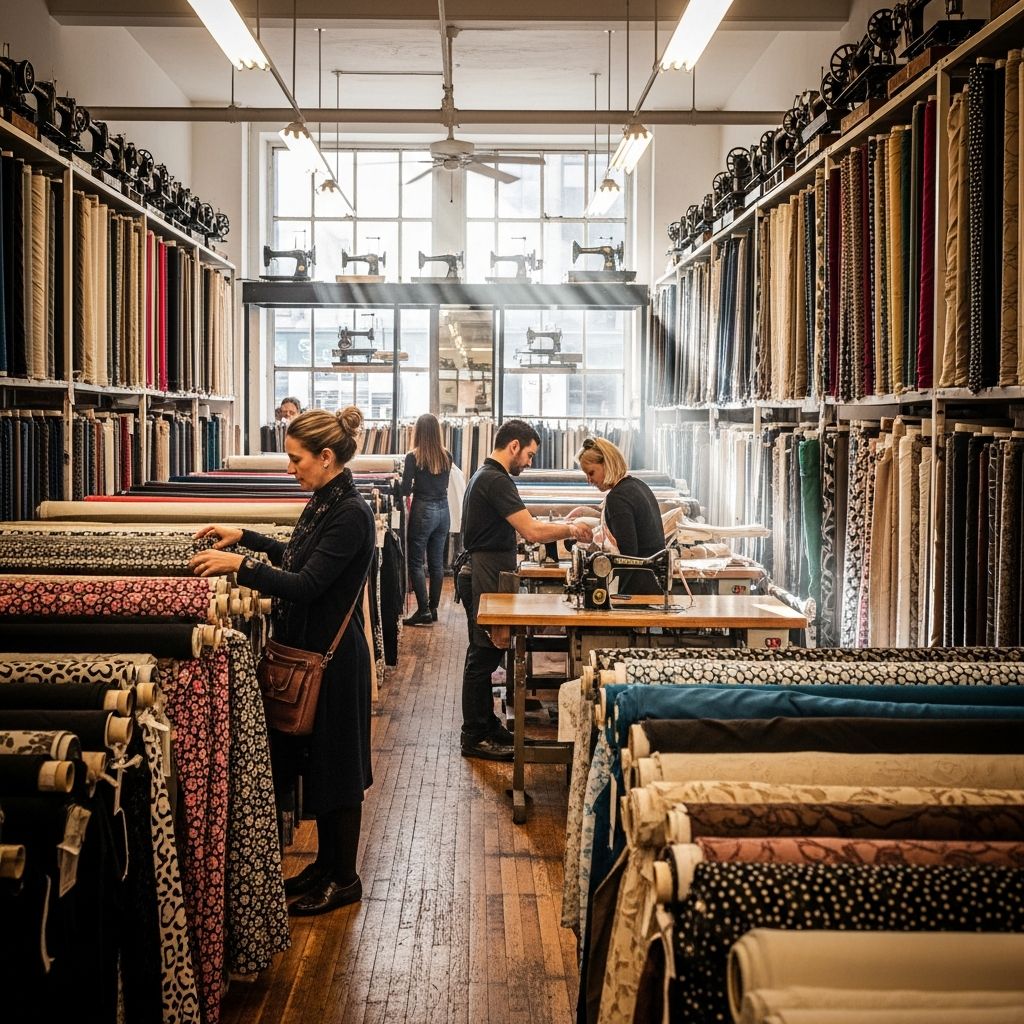
The New York City Garment District is one of the most inspiring places in the world for anyone who loves fashion, sewing, textiles, or design. It is a compact neighborhood where fabric shops, trim merchants, patternmakers, and designers coexist in a dense grid of streets and high-rise buildings. A visit here can be thrilling, overwhelming, and incredibly productive—if you go in with a plan.
This guide offers a structured, practical way to experience the Garment District, whether you are a home sewist planning a once-in-a-lifetime trip, a fashion student scouting materials, or a curious traveler who simply wants to see how clothing really begins. You will find preparation tips, an overview of shop types, sample budgets, etiquette advice, and answers to frequently asked questions, all organized for easy reading and SEO-friendly scanning.
Why the Garment District Matters
The Garment District is not just a cluster of fabric stores; it is a living ecosystem that has fueled New York’s fashion industry for more than a century. Designers source runway fabrics, Broadway costume departments restock sequins and feathers, and independent makers discover unique materials you will never see in chain stores. The neighborhood offers a rare glimpse of the fashion supply chain up close.
For visitors, the appeal lies in both the variety and the density. Within just a few city blocks you can move from luxury imported silks to discount deadstock, from minimalist atelier-style showrooms to chaotic warehouse-style shops with towering piles of bolts. No other retail district delivers this combination of selection, inspiration, and immediacy in such a small area.
Planning Your Garment District Adventure
Because the Garment District packs so many stores into a tight area, unstructured wandering can quickly become exhausting. A loose plan helps you stay focused, protects your budget, and ensures that you leave with materials you will actually use. Think of your visit as a self-guided shopping tour with a theme rather than a random stroll.
Before you go, clarify your priorities. Are you hunting for one special fabric for a wedding outfit, building up a stash of basics, or exploring purely for inspiration? Your answer will influence how many shops you visit, how long you spend in each, and how you manage your energy and spending.
Step-by-step prep checklist
- Define 2–4 specific projects (e.g., blazer, evening dress, jeans, home décor) and note yardage needs.
- Measure yourself and write key measurements on a card or phone note.
- Pack a lightweight tote or rolling bag, a small tape measure, and a notebook or phone app for notes.
- Set a realistic budget range and decide how much you can splurge on a single standout piece.
- Wear comfortable shoes and layers; shops can be dusty, warm, and involve lots of standing.
What to Expect When You Arrive
First-time visitors are often surprised that many fabric shops sit on upper floors of commercial buildings rather than at street level. You may step into a nondescript lobby, ride an elevator, and emerge directly into a room lined with bolts of fabric from floor to ceiling. Street-level storefronts also exist, but part of the charm is discovering hidden spaces above.
Most shops are independently owned, and each has its own personality. Some are sleek and organized with labeled sections, while others feel like treasure caves with narrow aisles and towering stacks. It is normal to feel overwhelmed at first; treat your first couple of stops as reconnaissance rather than high-pressure buying missions.
Types of Shops You’ll Encounter
The Garment District is not one uniform marketplace. Understanding the main types of shops helps you match your expectations to your budget and your style. This diversity is what makes a full or half-day visit so rewarding for both beginners and seasoned sewists.
Below is a high-level overview of the shop categories you are likely to encounter and how they typically differ in price, atmosphere, and target customer.
Common shop categories
| Shop type | Typical price level | Best for | What to expect |
|---|---|---|---|
| Designer fabric boutiques | Medium to very high | Special garments, bridal, couture-inspired looks | Curated selection, labeled fibers, attentive staff, often generous cutting minimums |
| Discount and jobber stores | Low to medium | Stash building, experimentation, muslins, trend fabrics | Huge variety, less consistent labeling, occasional haggling on price |
| Trim and notion shops | Varies by item | Buttons, ribbons, zippers, lace, appliqués, beads | Wall-to-wall embellishments, small minimums, by-the-yard pricing |
| Specialty textile stores | Medium to high | Lace, leather, technical fabrics, couture-level textiles | Focused inventory, knowledgeable staff, specific niche expertise |
| Notion and supply counters | Low to medium | Thread, needles, interfacings, closures, tools | Practical basics, limited décor, quick in-and-out shopping |
Designing Your Own Mini Shopping Tour
Rather than trying to cover every store in the neighborhood, treat your visit as a focused route with a beginning, middle, and end. A three- to five-stop itinerary strikes a good balance between variety and information overload. Group stores by block to minimize backtracking and keep your energy for decision-making rather than logistics.
It helps to assign each stop a purpose. One store might be your “inspiration” shop where you observe trends and feel fabrics. Another could be your “basics” stop to pick up lining, interfacings, or denim. A third might function as your “splurge” stop where you allow yourself one special purchase without guilt.
Sample half-day itinerary structure
- Stop 1: Large, well-known fabric store to get oriented and see a broad range of fabrics.
- Stop 2: Smaller boutique focused on higher-end or niche textiles.
- Lunch break: Café or deli nearby to regroup, check notes, and review photos.
- Stop 3: Trim and notions store for zippers, buttons, lace, or embellishments.
- Stop 4 (optional): Discount or surplus shop for bargain hunting and experiments.
Budgeting for Your Visit
The Garment District can accommodate almost any budget, but it is easy to overspend if you fall in love with every bolt. Taking a strategic approach helps you enjoy the experience without buyer’s remorse. Think of your budget in categories: must-buy, nice-to-have, and impulse tolerance.
Prices vary widely. Everyday cottons and denims can feel comparable to better independent fabric stores, while imported designer silks and wools can reach luxury-level prices. Trim costs also add up faster than expected when you factor in yardage for gowns or elaborate jackets.
Example budget ranges
- Modest budget (around the cost of a casual dinner out): Ideal for one or two small projects, a few yards of cotton, and a handful of interesting buttons or zippers.
- Mid-range budget (roughly a weekend getaway hotel night): Allows for a mix of everyday fabrics, one luxury cut like wool coating or silk, plus several trims and notions.
- Splurge budget (treat-yourself level): Suitable for special-occasion garments, like a tailored coat or evening dress, with coordinating lining and high-end embellishments.
How to Choose Fabrics Wisely
With thousands of bolts competing for attention, decision fatigue is real. Grounding yourself in your current skill level, wardrobe needs, and climate will help you buy fabric you will actually sew and wear. Thinking like a designer—start with the purpose and silhouette, then find the right textile—creates better results than falling for a print alone.
You do not need to know every fiber type, but a few basic questions can guide your choices. Ask how the fabric behaves when washed, whether it requires dry cleaning, and if it needs lining or special needles. Staff often have practical insights from working with local designers who use the same materials.
Fabric selection tips
- Touch everything slowly; feel for drape, weight, and recovery rather than judging only by print.
- Carry your pattern envelope or yardage notes to avoid guessing how much you need.
- Think in outfits: coordinate main fabrics with lining, interfacing, and trims while you are still in the district.
- Take photos of bolt ends or labels to record fiber content and care notes for later.
- Walk away and revisit a fabric after lunch if you feel unsure—if you still think about it, it might be worth the splurge.
Navigating Trim and Notion Stores
Trim shops are often the most visually overwhelming part of the Garment District. Walls of ribbons, cases of buttons, racks of fringe, and trays of beads make these spaces feel like candy stores for clothes. It is tempting to collect embellishments with no plan, but a little restraint goes a long way.
Approach trim stores with specific garments in mind. For a blazer, you might target buttons and sleeve lining; for a gown, you might focus on appliqués, lace edging, and invisible zippers. Staff can help narrow options if you mention color, style, and budget.
Smart trim-shopping strategies
- Carry fabric swatches from earlier purchases to match colors accurately.
- Ask for prices before you fall in love with an elaborate lace or imported ribbon.
- Buy a tiny bit extra when purchasing appliqués or lace motifs in case of cutting mistakes.
- Stock up on timeless basics like neutral zippers, black and white buttons, and quality elastic.
Etiquette, Culture, and Unspoken Rules
Many Garment District shops are working spaces that serve both industry professionals and walk-in shoppers. Being courteous and observant makes the experience smoother for everyone. Simple politeness often leads to better service and more helpful guidance from staff.
In some stores the staff will guide you through the inventory rather than allowing unsupervised cutting or unrolling of bolts. Follow their lead and ask before moving large stacks or unwrapping packaged items. Treat the space as a shared workroom rather than a big-box retail chain.
Good manners to keep in mind
- Greet staff when you enter and say thank you when you leave, even if you did not make a purchase.
- Handle bolts carefully; do not yank fabrics or leave piles unfolded on cutting tables.
- Ask permission before taking photos, especially if other customers or proprietary designs are visible.
- Have your payment ready and avoid spreading personal items across the cutting area.
Solo vs. Guided Experiences
Some visitors prefer self-guided exploration, while others enjoy the structure and insight of a more curated experience. There are professionals and local experts who offer private or small-group shopping tours, focusing on fabrics, trims, or the history of the district. These services are especially appealing if you have limited time or specific goals like sourcing materials for a wedding outfit or capsule wardrobe.
A private guide can tailor store choices to your style, suggest shops you might not discover on your own, help with terminology, and gently keep you on budget. Independent exploration, on the other hand, offers maximum flexibility and the thrill of unplanned discoveries. Both approaches can be rewarding depending on your travel style and confidence level.
Practical Logistics: Transport, Packing, and Shipping
Fabric is heavy and bulky, especially when you buy coating, denim, or multiple yards of drapery-weight textiles. It is wise to think through how you will get your haul back to your hotel or home. Rolling bags, backpacks, or foldable totes quickly prove their value after the third stop of the day.
If you are flying in, consider leaving extra space in your suitcase or packing a compressible duffle bag. Some stores may offer shipping services for large or expensive orders. Compare shipping fees with airline baggage costs to determine the most practical option.
Transport tips
- Bring a compact rolling bag or wheeled backpack if you plan to buy heavy yardage.
- Keep receipts together in one envelope or photo album on your phone for customs or returns.
- Roll fabrics instead of folding them sharply to minimize creasing in transit.
Making Time for Inspiration Beyond Shopping
While fabric and trim shopping may be your main goal, the Garment District offers more than retail. Window displays, street style, and nearby museums or design schools can all feed your creativity. Even a simple walk past industry showrooms reveals color stories, fabric pairings, and silhouettes you can translate into your own sewing projects.
Consider scheduling a brief non-shopping activity partway through your day. A quick café break, a visit to a fashion-related exhibit, or a stroll through a nearby park can reset your senses and help you return to the stores more focused and selective.
Frequently Asked Questions
Is the Garment District suitable for beginners?
Yes. While the volume of choice can be intense, beginners can still have a great experience by limiting the number of stores visited and focusing on simple, familiar fabrics like cottons, stable knits, and straightforward wools. Many staff members are used to answering basic questions if you are honest about your skill level.
How much time should I allow for a first visit?
A focused first visit often works well as a half day, such as three to five hours including a meal break. This allows enough time to explore a few key stores without getting overwhelmed. If you are traveling from far away, you might devote a full day, but plan for downtime between clusters of shops.
Do I need to bring patterns with me?
You do not have to bring physical patterns, but you should at least have yardage estimates and notes about garment style, desired fit, and fabric requirements. A photo of the pattern envelope on your phone can be just as useful as the paper version and takes up less space.
Are bargains really better than online shopping?
Some fabrics in the Garment District can be much cheaper than online equivalents, especially remnants, deadstock, and closeouts. Others, particularly designer or imported textiles, may cost more but offer quality and uniqueness that are hard to find elsewhere. The main advantage in person is the ability to see, touch, and compare fabrics before you buy.
What if I feel shy or intimidated?
It is normal to feel nervous in a new environment, especially one that serves industry professionals. Starting in a larger, more tourist-friendly store can help you get comfortable before trying smaller, more intense shops. Remember that you are a paying customer and your curiosity is welcome when paired with politeness and respect.
Turning Inspiration into Finished Projects
The true success of a Garment District trip is not the size of your haul but how many of those materials become garments or décor you actually use. As soon as you return home or to your hotel, label each fabric with its intended project, care instructions, and yardage. This small step keeps your enthusiasm from dissipating into a vague stash.
In the months after your visit, try to complete at least one project from your purchases before planning your next trip. Each finished garment will remind you of your day in the district and teach you more about how different fabrics behave, making your next shopping adventure even more focused and satisfying.