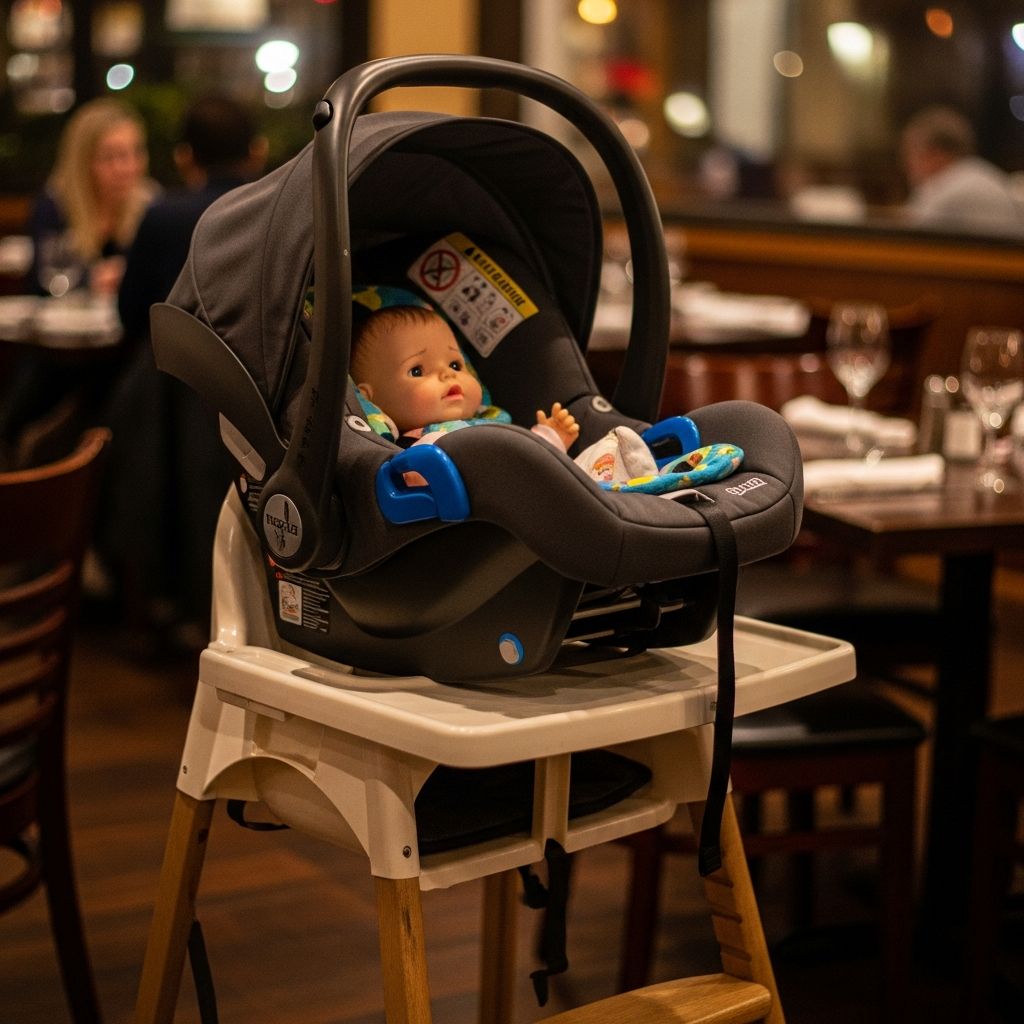
Parents often face challenges when dining out with infants, seeking convenient ways to position car seats at table height. However, balancing a car seat on a restaurant high chair—whether upright or inverted—creates significant safety hazards that can lead to falls, tip-overs, and serious injuries. This practice compromises the structural integrity of both the car seat and high chair, as neither is designed for such use.
The Hidden Dangers of Improvised Car Seat Stands
Infant car seats are engineered specifically for vehicular use, with strict positioning requirements to maintain safe angles for breathing and spinal alignment. When propped on high chairs, these seats can shift unpredictably, elevating the risk of the child sliding out or the entire setup collapsing. High chairs, intended for seated toddlers who can support themselves, lack the stability mechanisms needed to securely hold a dangling car seat.
Common scenarios include flipping high chairs upside down to cradle the car seat handle, a method observed in some restaurants but universally discouraged by safety experts. The narrow leg openings and lightweight construction of many high chairs make them prone to tipping under the added, uneven weight distribution of a car seat plus infant. Even brief moments of instability can result in devastating accidents, as infants cannot self-correct falls from heights equivalent to adult tabletops.
- Tipping Risk: High chairs post-2019 must have smaller leg openings and three-point harnesses per CPSC rules, but these features do not prevent overload from car seats.
- Fall Hazards: Car seats may slip off slick surfaces or unbalanced perches, leading to head-first impacts.
- Strangulation Concerns: Straps or harnesses misused to secure car seats can form loops around a baby’s neck.
- Angle Issues: Improper tilt compresses airways, increasing SIDS-like risks during sleep.
Understanding High Chair Safety Standards
The Consumer Product Safety Commission (CPSC) updated high chair regulations effective June 19, 2019, mandating passive crotch restraints, three-point belts, enhanced stability, and prominent warnings to curb thousands of annual ER visits from high chair incidents. These apply only to newly manufactured or imported models, meaning many restaurants still use older equipment without these protections.
Key requirements include:
| Feature | Purpose | Benefit |
|---|---|---|
| Smaller Leg Openings | Prevents legs from slipping through | Reduces climbing-out falls |
| Passive Crotch Restraint | Automatic bar between legs | Blocks forward slumping |
| Three-Point Harness | Waist and shoulder straps | Secure seating for active toddlers |
| Warning Labels | Clear misuse cautions | Alerts caregivers to hazards |
Despite these advances, high chairs remain unsuitable for car seats, as standards focus on upright use by sitting children, not as carriers.
Safe Age Guidelines for High Chair Use
Babies should only transition to high chairs once they can sit unsupported, typically at 6-8 months. Earlier use risks slouching or toppling, while most outgrow them by 2-3 years, shifting to boosters. Always verify the child’s readiness: firm head and trunk control is essential.
Restaurant Obligations and Realities
No federal law requires restaurants to offer high chairs, boosters, or changing stations, though many provide them as family-friendly perks. When available, inspect for cleanliness, intact straps, and stability before use. Politely request wipes or report damaged units—venues prioritize guest safety to foster loyalty.
Recommended Alternatives for Infant Car Seats
Opt for purpose-built solutions to keep babies secure at restaurants:
- Infant Seat Cradles: Devices like Koala Kare KB966/KB977 convert high chairs into stable platforms, securing car seats perpendicular to a crossbar with straps. Made of durable HDPE, they stack for storage and comply with ASTM F404-21 standards.
- Freestanding Car Seat Stands: Portable holders maintain proper angles without high chair reliance.
- Baby Slings or Wearables: Keep infants close while eating, avoiding seat needs altogether.
- Booster Seats for Older Babies: Post-high chair phase, these lap-level options suit booths safely.
Wooden high chairs (e.g., Modesto or Old Dominion models) offer style in finishes like mahogany or natural, while plastic versions excel in wipe-down ease using polyethylene.
Cleaning and Maintenance Best Practices
Post-meal, high chairs harbor bacteria from hand-eating toddlers. Restaurants should wipe with sanitizers, removing crumbs to prevent mold. Parents: Carry disposable liners or seat guards for extra protection.
Expert Tips for Dining Out with Infants
- Call ahead to confirm accommodations.
- Choose family-oriented spots with verified safe seating.
- Use travel high chairs or clip-ons for unreliability.
- Supervise constantly—never leave baby unattended.
- Select tables away from traffic for stability.
Frequently Asked Questions
Is it legal for restaurants to lack high chairs?
Yes, no laws mandate them; it’s a courtesy service.
At what age can babies safely use restaurant high chairs?
Around 6-8 months, when sitting independently.
Are all high chairs required to meet new CPSC standards?
Only those made after June 19, 2019; older ones may not comply.
What’s the best way to secure a car seat at a restaurant table?
Use dedicated cradles like Koala Kare models, not high chairs.
How do I know if a high chair is safe?
Check for harnesses, restraints, stability on level floors, and no damage.
Choosing the Right Restaurant Seating Options
Venues balance space, style, and safety. Wooden units stack neatly for upscale vibes; plastic withstands heavy sanitizing. Brands like Koala Kare, Rubbermaid, and Winco offer compliant, versatile products.
For booths, dual-height boosters with straps prevent slips. Infant kradles accommodate car seats properly, facing away from the bar for security.
Long-Term Safety Evolution in Child Seating
Post-2019 CPSC reforms slashed injury rates by addressing common failure points. Ongoing ASTM and EN standards ensure global alignment, pushing restaurants toward upgrades despite no replacement mandates.
Parents play a pivotal role: advocate for safe practices, report hazards, and model correct usage. Informed choices turn family outings from stressful to enjoyable.
References
- Restaurant High Chairs: Everything You Need To Know — Central Restaurant Products. 2021. https://www.centralrestaurant.com/blog/restaurant-high-chairs/
- When Can Babies Sit in High Chairs in Restaurant? — Superior Seating. Recent (post-2019 standards). https://www.superiorseating.com/blog/when-can-babies-sit-in-high-chairs-in-restaurant
- KB966/KB977 KidSitter – Koala Kare — Koala Kare. Recent (ASTM F404-21 compliant). https://www.koalabear.com/product-catalog/kb966-kb977/
- Restaurant High Chairs & Booster Seats — Equippers. Recent. https://www.equippers.com/restaurant-furniture/youth-and-infant-furniture