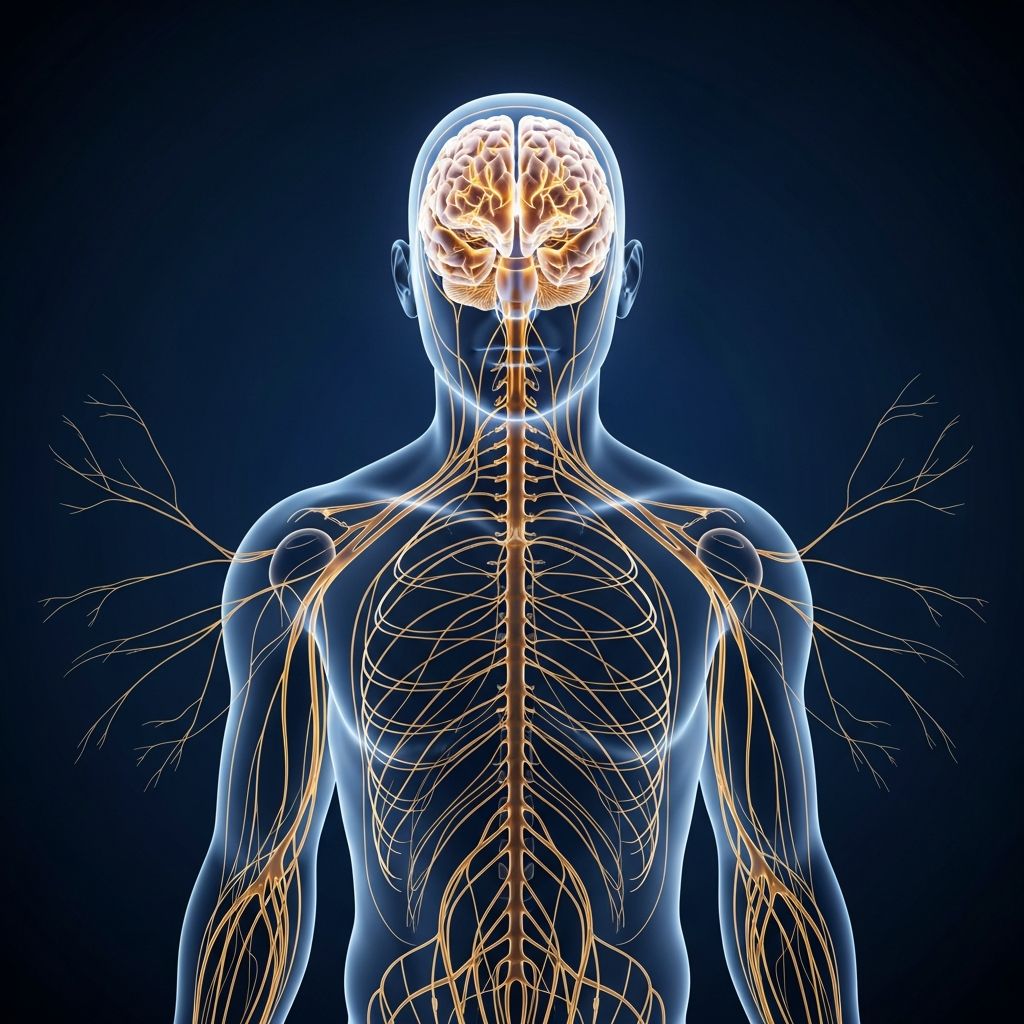
Your body has a built-in communication network that never takes a break. This network is called the nervous system, and it helps you think, move, feel, and react every second, even while you sleep. It sends, receives, and interprets messages so quickly that you can catch a falling ball, pull your hand away from something hot, or laugh at a joke in almost no time.
In this guide, you will explore how your brain, spinal cord, nerves, and senses work together like a high-speed information highway. You will see why this system is so important, how it keeps you safe, and what you can do to keep it healthy.
Meet the Nervous System: The Body’s Message Network
The nervous system is like the control center and wiring of your entire body. It is made up of special cells called neurons, which send and receive electrical and chemical signals. These signals carry information about everything you do and feel.
Scientists usually divide the nervous system into two main parts:
- Central nervous system (CNS) – your brain and spinal cord
- Peripheral nervous system (PNS) – all the nerves that branch out from your brain and spinal cord to the rest of your body
These two parts constantly send messages back and forth, making sure your body works smoothly and reacts quickly when needed.
The Central Nervous System: Control Headquarters
The central nervous system sits at the center of everything you feel and do. It is protected by bone (your skull and spine) and by special coverings and fluid that cushion it.
The Brain: Your Thinking and Feeling Organ
Your brain is the boss of the nervous system. It weighs only about as much as a small book, but it uses a lot of your body’s energy to keep you alive and alert. Different parts of your brain have different jobs:
- Cerebrum – the largest part; helps you think, remember, speak, read, and make decisions.
- Cerebellum – helps you keep your balance and coordinate movements so you can walk, jump, and catch.
- Brainstem – controls automatic actions you do not have to think about, like breathing, heart rate, and swallowing.
Billions of neurons in the brain talk to each other using electrical signals and chemicals called neurotransmitters. Together, they create your thoughts, feelings, memories, and movements.
The Spinal Cord: Main Information Highway
The spinal cord is a long bundle of nerve tissue that runs inside your backbone (spine). It connects your brain to most of the nerves in your body. The spinal cord has two big jobs:
- Carry messages down from the brain to muscles and organs.
- Carry messages up from the body back to the brain.
The spinal cord also controls very fast reactions called reflexes. When you touch something very hot and pull your hand away before you even think about it, your spinal cord made that quick decision to protect you.
The Peripheral Nervous System: Nerves All Over
The peripheral nervous system includes all the nerves that spread out from your brain and spinal cord to the rest of your body. These nerves reach your skin, muscles, organs, and even the tips of your fingers and toes.
The PNS can be divided into two main groups of nerves:
- Somatic nerves – help you control movements you choose to make, like waving, running, or writing.
- Autonomic nerves – control automatic actions you don’t have to think about, like breathing, sweating, digestion, and heartbeat.
| Type of Nerves | What They Control | Examples |
|---|---|---|
| Somatic | Voluntary (chosen) movements | Jumping, drawing, typing, kicking a ball |
| Autonomic | Involuntary (automatic) actions | Heart rate, breathing, sweating, digestion |
Neurons: Tiny Messengers With Big Jobs
The working units of the nervous system are neurons, or nerve cells. Each neuron is specially shaped to send and receive information quickly.
A typical neuron has three basic parts:
- Dendrites – branch-like parts that receive messages from other cells.
- Cell body – the center that keeps the neuron alive and processes information.
- Axon – a long fiber that carries messages away to other neurons, muscles, or glands.
Many axons are covered with a fatty coating called myelin. Myelin works like insulation on a wire, helping signals move faster and more efficiently.
How Messages Travel: From Stimulus to Response
Every time your nervous system reacts to something, it follows a basic pattern: something happens, your body senses it, the message travels, and then you respond. This is often called a stimulus–response pathway.
Steps in a Typical Nerve Signal Journey
- Stimulus – Something changes around or inside you (for example, a loud sound, bright light, or hot stove).
- Receptor – Special cells in your sense organs (eyes, ears, skin, etc.) notice the change.
- Signal sent – Sensory neurons carry an electrical signal through nerves to the spinal cord and brain.
- Brain interprets – The brain figures out what the signal means and decides what to do.
- Response sent – Motor neurons carry a new signal from the brain or spinal cord to muscles or glands.
- Action – Muscles move or glands release something (like sweat) to respond.
This all happens so quickly that you often respond in less than a second.
Your Five Main Senses: Windows to the World
Your senses are how the nervous system gathers information about your surroundings. Most people are familiar with the five major senses: sight, hearing, smell, taste, and touch. Each sense has special organs and receptors that turn the outside world into nerve signals for the brain.
Sight: Seeing With Your Eyes
Light enters your eye through the front and is focused onto the back of the eye, called the retina. The retina has light-sensitive cells that change light into electrical signals. These signals travel along the optic nerve to the brain, which builds the picture you see.
- Your eyes help you read, play sports, and move around safely.
- Both eyes send slightly different views, which helps your brain judge depth and distance.
Hearing: Listening With Your Ears
Sound is made of vibrations in the air. Your outer ear collects these vibrations and sends them down a tube to your eardrum. Tiny bones and fluid inside the ear pass the vibrations to special cells, which turn them into nerve signals. These signals travel through the auditory nerve to the brain.
- Hearing helps you enjoy music, talk with friends, and notice danger, like a car horn.
- Your ears also help with balance thanks to fluid-filled structures inside them.
Smell: Detecting Scents With Your Nose
When you sniff the air, tiny odor particles enter your nose and land on a special patch of cells high inside your nasal cavity. These cells send signals about different smells along the olfactory nerve to your brain.
- Smell helps you enjoy food, notice smoke, or avoid spoiled items.
- Smell and taste work closely together to create the flavors you notice.
Taste: Sensing Flavors With Your Tongue
Your tongue is covered with tiny bumps called taste buds. Taste buds have receptor cells that react to chemicals in food and drinks. They send signals through nerves to the brain, which recognizes different basic tastes such as sweet, salty, sour, bitter, and umami (savory).
- Taste helps you enjoy meals and avoid dangerous or spoiled foods.
- Many flavors you notice are a mix of taste and smell together.
Touch: Feeling With Your Skin
Your skin has many different kinds of receptors that sense pressure, temperature, pain, and more. When you touch something, these receptors send signals along nerves through the spinal cord to your brain.
- Touch helps you know if something is sharp, smooth, rough, hot, or cold.
- Pain signals warn you when something might harm your body, so you can move away.
Reflexes: Super-Fast Safety Responses
A reflex is a quick, automatic action your body does without you thinking about it. Reflexes are usually designed to protect you from harm.
Some common reflex examples include:
- Blinking when something gets close to your eyes.
- Coughing when something irritates your throat.
- Pulling your hand away quickly from something very hot or sharp.
In many reflexes, the signal travels to the spinal cord and back out to the muscles without waiting for the brain to decide. This makes the response much faster and can prevent injury.
Keeping Your Nervous System Healthy
Your nervous system is powerful, but it also needs care. Healthy everyday habits can help your brain and nerves work their best now and as you grow.
Healthy Habits for a Strong Brain and Nerves
- Get enough sleep – Sleep helps your brain organize memories, repair itself, and get ready for a new day.
- Eat nutritious foods – Fruits, vegetables, whole grains, healthy fats, and protein provide the fuel and building blocks your brain cells need.
- Be active – Regular physical activity improves blood flow to the brain and can help with mood, learning, and attention.
- Protect your head – Wear a helmet when biking, skating, or doing sports where you might fall or get hit.
- Avoid harmful substances – Smoking, alcohol, and some drugs can damage the brain and nerves, especially while you are still growing.
When to Ask an Adult or Doctor
Sometimes the nervous system can have problems, just like any other part of the body. You should tell an adult and see a doctor if you:
- Have frequent or very strong headaches.
- Feel dizzy or lose balance often.
- Have trouble seeing or hearing clearly.
- Feel tingling, numbness, or weakness that will not go away.
- Hit your head hard and feel confused, very sleepy, or sick to your stomach.
Health professionals who specialize in the nervous system are called neurologists. They can examine the brain, spinal cord, and nerves and suggest treatments when needed.
Quick Nervous System Facts
- Your brain contains billions of neurons and many more support cells.
- Nerve signals can travel very fast, sometimes more than 100 kilometers per hour.
- Your brain uses a large share of your body’s energy, especially glucose (a type of sugar).
- Even when you are sleeping, your nervous system is busy controlling breathing, heart rate, and more.
Frequently Asked Questions (FAQs)
Q1: Why is the nervous system so important?
The nervous system is important because it controls nearly everything your body does. It lets you think, move, feel, remember, and react to the world around you. Without it, your organs would not work together and you could not sense or respond to danger.
Q2: Can the brain heal if it gets hurt?
The brain can sometimes adapt and repair itself, especially in children, but it cannot always fully heal from serious injuries. That is why protecting your head with helmets and seat belts is so important. Some problems can improve with time, medicine, or therapy, but preventing injury is always better.
Q3: Are all nerve signals equally fast?
No. Some nerve fibers are covered with myelin, which helps signals move quickly. Others are thinner or not myelinated and carry slower signals. For example, sharp pain travels faster than dull, aching pain because it usually uses faster nerve pathways.
Q4: Why do I need sleep for a healthy brain?
During sleep, your brain sorts memories, clears away waste products, and resets for the next day. Getting the right amount of good-quality sleep helps you pay attention in school, remember new information, and stay in a better mood.
Q5: Is it true that we only use 10% of our brain?
No. Scientists have shown through brain imaging that almost all parts of the brain have a function and are active at different times. You use your whole brain over the course of a day, not just a small part.
References
- Brain Facts for Kids — National Institute of Neurological Disorders and Stroke (NINDS), U.S. National Institutes of Health. 2023-08-10. https://www.ninds.nih.gov/health-education/kids/brain-basics-and-beyond
- Nervous System — Nemours KidsHealth. 2022-05-15. https://kidshealth.org/en/kids/brain.html
- How the Body Works: The Nervous System — Nationwide Children’s Hospital. 2022-04-01. https://www.nationwidechildrens.org/conditions/health-library/nervous-system-anatomy-and-function
- Brain Basics: Know Your Brain — National Institute of Neurological Disorders and Stroke (NINDS), U.S. National Institutes of Health. 2021-12-20. https://www.ninds.nih.gov/health-information/public-education/brain-basics/know-your-brain
- How Our Senses Work — National Institute of General Medical Sciences (NIGMS), U.S. National Institutes of Health. 2023-02-17. https://science.education.nih.gov/how-our-senses-work
- Senses and Your Nervous System — University of Rochester Medical Center. 2022-09-05. https://www.urmc.rochester.edu/encyclopedia/content.aspx?ContentTypeID=90&ContentID=P02532