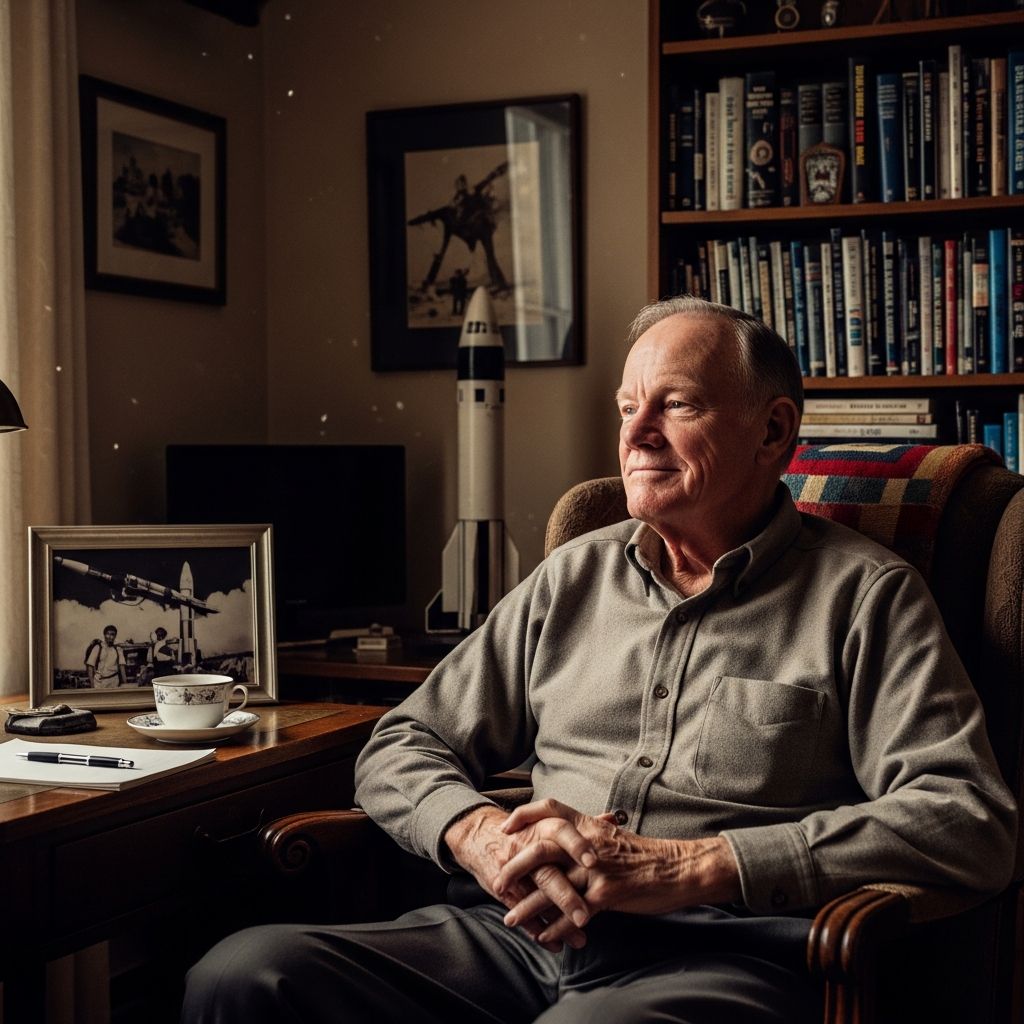
Neil Armstrong’s name is forever tied to one moment: stepping onto the Moon on July 20, 1969, and uttering the famous line, “That’s one small step for [a] man, one giant leap for mankind.” But what happened in the decades that followed, once the parades, medals, and global fame began to fade? Far from chasing celebrity, Armstrong chose a life of quiet service, teaching, and thoughtful advocacy, becoming a symbol not just of spaceflight, but of humility and integrity.
From Global Hero to Reluctant Celebrity
After Apollo 11 splashed down in the Pacific, Armstrong, Buzz Aldrin, and Michael Collins entered a three-week quarantine before being released to a world eager to celebrate them. They were feted with ticker-tape parades in New York and Chicago, honored by presidents and royalty, and sent on a 38-day, 20-nation goodwill tour that took them from Mexico to the Soviet Union, Japan, and Western Europe. During this whirlwind, Armstrong received the Presidential Medal of Freedom and countless other awards, cementing his status as a national and global icon.
Yet Armstrong never embraced the spotlight. He disliked being called “the first man on the Moon” and often redirected praise to the thousands of engineers, technicians, and fellow astronauts who made Apollo possible. He gave few interviews, avoided talk shows, and rarely discussed his personal feelings about the landing in public, preferring to let the mission itself speak for him. This deliberate distance from fame became a defining trait of his post-Apollo life, setting him apart from more media-savvy astronauts.
Leaving NASA and Choosing the Classroom
Shortly after Apollo 11, Armstrong made it clear he did not intend to fly in space again. In 1970, he briefly served as Deputy Associate Administrator for Aeronautics at NASA’s Office of Advanced Research and Technology, but he resigned from that role and from NASA entirely in 1971. Rather than moving into politics or a high-profile corporate job, he chose a quieter path: academia.
Armstrong accepted a position as a professor of aerospace engineering at the University of Cincinnati, where he taught from 1971 to 1979. He selected Cincinnati over other offers, including from his alma mater Purdue, because he believed a smaller aerospace department would allow him to contribute more meaningfully without overshadowing his colleagues. In the classroom, he was known for being demanding but fair, emphasizing fundamentals, safety, and the importance of engineering rigor over heroics.
Life as a Professor and Engineer
At the University of Cincinnati, Armstrong taught courses in flight dynamics, propulsion, and spacecraft design, drawing on his deep experience as a test pilot and astronaut. Students and colleagues described him as reserved but deeply engaged, often staying after class to answer questions and challenge students to think critically about real-world aerospace problems. He avoided using his fame as a teaching tool, instead focusing on the technical and human factors that underpinned successful flight.
His time in academia also reflected his belief that space exploration should be grounded in sound engineering and careful planning, not just bold visions. He encouraged students to pursue careers in aeronautics and astronautics, but always with an emphasis on responsibility, precision, and lifelong learning. This period helped shape a generation of engineers who carried forward the Apollo-era values of discipline and innovation.
Corporate Boards and Aerospace Advocacy
After leaving the university, Armstrong transitioned into the corporate world, serving on the boards of several major aerospace and technology companies. He joined the board of directors at Cincinnati-based aerospace firm AIL Systems (later part of L-3 Communications), where he provided technical guidance on avionics and flight systems. He also served on the board of Thiokol, the company that built the Space Shuttle’s solid rocket boosters, and later on the board of the computer company Computing Devices International.
In these roles, he was known for asking tough, practical questions and insisting on safety and reliability, especially after the Challenger disaster in 1986. He later joined the Rogers Commission that investigated the accident, where his calm, analytical approach helped uncover critical flaws in decision-making and engineering culture at NASA. His corporate work allowed him to influence aerospace policy and technology from behind the scenes, far from the glare of public attention.
Family, Privacy, and Personal Loss
Armstrong’s public reserve was mirrored in his private life. He married Janet Shearon in 1956, and they had three children: Eric, Karen, and Mark. The family endured a profound tragedy in 1962 when their daughter Karen died at age two from complications of a brain tumor, an event that deeply affected Armstrong and contributed to his guarded nature.
He and Janet divorced in 1994, and he later married Carol Knight, with whom he lived in Indian Hill, Ohio. Throughout his life, Armstrong fiercely protected his family’s privacy, rarely speaking about his children or personal struggles in interviews. This commitment to privacy extended to his health; he underwent heart bypass surgery in August 2012 but kept details private until his death later that month.
Later Years and Final Public Stands
Even in retirement, Armstrong remained engaged with the future of space exploration. In 2010, he stepped back into the public eye to testify before Congress about changes to the U.S. space program under President Barack Obama. He expressed strong concerns about the cancellation of the Constellation program, which aimed to return astronauts to the Moon, and warned that relying too heavily on commercial companies without a clear government-led vision could weaken America’s leadership in space.
These remarks were among his last major public statements, reflecting a lifelong belief that human spaceflight required long-term commitment, robust engineering, and national purpose. He continued to support aerospace education and occasionally appeared at events honoring Apollo, but always on his own terms, avoiding self-promotion.
Legacy Beyond the Moonwalk
Neil Armstrong died on August 25, 2012, at the age of 82, from complications following heart surgery. His family’s statement asked that people honor his example of service, accomplishment, and modesty, and that they remember him by looking up at the Moon and “giving him a wink.” That simple request captured the essence of his character: a man who achieved the extraordinary but never let it define him.
His legacy extends far beyond that single step on the lunar surface. As a teacher, he shaped future engineers; as a board member and investigator, he helped make spaceflight safer; and as a private citizen, he modeled how to live with fame without being consumed by it. In an age that often celebrates self-promotion, Armstrong’s quiet integrity remains a powerful counterpoint.
Key Facts: Neil Armstrong’s Life After Apollo 11
| Period | Role / Activity | Key Details |
|---|---|---|
| 1969–1971 | Post-Apollo tours and honors | Global goodwill tour, Presidential Medal of Freedom, brief NASA management role |
| 1971–1979 | Professor of Aerospace Engineering | University of Cincinnati; taught flight dynamics, propulsion, spacecraft design |
| 1980s–2000s | Corporate board member | AIL Systems, Thiokol, Computing Devices International; focused on safety and engineering |
| 1986 | Challenger accident investigator | Served on Rogers Commission; emphasized technical and organizational failures |
| 2010 | Space policy advocate | Testified before Congress against cancellation of Constellation Moon program |
| 2012 | Death and legacy | Died August 25, 2012, at age 82; family asked public to honor his modesty and service |
Frequently Asked Questions
- What did Neil Armstrong do after Apollo 11?
After Apollo 11, Armstrong left NASA in 1971 and became a professor of aerospace engineering at the University of Cincinnati, later serving on corporate boards and advocating for space exploration policy. - Did Neil Armstrong fly in space again after Apollo 11?
No, Armstrong did not fly in space again after Apollo 11; he stated he did not plan to make another spaceflight and focused instead on teaching and engineering roles. - Why was Neil Armstrong so private?
Armstrong valued privacy and humility, often redirecting attention from himself to the team behind Apollo; he also experienced personal loss and preferred to keep his family life out of the public eye. - What was Neil Armstrong’s role after the Challenger disaster?
He served on the Rogers Commission that investigated the 1986 Challenger accident, where he helped analyze technical and organizational failures in the Shuttle program. - How did Neil Armstrong die?
Neil Armstrong died on August 25, 2012, at age 82, from complications following heart bypass surgery.