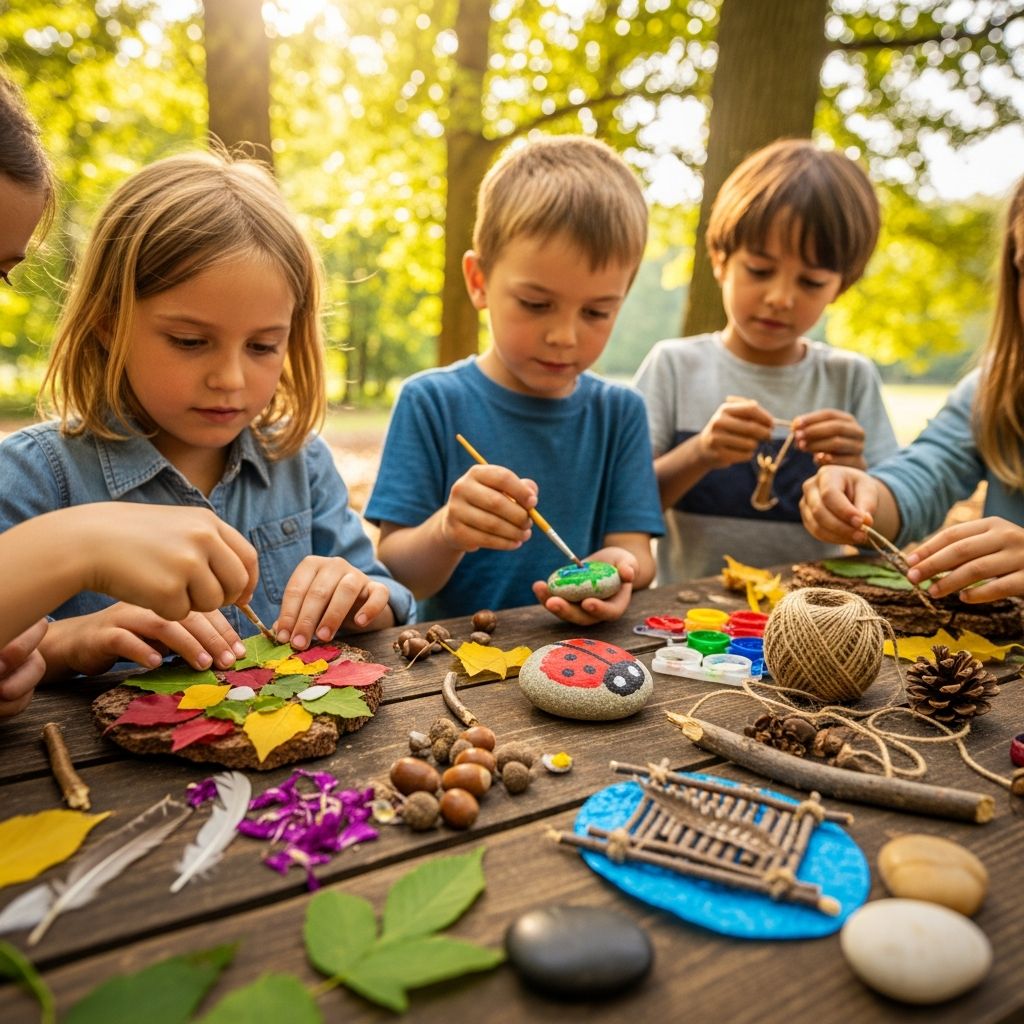
Bringing children outdoors for art projects transforms everyday nature walks into treasure hunts of inspiration. These activities encourage exploration, fine motor development, and imaginative thinking while deepening appreciation for the environment. Using items like leaves, twigs, rocks, and petals, kids create lasting memories and artwork without needing fancy supplies.
Benefits of Nature-Based Art for Young Minds
Engaging in outdoor crafts offers more than fun; it supports holistic child development. Research from the American Academy of Pediatrics highlights how nature play enhances motor skills, reduces stress, and improves focus in children. Collecting materials hones observation skills, while assembling projects builds problem-solving abilities.
- Physical Growth: Gathering items involves bending, reaching, and carrying, strengthening gross and fine motor control.
- Cognitive Boost: Sorting natural objects by color, size, or texture teaches categorization and patterning.
- Emotional Well-being: Creative expression in serene outdoor settings promotes mindfulness and joy.
- Environmental Awareness: Hands-on interaction fosters respect for ecosystems and sustainability.
Parents report children who participate in such activities show increased curiosity and persistence, turning playtime into valuable learning opportunities.
Simple Gathering Techniques for Art Supplies
Start every project with a purposeful nature scavenger hunt. Equip kids with small baskets or bags to collect safe, abundant items like fallen leaves, smooth pebbles, pinecones, feathers, and bark pieces. Teach guidelines: only take what has naturally fallen, avoid live plants or animal homes, and leave plenty behind to preserve habitats.
| Season | Best Items to Collect | Art Ideas |
|---|---|---|
| Spring | Flower petals, budding twigs, moss | Petals portraits, twig frames |
| Summer | Grasses, shells, wildflowers | Grass weaving, shell mosaics |
| Fall | Colorful leaves, acorns, seed pods | Leaf suncatchers, acorn animals |
| Winter | Pinecones, bark, evergreen sprigs | Bark rubbings, cone ornaments |
This seasonal approach keeps projects fresh and ties art to the changing world around them.
Leaf and Petal Impressions: Capturing Nature’s Patterns
One of the easiest entry points is creating impressions from leaves and petals. Lay a collected leaf under thin paper and gently rub with the side of a crayon to reveal intricate veins and textures. For variety, dip petals in watercolor and press onto fabric or paper for vibrant prints.
Extend this by making suncatchers: arrange transparent tape over petals and leaves, then seal with another layer. Hang in a window to dance with sunlight. These ephemeral pieces teach about transience in nature while producing stunning visuals. Kids as young as 3 can participate with guidance.
Twig and Branch Constructions: Building Mini Worlds
Twigs offer endless possibilities for structural play. Bundle straight branches with twine to form teepees or frames, then add leaves for roofs. For sculptures, balance sticks into abstract towers or spell out names on the ground.
Advance to fairy dwellings: use moss as bedding, pebbles as doorsteps, and acorn caps as furniture. This imaginative play sparks storytelling, as children invent habitats for woodland creatures. No glue needed—gravity and careful placement hold it all together.
Rock Artistry: From Painting to Mosaics
Smooth river rocks are perfect canvases. Wash them clean, then let kids paint patterns, animals, or mandalas with acrylics or markers. Seal with clear varnish for durability. For mosaics, arrange smaller pebbles into hearts, turtles, or tic-tac-toe boards on a flat base like cardboard, securing with natural mud or glue.
These portable artworks double as garden decorations or games, encouraging repeated outdoor visits to expand collections.
Clay and Dough Creations with Natural Embeds
Air-dry clay or homemade playdough pairs beautifully with nature finds. Press leaves, feathers, or shells into the surface for textured pendants or ornaments. Roll seeds into balls for mini planets or embed pinecones halfway for hybrid sculptures.
Bake polymer clay versions for permanence, or sun-dry natural dough for eco-friendliness. String with twine for mobiles that twirl in the breeze, combining motion and memory.
Nature Weavings and Mandalas: Patterns in the Wild
Forked twigs make natural looms. Stretch grass or yarn between prongs and weave in flowers, feathers, or thin bark strips. Larger mandalas on the ground use concentric circles of petals, stones, and cones to meditate on symmetry.
These temporary installations teach design principles and impermanence, as wind or rain reshapes them overnight.
Seasonal Showcases and Dioramas
Assemble dioramas in shoeboxes: paint backgrounds blue for skies or ponds, then populate with painted pinecones as trees, leaves as foliage, and sticks as paths. Display on shelves or walls, rotating with seasons to celebrate change.
Science-Infused Nature Art: Color Experiments
Turn crafts educational with color-changing flowers: place white blooms in colored water to watch petals transform via capillary action. Or create sun prints by arranging objects on light-sensitive paper, exposing to sunlight for cyanotype effects.
Frequently Asked Questions (FAQs)
What age group are these nature crafts suitable for?
Most projects adapt for ages 3-12. Toddlers focus on collecting and simple rubbings, while older kids tackle complex weaves and dioramas.
Do I need special supplies besides nature items?
Minimal: paper, crayons, tape, string, and optional clay or washable paints. Emphasize household basics to keep it accessible.
How can I ensure safety during outdoor collecting?
Supervise closely, teach to avoid insects/plants, use gloves for unknown items, and stick to paths away from traffic.
Are these crafts eco-friendly?
Yes, by using only fallen materials and creating temporary art, they promote ‘leave no trace’ principles.
What if it rains during our art session?
Shift indoors: use collected items for collages or rubbings on covered porches. Rain adds texture to some prints!
Extending the Fun: Group and Community Ideas
Host neighborhood nature art fairs where kids display works and swap materials. Partner with schools for phenology journals tracking seasonal changes through drawings. These communal efforts build social skills alongside creativity.
Incorporate cultural ties, like Native American-inspired symbols using natural dyes, to broaden perspectives.
References
- 22 Nature Art Ideas for Kids — The Artful Parent. 2023-05-15. https://artfulparent.com/nature-art-for-kids/
- 10 Nature-inspired art projects for kids — Wild Earth Lab. 2023-08-09. https://wildearthlab.com/2023/08/09/nature-art-activities/
- Nature Art: Outdoor Inspiration to Boost Your Child’s Development — American Academy of Pediatrics. 2024-01-12. https://www.healthychildren.org/English/family-life/power-of-play/Pages/nature-art-outdoor-inspiration-to-boost-your-childs-development.aspx
- 22 Crafts for Nature-Loving Kids — The Everymom. 2023-06-20. https://theeverymom.com/crafts-for-nature-loving-kids/
- Easy Nature Crafts for Kids — Red Ted Art. 2023-09-10. https://www.redtedart.com/easy-nature-crafts-kids/