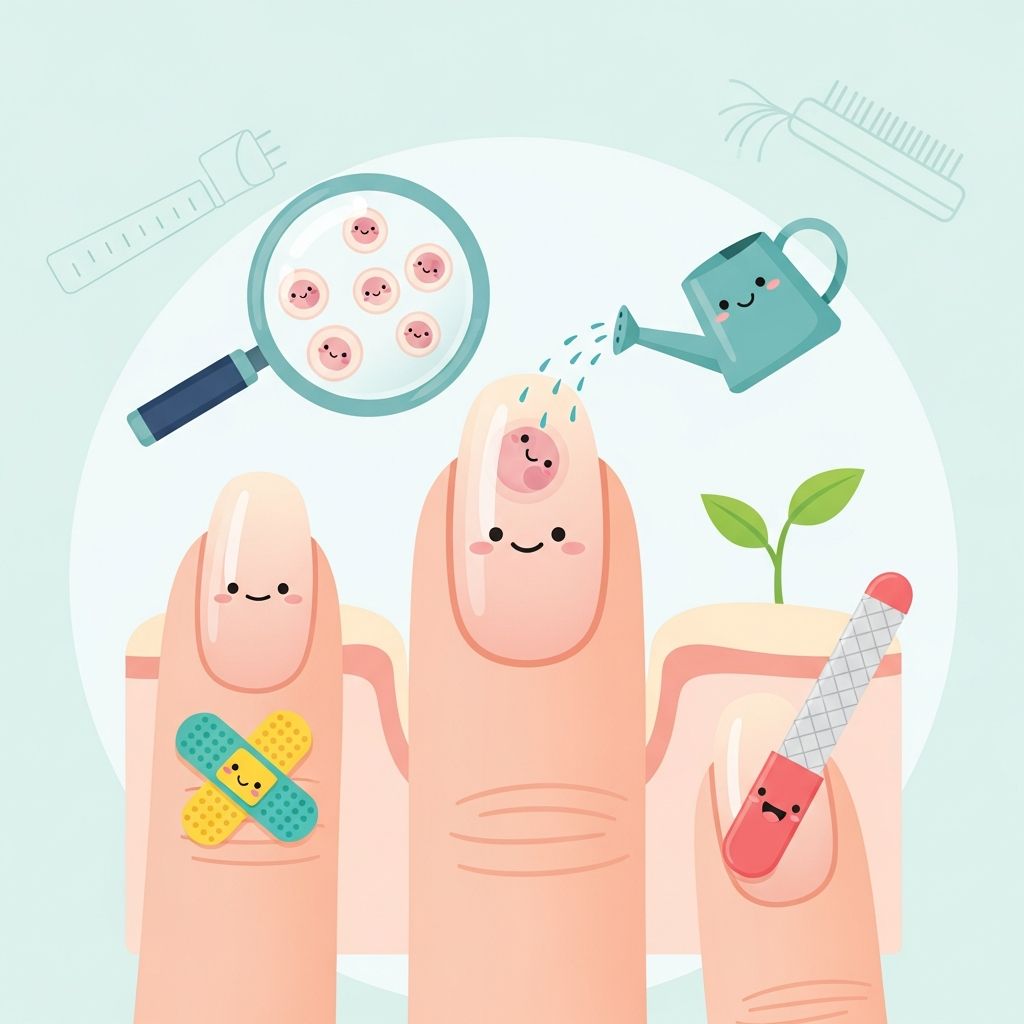
Nails might look small and simple, but they are busy all day long helping you play, write, draw, and protect the tips of your fingers and toes. This guide explains what nails are made of, how they grow, why they matter, and how to keep them strong, clean, and healthy.
What Exactly Is a Nail?
When you look at your fingernails or toenails, you see a smooth, hard surface that feels very different from the soft skin around it. That hard part is made from many flat layers of special cells packed with a tough protein called keratin. Keratin is the same substance that helps make your hair and the outer layer of your skin strong and protective.
Even though nails feel hard, they are actually made of dead cells that once grew from a living area under the skin. That means the part you can clip does not hurt when it is trimmed because it no longer contains nerves or blood vessels. The living parts that make your nails grow sit safely underneath and behind what you can see.
Meet the Different Parts of a Nail
Each nail is like a tiny team of parts working together, even if it just looks like one solid piece. Understanding the main areas of a nail helps you see why gentle care matters.
- Nail plate: The hard, flat part you see and trim. It covers and protects the tip of your finger or toe.
- Nail bed: The soft pink skin directly under the plate that helps support and nourish the nail from below.
- Nail root: The hidden area at the base where new nail cells are made and pushed forward to form the plate.
- Lunula: The pale, half-moon shape that may show near the base of some nails, where new nail material is becoming visible.
- Cuticle: The thin border of skin that lies along the bottom edge of the nail plate, guarding the root from germs and dirt.
- Nail folds: The skin that surrounds the sides and base of the nail, helping hold it steady in place.
All of these parts together keep your nails attached firmly, help them grow in the right direction, and protect the delicate skin at your fingertips and toes.
How Nails Grow, Layer by Layer
Nails grow from the root, a hidden region under the skin at the base of each nail. New cells form there, fill with keratin, and slowly flatten into thin plates. As new cells appear, they push the older ones forward and outward, which is why the free edge of your nail becomes longer over time.
Fingernails usually grow faster than toenails, which is why they need to be trimmed more often. Growth speed can vary from one person to another and may change with age, health, and even the seasons. When a nail is injured but the root stays safe, a new nail can slowly replace the damaged one as fresh cells move forward.
Fingernails and Toenails: Same Material, Different Jobs
Fingernails and toenails are made of the same basic material, but they face very different challenges during the day. Fingers help you pick up small objects, type, draw, and play instruments, so fingernails give your fingertips extra support and protection. They also make it easier to scratch an itch, peel stickers, and open small packages.
Toenails act more like shields for your toes, which spend a lot of time inside shoes or bumping against things while you walk, run, or play sports. Shoes, socks, and tight spaces can make toenails more likely to rub, press, or get hurt, so caring for them is especially important to avoid discomfort and infection.
Quick Comparison: Fingernails vs. Toenails
| Feature | Fingernails | Toenails |
|---|---|---|
| Main job | Help with grabbing, scratching, writing, and detailed hand movements. | Protect toes from bumps, pressure, and friction inside shoes. |
| Growth speed | Generally faster; need trimming more often. | Generally slower; need trimming less often. |
| Common problems | Biting, picking, splitting, and hangnails from rough handling. | Ingrown edges, rubbing from tight shoes, and pressure injuries. |
| Care focus | Regular trimming, gentle cleaning, and avoiding nibbling. | Proper trimming, roomy shoes, and clean, dry socks. |
Why Nails Are Helpful, Not Just Decorative
Nails do more than look shiny when painted. They act like armor for the tips of your fingers and toes, helping block injuries to the sensitive skin underneath. Because the area under each nail is full of nerves, the firm backing of the nail makes your sense of touch more precise.
Nails also give clues about what is going on inside your body. Changes in color, shape, or strength can sometimes signal that something is not right, such as an infection, repeated injury, or a health condition that needs attention from an adult and a healthcare professional.
Everyday Nail Care Steps for Kids
Good nail care is part of staying clean and healthy, just like brushing your teeth or washing your hands. You do not need fancy products or long routines; simple habits done regularly can keep your nails neat, comfortable, and less likely to get infected.
How to Trim Nails Safely
Trimming nails the right way helps prevent painful snags, scratches, and ingrown edges. Young kids should always ask an adult for help with nail clippers or scissors.
- Use clean, sharp nail clippers or special nail scissors meant for fingers and toes.
- Trim fingernails so that the edge is smooth and slightly curved, without cutting too close to the skin.
- Trim toenails in a straighter line across the top, which helps keep the corners from digging into the skin.
- File any rough spots gently with an emery board so nails do not catch on clothing or blankets.
- Ask an adult to trim your nails regularly so they do not grow too long and sharp.
Keeping Nails Clean and Comfortable
Because you use your hands for almost everything, dirt and germs can easily collect around and under your nails. A few seconds of extra cleaning when you wash your hands can make a big difference.
- Wash your hands with soap and water, gently scrubbing around the nails and under the tips.
- Use a soft nail brush if your parent or caregiver says it is okay, especially after messy play.
- Dry hands and feet well, including between the toes, to keep the skin around the nails from staying damp for too long.
- Use a small amount of gentle lotion on hands and feet if the skin or cuticles look dry or cracked.
- Avoid peeling or tearing off bits of nail or broken skin; ask for help with safe clipping instead.
Habits That Can Hurt Your Nails
Certain habits can weaken nails or irritate the skin around them, even if they seem harmless or feel comforting at the time. Learning to avoid these habits can keep your nails smoother, stronger, and less painful.
- Nail biting: Chewing nails can make them uneven, shorter than they should be, and more likely to get infected. It also spreads germs from your fingers to your mouth.
- Picking at cuticles: Tearing at the thin skin along the base of the nail can cause tiny wounds where germs can enter.
- Using nails as tools: Prying open cans, scraping stickers, or digging at objects with your nails can bend, crack, or break them.
- Peeling polish or stickers: Pulling off nail polish or decorations instead of using remover can strip away thin layers of the nail surface.
- Wearing tight shoes: Shoes that squeeze your toes can make toenails sore, misshapen, or more likely to grow into the skin at the sides.
Common Nail Problems Kids May Notice
Even with good care, nails can sometimes bother you. Paying attention to small changes and telling an adult early can prevent bigger problems or help find help sooner.
- Hangnails: Tiny strips of skin near the side of the nail that tear and can sting. These should be clipped carefully instead of pulled.
- Ingrown edges: When the side or corner of a nail presses down into the surrounding skin, causing redness, swelling, and soreness, usually in toes.
- Bruised nails: Dark spots or discoloration under the nail from a bump, pinch, or crush injury, often tender when touched.
- Split or peeling nails: Nails that flake or split can stem from frequent wetting and drying, biting, or picking.
- Infections around the nail: Redness, warmth, pus, or throbbing near the nail fold can signal germs have entered through a cut or tear.
Any nail problem that is very painful, looks badly infected, or does not improve should be checked by a parent or caregiver, who can then decide whether to contact a healthcare professional.
When Nail Changes Might Mean Something More
Most nail issues in kids come from bumps, bites, or small injuries. Sometimes, though, nails can change in ways that may be linked to other health conditions, so it is important not to ignore serious or long-lasting changes.
- Nails that suddenly change color in a large area, turn very pale, or show a new, dark streak that was not there before.
- Nails that lift away from the nail bed, crumble easily, or develop thick, rough surfaces over time.
- Skin around the nail that stays swollen, hot, or painful even after several days of careful cleaning and rest.
- Nails that stop growing normally, become very curved, or change shape without a clear reason.
If you notice any of these signs, tell an adult so they can watch the changes and decide whether it is time to see a doctor or dermatologist.
Fun and Safe Ways to Decorate Nails
Painting or decorating nails can be a fun way to express your style, as long as you treat your nails gently. Some products can dry out or damage nails if used too often or removed harshly, so it helps to choose carefully and take breaks.
- Ask an adult before using nail polish, and follow any age recommendations on the label.
- Keep polish away from the skin around the nail as much as possible, and let nails dry fully before using your hands.
- Use gentle, kid-safe polish removers instead of peeling polish off with your fingers.
- Give nails regular “rest days” without polish so they can stay smooth and strong.
- Avoid glues or decorations that feel heavy, tight, or uncomfortable on the nail surface.
Simple Nail Care Checklist for Kids
If you want to remember the basics, think of nail care as a short checklist you can review every week. You can even post this near your bathroom sink or mirror as a reminder.
- Are fingernails and toenails clean, without dirt hiding underneath?
- Are nails trimmed short enough that they do not scratch you or snag on clothing?
- Is the skin around the nails smooth, without red, painful, or puffy areas?
- Have you avoided biting your nails or picking at the skin nearby?
- Do your shoes feel comfortable, with enough room for your toes to move?
Frequently Asked Questions About Nails
Do nails keep growing forever?
Nails keep growing as long as the root stays healthy, but the part you see will eventually reach a length where it needs to be trimmed. Once the outer portion is clipped, new nail from the root slowly moves forward to replace it. That is why you see steady growth, even though each thin layer formed at the root eventually becomes the free edge you cut.
Why do my nails look pink?
Nails themselves are mostly clear, but they rest on top of skin filled with tiny blood vessels. The color of that healthy skin shows through the clear nail plate, giving nails a pinkish shade. When you press on a nail and then let go, the color fades briefly and then returns as blood flows back into the small vessels underneath.
Is it bad if I sometimes bite my nails?
Many kids bite their nails without thinking, especially when they feel bored, worried, or focused on something. Doing it once in a while might not cause big problems, but frequent biting can make nails uneven, shorter, and more likely to get infected. It can also carry germs from under your nails to your mouth, so it is healthier to find other ways to calm your hands, like squeezing a stress ball or doodling.
What should I do if my nail turns dark after I hit it?
A strong bump or crush injury can make blood leak under the nail, which shows up as a dark spot or patch. Small bruises usually fade as the nail grows out and are only a little sore. If the nail is very painful, the dark area is large, or the finger or toe looks badly swollen, an adult should check it and decide if a doctor needs to see it.
Can a nail grow back if it falls off?
If a nail comes off but the root stays healthy and protected, new nail cells can slowly build a fresh plate. It can take several months for a full nail to grow back, especially on toes, so patience is important. During this time, keeping the area clean, covered when needed, and protected from bumps gives the new nail the best chance to form smoothly.
Why do my toenails sometimes feel sore?
Soreness in toenails often comes from shoes or socks that squeeze the toes, especially during sports or long walks. A nail that grows into the surrounding skin or a bump against furniture or playground equipment can also make toes hurt. Wearing well-fitting shoes, trimming nails straight across, and telling an adult about lasting pain can help prevent bigger problems.
Nails may seem small, but they play a big role in protecting you and helping you do everyday tasks. By keeping them clean, trimmed, and treated with care, you give your hands and feet a healthy head start for all the writing, drawing, running, and playing you do every day.