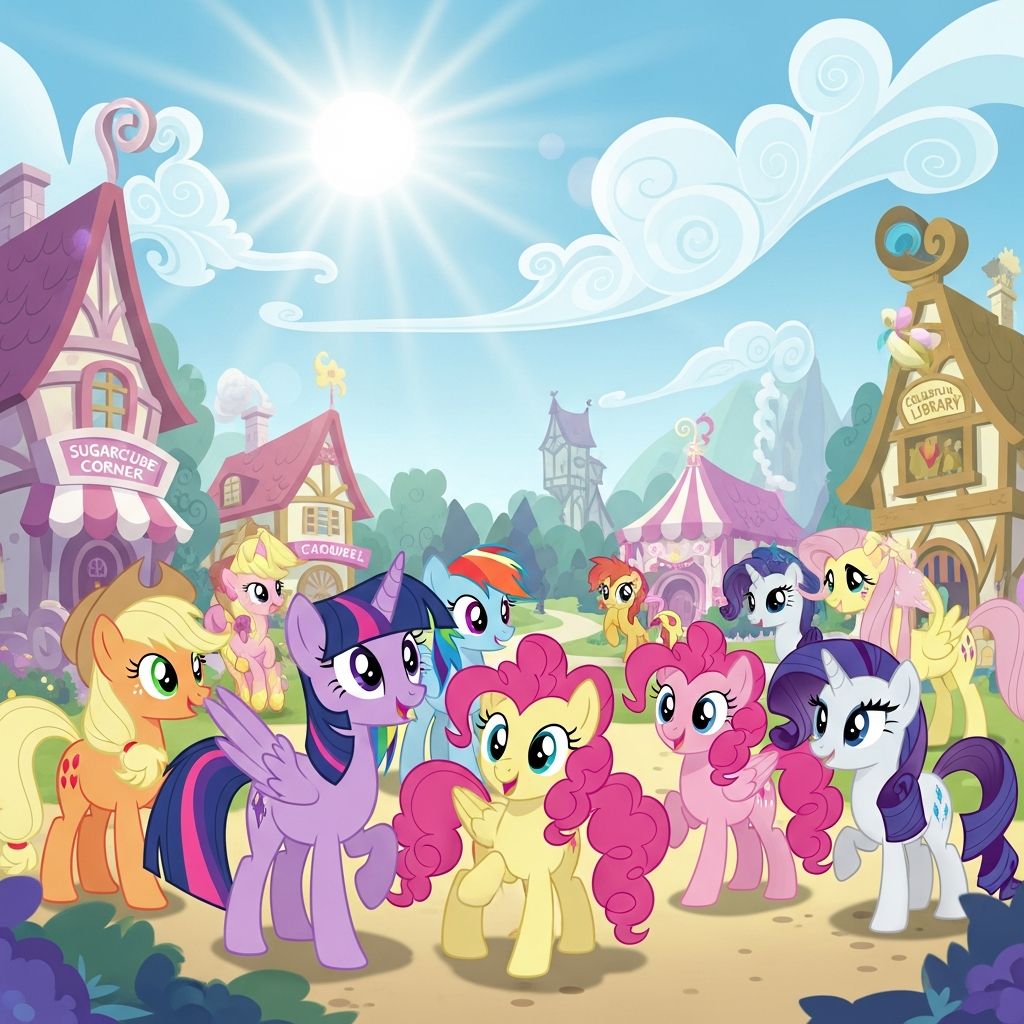
My Little Pony: Friendship Is Magic is an animated fantasy series that follows a studious unicorn, Twilight Sparkle, who moves to the town of Ponyville and learns about friendship alongside a close-knit group of ponies in the magical land of Equestria.
Across nine seasons and more than 200 episodes, the show blends bright, toy-based visuals with character-driven stories about emotions, conflict, and growing up, making it appealing to both kids and many adults.
What This Show Is Actually About
On the surface, the series looks like a typical toy tie-in, but its ongoing story centers on relationships, community, and the idea that friendship is a skill that can be learned and practiced.
Each episode focuses on a social or emotional problem—misunderstandings, jealousy, fear, failure—and walks characters toward a resolution that emphasizes empathy, communication, and responsibility.
The Magical Setting of Equestria
The show takes place in Equestria, a fantasy world populated by different kinds of ponies and other creatures, where magic, weather, and even the day–night cycle are often managed by its inhabitants.
Ponyville, the main town, acts as a small, tight community backdrop where kids see familiar settings—schools, farms, shops—reimagined in whimsical, pastel form.
The Core Friend Group (The “Mane Six”)
The central cast is a group of six ponies whose personality traits mirror classic “friendship strengths” that kids can easily recognize and discuss.
- Twilight Sparkle: A book-loving unicorn (later an alicorn) who represents curiosity, leadership, and the idea that even natural leaders need help from friends.
- Applejack: An honest, hardworking farm pony who models reliability, family loyalty, and problem-solving rooted in common sense.
- Rarity: A fashion-focused unicorn whose generosity and eye for beauty help kids see that creativity can coexist with kindness and responsibility.
- Fluttershy: A timid, animal-loving pegasus who shows that gentleness and empathy are strengths, not weaknesses.
- Rainbow Dash: A bold, speed-obsessed pegasus who models confidence, ambition, and the importance of balancing pride with loyalty.
- Pinkie Pie: An energetic pony who loves parties and laughter, highlighting how joy, play, and silliness contribute to emotional resilience.
Key Themes Parents Will Notice
Although episodes are short and lighthearted, the themes often map directly onto challenges kids face in friendships, at school, and in their families.
- Managing big feelings like jealousy, fear, embarrassment, and disappointment.
- Repairing friendships after arguments or misunderstandings.
- Handling peer pressure and learning to apologize meaningfully.
- Recognizing that different personalities bring different strengths to a group.
Because the characters are flawed and make mistakes, kids see that it is normal to mess up and that healthy relationships rely on communication and willingness to grow.
Why Adults End Up Liking It Too
Many adults appreciate that the series balances kid-friendly humor with story arcs and character development that reward long-term viewing.
There are callbacks, world-building details, and emotional payoffs across seasons that can make watching with children feel more like following a family-friendly fantasy saga than sitting through repetitive episodes.
Major Character Traits at a Glance
| Pony | Main Strength | Common Struggle | Conversation Starter for Kids |
|---|---|---|---|
| Twilight Sparkle | Curiosity and leadership | Overthinking, anxiety about failure | “Have you ever worried so much about being perfect that you forgot to have fun?” |
| Applejack | Honesty and dependability | Trouble asking for help | “When is it important to admit you can’t do everything alone?” |
| Rarity | Creativity and generosity | Vanity and overdramatizing setbacks | “How can you bounce back when something doesn’t go the way you imagined?” |
| Fluttershy | Kindness and empathy | Standing up for herself | “Is it possible to be kind and still say ‘no’ when you need to?” |
| Rainbow Dash | Loyalty and courage | Impulsiveness and arrogance | “When does confidence turn into bragging?” |
| Pinkie Pie | Optimism and humor | Difficulty recognizing when others need quiet or space | “How can you tell when a friend wants to talk and when they want calm?” |
Age Appropriateness and Content Notes
The series is generally rated TV-Y or TV-Y7 depending on the region, making it suitable for most elementary-age children and many preschoolers.
Action is typically mild and cartoonish, with occasional fantasy villains and tense scenes that may be intense for very sensitive viewers but are usually balanced by humor and clear resolutions.
What Kids Can Learn Without Feeling Lectured
Every episode involves some kind of problem—social, emotional, or practical—that leads characters to reflect on what went wrong and how they can improve next time.
- Recognizing when pride, fear, or insecurity is driving their behavior.
- Trying again after failure and reframing mistakes as learning opportunities.
- Seeing that friendships require effort, forgiveness, and boundaries.
Because the stories sit inside adventure and comedy, kids receive these messages through example rather than through rigid moral lectures.
How to Watch with Your Child
Co-viewing can turn the show into a tool for emotional coaching rather than purely passive entertainment.
- Pause after a character makes a poor choice and ask, “What could they have done differently?”
- Notice when a character apologizes and point out what makes the apology feel sincere.
- Ask your child which pony they relate to most and why.
Short post-episode chats—just a minute or two—can help children connect on-screen conflicts to their own experiences at school or with siblings.
Using Episodes as Conversation Hooks
Certain episodes and story arcs lend themselves particularly well to specific family topics, even if you avoid explicit spoilers.
- Jealousy and comparison: Use stories where characters compare talents or feel overshadowed to talk about envy and self-worth.
- Leadership and teamwork: Episodes that feature group missions are ideal for discussing listening, delegating, and compromise.
- Change and transition: Later seasons introduce bigger life changes that open doors to conversations about moving, growing up, or changing roles in the family.
You can even let your child pick an episode “theme” for the night—kindness, bravery, honesty—and then briefly reflect on how the story illustrated that trait.
Representation, Diversity, and Social Messages
While the characters are all ponies, the world of Equestria includes many different species and cultures, encouraging acceptance of those who look or live differently.
Conflicts often arise from misunderstanding or prejudice between groups, and resolutions emphasize listening, cooperation, and breaking down stereotypes.
Balancing Screen Time with Play
The show’s strong visual identity and imaginative setting makes it easy to turn screen time into offline play.
- Encourage kids to draw their own original characters who could live in Equestria.
- Prompt them to invent a new problem for the ponies to solve and act it out with toys or stuffed animals.
- Use simple crafts—paper cutie marks, homemade badges for kindness or bravery—to reinforce themes from episodes.
Pairing viewing with creative play helps transform the series from simple entertainment into a springboard for storytelling, role-play, and social learning.
FAQs About My Little Pony: Friendship Is Magic
Is this show only for young kids?
The primary target is younger children, but the storytelling, humor, and character development have attracted a cross-generational audience that includes many teens and adults.
That broader appeal can be reassuring for parents who want media they can genuinely enjoy watching alongside their kids rather than simply tolerating it.
Do I need to worry about scary content?
There are villains, magical battles, and tense moments, but violence is stylized, largely non-graphic, and usually focused on the emotional stakes of doing the right thing.
For very sensitive or very young viewers, it can help to preview a few episodes or watch the more intense stories together and reassure them about the outcome.
Is it important to watch the seasons in order?
Most episodes stand alone, but recurring characters and long-running arcs make the show more rewarding when watched roughly in order from the beginning.
Starting with early seasons lets children see how friendships develop over time and how characters gradually take on more responsibility.
Is this just a long toy commercial?
The series is part of a larger brand that includes toys and merchandise, but its writing and character focus have been praised for going beyond product promotion.
Families who prefer to limit commercial pressure can set expectations about toys early and focus on discussions around themes and character growth rather than collectibles.
What makes this different from other “sparkly” kids’ shows?
While it uses bright colors and cute designs, the narrative invests time in consequences, apologies, and growth, making emotional development central instead of incidental.
That combination of whimsy and psychological nuance is why the series has had such a long run and remains a go-to recommendation in many parenting communities discussing media with positive social–emotional content.
Turning a Colorful Cartoon into a Family Tool
My Little Pony: Friendship Is Magic blends adventure, fantasy, and humor with a surprisingly nuanced exploration of friendship, making it fertile ground for family conversations about feelings, values, and handling conflict.
By watching intentionally, asking a few open-ended questions, and encouraging kids to reflect and play, parents can turn time spent in Ponyville into practice for real-world relationships.