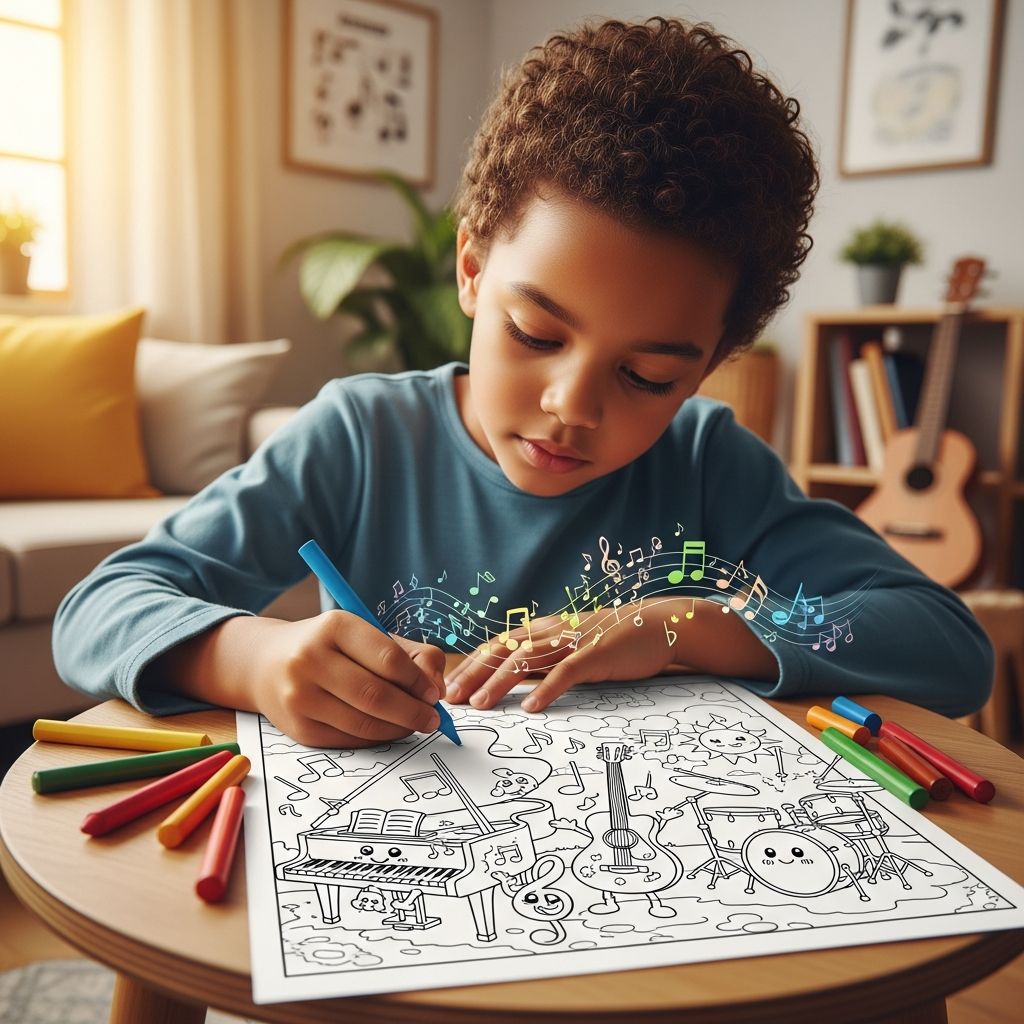
Music and coloring are two activities that most children naturally enjoy, and bringing them together can create a powerful tool for both fun and learning. Music-themed coloring pages turn simple pictures into gateways for creativity, emotional expression, and early music understanding.
This article explores how music coloring pages benefit children, how parents and teachers can use them, and practical ideas to make these pages part of everyday play or lessons.
Why Combine Music and Coloring?
Individually, music and coloring each support healthy development in children. Together, they encourage a rich mix of visual, auditory, and motor skills that help kids learn in a more engaging way.
- Coloring supports focus, patience, and hand control.
- Music nurtures rhythm, listening skills, and emotional expression.
- Combining both helps children link what they hear with what they see and do.
Key Benefits of Music-Themed Coloring Pages
Music coloring pages are more than quick time-fillers; they can support multiple areas of development when used with intention.
Fine Motor Skills and Hand-Eye Coordination
When children color around instruments, notes, and other music symbols, they practice staying within lines, adjusting pressure, and making smaller, controlled movements. This helps prepare them for writing, playing instruments, and other precise tasks.
- Tracing note outlines helps develop pencil grip.
- Coloring strings, keys, and buttons on instruments encourages attention to detail.
- Switching colors teaches controlled hand movements and planning.
Creativity and Imagination
Music coloring pages invite children to imagine the sounds behind the pictures. A bright red drum or a rainbow-colored xylophone can spark stories, songs, and role-play that go far beyond the page.
- Children can invent “band names” for the characters or instruments they color.
- They can choose unique color schemes that reflect how they think each instrument might sound.
- Drawing their own musical backgrounds (like stages or concerts) builds narrative thinking.
Emotional Regulation and Relaxation
Coloring to gentle background music can calm busy minds and reduce stress for both children and adults. The rhythmic motion of coloring, combined with steady music, helps children slow down, breathe more steadily, and recharge.
- Music coloring pages offer a quiet break during overstimulating days.
- They can be part of a bedtime or wind-down routine to ease transitions.
- You can match the background music to the mood—soothing for calm, upbeat for energy.
Early Music Literacy
Children do not need formal lessons to start understanding basic music ideas. Simply seeing repeated symbols while coloring builds familiarity and curiosity.
- Repeated exposure to shapes like notes, clefs, and rests makes them less intimidating later.
- Parents and teachers can casually mention simple terms such as “note,” “beat,” or “loud/soft.”
- Color coding (for example, coloring high notes in one color and low notes in another) can gently introduce pitch concepts.
Types of Music Coloring Pages to Try
Not all music coloring pages look the same. Choosing a variety keeps children interested and supports different learning goals.
Instrument-Focused Pages
Pages that highlight a single instrument help children recognize shapes and parts of that instrument. They can be especially useful if a child is about to start lessons or is curious about sound.
- Large images of pianos, guitars, drums, violins, or flutes.
- Cutaway-style pictures with outlined keys, strings, or valves.
- Cartoon characters playing instruments to make the scene more relatable.
Musical Symbols and Notes
These pages focus more on music notation: notes, clefs, rests, and dynamic marks. They are especially helpful for children who are beginning formal music study or piano lessons.
- Lines of notes on a staff that children can color in different colors.
- Large versions of symbols such as treble clefs or sharps for younger kids.
- Simple color rules (for example, “color all quarter notes blue”) to reinforce recognition.
Scene and Story Pages
Pages that show music in everyday life can help kids understand how music fits into different moments. These are ideal for storytelling, conversations, and imaginative play.
- Children dancing, singing, or listening to a band.
- Animals playing instruments in a park or forest.
- Stages, concerts, and parades with multiple musical elements.
Age-Appropriate Ways to Use Music Coloring Pages
Different age groups benefit from music coloring pages in unique ways. Adjusting expectations and instructions makes the experience positive and developmentally appropriate.
| Age Range | Focus | Practical Tips |
|---|---|---|
| Toddlers (1–3) | Exploration and sensory play | Offer thick crayons, large simple designs, and short sessions. Emphasize fun over staying in the lines. |
| Preschoolers (3–5) | Basic control and recognition | Introduce simple music words, name instruments, and praise effort. Allow kids to pick music to listen to while coloring. |
| Early Elementary (6–8) | Attention and early music concepts | Use pages that show notes, simple rhythms, or instrument families. Encourage careful coloring and completing pages. |
| Older Children (9+) | Detail, patience, and design | Offer more intricate patterns and invite them to design their own music-themed pages or mini-posters. |
Simple Activities to Pair with Music Coloring
Music coloring pages become even more powerful when combined with movement, listening, or simple games. These activity ideas are easy to set up at home or in a classroom.
1. Color and Listen Sessions
Play different styles of music while kids color pages with instruments or musical scenes. Ask a few open-ended questions before or after the activity.
- “Which instrument on your page do you think you can hear in this song?”
- “Does this song feel fast or slow? Which colors match that feeling?”
- “What do you think the people or animals on your page might be hearing?”
2. Color by Music Clue
Instead of telling children which color to use, link colors to musical instructions. This adds a playful problem-solving element to the coloring page.
- Assign a color to “loud,” “soft,” “fast,” or “slow.”
- Play short excerpts of music and ask children to decide which color matches what they hear.
- Encourage them to explain their choices (“I chose yellow because the music sounded bright”).
3. Storytelling With Completed Pages
Once a child finishes coloring, invite them to tell a story about their picture. This encourages language skills, confidence, and deeper thinking about the role of music.
- Ask who the characters are and what kind of music they play.
- Let children name their band or concert.
- Turn several colored pages into a “music storybook” by stapling them together in sequence.
Tips for Parents and Teachers
Music coloring pages can be flexible tools: they work as quick fillers, planned lessons, or calming stations. A few simple habits can help you get more value from them.
- Keep a folder or box of printed music pages ready for slow moments or transitions.
- Rotate page types—sometimes instruments, sometimes notes, sometimes scenes—to prevent boredom.
- Display finished work on a wall or bulletin board to celebrate effort and reinforce learning.
- Provide a variety of coloring tools (crayons, markers, colored pencils) so children can choose what feels right.
Using Music Coloring in Group Settings
In classrooms, music studios, and clubs, music coloring pages can build community and make group learning more dynamic. They also help keep younger or early-finishers engaged while others complete tasks.
- Use pages as a warm-up activity while students arrive and settle.
- Set up a “creative corner” with music pages, headphones, and soft background music.
- Invite students to swap pages and explain what they colored to a partner.
Frequently Asked Questions
Are music coloring pages educational or just for fun?
Music coloring pages can absolutely be educational when used thoughtfully. They support fine motor development, visual recognition, listening skills, and early exposure to musical ideas, all while still feeling like play.
Do I need to know music to use these pages with my child?
You do not need any formal music training to use music coloring pages effectively. Simply naming instruments, asking what your child hears in the background music, and enjoying the process together is more than enough to make the activity meaningful.
How long should a coloring session last?
The ideal length depends on the child’s age and attention span. For toddlers and preschoolers, 5–15 minutes may be plenty, while older children might enjoy much longer sessions as long as they are still engaged and comfortable.
Can music coloring pages help children who feel anxious?
Many children and adults find coloring soothing, and pairing it with gentle music can deepen that calming effect. While it is not a replacement for professional support when needed, it can be a helpful tool to add to daily routines and coping strategies.
What is the best way to store and display finished pages?
You can place colored pages in a binder with plastic sleeves, create rotating displays on a wall or refrigerator, or staple several pages into a homemade “music art book.” Involving children in choosing how to display their work helps them feel proud of their efforts.
Bringing Music Coloring Into Everyday Life
Music-themed coloring pages are simple to print and easy to personalize, yet they can offer lasting benefits. Whether you are a parent, grandparent, teacher, or music instructor, these pages can become a low-pressure way to introduce musical ideas, support emotional well-being, and celebrate creativity.
By regularly setting aside a few minutes to color to the beat, you give children not only a fun activity but also a gentle foundation for a lifelong appreciation of music and art.