Mpox, caused by the monkeypox virus, presents milder symptoms in most children compared to historical outbreaks but requires vigilant parental awareness for early detection and management. This guide equips parents with knowledge on recognition, response, and risk reduction.
Understanding the Mpox Virus
The monkeypox virus belongs to the orthopoxvirus family, related to smallpox, yet typically causes less severe illness. It spreads primarily through direct contact with infectious rash, bodily fluids, or contaminated materials, and occasionally via respiratory droplets during prolonged face-to-face interactions. In children, transmission often occurs in household settings from infected family members or through shared items like towels. Unlike some viruses, mpox is not airborne over long distances but thrives in close-knit environments like schools or daycares if hygiene lapses.
Globally, mpox has evolved with clades showing varying severity; current strains in many regions result in fewer lesions and shorter illness durations, especially in healthy kids. Parents should note that while animal-to-human jumps occur in endemic areas like parts of Africa, human-to-human spread dominates outbreaks elsewhere.
Recognizing Early Warning Signs in Kids
Initial mpox symptoms in children mimic common illnesses, appearing 5-21 days post-exposure. Watch for fever, chills, headache, muscle aches, fatigue, and notably swollen lymph nodes in the neck, armpits, or groin— a key distinguisher from similar viruses like chickenpox. These prodromal signs last 1-3 days before the hallmark rash emerges.
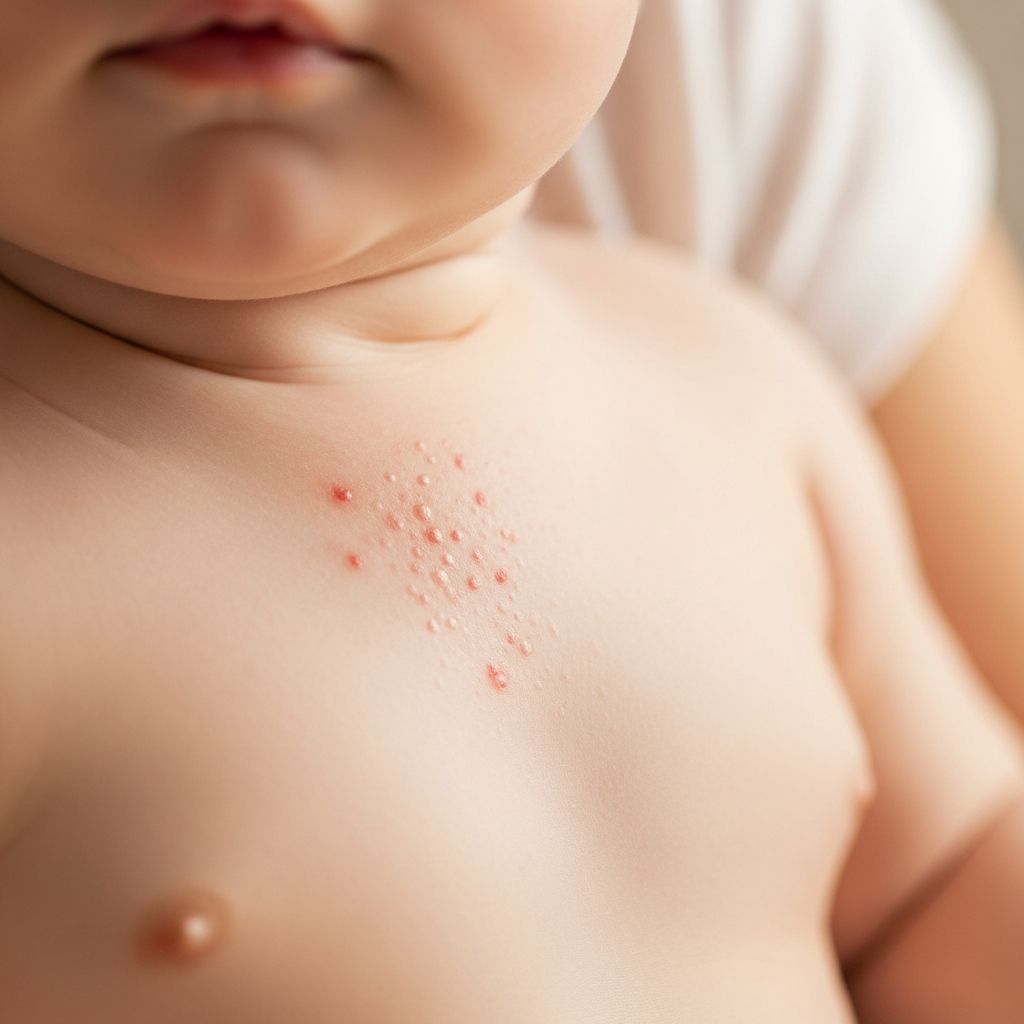
The rash evolves predictably: starting as flat red spots (macules), progressing to raised bumps (papules), fluid-filled blisters (vesicles), pus-filled pustules, and finally scabbed lesions that crust over. Lesions often appear first on the face, genitals, or anogenital area, spreading to trunk and limbs, numbering from a few to dozens. In kids, rashes may itch intensely, prompting scratching that risks secondary bacterial infections.
- Fever and chills: Often high, resolving as rash peaks.
- Lymphadenopathy: Swollen nodes, painful to touch.
- Rash progression: 7-14 days from onset to scab healing.
- Other signs: Sore throat, cough, back pain.
Infants and toddlers may show subtler cues like irritability or poor feeding alongside these.
Risk Factors Heightening Severity in Young Ones
While most pediatric cases resolve mildly within 2-4 weeks, certain children face elevated risks. Infants under 6 months, those with eczema, atopic dermatitis, or other skin barriers, and immunocompromised kids (e.g., HIV, cancer treatment) are prone to widespread rashes, dehydration, or bacterial superinfections. Pregnant mothers with mpox risk fetal complications, underscoring family-wide precautions.
Adolescents engaging in high-risk behaviors, like close sexual contact, warrant extra vigilance, including STI and HIV screening alongside mpox testing. Historical data notes depressed scarring as a potential long-term mark, more common in children.
| Risk Group | Why Higher Risk? | Key Concerns |
|---|---|---|
| Infants <6 months | Immature immunity | Severe dehydration, eye involvement |
| Eczema sufferers | Compromised skin barrier | Extensive lesions, auto-inoculation |
| Immunocompromised | Weakened defenses | Prolonged illness, hospitalization |
| Pregnant contacts | Fetal transmission | Adverse pregnancy outcomes |
How Mpox Spreads: Breaking the Chain at Home
Transmission hinges on proximity: direct skin-to-skin with active lesions, mucosal contact, or handling contaminated linens/clothing. Respiratory spread is possible in shared rooms but less efficient than touch. In schools, outbreaks link to shared toys or unwashed hands.
Contagiousness spans from symptom onset until all scabs fall off and new skin forms (typically 2-4 weeks). Asymptomatic spread is rare but possible via lesions. Parents can curb spread by isolating sick children, using separate bathrooms, and disinfecting surfaces with household cleaners effective against enveloped viruses.
When to Contact a Doctor: Red Flags for Parents
Seek immediate care if your child develops rash with fever/lymph nodes, especially post-exposure. Pediatricians diagnose via lesion swabs (PCR preferred), blood, or tissue samples sent to health departments. Home monitoring suits mild cases, but hospitalize for high fever >3 days, breathing issues, eye lesions, or poor oral intake.
Notify schools/childcare if symptoms arise there, triggering contact tracing.
Managing Symptoms: Supportive Care Strategies
Most children recover without antivirals via rest, hydration, and symptom relief. Use acetaminophen or ibuprofen for fever/pain; avoid aspirin in kids due to Reye’s risk. Colloidal oatmeal baths soothe itchy rashes; keep lesions covered with breathable dressings to prevent scratching.
Encourage fluids (pedialyte for little ones), soft foods, and isolation. Monitor for secondary infections (increased redness, pus) needing antibiotics. Full recovery: 2-4 weeks, with scabs non-contagious once fallen.
Advanced Treatments for Severe Pediatric Cases
For high-risk or severe mpox, tecovirimat (TPOXX) is first-line, FDA-approved under expanded access for kids >28 lbs via oral suspension or capsules with fatty food. Administered through health departments/CDC IND protocols, it shortens duration and lesion counts.
Alternatives like vaccinia immune globulin (VIGIV) or cidofovir suit contraindications, consulted with specialists. Infants <6 months may get VIGIV preferentially.
Vaccination and Prevention: Building Family Defenses
JYNNEOS vaccine (2 doses, 28 days apart) protects high-risk kids/adolescents pre- or post-exposure. Infants ineligible until 6 months; use VIGIV for PEP. Household contacts of cases should quarantine 21 days, vaccinate if eligible.
- Handwashing with soap 20+ seconds.
- Avoid lesion contact; don’t share bedding.
- Vaccinate at-risk teens.
- Exclude sick kids from group settings until cleared.
Frequently Asked Questions (FAQs)
Can healthy kids get severely ill from mpox?
Rarely; most cases are mild, but monitor closely as complications like dehydration occur.
Is mpox like chickenpox?
No—mpox has deeper pustules, lymph swelling, slower progression.
How long is my child contagious?
From symptoms until scabs heal and fall off, ~2-4 weeks.
Does mpox leave scars in children?
Possible, especially depressed scars lasting years.
Can I prevent mpox at school?
Yes—promote hygiene, isolate symptomatic kids promptly.
Long-Term Outlook and Family Preparedness
Post-recovery, children gain immunity but watch for scarring or pigmentation changes. Families should prepare isolation kits: gloves, masks, disinfectants, OTC meds. Stay updated via CDC/WHO as outbreaks evolve. Educate older kids on avoiding risky contacts. With prompt care, mpox remains manageable, rarely life-threatening in pediatrics.
References
- Mpox in Kids: What Parents Need to Know — Lurie Children’s Hospital. 2024. https://www.luriechildrens.org/en/blog/faq-what-parents-should-know-about-monkeypox/
- Monkeypox – Conditions and Treatments — Children’s National Hospital. 2024. https://www.childrensnational.org/get-care/health-library/monkeypox
- Diagnosis, treatment, and prevention of monkeypox in children — PMC (NCBI). 2022-11-28. https://pmc.ncbi.nlm.nih.gov/articles/PMC9685019/
- Clinical Considerations for Monkeypox in Children and Adolescents — Centers for Disease Control and Prevention (CDC). 2024. https://www.cdc.gov/monkeypox/hcp/clinical-care/pediatric.html
- Mpox in Children: Symptoms, Testing, Treatment & Immunization Tips — American Academy of Pediatrics (HealthyChildren.org). 2024. https://www.healthychildren.org/English/safety-prevention/immunizations/Pages/mpox-in-children-symptoms-testing-treatment-and-immunization-tips.aspx
- Monkeypox (MPX) — Boston Children’s Hospital. 2024. https://www.childrenshospital.org/conditions-treatments/monkeypox
- Mpox — World Health Organization (WHO). 2024. https://www.who.int/news-room/questions-and-answers/item/mpox