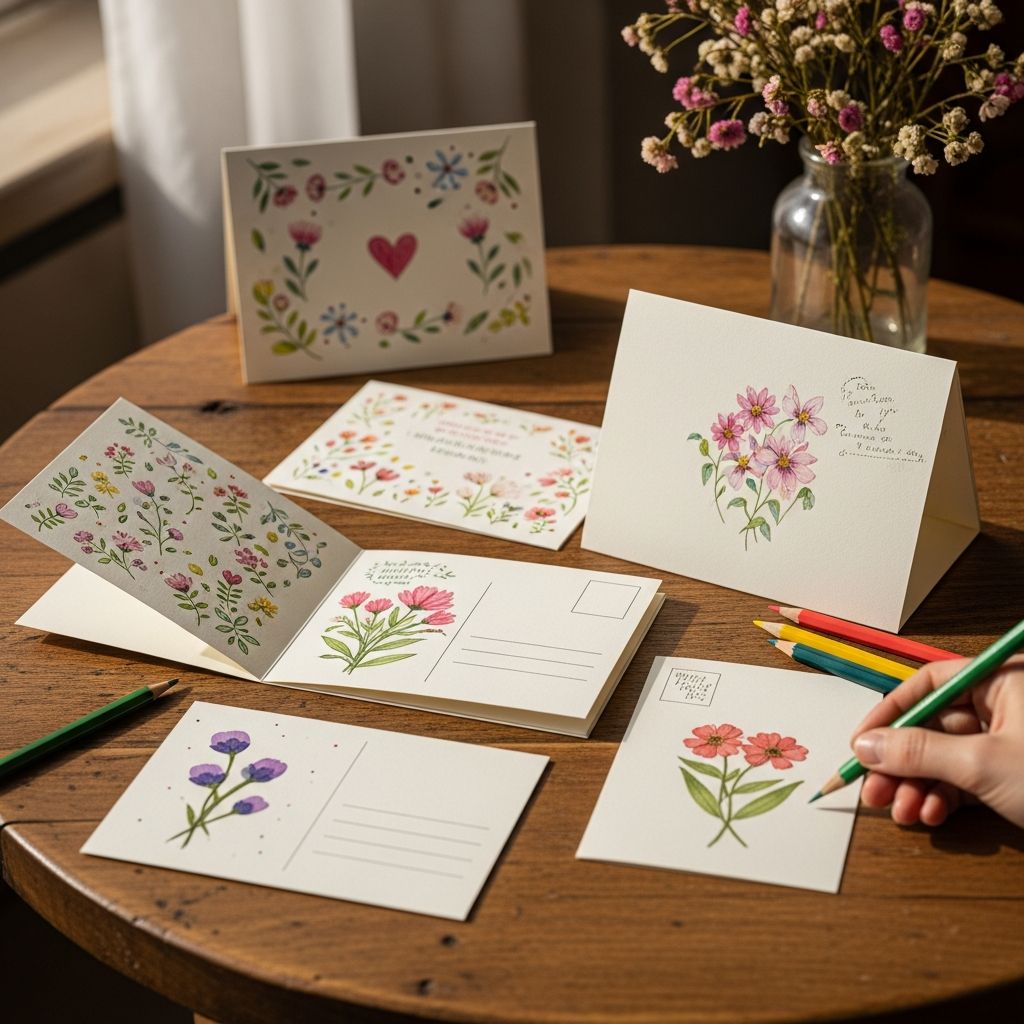
Mother’s Day is a beautiful chance to honor not only moms, but also grandmothers who pour time, love, and stories into the lives of their grandchildren. When families can’t be physically together—because of distance, travel limits, health concerns, or busy schedules—a simple postcard can become a powerful little bridge between generations.
Why Postcards Make Grandma Feel Close
Postcards are small, inexpensive, and easy to mail, but they carry something priceless: a child’s voice, drawings, and handwriting. Unlike a quick text or video call, a postcard is something Grandma can hold in her hands, keep on her nightstand, or display on the fridge.
For kids, decorating a postcard also slows them down long enough to think about Grandma, remember shared memories, and choose what they want to say. That small creative ritual helps them feel more connected, even when weeks go by between visits.
Planning Your Postcard Project
A little planning turns postcard-making into a relaxed, meaningful family activity instead of a rushed last-minute scramble. Start by deciding whether you’ll mail one special postcard or create a series that arrives across several days.
- Choose a comfortable day before Mother’s Day so children have plenty of time to draw and write.
- Gather materials in advance and keep them in a small box or tray so everything feels inviting and ready.
- Talk briefly about Grandma first—what she likes, funny memories, and things kids appreciate about her.
Simple Materials You Probably Already Have
You don’t need specialty supplies to make something beautiful. Most families can create lovely postcards with items already in the house.
- Cardstock or cut pieces from cereal boxes (about postcard size)
- Markers, crayons, or colored pencils in a range of colors
- Stickers, washi tape, or decorative tape (optional but fun)
- Glue stick and small scraps of colored paper or magazines
- Stamps and Grandma’s full mailing address written clearly on a slip of paper
If your child is very young, pre-draw the postcard division line and areas for the address and stamp on the back so they know where artwork should go.
Creative Themes Kids Can Use
Children sometimes freeze when asked to “draw anything.” Offering a gentle theme gives them a springboard. You can ask, “Do you want your postcard to be about a favorite memory, a pretend adventure, or a wish for Grandma?” and see what excites them.
Memory-Inspired Themes
- Favorite visit: Draw the park, backyard, or kitchen where you usually see Grandma and add tiny details she will recognize.
- Shared hobby: Show Grandma baking, gardening, reading, or doing a puzzle with your child, even if it’s from a long-ago visit.
- Holiday flashback: Recreate a joyful moment from a past birthday, holiday, or vacation together.
Future-Focused Themes
- When we visit again: Kids draw what they want to do with Grandma next time—bake cookies, feed ducks, or have a living room dance party.
- Dream adventure: Imagine Grandma flying in a hot air balloon, camping in a fort made of pillows, or going on a pretend space trip with the grandkids.
- Wish card: Let kids draw their wishes for Grandma’s upcoming year—healthy days, flowers in her garden, or silly pets to keep her company.
Sample Layouts for Child-Friendly Postcards
Kids often benefit from a loose structure. You can lightly sketch sections on the front of the postcard to help them organize their ideas. Here is a simple way to think about layout options.
| Layout Name | Front Design Idea | Who It Suits Best |
|---|---|---|
| Big Picture | One large drawing that fills the whole front, with a short caption like “I love you, Grandma!” | Young children who prefer drawing more than writing |
| Four Little Moments | Front divided into four boxes, each with a tiny scene: a hug, a snack, a game, and a heart. | Kids who like comics or telling stories in steps |
| Photo Frame | A drawn frame around the edges with a picture of Grandma and the child in the middle. | Children who want to focus on one favorite memory |
| Collage Fun | Bits of colored paper, magazine cutouts, and stickers arranged around a central heart. | Kids who love gluing, cutting, and experimenting with textures |
Helping Kids Decide What to Write
The writing portion doesn’t need to be long to be meaningful. A few honest, age-appropriate sentences can form a message Grandma will treasure. Younger children might only add a signature or trace their name, while older kids can write a small note.
To get them started, give short prompts instead of vague instructions. For example, ask, “What do you miss most about being with Grandma?” or “What’s something you want to say thank you for?” and write down their exact words if they are not yet writing independently.
Age-Appropriate Message Starters
- Preschoolers: “I love when you…” or “I miss your…” then describe a hug, a song, or a story.
- Early readers: “My favorite thing to do with you is…” followed by a simple activity.
- Older kids: “Three reasons I think you are amazing are…” and then list them as short sentences or bullet points.
Turning Postcards into a Mini Tradition
One postcard is lovely, but a simple ongoing ritual can help Grandma feel included in your daily life all year long. Consider planning more than one card and turning the project into a series that continues beyond Mother’s Day.
- A “monthly moment” postcard where kids share one thing they learned, one thing they loved, and one silly drawing.
- A “season postcard” four times a year, describing what the weather is like and what they enjoy doing right now.
- A “thankful postcard” every time Grandma sends a package, letter, or message, so appreciation becomes a regular habit.
Expanding the Experience: Photos, Video, and Voice Notes
Postcards are the centerpiece, but you can layer in other small touches to make Grandma feel even closer without adding extra stress. Many families like to combine print mail with digital moments.
- Snap a quick photo of the finished postcard before mailing it and text or email it so she has an early peek.
- Record a short video of your child describing their drawing or reading their note out loud.
- Send a brief voice message where kids simply shout, “Happy Mother’s Day, Grandma, we love you!” with all their natural enthusiasm.
Practical Tips for Mailing and Timing
Mailing times can be unpredictable, especially if Grandma lives in another state or country. To reduce stress, treat Mother’s Day as a “season” instead of one single day and talk with kids about how love travels even if mail is late.
- Try to mail the postcard at least one week before Mother’s Day if it’s domestic, more if international.
- Double-check Grandma’s address, including apartment numbers or special delivery notes.
- Let kids help apply the stamp and drop the card in the mailbox so they feel involved in the full process.
Ideas for Including Multiple Grandparents
Many families are blessed with multiple grandmothers or special “like-a-grandma” figures. To keep things fair and simple, use similar formats but encourage kids to personalize each card so no one feels like they received a copy.
- Use the same basic layout for each postcard but change colors, drawings, and specific memories for each person.
- Help kids think of one distinctive memory or quality for each Grandma to highlight.
- Remind children that love is not divided between grandparents; it grows with every special person in their life.
Making It Easy for Busy Parents
Parents often want to facilitate meaningful traditions but feel overwhelmed by time and energy limits. The goal of a postcard project is connection, not perfection.
- Limit the activity to a short, specific window (for example, 20 minutes after snack time) so it doesn’t drag on.
- Use what you have; scribbled hearts on scrap cardstock are just as powerful as elaborate designs.
- Remember that even if the postcard looks simple, Grandma will see the love and effort behind it.
Optional Extras: Small Flat Surprises to Tuck In
Most postcards are mailed as-is, but if you prefer to send your creation in an envelope, you can include tiny, flat surprises without increasing postage too much. These little additions can brighten Grandma’s day even more.
- A pressed flower or tiny leaf from a walk you took together or wish you could share
- A very small photo print or drawing of the whole family labeled with names and ages
- A “coupon” made by your child, promising a hug, a story, or a video call at her request
Frequently Asked Questions
What if my child doesn’t like drawing or writing?
If traditional art activities frustrate your child, focus on what they do enjoy. They can add fingerprints, stamps, sticker patterns, or even simple shapes while you write their spoken message word-for-word. Some kids simply like choosing colors while a parent or sibling handles the actual drawing.
How can I involve a toddler?
For very young children, keep things playful and brief. Offer a thick marker or crayon, let them make a few joyful marks, trace their hand, and then write a short note from “both of you” explaining that the scribbles are their love for Grandma.
What should we do if the postcard arrives late?
Late mail can become a sweet surprise rather than a problem. Talk with kids about how love isn’t tied to a calendar square, and frame the postcard as an extra burst of Mother’s Day cheer that stretches the celebration a little longer.
Can we make digital postcards instead?
Yes. If printing and mailing is difficult, you can take a clear photo of the child’s artwork, use simple design tools or apps to add a message, and send it as an email or digital card. The key is that the artwork and words are personal, not generic.
How do we keep this tradition going year after year?
You can schedule a recurring reminder a few weeks before Mother’s Day and keep a basic supply kit ready. Consider snapping a photo of each year’s postcard so you and your child can look back and see how their skills, interests, and handwriting have grown.
However you shape your Mother’s Day postcard ritual, remember that what Grandma will notice most is not straight lines or perfect spelling. She will see the time you carved out, the stories your children chose to share, and the little pieces of themselves they mailed across the miles. That simple act of putting love on paper can make her feel close, even when you are far apart.