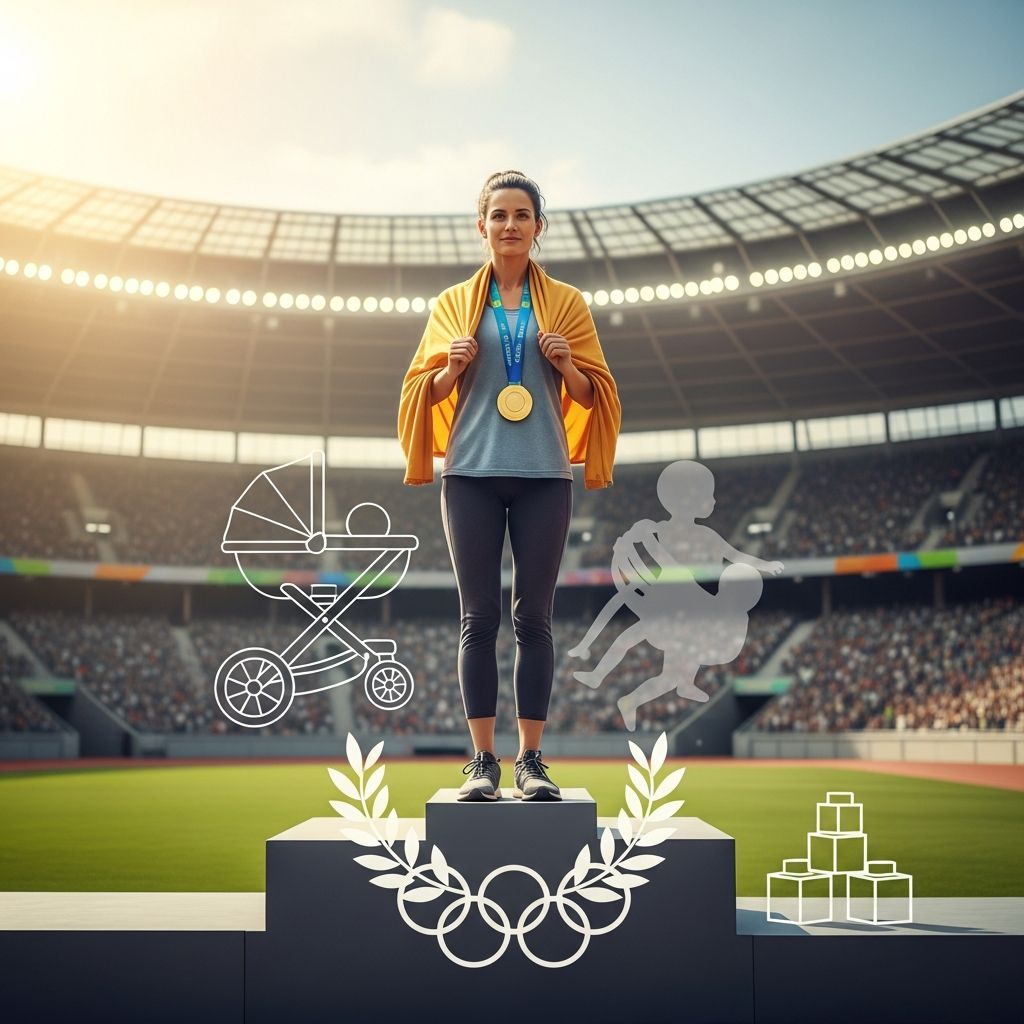
Motherhood transforms ordinary women into elite performers, executing feats of physical and mental prowess that would earn gold medals in any Olympic event. From dawn patrols juggling diapers and deadlines to late-night endurance tests, mothers navigate a relentless gauntlet of challenges with unmatched resilience.
Daily Feats That Rival World-Class Competition
Consider the average day in a mother’s life: it begins before sunrise with a 5K sprint to soothe a crying infant, followed by a weightlifting session hoisting car seats and groceries equivalent to Olympic barbells. Data from maternal health studies highlight how these routines build extraordinary core strength and cardiovascular fitness, often surpassing gym-trained athletes.
- Wake-up Relay: Mothers average 4-6 interruptions per night, training split-second reflexes akin to a hurdler’s precision.
- Multitask Decathlon: Preparing meals, mediating sibling disputes, and answering work calls simultaneously demands cognitive bandwidth rivaling decathlon champions.
- Endurance Trials: Chasing toddlers for hours builds stamina comparable to marathon runners, with recovery times that test even the toughest competitors.
These aren’t exaggerations; physiological research confirms that parenting ignites adaptive responses, enhancing muscle memory and stress tolerance in ways professional sports training emulates but rarely matches.
Physical Demands: Labor, Delivery, and Beyond
Pregnancy and childbirth alone qualify as extreme sports. Labor can last 12-24 hours, involving contractions more intense than elite cyclists’ peak efforts during Tour de France climbs. Postpartum recovery adds layers of complexity, with hormonal shifts and physical rebuilding that demand months of disciplined rehabilitation.
| Olympic Event | Motherhood Equivalent | Key Metrics |
|---|---|---|
| 100m Sprint | Chasing a runaway toddler | Peak speed: 20-25 km/h bursts; reaction time under 0.2 seconds |
| Marathon (42km) | Full-day childcare marathon | 18+ hours on feet; calorie burn: 3,000-5,000 daily |
| Weightlifting (Clean & Jerk) | Lifting stroller + child + bags | Loads up to 40-60kg one-handed |
| Gymnastics Floor Routine | Navigating cluttered home with baby | Balance, flexibility, core engagement non-stop |
This table illustrates quantifiable parallels, underscoring how maternal bodies adapt through sheer necessity, forging superhuman capabilities without podium celebrations.
Mental Fortitude: The Unseen Gold Medal Battles
Beyond physicality, motherhood hones mental steel sharper than any fencer’s blade. Sleep deprivation—averaging 750 hours lost in the first year—trains the brain for high-stakes decision-making under fatigue, mirroring Navy SEAL endurance protocols. Yet, societal oversight often leaves this psychological marathon unsupported.
Mothers manage emotional ecosystems: soothing tantrums (diplomacy rivaling UN negotiations), budgeting family finances (strategic planning like chess grandmasters), and fostering child development (coaching that builds future champions). A landmark study on caregiver cognition reveals heightened empathy and problem-solving, attributes gold in team sports.
Real-World Champions: Mothers Who Conquered Olympics
History now spotlights trailblazing athlete-moms shattering myths that parenthood ends competitive careers. In recent Winter Olympics, six U.S. women balanced motherhood with elite performance, supported by nurseries in Olympic villages and quota protections post-childbirth. Allyson Felix, track legend, advocated fiercely for better recovery policies, noting maternal healing outpaces Olympic training rigors.
- Kendall Coyne Schofield led Team USA hockey moms to Milan-Cortina, proving dual roles amplify success.
- Organizations like For All Mothers granted $5,000 stipends, easing logistical burdens for Olympian parents.
- U.S. Olympic Committee innovations include lactation rooms and postpartum strategies, normalizing maternal athleticism.
These pioneers erase outdated barriers, inspiring everyday moms whose “offseason” never ends.
Health Hurdles: When Moms Push Through Pain
Working mothers face amplified pressures, with 80% unable to afford sick days despite needing them, per recent caregiver surveys. Nearly all feel compelled to maintain routines while ill, with moms powering through more than dads—97% report unrelenting duty. For the “sandwich generation,” juggling kids and elders, illness turns overwhelming into crisis.
Physical tolls include chronic back strain from lifting, pelvic floor challenges post-delivery, and immune suppression from exhaustion. Yet, resilience shines: moms report higher life satisfaction long-term, crediting adaptive grit forged in family fires.
Societal Support: Time for a Maternal Medal Stand
While Olympic moms gain ground, everyday mothers deserve equivalent infrastructure. Proposals include universal paid family leave, on-site childcare in workplaces, and recognition programs celebrating maternal milestones. Imagine “Mom Olympics”—community events awarding medals for real-life heroics, boosting morale and visibility.
Policy shifts are vital: U.S. teams now mandate childcare accommodations for meetings, a model scalable to corporations. Paid sick leave advocacy, championed by figures like Felix, could alleviate 87% of caregivers’ “no-choice” burdens.
Empowering the Next Generation of Maternal Athletes
Teaching children to honor maternal strength rewires narratives. Families can institute “Mom Appreciation Days” with breaks, chores shared, and heartfelt acknowledgments. Schools might integrate parenting simulations, fostering empathy from youth.
Technology aids too: apps tracking maternal wellness, virtual support networks, and AI-optimized schedules mimic elite training staffs. Ultimately, viewing motherhood as Olympic-caliber reframes it from burden to badge of honor.
Frequently Asked Questions
Do mothers really have Olympic-level physical strength?
Yes, studies show maternal adaptations like increased muscle efficiency and pain tolerance match or exceed many athletes, especially in endurance and multitasking.
How has support for Olympic moms improved?
Recent Olympics feature nurseries, lactation support, quota protections, and grants, enabling six U.S. moms to compete in 2026.
Why do working moms skip sick days?
80% cite financial needs or job risks; 97% feel pressure to continue routines despite illness.
Can motherhood enhance athletic performance?
Absolutely—postpartum physiological changes boost VO2 max and mental toughness, as seen in returning Olympians.
What can families do to support mom-athletes?
Share loads, advocate for policies, and celebrate daily wins to prevent burnout and honor their endurance.
References
- How this generation of Olympic women erased the idea that motherhood is the end of a gold medal dream — CNN Sports via KTVZ. 2026-02-07. https://ktvz.com/sports/cnn-sports/2026/02/07/how-this-generation-of-olympic-women-erased-the-idea-that-motherhood-is-the-end-of-a-gold-medal-dream/
- Allyson Felix says recovery is harder as a mom than as an Olympic champion — Mother.ly. 2026 (accessed). https://www.mother.ly/health-wellness/allyson-felix-paid-sick-leave/