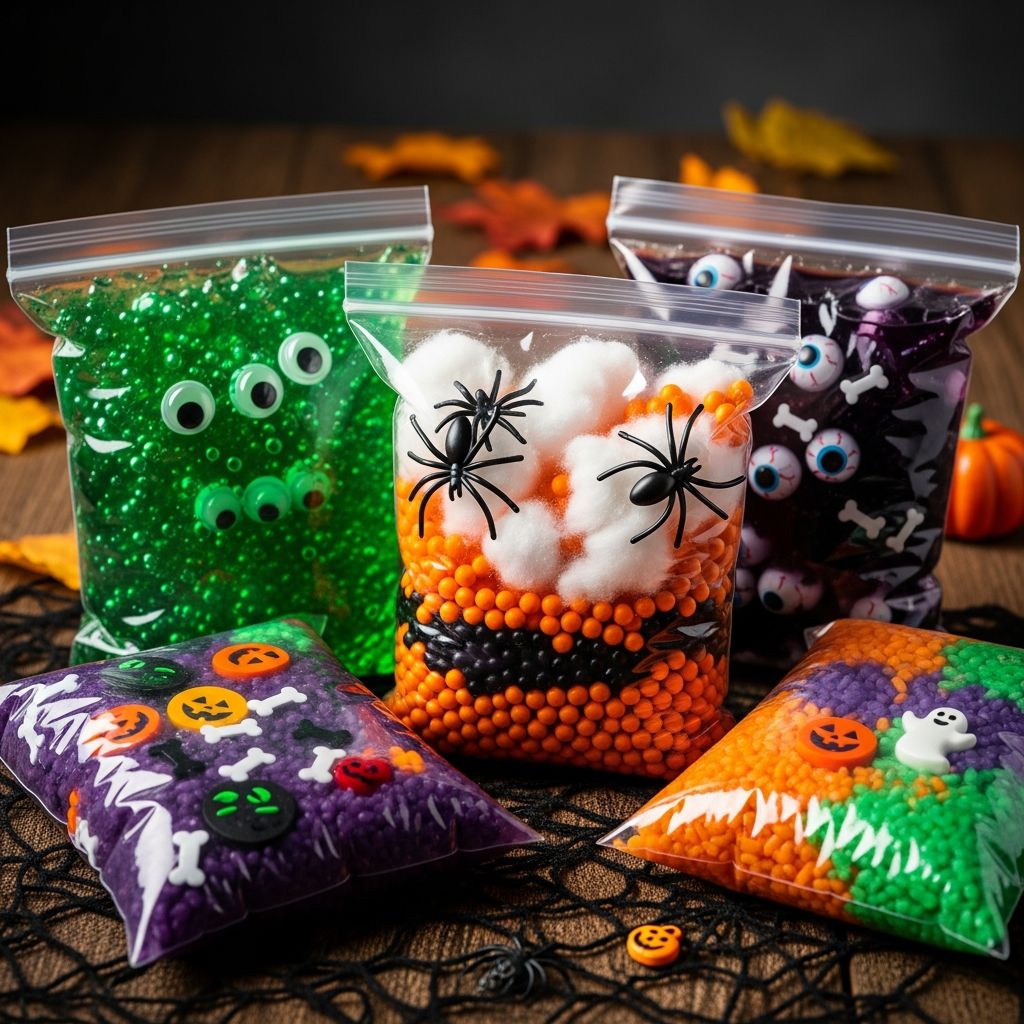
Halloween brings a thrilling mix of costumes, treats, and eerie decorations, but for parents of young children, it also offers chances to blend learning with festivity. Sensory bags stand out as a brilliant, contained way to let little ones dive into tactile experiences themed around ghosts, goblins, and pumpkins. These portable playthings use sealed plastic bags filled with gel and Halloween trinkets, ensuring safe exploration without spills or sticky residues.
Ideal for infants and toddlers who love mouthing objects, sensory bags promote fine motor skills, hand-eye coordination, and cognitive growth through squishing, poking, and pattern-making. They’re especially valuable during the busy Halloween period, providing quiet, engaging activities for home, car rides, or parties.
Why Sensory Play Matters for Little Ghouls
Sensory activities expose children to diverse textures, colors, and movements, which are foundational for brain development. Research from child development experts highlights how such play enhances neural connections, language acquisition, and emotional regulation. For Halloween, incorporating thematic elements like slimy ‘witch goo’ or crunchy ‘pumpkin innards’ makes learning festive and memorable.
Parents appreciate the no-mess aspect: everything stays inside the bag, secured with tape or glue, allowing worry-free play on floors, tables, or high chairs. These bags also encourage imaginative storytelling—kids might narrate a ‘monster chase’ as they manipulate figures inside.
Gathering Your Supplies: Simple and Affordable
Most materials hide in plain sight in your home or dollar store. Here’s a starter kit for multiple bags:
- Quart- or gallon-sized zip-top plastic bags (freezer-safe for durability)
- Clear hair gel or dish soap (for squishy base)
- Food coloring (green, orange, purple for Halloween vibes)
- Small toys: googly eyes, plastic spiders, mini pumpkins, rubber bats, foam ghosts
- Sequins, glitter, or yarn snippets for sparkle and texture
- Clear packing tape or super glue to seal
- Optional: pipettes or tweezers for advanced manipulation
Budget tip: Reuse holiday decorations or craft leftovers. One bottle of gel fills 2-3 bags, keeping costs under $10 for a dozen projects.
Step-by-Step: Crafting a Witch’s Brew Bag
This green, bubbling concoction mimics a melting witch, perfect for stirring up magic.
- Squeeze 1/2 cup clear hair gel into a quart bag.
- Add 3-4 drops green food coloring; squish to blend for a potion-like hue.
- Drop in witchy bits: black yarn ‘hair,’ a plastic witch hat, squishy finger toy, and googly eyes.
- Push out excess air, seal tightly, then reinforce with tape over the zipper.
- Hand to child: watch them mash the ‘witch’ into gooey green sludge!
Play lasts 20-30 minutes per session; refresh gel if it clouds after days of use.
Goblin Innards: A Slimy, Stringy Delight
Evoke monstrous guts with this textured bag that’s irresistibly gooey.
Prep noodles first: Boil spaghetti, drain, then toss 1 cup with green dye. Let dry 10 minutes on a towel.
- Fill gallon bag halfway with hair gel.
- Mix in dyed noodles, plastic snakes, spiders, and eyeballs.
- Seal, tape securely, and refrigerate between plays (good for 3 days).
Kids relish pulling ‘guts’ apart and reforming them, building grip strength amid giggles.
Pumpkin Patch Squish: Orange and Crunchy
Celebrate autumn with a jack-o’-lantern inspired bag.
- Orange gel base (gel + yellow/orange dye).
- Add mini orange pom-poms, green pipe cleaners for stems, black bead ‘faces,’ and real pumpkin seeds if age-appropriate (over 18 months).
- Seal and squish to ‘carve’ pumpkins repeatedly.
This one doubles as fine motor practice, as fingers trace faces on the bag’s surface.
Creepy Crawly Spider Web
For arachnophobes-turned-explorers:
| Layer | Ingredients | Effect |
|---|---|---|
| Base | Purple gel + white glitter | Misty night sky |
| Middle | Plastic spiders, white yarn ‘webs’ | Crawling critters |
| Top | Googly eyes, glow-in-dark stars | Starry scares |
Layering creates depth; kids ‘weave’ webs by dragging yarn across spiders.
Safety First: Guidelines for Peaceful Play
Supervise always, especially with under-3s. Check seals hourly—reglue if needed. Avoid small parts for mouthers; opt for larger toys. Wash hands post-play. Store flat in fridge to prevent leaks. If allergies to dyes/gels arise, swap for cornstarch slime (cornstarch + water).
Age adaptations: Babies (6-12 months) get smooth gel-only bags; toddlers add chunky items; preschoolers use tools like tongs for retrieval challenges.
Boosting Learning Through Spooky Themes
These bags aren’t just fun—they teach. Squishing refines pincer grasp, essential for later writing. Colors reinforce naming (“Find the red bat!”). Counting eyes or spiders introduces math. Narrate plays to build vocabulary: “The goblin hides in the goo!”
Extend play: Pair with songs like “Five Little Pumpkins” or books such as Room on the Broom. Rotate bags weekly to sustain interest.
Seasonal Variations for Year-Round Use
Halloween bags inspire adaptations:
- Thanksgiving: Turkey feathers, corn kernels in brown gel.
- Christmas: Red/green gel with mini ornaments.
- Birthday: Balloons, confetti in skin-toned gel.
Customization keeps sensory play fresh across holidays.
Frequently Asked Questions (FAQs)
What age is best for sensory bags?
From 6 months (smooth gels) to 5 years (complex textures). Tailor contents to developmental stage.
How long do sensory bags last?
3-7 days refrigerated; discard if cloudy or leaking. Refresh gel for longevity.
Can I make them without hair gel?
Yes—use dish soap, lotion, or cornstarch-water mix for similar squish without buying extras.
Are they messy?
No, if sealed properly. Double-bag and tape for extra security.
What if my child tries to open it?
Supervise closely; use super glue for permanence. Distract with verbal cues like “Squish inside!”
Parent Testimonials and Pro Tips
Moms rave: “My 18-month-old played for 45 minutes straight—no fuss!” Pro tip: Freeze bags overnight for icy texture twist, mimicking ‘frozen zombies.’
Host a sensory bag swap at playgroups—trade themes for variety.
References
- Sensory Play and Child Development — American Academy of Pediatrics. 2023-10-15. https://www.aap.org/en/patient-care/early-childhood/sensory-play/
- Benefits of Tactile Exploration in Early Childhood — Zero to Three. 2024-02-20. https://www.zerotothree.org/resource/tactile-exploration/
- Fine Motor Skills Through Sensory Activities — CDC Developmental Milestones. 2025-01-10. https://www.cdc.gov/ncbddd/actearly/milestones/index.html
- Safe Play Guidelines for Infants — Mayo Clinic. 2024-05-05. https://www.mayoclinic.org/healthy-lifestyle/infant-and-toddler-health/in-depth/infant-development/art-20048012