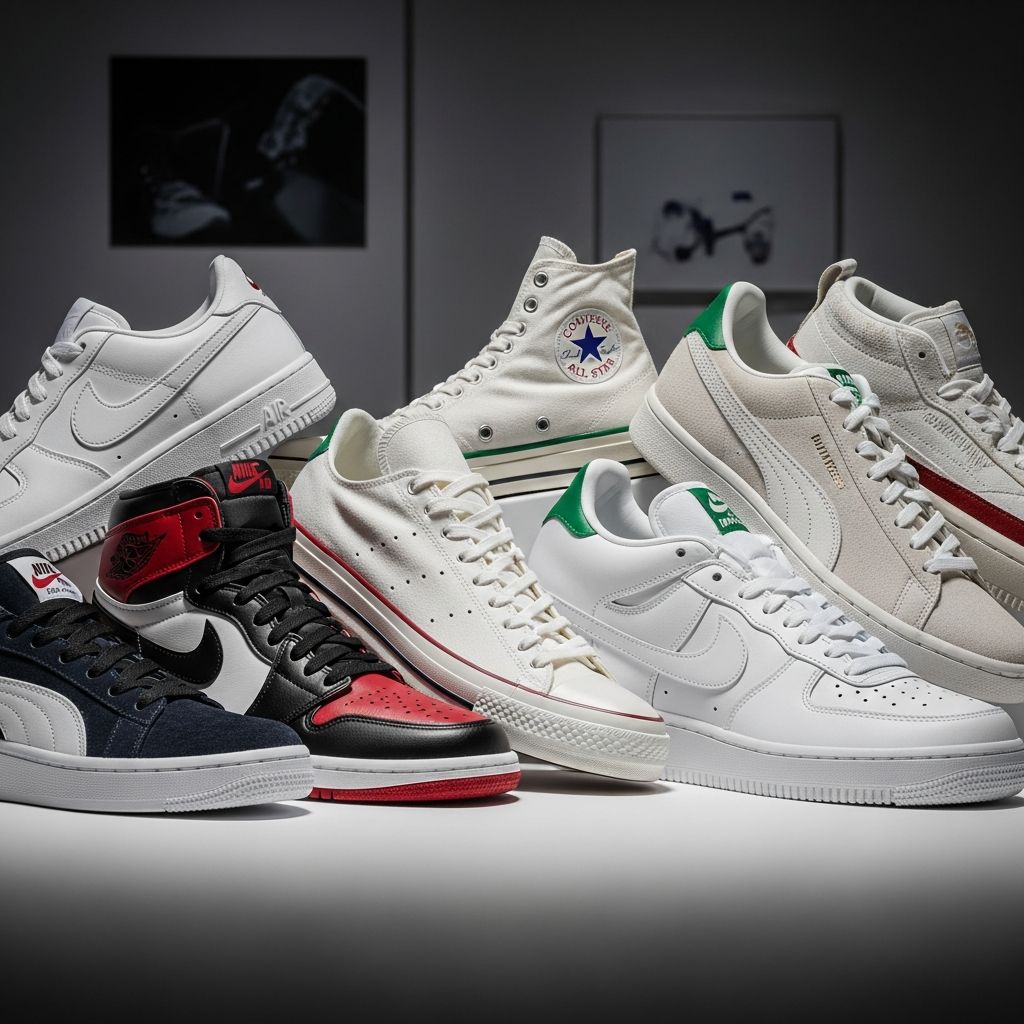
Sneakers were once simple tools for sport. Today, they are collectibles, cultural artifacts, and everyday essentials that say as much about identity as they do about comfort. This hall of fame explores the most influential sneakers ever, why they matter, and how a handful of designs reshaped fashion, music, and even the way companies market products.
The Evolution From Gym Shoe to Cultural Symbol
The story of sneaker icons starts more than a century ago, when rubber-soled shoes first appeared as practical footwear for emerging sports like tennis and basketball. Early models were focused on grip and durability, not style. Yet as brands realized athletes could become walking billboards, the sneaker slowly turned into a symbol.
By the mid-20th century, canvas basketball shoes and plimsolls had already become everyday casual wear, especially among young people. Over the following decades, innovations in cushioning, materials, and design, coupled with powerful marketing and celebrity endorsements, transformed sneakers into a global obsession.
- Performance first: Early sneakers prioritized traction, stability, and support.
- Personality next: Athlete signatures and bold logos made shoes aspirational.
- Culture finally: Hip-hop, skate, and streetwear turned sneakers into status symbols and storytelling devices.
What Makes a Sneaker Truly Iconic?
Not every popular shoe belongs in a hall of fame. The pairs that endure across generations usually share a mix of specific traits:
- Design originality – A distinctive silhouette, material choice, or color blocking that still feels recognizable decades later.
- Technical innovation – A new cushioning system, construction method, or material that changes how shoes are built or worn.
- Cultural impact – Connection to a sport, movement, music scene, or subculture that makes the shoe bigger than footwear.
- Longevity – Continued relevance through retro releases, collaborations, and consistent sales across generations.
- Versatility – The ability to work on court, on stage, and on the street, often across different age groups and style tribes.
Canvas Classics: Early Legends That Still Sell
Some of the earliest athletic shoes remain best-sellers today thanks to their simplicity and adaptability.
Converse-Style Basketball High-Tops
High-top canvas basketball sneakers from the early 20th century helped define what a sports shoe could look like. Their rubber toe caps, canvas uppers, and vulcanized soles created a formula that was easy to produce and even easier to wear off the court.
- Key design cues: Canvas upper, rubber toe bumper, high ankle, flat sole.
- Cultural reach: From professional athletes in the first half of the century to rock bands, skaters, and everyday wearers later on.
- Why hall of fame: They wrote the template for casual sneakers and remain among the most recognizable shoes worldwide.
Minimalist Court Shoes
In tennis, low-profile leather sneakers with clean lines and subtle branding became another early archetype. One iconic example, a minimalist leather tennis shoe first introduced in the 1960s, later adopted the name of a champion player and went on to become a lifestyle staple worn far from the court.
- Key design cues: Smooth white leather, perforated detailing instead of bold stripes or large logos.
- Cultural reach: Adopted by fashion-conscious wearers for its ability to pair with jeans, trousers, or suits.
- Why hall of fame: Showed that a sports shoe could be both technical and elegantly understated, influencing luxury and minimalist sneaker design for decades.
Air, Cushioning, and the Tech Revolution
From the 1970s onward, sneaker brands leaned heavily into technology. New foam compounds, air cushioning, and engineered soles promised better performance—and gave designers new visual tools.
Running Shoes That Looked to the Future
Innovative running shoes in the 1970s were often the first testing grounds for new soles and foams. One breakthrough involved a waffle-like outsole texture developed to improve traction and energy return; it became the blueprint for a wave of performance running models and helped launch a major sportswear brand to prominence.
- Impact on design: Showed that sole engineering could be as important as the upper in both performance and visual identity.
- Long-term influence: Modern running shoes still experiment with outsole geometry and foams in similar ways.
Visible Air and the Birth of Tech Aesthetics
The introduction of visible air cushioning in the late 1980s fundamentally changed sneaker aesthetics. A running shoe lined with a transparent window in the midsole didn’t just feel different—it looked like a piece of industrial design on your foot.
- Design leap: The midsole became a place to display technology rather than hide it.
- Cultural effect: Owning visible-air sneakers became a marker of taste and status among kids and collectors.
- Why hall of fame: It cemented the idea that tech can be a visual flex, not just a functional feature.
| Era | Innovation Focus | Typical Look |
|---|---|---|
| Pre-1960s | Basic grip and durability | Canvas, flat soles, simple rubber toe caps |
| 1970s | Running performance, outsole geometry | Low-top nylon or leather, waffle-like soles |
| 1980s | Cushioning systems, visible technology | Chunkier midsoles, bold color-blocking, air windows |
| 1990s–2000s | Specialized sport tech, lifestyle remixes | Mesh panels, plastic supports, retro reissues |
Basketball Signatures and the Birth of Sneaker Celebrity
Basketball shoes played an outsized role in creating modern sneaker culture. High-fliers on the court became global superstars, and their shoes became objects of desire.
The First Wave of Basketball Icons
In the 1910s and 1920s, high-top basketball sneakers were among the earliest mass-produced performance shoes. By the 1970s, players began receiving their own named models, including a suede low-top associated with an NBA star known for his flair on and off the court.
- Shift in marketing: Shoes were no longer just for a sport; they were for a specific personality.
- Subculture roots: These shoes were quickly adopted by emerging hip-hop scenes and B-boys, reinforcing the link between basketball, music, and street fashion.
The Air Jordan Phenomenon
The watershed moment came in the mid-1980s with the launch of the first signature model for a Chicago basketball star. Designed with input from the player, this shoe featured bold colors that initially clashed with league uniform rules, generating controversy and free publicity.
- Record-breaking success: The first model alone generated hundreds of millions of dollars in revenue in its debut year.
- Pop culture dominance: Subsequent models, enhanced by innovative designers and cinematic marketing campaigns, turned the line into a brand of its own, influencing fashion and youth culture worldwide.
- Legacy: Retro releases of these models still sell out, and collaborations with designers and artists keep the line in constant conversation.
Street, Skate, and Subculture Staples
Not all legendary sneakers were built for professional sport. Some of the most important designs came from listening to subcultures—skaters, graffiti artists, and musicians—who were already repurposing existing shoes.
Skate-Ready Low-Tops
By the 1970s, skateboarders had adopted certain low-top canvas and leather sneakers for their grip and board feel. In response, brands refined their designs with padded collars, reinforced toes, and stickier rubber.
- Design tweaks: Thicker tongues and specific sole patterns created shoes purpose-built for skateboarding.
- Cultural reach: These models became closely tied to punk, alternative, and DIY cultures, eventually influencing mainstream fashion.
Hip-Hop, Shell Toes, and Beyond
In the 1980s, a leather basketball shoe with a rubber shell toe became a street icon when a pioneering hip-hop group adopted it as part of their uniform—laces undone, tongues out. The shoe bridged the gap between basketball courts and city sidewalks, and its association with music cemented sneaker culture as part of broader youth identity.
- Key features: Rubber shell toe, leather upper, bold stripes.
- Fashion legacy: Still a go-to casual sneaker, and a template for collaborations with designers and brands across fashion tiers.
From Sportswear to Luxury and Collaboration
As sneakers grew in cultural importance, high-end fashion and luxury labels entered the arena. This crossover redefined what a sneaker could cost and who it could be for.
Luxury Brands Enter the Game
By the 1980s, luxury houses had started releasing their own tennis-inspired sneakers with signature stripes or logos, signaling that casual footwear had a place in high fashion. This trend accelerated in the 2000s and 2010s with chunky designer sneakers, premium leathers, and runway debuts.
- Shift in perception: Sneakers were no longer the opposite of formal; they became acceptable even with tailoring.
- Price escalation: High-end materials and limited distribution elevated sneakers to investment pieces and collectibles.
Collabs and Limited Editions
Collaboration became the new frontier. Artists, musicians, designers, and even museums worked with sportswear brands to reinterpret classic silhouettes. One especially influential collaboration line in the late 2010s reimagined existing basketball and running models with deconstructed details, quotation marks, and exposed construction, making the shoes feel like conceptual design pieces.
- Impact: Demonstrated that storytelling and design language could be as exciting as performance features.
- Result: A thriving resale market and a new understanding of sneakers as art and cultural commentary.
Why Certain Sneakers Keep Coming Back
Many of the shoes in any sneaker hall of fame are decades old, yet they remain perennial best-sellers. Several forces keep these icons alive:
- Nostalgia: Retro releases tap into memories of childhood, sports heroes, and music eras.
- Timeless design: Simple forms and balanced proportions rarely go out of style.
- Brand storytelling: Ongoing campaigns, documentaries, and collaborations refresh old silhouettes for new audiences.
- Versatile wear: The most beloved sneakers pair easily with different outfits and aesthetics, from streetwear to smart-casual.
How to Build Your Own Mini Sneaker Hall of Fame
You do not need hundreds of pairs to appreciate sneaker history. A small, thoughtful rotation can capture the spirit of the greats.
Core Categories to Cover
- One canvas classic: A high-top or low-top canvas shoe for everyday wear.
- One minimalist leather court shoe: Clean and versatile enough for dressed-up casual fits.
- One tech-forward runner: Modern comfort for long days and travel.
- One basketball icon: A historically significant high-top or mid, ideally in an original colorway.
- One personal grail: A collaboration, limited release, or model that connects to a memory or passion.
Questions to Ask Before Adding a Pair
- Does this design introduce something new—or refine a classic idea well?
- Is there a story behind this shoe that matters to you (athlete, artist, era)?
- Will you still want to wear this in five or ten years?
- Does it complement what you already own, or just duplicate another pair?
Frequently Asked Questions (FAQs)
Q: What is the single most influential sneaker ever?
There is no universal consensus, but many historians point to early canvas basketball high-tops and the first Air Jordan model as particularly influential because they helped launch both modern performance shoes and global sneaker culture.
Q: Why do retro sneakers stay popular when newer tech exists?
Retro models tap into nostalgia, iconic design, and cultural stories that newer shoes do not yet have. While modern pairs may offer better cushioning or support, classics remain desirable because of their emotional and stylistic resonance.
Q: How did sneakers become part of luxury fashion?
Starting with tennis-inspired shoes from high-end brands in the 1980s and accelerating with designer collaborations in the 2000s, luxury labels realized that sneakers could carry brand identity just as strongly as leather shoes, especially for younger consumers.
Q: Are collaborations important for sneaker history?
Yes. Collaborations between sportswear brands and designers, artists, or musicians often reinterpret classic models, introduce new audiences to historic silhouettes, and highlight sneakers as cultural objects rather than just products.
Q: How can I spot a design that might become a future classic?
Look for a clear visual identity, meaningful innovation, a strong story or partnership, and broad appeal beyond a single season. Designs that connect deeply to culture or push technical boundaries are more likely to endure.
References
- Popular Sneaker Designs of All Time — Academy of Art University. 2020-03-10. https://blog.academyart.edu/popular-sneaker-designs-of-all-time/
- The 25 Most Influential Sneakers of All Time — House of Heat. 2021-08-15. https://houseofheat.co/the-25-most-influential-sneakers-of-all-time
- 8 Iconic Sneaker Designers Who Defined Sneaker History — Crep Protect. 2023-02-09. https://crepprotect.com/blogs/crepdaily/8-iconic-sneaker-designers-who-defined-sneaker-history
- History of Sneakers — Encyclopaedia Britannica. 2024-05-01. https://www.britannica.com/topic/history-of-sneakers
- The History of Top-of-the-Range Sneakers Through the Ages — National Standard. 2022-04-20. https://nationalstandard.fr/en/blogs/sneakers-news/history-high-end-sneakers-national-standard
- Behind Every Iconic Sneaker Is An Even Better Story — MR PORTER. 2021-09-01. https://www.mrporter.com/en-us/journal/fashion/sneaker-story-nike-adidas-new-balance-collaborations-10579736
- The Surprising Story of Sneakers — Scholastic SuperSTEM. 2024-09-01. https://superstem.scholastic.com/issues/2024-25/090124/sneaker-history.html