When Potty Training Success Turns Into a Stand-Off
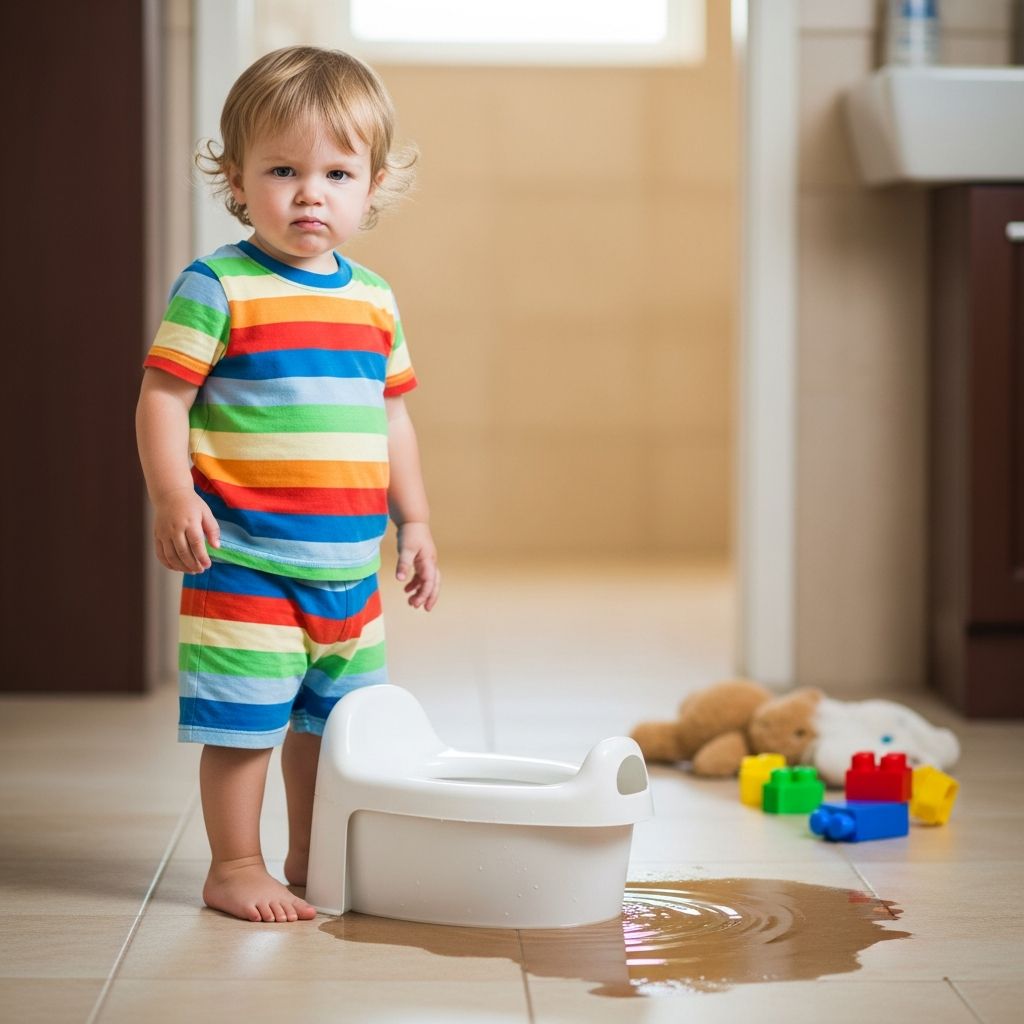
Many parents follow an intensive potty training method and see fast results, only to find that a few weeks later their toddler refuses the potty, demands diapers, and accidents explode again. What feels like a betrayal is usually not defiance for the sake of drama; it is a child clearly saying, “This is too much, too fast.”
This article explains what is happening when potty training boot camp leads to rebellion, how to step out of a power struggle, and how to build a calmer, more cooperative plan that respects your child’s pace and still gets you out of diapers.
Understanding Potty Training Rebellion
Before you can fix potty training problems, it helps to understand why toddlers dig in their heels.
Common Reasons Toddlers Suddenly Refuse the Potty
- Training started before true readiness – Medical and developmental experts emphasize watching the child’s physical, cognitive, and emotional signals instead of the calendar. When training starts too early or too intensively, resistance is more likely.
- Loss of control – Toddlers are biologically driven to seek autonomy. When they sense adults are overly invested in where and when they pee or poop, holding it or refusing to sit can become their most reliable way to assert power.
- Fear and anxiety – Loud flushes, large toilets, fear of falling in, or previous painful bowel movements can all make toileting feel scary.
- Negative experiences – Scolding, pressure, or punishment around accidents increase anxiety and can lead to withholding urine or stool, which then makes toileting even more uncomfortable.
- Big life changes – New siblings, moves, childcare changes, or stress at home often show up as regressions in already-learned skills, including potty use.
Boot Camps vs. Toddler Brains
Intensive or “boot camp” approaches usually aim to train a child in a few days with constant potty trips and intense focus. While some families do see quick success, this style can clash with how toddlers learn best:
- It focuses on speed instead of building understanding and comfort.
- It often leaves little room for the child’s choice or control.
- It can accidentally turn the potty into a stage for battles rather than a normal body routine.
Evidence-based guides stress that gradual, child-centered approaches, positive reinforcement, and avoiding punishment lead to fewer resistance problems and long-term success.
Signs Your Child Is Overwhelmed, Not Just Stubborn
Parents often describe a child who once seemed fully trained and is now “refusing out of nowhere.” Look closely, and the signs usually show a child in over their head.
| What You See | What It May Really Mean |
|---|---|
| Crying or screaming when asked to sit on the potty | Fear, anxiety, or association of the potty with pressure |
| Holding pee or poop for long stretches, then big accidents | Trying to maintain control or avoiding discomfort with elimination |
| Hiding to poop in a corner or behind furniture | Prefers privacy, not yet comfortable letting go on the potty |
| Asking for diapers again, even if they used underpants successfully | Seeking a familiar, safe routine after feeling rushed |
| Clinginess, meltdowns, or new sleep struggles | General stress spilling over into other areas of life |
Framing these behaviors as communication instead of misbehavior makes it easier to respond calmly and constructively.
First Step: Calling a Truce on Potty Battles
If every bathroom trip feels like a fight, the most powerful move is to consciously step out of the struggle. That usually means pausing the intense training plan and rebooting from a calmer place.
When Hitting Pause Helps
- Every request to use the potty ends in tears or yelling.
- Your child is withholding stool or urine and seems increasingly uncomfortable.
- You feel constantly angry, disappointed, or obsessed with your child’s toileting.
In these situations, many child development experts advise taking a short break from active training, especially if there are signs of emotional distress. A pause of a few weeks does not mean you have failed; it gives everyone time to reset.
How to Pause Without Confusing Your Child
- Use simple, non-blaming language such as: “The potty has been making us both upset. Let’s take a break and try again later.”
- If you return to diapers, present it as a neutral, temporary solution, not a punishment or a reward.
- Continue to offer the potty casually (“You can use the potty or your diaper; your body, your choice”) without pressure.
- Keep routines around handwashing and bathroom visits (for yourself) so toileting remains visible and normal.
Checking for Physical Causes Before You Push Harder
Before assuming the problem is purely behavioral, consider whether your child is dealing with physical discomfort.
Constipation and Painful Poops
One of the most common medical contributors to potty refusal is constipation. Children who have had painful bowel movements often begin to avoid pooping, which in turn worsens constipation and increases pain.
- Watch for hard, large, or very infrequent stools.
- Notice if your child stands on tiptoe, stiffens, or hides when they seem about to poop.
- Talk with your pediatrician if you suspect constipation; medical guidance on diet, fluid intake, activity, and, if needed, short-term medication can be crucial.
Other Physical Discomforts
- Urinary tract infection – Burning, frequent urination, or pain can cause sudden resistance; this requires medical evaluation.
- Uncomfortable potty setup – Toddlers need stable seating, with feet supported, to feel secure and to use their muscles effectively.
- Clothing challenges – Tight, complicated outfits can make potty use stressful; simple elastic-waist bottoms are usually best.
Rebuilding Trust After a Potty Power Struggle
Once you have eased the immediate conflict and ruled out major medical issues, the next phase is repairing the relationship between your child and the potty and between you and your child around this topic.
Make the Potty Safe, Boring, and Available
- Allow your child to explore the potty fully clothed again, just as if you were starting from scratch.
- Keep a small basket of books, fidget toys, or soft figures nearby so sitting feels relaxed, not like a test.
- Offer brief, low-pressure “practice sits” at predictable times, such as after meals or before bath, with an invitation rather than a command.
Give Back a Sense of Control
Many resistant toddlers relax as soon as they feel some genuine choice.
- Let them pick their potty, seat insert, or step stool color, and involve them in setting it up.
- Offer true choices: “Do you want to try the potty now or after we finish this puzzle?”
- Allow them to choose their underwear or training pants when the time is right again.
- Respect “no” whenever possible so that your “yes, this is important” carries more weight when you need it.
Use Encouragement, Not Pressure
Research and clinical guidance consistently warn against punishment or shaming for accidents, as this increases anxiety and resistance.
- Notice and praise effort: “You sat on the potty when it was hard. That was brave.”
- Use small, consistent rewards if they motivate your child—a sticker chart, choosing the bedtime story, or a special song during successful potty visits.
- Respond to accidents matter-of-factly: “Your underwear is wet. Let’s get you dry.” No lectures, no eye-rolling.
Designing a Gentler, Evidence-Informed Plan
Once the emotional temperature has cooled, you can move toward a more sustainable potty training approach that respects your child’s developmental stage and temperament.
Check for Readiness Signs
Pediatric and child development resources highlight several readiness indicators:
- Stays dry for at least 2 hours at a time.
- Can follow simple directions.
- Shows awareness of peeing or pooping (squatting, pausing play, or telling you).
- Dislikes wet or dirty diapers or asks to be changed.
- Shows interest in the bathroom or copying adults.
Build Predictable Routines Instead of Constant Reminders
- Connect potty sits to daily anchor points: waking up, before leaving the house, after meals, before bath.
- Keep sits short (1–3 minutes) and pleasant; long forced sessions generally backfire.
- Use a gentle timer or song to mark “potty check times,” making it a shared routine rather than a nag.
Make the Environment Toddler-Friendly
- Use a child-size potty or a seat insert plus a sturdy step stool so your child’s feet are supported.
- Ensure they can manage clothing by themselves as much as possible.
- Keep the bathroom warm, well-lit, and stocked with wipes, books, and a small towel they can reach.
Support Learning in Public and New Places
Some children will happily use the potty at home but refuse in public bathrooms.
- Practice visiting public restrooms only to wash hands or look around, with no expectation to use the toilet.
- Bring a familiar foldable seat or travel potty when possible.
- Describe what will happen before you go in: “The toilets here flush loudly. I’ll cover your ears and we’ll step back when they flush.”
Emotional Support for Parents
It is easy to feel judged, ashamed, or panicked when potty training does not go as planned, especially if you believed a boot camp would “get it done” quickly. Your stress is understandable—and contagious. Children are extremely sensitive to adult tension, which can intensify their own resistance.
Resetting Your Own Expectations
- Recognize that regressions are common and usually temporary.
- Remember that the goal is long-term independence, not fastest completion.
- Acknowledge that each child’s timeline is individual; comparisons with siblings or peers rarely help.
When to Ask for Professional Help
Consult your pediatrician or a child development specialist if:
- Your child is over 4 and still completely refuses the toilet.
- There is ongoing stool or urine withholding, especially with pain or frequent accidents.
- Potty issues are causing significant conflict, shame, or disruption in daily life.
A professional can screen for medical issues, constipation, or developmental concerns, and can help tailor strategies to your specific child.
Sample Gentle Potty Reset Plan
To make this all more concrete, here is a simple, flexible framework you can adapt after a boot camp experience has gone off the rails:
- Week 1–2: Cool-down and connection
Use diapers or training pants. No pushing. Read a couple of age-appropriate potty books, let your child see you use the toilet, and keep bathroom talk light and neutral. - Week 3–4: Reintroduce practice sits
Offer one or two short, optional potty sits per day around predictable times. Celebrate every step (walking to the bathroom, pulling pants down) rather than only successful pees. - After Week 4: Move toward underwear when they show interest
Involve your child in choosing underwear. Expect and normalize accidents. Keep routines consistent, use praise and small rewards if helpful, and avoid returning to pressure tactics.
This is not a strict schedule; it is a template to remind you that slower, calmer, and kinder is often the fastest way to genuine, lasting potty independence.
Frequently Asked Questions (FAQs)
My toddler was fully trained for weeks. Why are they suddenly having accidents again?
Sudden regression is common and can be triggered by stress, changes in routine, constipation, or having been pushed faster than your child was truly ready. Focus on staying calm, checking for physical issues, and gently reinforcing routines rather than starting another strict boot camp.
Should I put my child back in diapers if they are refusing the potty?
Short-term return to diapers or training pants can be helpful if battles are intense or your child is clearly distressed. Frame it as a temporary support, not a punishment, and continue to offer the potty in a low-pressure way while you rebuild trust.
Is rewarding potty use with stickers or treats okay, or will it cause problems?
Many evidence-based guides support using small, predictable rewards as one tool among others, especially when paired with praise for effort. Keep rewards modest and consistent, and avoid taking them away as punishment.
How long should I make my child sit on the potty?
Experts generally recommend brief sits—around 1–3 minutes—at predictable times, especially after meals. Long, forced sessions can create negative associations and are unlikely to improve success.
When is potty training resistance a sign of a bigger problem?
Talk with your pediatrician if your child is over 4 and not using the toilet at all, if there is frequent painful constipation or urinary symptoms, or if potty issues are severely impacting family life. A professional can rule out medical causes and help you develop a tailored plan.
References
- Potty training problems and solutions: An evidence-based guide — Gwen Dewar, Parenting Science. 2024-01-05. https://parentingscience.com/potty-training-problems-prevention/
- How to address challenges in potty training — Mastermind Behavior. 2023-08-10. https://www.mastermindbehavior.com/post/how-to-address-challenges-in-potty-training
- 11 Strategies To Help You With Potty Training Resistance — Go Potty Now. 2023-05-18. https://gopottynow.com/help-my-child-wont-sit-on-potty-a-parents-guide-to-potty-training-resistance/
- Five do’s and don’ts of potty training your toddler — UC Davis Health Children’s Hospital. 2022-09-15. https://health.ucdavis.edu/children/patient-education/potty-training-children
- Potty Training Challenges? These Ideas Can Help — First 5 California. 2022-03-01. https://www.first5california.com/en-us/articles/potty-training-challenges-these-ideas-can-help/