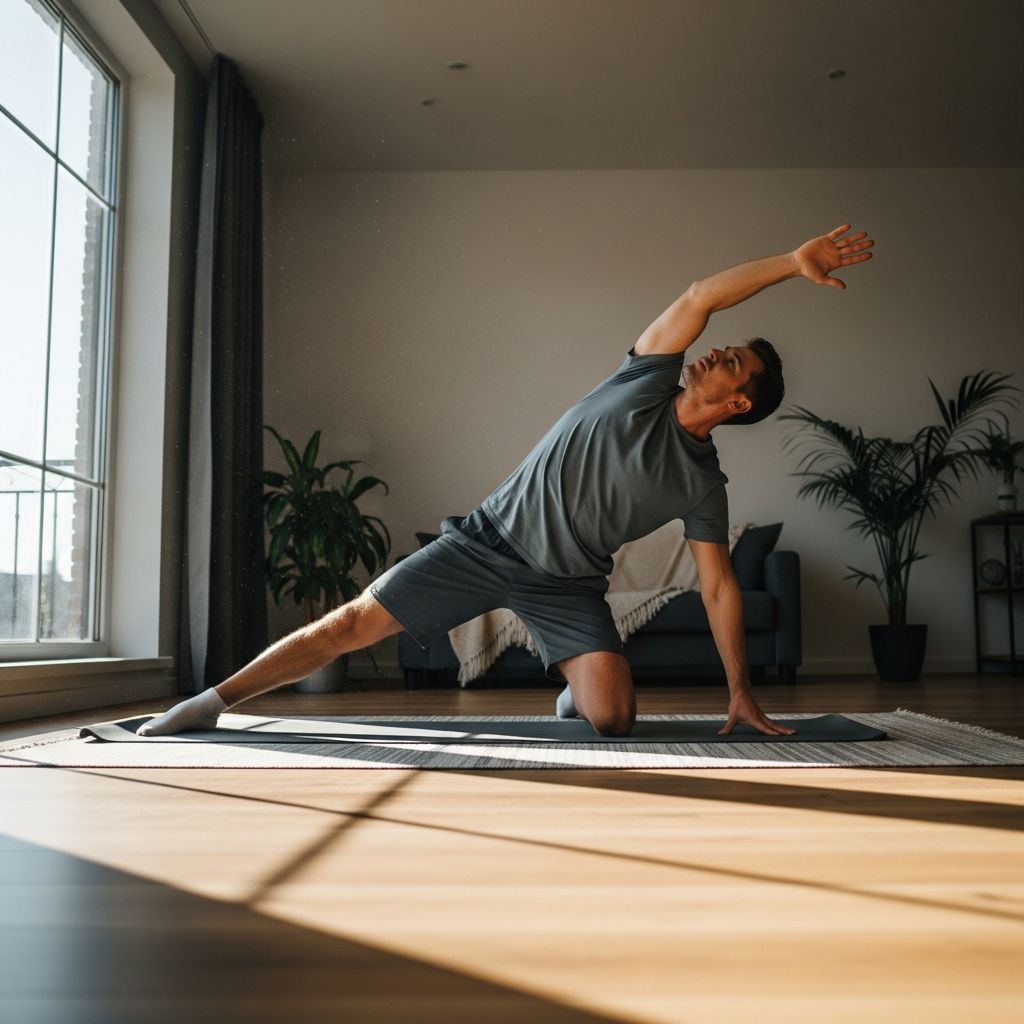
Rolling out of bed and grabbing your phone might be the default, but it does nothing for your aching back, tight hips, or foggy mind. A short, targeted morning stretch routine can reset your body, protect your joints, and make you feel more awake before the first sip of coffee.
Why Men Should Start the Day With Stretching
Many men carry stiffness from desk jobs, driving, heavy lifting, and hard training sessions. Over time, this tension can limit movement, worsen posture, and raise the risk of injury during simple activities like picking up a child or playing weekend sports. Morning stretching acts like a daily tune-up for your muscles and joints, especially in the hips, hamstrings, chest, and lower back.
Stretching also supports circulation and nervous system wakefulness. Gentle movement signals to your body that it is time to be alert, making it easier to focus and react throughout the day. When done consistently, a morning mobility practice becomes less about flexibility tricks and more about staying capable, strong, and pain-free as the years go by.
How This Routine Is Structured
This routine is designed for busy men who want results without spending an hour on the floor. You will start with light movement to wake up the joints, then move into deeper stretches for the areas that commonly feel tight, and finish with a few activation drills to prepare your body for standing, walking, and lifting.
Expect the session to take 10–15 minutes once you know the flow. You can do it on a yoga mat, carpet, or firm bed, and no equipment is required. The goal is consistency, not perfection, so focus on showing up, breathing steadily, and moving within a comfortable range rather than forcing extreme positions.
| Phase | Duration | Focus Area |
|---|---|---|
| Warm-Up Movements | 3–4 minutes | Spine, shoulders, hips |
| Deep Stretch Blocks | 5–7 minutes | Hip flexors, hamstrings, chest, glutes |
| Activation & Finish | 2–4 minutes | Core, posture, balance |
Simple Warm-Up Moves to Wake Up Your Body
Before holding any stretch for time, use a few gentle, repeated movements to lubricate your joints and raise your body temperature. Think of this as taking your body out of “sleep mode” and into “ready to move.” Each motion should feel controlled and pain-free.
Spend about 30–45 seconds on each of the following:
- Neck nods and turns: Slowly look down and up a few times, then turn your head left and right. Keep the motion small and avoid forcing your neck to the limit.
- Shoulder rolls: Circle your shoulders forward 10 times, then backward 10 times. Keep your chest open and avoid shrugging up toward your ears.
- Cat–camel spine waves: On all fours, gently alternate between arching your back up and letting it gently extend. Move with your breath to loosen the spine.
- Hip circles: Standing, place your hands on your hips and trace slow circles with your pelvis. Rotate clockwise and counterclockwise to explore the edges of your comfortable range.
Core Stretches for Men’s Tight Areas
Most men feel tight in the same predictable spots: front of the hips from sitting, hamstrings and calves from lack of movement or heavy training, and chest and shoulders from desk work and lifting. The stretches below directly target these regions so you can move better and stand taller.
Hold each stretch for 20–30 seconds, repeat 1–2 times, and keep breathing gently. If a position causes sharp pain, ease out and shorten the range.
1. Hip Flexor Lunge Stretch
This targets the front of the hip on the trail leg and helps undo hours of sitting. It is especially helpful for men who experience lower back tightness or feel locked up when standing after long periods in a chair.
- Kneel on your right knee with your left foot forward, front knee bent around 90 degrees.
- Shift your hips gently forward until you feel a stretch in the front of your right hip, not your lower back.
- Keep your torso tall, ribs stacked over your hips, and avoid leaning too far forward.
- Hold, breathe slowly, then switch sides.
2. Hamstring Reach From Standing
This stretch targets the back of the thigh and can relieve the feeling of “short” or tight legs in the morning. It also encourages you to hinge from your hips rather than rounding through the lower spine.
- Stand with your feet hip-width apart and soften your knees.
- Hinge at your hips and let your chest move toward your thighs while your hands slide down your legs or toward the floor.
- Stop when you feel a firm but manageable stretch along the backs of your legs.
- Keep your back long, not collapsed, and relax your neck.
3. Chest Opener Against a Wall
Men often build strong chest muscles but neglect flexibility in the front of the shoulders. This can pull the upper body into a rounded position and strain the neck and upper back. A simple chest opening drill helps rebalance the front and back of the body.
- Stand next to a wall and place your right palm and forearm against it at shoulder height.
- Gently turn your chest away from the wall until you feel a stretch across the front of your shoulder and chest.
- Keep your shoulder down and relaxed, not jammed up toward your ear.
- Hold, then switch sides.
4. Glute and Lower Back Release on the Floor
Tight glutes and lower back muscles can make it uncomfortable to bend, twist, or sit. A controlled lying twist eases pressure in this region and restores a sense of fluid movement in your spine and hips.
- Lie on your back with your knees bent and feet flat on the floor.
- Bring your right knee toward your chest, then guide it gently across your body toward the left side.
- Let your right arm stretch out to the side and keep your shoulders as close to the floor as comfortable.
- Hold, breathe calmly, then return to the middle and repeat on the other side.
5. Calf and Ankle Wall Stretch
Ankles that move poorly can affect everything above them, from knees to hips. Loosening the calves and ankles in the morning helps your walking, running, and squatting feel smoother.
- Face a wall and place your hands on it for support.
- Step your right foot back and keep your heel pressed down while your left knee bends slightly.
- Lean your hips forward until you feel a stretch in the back of the right lower leg.
- Hold, then switch legs. For a deeper stretch closer to the Achilles, bend both knees a bit while keeping the back heel down.
Activation: Turn On Your Muscles Before the Day Starts
Stretching on its own can increase your range of motion, but pairing it with basic activation movements makes that new range more useful. Think of this phase as “saving” your flexibility gains by asking your muscles to support your joints through controlled movement.
Do 8–12 slow, quality repetitions of each exercise:
- Bodyweight hip hinge: Stand tall, push your hips back while keeping your spine long, then return to standing. You should feel your hamstrings and glutes working more than your lower back.
- Wall slide for posture: Stand with your back against a wall, elbows bent at 90 degrees, and try to slide your arms overhead while staying in contact with the wall as much as comfortable. This encourages better upper-back engagement and shoulder control.
- Marching balance holds: Stand on one leg and lift the opposite knee to hip height, holding for a few seconds before switching. This challenges your balance and wakes up the muscles around your ankles and hips.
Tips to Make Stretching a Daily Habit
The biggest challenge is rarely the stretching itself; it is remembering to do it. Building a habit means making the routine simple, consistent, and easy to start. You do not need willpower if the habit fits naturally into your existing morning flow.
- Attach it to something you already do: For example, stretch right after you brush your teeth or before you start the coffee machine.
- Start small: Begin with just three stretches if you are new. As it becomes automatic, add more movements or increase your hold times.
- Lay out a mat the night before: A visible cue on the floor reminds you of your commitment as soon as you wake up.
- Track streaks, not perfection: If you miss a day, simply resume the next morning rather than trying to “make up” missed sessions.
Common Mistakes Men Make When Stretching
Stretching should never feel like a competition, yet many men push too aggressively, hold their breath, or compare themselves to younger versions of their bodies. These habits not only reduce the benefits but can also increase the chance of strain or soreness.
- Bouncing into stretches: Rapid, jerky movements can irritate muscles and tendons. Aim for steady, gradual tension instead.
- Chasing pain: Mild discomfort is normal, but sharp or burning sensations are a warning sign to back off immediately.
- Ignoring breathing: Holding your breath makes your body more tense. Slow exhales help your muscles relax into the stretch.
- Only stretching the “problem” spot: Knee or back discomfort often starts with tight hips, calves, or glutes. Give your entire body some attention.
Who This Routine Is Best For
This style of routine suits a wide range of men, from beginners with no exercise background to experienced lifters who want to maintain joint health. As long as you move within your comfort zone and respect your limits, most of these positions are low-impact and accessible.
If you have a history of serious joint problems, recent surgery, or persistent pain, it is wise to clear any new routine with a qualified health professional. Modifications such as using pillows, changing angles, or reducing hold times can help you enjoy the benefits without over-stressing sensitive areas.
FAQs About Morning Stretching for Men
How long should a morning stretch routine take?
For most men, 10–15 minutes is enough to address key areas and feel noticeably looser. If you are very short on time, even 5 focused minutes of hips, hamstrings, and chest can make a difference. The most important factor is how regularly you perform the routine, not the exact length of each session.
Is stretching before or after coffee better?
You can stretch either before or after coffee; what matters is consistency. Many men prefer to stretch first because it is easier to complete the routine before distractions begin. Others enjoy using the warm, alert feeling from caffeine to move deeper into their positions. Experiment and pick the timing you are more likely to maintain.
Can stretching alone replace a workout?
Stretching helps with mobility, posture, and joint comfort, but it does not build cardiovascular fitness or significant strength on its own. Think of this morning routine as the foundation that supports your other training, whether that is lifting, running, sports, or physically demanding work. Ideally, combine stretching with resistance training and regular walking or other movement.
What if I feel more sore after stretching?
Mild soreness or fatigue can appear if your body is not used to moving through these ranges, but sharp pain or lingering discomfort is a sign to adjust. Reduce the depth of your stretches, shorten your holds, or take an easier version of each position. If pain persists or worsens, consult a professional rather than trying to push through it.
Is it better to stretch in the morning or at night?
Both can be helpful, but they serve slightly different purposes. Morning stretches prepare your body for the day’s demands and can combat stiffness from sleep, while evening sessions are often better for relaxation and recovery. If you choose only one, pick the time you are most likely to stick with over the long term.
Putting It All Together
A smart morning stretch routine does not need to be complicated to be effective. By spending a few minutes on your hips, hamstrings, chest, and spine, then finishing with simple activation moves, you prepare your body for nearly everything the day can throw at it. Over weeks and months, these small, consistent actions compound into better posture, fewer aches, and greater confidence in how your body moves.
Start with the basic sequence outlined above, adjust the intensity to your needs, and treat each morning as a chance to check in with your body. With time, you will not just feel more flexible; you will feel more ready for the day before your feet even leave the bedroom floor.