Water naturally captivates young children, drawing their attention and curiosity in ways few other materials can. In Montessori philosophy, this inherent attraction to water is viewed not merely as play, but as a meaningful learning opportunity. Water-based activities serve dual purposes: they provide sensory-rich experiences while building practical life skills that foster independence and confidence in young learners. By incorporating water play into your home environment, you create opportunities for children to develop concentration, refine motor skills, and explore cause-and-effect relationships through direct, hands-on engagement.
Understanding Water Play in Montessori Education
The Montessori approach to education fundamentally differs from traditional play-based learning by recognizing that children’s work and play are inseparable. When a child engages with water activities in a Montessori-inspired home, they are not simply playing—they are working toward developing essential life competencies. Water serves as a natural medium for this work because it responds to a child’s actions immediately, providing instant feedback and encouraging repeated practice.
Young children between ages one and six demonstrate particularly strong interest in water-based tasks. This developmental stage presents an ideal window for introducing structured water activities that align with the child’s natural developmental needs. The Montessori method emphasizes practical life skills as foundational to a child’s overall development, and water activities form a cornerstone of these practical experiences.
Foundational Water Exploration Experiences
Before introducing more complex water activities, children benefit from simple sensory exploration. These introductory experiences help children become comfortable with water and understand its fundamental properties.
Shallow Tray Water Play
The most basic introduction to water involves minimal setup. Place a shallow tray containing room-temperature water in an accessible location—on a low table, directly on the floor, or even outside on warm days. Add nothing initially; allow your child to splash, pour, and manipulate the water with their hands. This foundational activity can be introduced once an infant demonstrates the ability to sit independently, typically around six to nine months of age.
As comfort increases, gradually introduce complementary materials: waterproof glowing cubes for visual interest, soft sponges for tactile variation, or small floating toys. Each addition expands the sensory dimensions of the experience without overwhelming the learner.
Sensory Bin Exploration
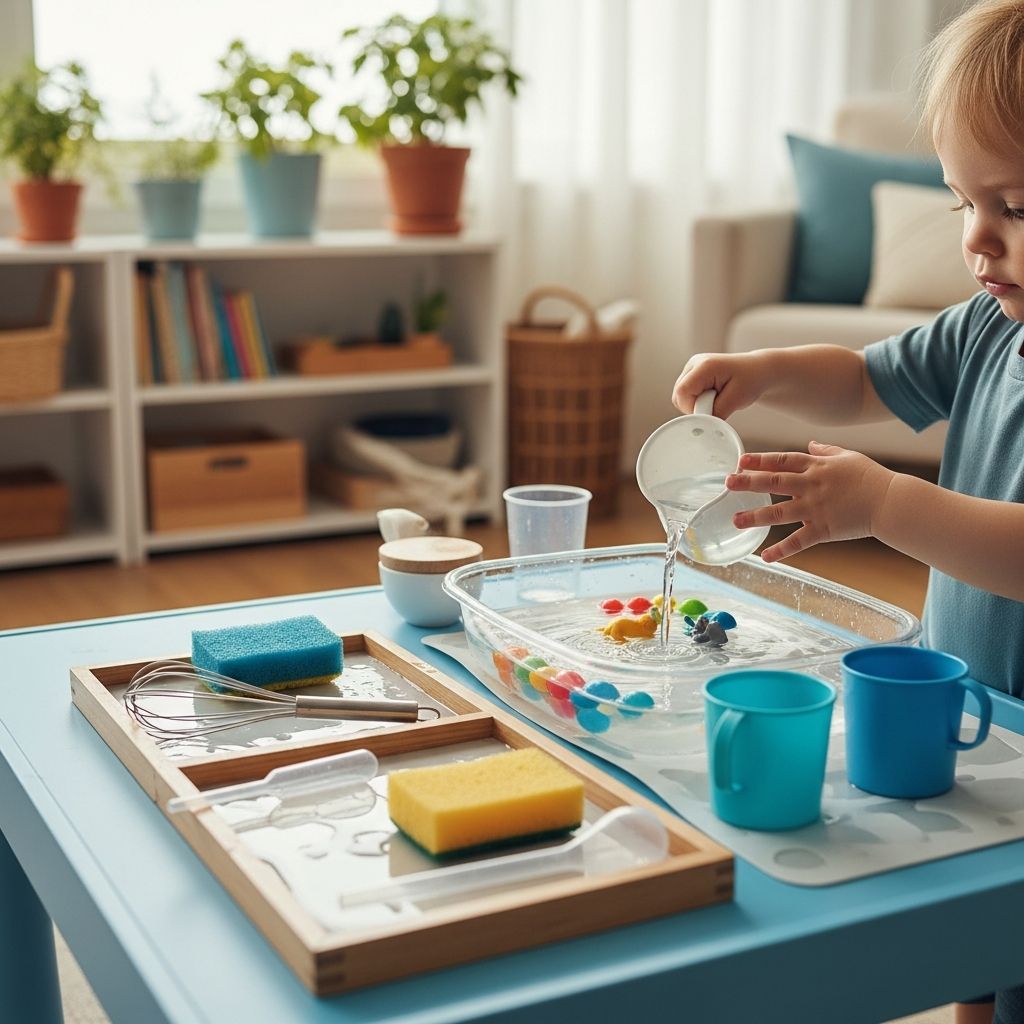
Water sensory bins provide contained, focused exploration opportunities. Fill a small basin with water and position your child where they can safely reach and observe. Begin with plain water, then progressively introduce variations: brightly colored sponges cut into different shapes, toy fish, objects that float versus sink, or measuring cups and bowls.
This graduated approach maintains engagement while introducing new concepts. Your child practices scooping, stirring, and pouring—all foundational motor skills—while simultaneously discovering properties of water and different materials.
Transfer and Pouring Activities
Water transfer activities represent a significant advancement in complexity and skill development. These exercises build fine motor control, hand-eye coordination, and concentration while providing deeply satisfying sensory feedback.
Pitcher-to-Pitcher Pouring
Set up two small pitchers on a shallow tray. Fill one pitcher with water and demonstrate slowly pouring from the full pitcher to the empty one. Allow your child to observe the process, then provide opportunities for repeated practice. This seemingly simple activity develops remarkable control and focus as children work to minimize spilling.
Progress by varying the vessels: large to small, wide to narrow, ceramic to plastic. Each variation presents new challenges that maintain interest and promote ongoing skill refinement. Some children will practice the same pouring sequence repeatedly, demonstrating the concentration and purposefulness characteristic of Montessori learning.
Precision Pouring with Measurement
Once basic pouring is established, introduce graduated measuring concepts. Provide graduated cylinders or standard measuring cups alongside the water vessels. Challenge your child to pour a specific quantity—”fill the cup to the line” or “pour exactly three tablespoons.” This bridges practical motor skill with early mathematical understanding.
Squeezing and Extracting Techniques
Activities involving squeezing develop different muscle groups and hand strength than pouring activities. These movements prepare children for future writing and fine motor tasks.
Sponge Squeezing
Provide natural sponges, soft cloths, or rags alongside two bowls—one filled with water, one empty. Demonstrate dunking the sponge in water, then squeezing it over the empty bowl. This activity strengthens hand muscles while teaching water containment and control.
Turkey Baster Transfer
Turkey basters offer a different squeezing mechanism. Fill the baster with water from one container and squirt into another. The resistance required to fill and empty the baster provides satisfying proprioceptive feedback while building strength in the hand and forearm.
Eyedropper Precision
Eyedroppers present the most refined squeezing challenge. Filling and emptying small droppers requires careful control and concentration. This activity naturally appeals to children seeking increasingly challenging work and provides excellent preparation for scientific observation and measurement skills.
Practical Life Applications of Water Work
Perhaps the most significant aspect of Montessori water activities involves their connection to real household responsibilities. When children engage with water in meaningful, purposeful contexts, they develop both competence and confidence.
Cleaning and Maintenance Tasks
Scrubbing represents one of the most beloved water activities in Montessori environments. Provide a small basin of water, a soft brush, and objects to clean—smooth stones, toy animals, or vegetables. Children scrub with purpose and satisfaction, completing a task that produces visible results.
Table washing extends this principle to household maintenance. Using a damp cloth or sponge with water, children learn to wipe surfaces clean. Window spraying with a small spray bottle targets fine motor control while accomplishing a household task. Floor mopping with miniature tools allows participation in family work while remaining manageable for small hands.
Dishwashing and Food Preparation
Washing dishes combines water work with meaningful contribution to family life. Set up a low, accessible washing station with basins of warm soapy water and a drying area. Children can wash small items, learning responsibility and independence while developing practical skills.
Water play naturally extends into food preparation contexts. Filling pots for cooking, adding water to recipes, and managing spills during meal preparation all offer legitimate opportunities for water engagement within purposeful family activities.
Plant Care and Garden Work
Watering plants serves dual purposes in Montessori homes: it provides structured water practice while teaching children responsibility for living things. Provide a child-sized watering can and establish a simple routine for plant care. Offer variety by including plants with different water needs, creating opportunities to observe and adapt approaches.
Sensory Enrichment Through Water Variations
While plain water offers tremendous learning opportunities, occasional variations maintain engagement and introduce new sensory dimensions.
Temperature Exploration
Safely introduce temperature variations—never extreme, but noticeable. Room-temperature water compared to slightly cool water or gently warmed water (always verified for safety) helps children recognize and respond to different sensory inputs. This foundation supports later scientific understanding of properties and states of matter.
Color and Visual Interest
A few drops of food coloring transforms plain water into visually compelling material. Colored water for pouring activities increases visual engagement, particularly for children with visual processing preferences. Some Montessori educators create ice-based water painting tools by freezing colored water in ice cube trays with popsicle sticks—combining water play with art creation.
Texture and Object Integration
Water becomes richer when combined with varied objects: floating toys, sinking objects, smooth stones, soft materials. Children develop classification skills while exploring density, buoyancy, and material properties through natural experimentation.
Creating an Effective Home Water Play Environment
Successful water activities require thoughtful environmental preparation. Unlike traditional play areas, water work benefits from specific organizational principles.
Accessibility and Safety
Position water activities at your child’s level—low tables or floor placement allows independent access and reduces the need for adult assistance. Use shallow trays to contain water and minimize spill volume. Keep absorbent materials nearby for quick cleanup, teaching your child responsibility for managing spills.
Tool Selection and Presentation
Offer real, child-sized tools rather than plastic miniatures when possible. Small pitchers, genuine sponges, and actual brushes provide authentic experiences and greater satisfaction. Limit the number of options presented at once—three to four tools create choice without overwhelming.
Repetition and Progression
Children benefit from consistent access to water activities. Rather than constantly introducing new options, allow familiar activities to remain available, enabling repeated practice and deepening mastery. Progressively introduce variations and increased complexity as skills develop.
Developmental Benefits and Learning Outcomes
Water-based activities in Montessori homes support development across multiple dimensions:
- Fine Motor Development: Pouring, squeezing, and manipulating water-based tools refine hand strength and coordination
- Concentration and Focus: Water’s immediate feedback encourages sustained attention and repeated practice
- Independence: Self-directed water activities build confidence and reduce dependence on adult direction
- Practical Competence: Real-world applications teach meaningful life skills
- Sensory Processing: Water engagement supports sensory integration and exploration
- Cognitive Development: Cause-and-effect relationships and problem-solving emerge naturally through water play
Seasonal and Environmental Considerations
Water play adapts beautifully to changing seasons and outdoor environments. During warm weather, expand activities outside—painting sidewalks with water and brushes, splashing in puddles after rain, or creating large-scale water transfer activities with bigger containers. These outdoor variations provide environmental richness while maintaining Montessori principles.
Rainy days present particular opportunities. Rather than viewing weather as limiting, Montessori practice suggests embracing rain as a natural water play extension. Going outside to feel rain on skin, splashing in puddles, or observing water running down windows extends water engagement into the natural world.
Frequently Asked Questions
Q: At what age can children begin water activities?
A: Simple water sensory play can begin around six to nine months once an infant sits independently. However, even younger children can observe and begin developing comfort with water in adult-supervised contexts. More complex activities progress as motor skills and concentration develop.
Q: How do I manage the mess and wet clothing?
A: Establish a contained water play area using shallow trays and waterproof mats. Have absorbent towels accessible and consider water-resistant clothing or aprons. Frame cleanup as part of the learning experience—children learn responsibility and practical skills through managing their own spills and wet areas.
Q: Can I incorporate water play during cooler months?
A: Absolutely. Indoor water play with warm water feels particularly satisfying during cooler seasons. Water sensory bins, dishwashing, and other indoor activities continue year-round. Adjust outdoor activities seasonally while maintaining the core principle of water engagement.
Q: How do I prevent water play from becoming chaotic splashing?
A: Structure and clear expectations support purposeful play. Present one activity at a time with specific tools and containers. Model the intended use calmly and deliberately. Allow adequate time for practice. Children naturally engage more purposefully when they feel competent and expectations are clear.
Q: What materials work best for water activities?
A: Real, child-sized tools—metal pitchers, genuine sponges, small brushes—provide the most satisfying experiences. Ceramic or glass containers when safe, natural materials, and items with purpose from daily life work better than plastic toy versions. Simple, quality materials support genuine engagement.
References
- Montessori, Maria — The Montessori Method. 1912. Foundation text establishing practical life as central to Montessori education and child development.
- The Kavanaugh Report: 20+ Montessori Ways to Play with Water — Montessori Home Resources. 2018-09-06. https://www.thekavanaughreport.com/2018/09/20-montessori-ways-to-play-with-water.html
- 3 Montessori-Inspired Water Play Activities for Infants and Toddlers — The Montessori Room. Video resource demonstrating age-appropriate water activities. https://www.youtube.com/watch?v=uDW33sNkz1Y
- 10 Ways to Play With Water — A Shared Vision. Accessible water play activities for children with visual differences. https://www.asharedvision.org/10-ways-to-play-with-water.html
- 5 Montessori Water Activities for Young Children — Nduoma. 2024. https://nduoma.com/5-montessori-water-activities-for-young-children/
- 11 Activities for Children Who Like Water Play — The Montessori Room. https://themontessoriroom.com/blogs/montessori-tips/11-activities-for-children-who-like-water-play