Daily life with young children often involves shifting from one activity to another, such as waking up, heading to school, or settling into bedtime. These moments can spark resistance or tears if not handled thoughtfully. Drawing from Montessori philosophy, which emphasizes respect for the child’s pace and natural development, parents can create structured yet flexible routines that promote independence and emotional security. This approach transforms potentially chaotic shifts into opportunities for growth, helping children feel capable and in control.
Building a Predictable Family Rhythm
The foundation of smooth transitions lies in establishing a consistent daily and weekly rhythm. Children thrive when they know what to expect, reducing anxiety around changes. In a Montessori home, this means aligning family schedules with the child’s needs rather than solely adult demands.
Start by mapping out your day: mornings for preparation, afternoons for rest or play, and evenings for winding down. For weekdays, maintain school drop-off and pick-up patterns, while weekends allow gentle variations like family outings. Consistency builds internal security, making unexpected adjustments easier to handle.
- Observe your child’s natural energy peaks and dips to tailor the rhythm.
- Involve them in discussing the schedule to foster ownership.
- Adjust for life events, like holidays, by previewing changes ahead.
This rhythmic structure mirrors the prepared environment of a Montessori classroom, where order supports concentration and self-regulation.
Visual Tools to Guide Young Minds
Visual aids empower children who may not yet read or fully grasp verbal instructions. A simple picture chart of the day’s sequence—waking, dressing, eating, playing—serves as a roadmap, minimizing confusion during shifts.
Create a laminated board with photos: a sun for wake-up, clothes for dressing, a plate for breakfast, a backpack for school. Review it each morning, moving magnets or clips to mark progress. For school days, include pick-up images to reassure separation anxiety.
| Time of Day | Visual Icon | Activity |
|---|---|---|
| Morning | Bed & Sun | Wake & Stretch |
| After Breakfast | Clothes | Dress Independently |
| Midday | Backpack | School Time |
| Evening | Bath Tub | Bath & Story |
Such tools not only ease transitions but also teach time concepts and sequencing skills essential for cognitive growth.
Cultivating Independence Through Practical Tasks
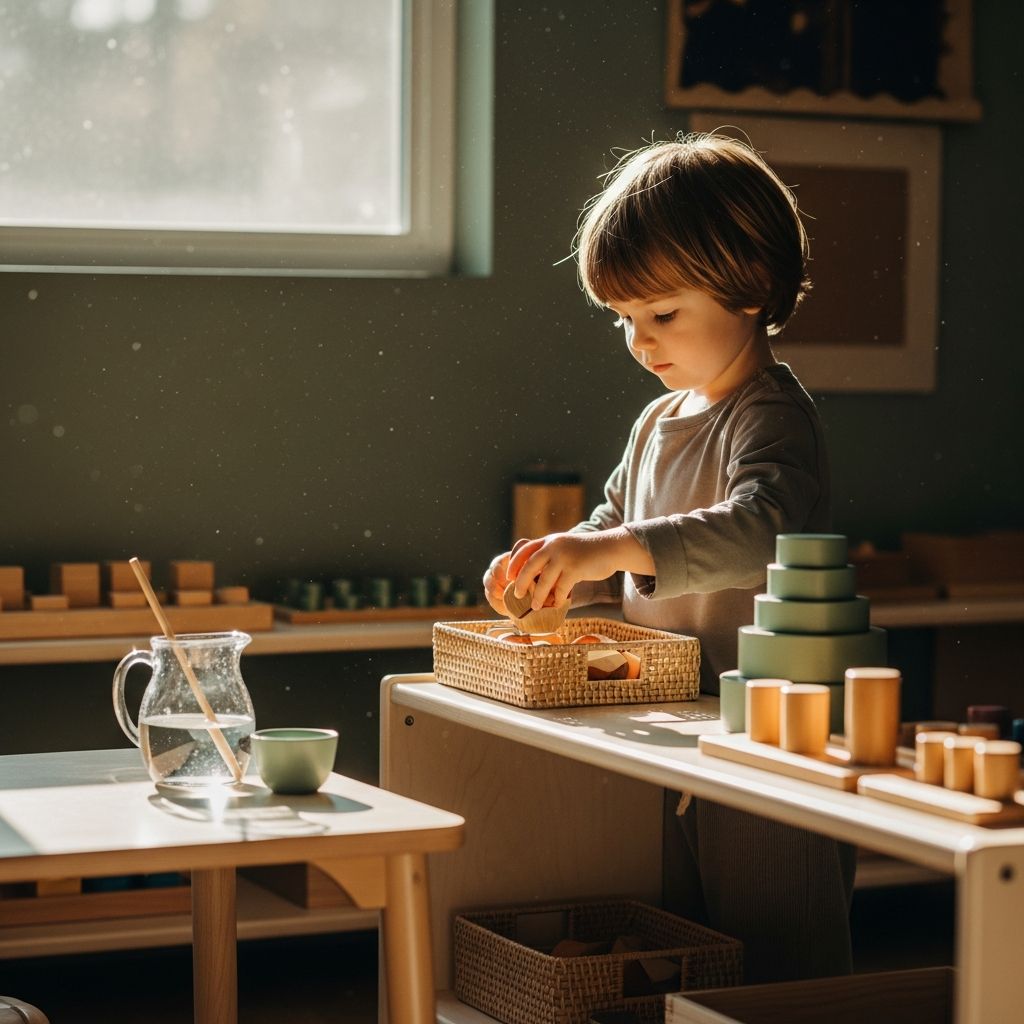
Montessori prioritizes practical life activities—real-world tasks like dressing or tidying—that build fine motor skills and self-reliance. During transitions, assign age-appropriate roles to give children purpose and agency.
For mornings, set out clothes the night before, allowing self-dressing with minimal intervention. At departure, let them pack bags or don coats. Even toddlers can place dishes in the sink post-breakfast. This shifts focus from resistance to accomplishment.
- Provide child-sized tools: hooks for coats, step-stools for sinks.
- Model tasks first, then step back to observe.
- Praise effort, not perfection, to encourage persistence.
Independence reduces power struggles, as children internalize routines and gain confidence in their abilities.
Advance Warnings and Connection Moments
Forewarning prevents shock. Use gentle verbal cues like “In five minutes, we’ll tidy toys and prepare for lunch,” paired with timers for tactile feedback. Connect emotionally by getting to eye level, explaining the reason, and acknowledging feelings: “I know playtime is fun; soon we’ll have story time.”
For tough shifts, like leaving the park, offer choices: “Do you want to hold the timer or my hand?” This respects autonomy while guiding compliance. Transitional objects—a family photo or special stone—comfort during separations, reminding them of your bond.
Morning Rituals for a Calm Start
Mornings set the day’s tone. Avoid rushes by preparing evenings prior: lunches packed, outfits chosen, schedules discussed. Greet with warmth—a hug or song—to ease from sleep.
Allow unhurried dressing and breakfast at home, not in cars. For late risers, dim lights and soft voices promote gentle awakening. These rituals build positive associations, making wake-ups joyful.
Evening Wind-Downs for Restful Nights
Evenings mirror mornings in reverse. Upon returning home, designate 30 minutes for decompression: free play or quiet reading. Involve kids in dinner prep—stirring, setting tables—to extend the day’s rhythm.
Baths soothe active bodies, followed by teeth-brushing, book selection, and dimming lights. Let them arrange bedding or choose lullabies, teaching self-soothing for independent sleep.
Adapting Routines for Growing Children
As kids age from toddlerhood to preschool, evolve routines. Introduce more choices and responsibilities, like selecting outfits or helping with laundry. Monitor for distress signals—tantrums or clinginess—and refine accordingly.
Flexibility is key; rigid schedules break under illness or travel. Use these as teaching moments for resilience, previewing changes with visuals or talks.
Common Challenges and Solutions
Resistance peaks during high-energy play-to-rest shifts. Counter with ample buffer time, avoiding last-minute rushes. If timers fail, try songs or chants as fun cues.
| Challenge | Montessori Solution | Expected Outcome |
|---|---|---|
| Meltdowns at Goodbye | Formal farewell ritual + transitional object | Emotional security |
| Struggles Dressing | Night-before prep + child-sized aids | Skill mastery |
| Bedtime Battles | Consistent wind-down + choices | Self-soothing |
Frequently Asked Questions (FAQs)
What age is best for visual schedules?
Visuals benefit children from 18 months through elementary, adapting complexity as they grow. Start simple with pictures for toddlers.
How do I handle a child who ignores timers?
Combine with connection: explain, empathize, then enforce calmly. Consistency builds trust over time.
Can these work for non-Montessori families?
Yes, principles of rhythm, independence, and respect apply universally, enhancing any parenting style.
What if our schedule is unpredictable?
Prioritize core anchors like meals and sleep; use portable visuals for on-the-go adjustments.
How long until routines stick?
Typically 2-4 weeks with gentle enforcement; celebrate small wins to motivate.
Implementing these Montessori-inspired strategies requires patience but yields calmer homes and more resilient children. By prioritizing preparation, visuals, independence, and connection, transitions become bridges to greater autonomy rather than battlegrounds.
References
- Managing Daily Transitions — Schoolhouse Montessori. 2015-10. https://schoolhousemontessori.com/wp-content/uploads/2015/10/Managing-Daily-Transitions.pdf
- Tips for Making Transitions Easier — Learning Grove. N/A. https://www.learning-grove.org/tips-for-making-transitions-easier/
- 5 Montessori Ways to Help Your Child Move Up to Elementary — Primary Montessori. N/A. https://primarymontessori.com/5-montessori-ways-to-help-your-child-move-from-early-childhood-to-elementary-classrooms/
- MONTESSORI AT HOME: Managing Transitions — YouTube (Hapa Family). N/A. https://www.youtube.com/watch?v=CeZ-e-0zxKI
- MONTESSORI AT HOME: 5 Daily Reminders for Parents — YouTube (Hapa Family). N/A. https://www.youtube.com/watch?v=QMViq7sL4LU
- 6 Ways To Make Transitions Easier — The Montessori Room. N/A. https://themontessoriroom.com/blogs/montessori-tips/6-ways-to-make-transitions-easier