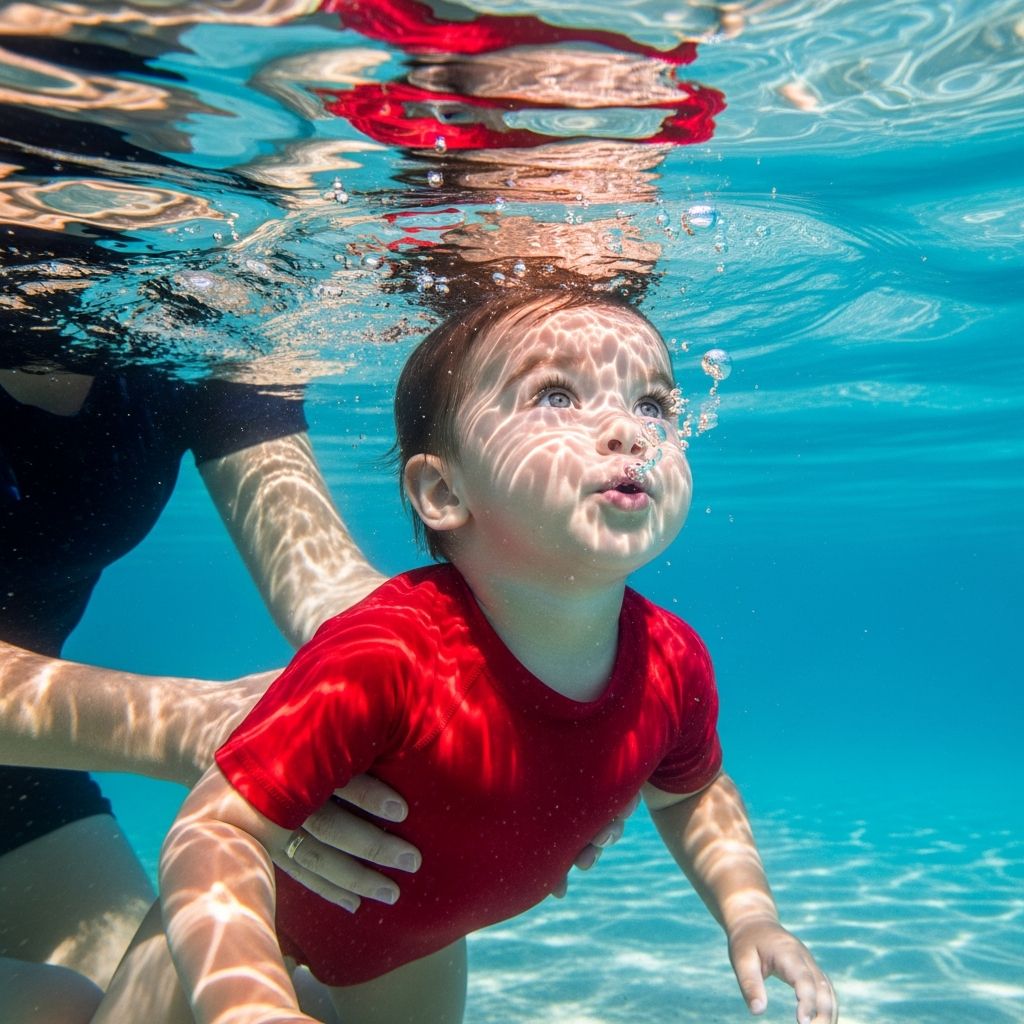
Infant Swimming Resource (ISR) lessons promise to teach very young children how to save themselves if they fall into water. For many parents, that sounds reassuring, but it also raises big questions: Is ISR safe? Does it really work? And is it right for your child and family?
This guide uses ISR programs as a starting point to explore survival-focused swim lessons, what experts say about drowning prevention, the potential benefits and concerns, and how to make an informed choice for your child.
Why Water Safety Matters So Much
Drowning is among the leading causes of accidental death in children, especially toddlers, which is why parents search for every possible layer of protection.
- In the United States, drowning is a top cause of unintentional injury death in children 1–4 years old.
- Most young-child drownings happen in residential pools and often during a brief lapse in supervision.
- For infants under 1 year, bathtubs and household water sources are common drowning locations.
The American Academy of Pediatrics (AAP) recommends a layered approach to water safety that includes constant supervision, barriers like four-sided pool fencing, CPR training for caregivers, and appropriate swim lessons.
What Is ISR and How Is It Different From Regular Swim Lessons?
Infant Swimming Resource (ISR) is a branded survival-swim program that focuses on self-rescue skills for infants and young children, typically from about 6 months to 6 years.
Core Features of ISR Lessons
- Self-rescue focus: Children are trained to roll onto their backs to float, breathe, and rest if they find themselves in water unexpectedly.
- One-on-one instruction: Lessons are individual, with a certified instructor working directly with the child.
- Short but frequent sessions: Typical ISR programs use sessions of around 10 minutes, five days per week, over several weeks to build consistent skills.
- Developmentally tailored: Instructors adapt techniques based on the child’s age, size, and developmental level.
- Parents often out of the water: In many ISR-style programs, caregivers observe from poolside while the instructor conducts the lesson.
ISR vs. Traditional Swim Lessons: Key Differences
| Feature | ISR / Survival Lessons | Traditional Swim Lessons |
|---|---|---|
| Main goal | Self-rescue: floating and short-distance swimming if a child falls in water unexpectedly. | Water skills & comfort: basic strokes, breath control, and enjoyment in water. |
| Typical age | About 6 months to 6 years, heavily focused on the youngest ages. | Infant-parent classes through adulthood; emphasis on skill progression and stroke technique. |
| Class format | One-on-one, highly individualized. | Often small groups; may be semi-private or private. |
| Session length & frequency | Short (about 10 minutes), but 4–5 times per week over several weeks. | Longer (20–45 minutes), 1–3 times per week. |
| Parent involvement | Usually watching from pool deck; may join briefly near the end of a session block. | Parent-and-baby options common for infants and toddlers; more direct caregiver participation. |
| Emphasis on play | Focused, repetitive skill practice; less emphasis on games. | Often game-based and social, especially in group classes. |
How ISR Survival Skills Are Taught
While each instructor has their style, most ISR-style curricula share some core skill goals.
Typical Skills by Age Group
- Approx. 6–12 months:
- Rolling from face-down to a stable back float
- Maintaining a float long enough to breathe and cry for help
- Learning to remain calm in the water while supported
- Toddlers and preschoolers:
- Short-distance swimming with face in the water
- Rolling to a back float to rest and breathe
- Returning to a horizontal swim to reach a wall or the pool edge
- Repeating a swim–float–swim pattern toward safety
Instructors use sensory-motor learning and repetition to help children build automatic responses—rolling to float and keeping airways clear.
Potential Benefits of ISR Lessons
Parents are often drawn to ISR because it aligns with a powerful instinct: the desire to protect their children from worst-case scenarios.
1. Early Water Competence
Evidence suggests that formal swimming lessons for young children can reduce drowning risk, especially when combined with other safety strategies. ISR-style lessons aim to provide:
- Functional skills like floating and short-distance swimming much earlier than in many traditional programs
- Familiarity with the feeling of water on the face and body
- Improved breath control and body position that can support later stroke learning
2. Self-Rescue While Waiting for Help
Because most drownings in toddlers involve brief, unsupervised access to water around the home, parents hope that floating skills might buy time until an adult notices the child is missing.
ISR programs specifically aim to help a child:
- Recover from an unexpected fall into water
- Orient to the surface
- Float on their back and maintain an open airway
- Signal distress through crying, if possible
3. Confidence and Comfort in the Water
Advocates report that children who complete survival lessons often become:
- More relaxed and confident in aquatic settings
- Better prepared to transition into stroke-based lessons or swim teams later on
- Engaged participants in family water activities, rather than fearful observers
Parents also describe a sense of reassurance when children have demonstrated these skills repeatedly in lessons.
Concerns and Limitations Parents Should Consider
Even strong supporters of swim lessons agree on one critical point: no child is ever “drown-proof.” Every program has limits, and ISR is no exception.
1. No Replacement for Supervision or Barriers
The AAP emphasizes that swim skills must never be treated as a substitute for active supervision or physical barriers like pool fencing.
- Even skilled swimmers can drown if they panic, become trapped, or lose consciousness.
- Young children, in particular, can tire quickly or forget skills under stress.
Families should view ISR as one layer in a broader protection strategy, not the only safeguard.
2. Emotional Experience for Child and Parent
Survival-focused lessons can be emotionally intense:
- Some children cry or resist during early lessons as they adapt to the structure and expectations.
- Watching a baby briefly go underwater or practice falling-in scenarios can be distressing for caregivers.
Parents should feel empowered to ask instructors:
- How they monitor stress and fatigue in infants
- How they respond if a child is highly distressed
- How they keep lessons physically and emotionally safe
3. Cost, Time, and Access
Because ISR lessons are one-on-one, they can be more expensive and time-intensive than group swim classes.
- Daily sessions may require a significant schedule commitment for several weeks.
- Availability can be limited in some regions.
4. Research Gaps
While there is solid evidence that formal swim lessons in general can lower drowning risk in 1–4-year-olds, there is less published, independent research that isolates the specific impact of ISR-branded programs in comparison with other approaches.
This does not mean ISR is ineffective; rather, it highlights the importance of combining any lessons with other safety measures and realistic expectations.
How ISR Fits into a Layered Water-Safety Strategy
Experts consistently recommend a multi-layered safety plan for families who spend time around water.
Key Safety Layers Beyond Lessons
- Constant, close supervision: An attentive adult within arm’s reach of young children around water, with undivided attention.
- Four-sided pool fencing: Self-closing, self-latching gates and barriers that fully separate the pool from the home and yard.
- Alarms and locks: Door alarms, window locks, and pool alarms as additional alerts.
- Life jackets: Approved personal flotation devices (PFDs) on boats and around open water; arm floaties do not replace life jackets.
- CPR training: At least one adult in the home trained to perform child and infant CPR.
- Clear rules: Family rules like “no swimming without an adult,” “no running near the pool,” and “always ask before going near water.”
ISR or any other lessons should be seen as adding one more layer—skills—to this broader net of protection.
Questions to Ask Before Enrolling in ISR Lessons
Whether you choose ISR or another program, it helps to evaluate instructors and settings carefully.
Evaluating Instructor Training and Experience
- What formal training and certification does the instructor have (ISR, lifeguarding, first aid, CPR)?
- How many seasons or years have they been teaching survival-focused lessons?
- How do they stay current with pediatric safety guidelines and drowning-prevention research?
Assessing Safety Practices
- Is there a clear policy for monitoring fatigue, cold stress, and signs of respiratory illness in children?
- How is water temperature maintained for infants and toddlers?
- What is the emergency action plan if a child becomes ill or a near-drowning event occurs?
- Are caregivers allowed to observe all lessons, and how are concerns addressed?
Understanding Program Philosophy
- How do they balance teaching survival skills with building a positive relationship with water?
- What happens if a child is highly distressed for multiple sessions?
- How do they communicate progress and goals to parents?
Choosing Between ISR and Traditional Swim Lessons
There is no single “right” choice for every family. Consider your child’s temperament, your schedule, and your access to safe water environments.
ISR May Suit Families Who:
- Live near pools, lakes, canals, or the ocean and have frequent, unavoidable water exposure
- Want a structured, intensive course focused heavily on self-rescue skills
- Are comfortable with short, frequent lessons and a more serious tone than play-based classes
- Can commit to daily attendance over the full session length
Traditional Swim Lessons May Fit Better If:
- Your main goal is long-term swimming ability, comfort, and social enjoyment
- You prefer slower, playful progression with more parental involvement in the water
- You need more flexible schedules or lower costs
Many families use a hybrid approach: starting with survival-focused lessons and then transitioning to traditional stroke lessons as children grow and skills improve.
Frequently Asked Questions (FAQs)
Q: At what age can a baby start ISR-style survival lessons?
Most ISR programs begin around 6 months of age, when babies typically have sufficient head and trunk control to participate safely. Regardless of program, talk with your pediatrician about timing, especially if your baby was premature or has medical conditions.
Q: Do survival swim lessons guarantee that my child will not drown?
No. No program can make a child drown-proof. Even strong swimmers can drown, and water safety still depends on active supervision, barriers, and other protection layers. Lessons should be viewed as added protection, not a replacement for vigilance.
Q: Are ISR lessons recommended by pediatric organizations?
The American Academy of Pediatrics supports formal swim lessons as one component of drowning prevention for most children ages 1–4, especially those with regular water exposure. The AAP does not endorse specific brands but encourages parents to choose developmentally appropriate, safety-focused programs.
Q: How do I know if my child is emotionally ready?
Readiness is individual. Signs your child may be able to adapt include tolerating brief separations from caregivers, managing new environments without extreme distress, and recovering quickly after being startled. If your child remains intensely upset across multiple sessions, discuss alternatives or modifications with the instructor.
Q: What should I do at home while my child is in ISR lessons?
Maintain strict supervision around all water, including bathtubs and buckets; keep pool gates locked and alarms active; avoid calling your child “drown-proof” or implying they can swim unsupervised; and reinforce safe behaviors, like always asking an adult before going near water.
References
- Drowning Prevention — Centers for Disease Control and Prevention. 2024-04-03. https://www.cdc.gov/drowning/facts/index.html
- Swim Lessons — Infant Swimming Resource (ISR). n.d. https://www.infantswim.com/lessons/isr-lessons.html
- Why ISR? — ISR Kentucky Aquatics. n.d. https://isrkyaquatics.com/why-isr/
- ISR vs. Traditional Swim Lessons: Which is Right for My Child? — H2O Survival Swim School. 2023-06-01. https://h2osurvivalswimschool.com/isr-vs-traditional-swim-lessons-which-is-right-for-my-child/
- ISR vs Regular Swim Lessons for Infants — My Baby Swims. 2022-09-15. https://mybabyswims.com/isr-vs-regular-swim-lessons-for-infants/
- Top 5 Benefits of Infant Swimming Resource Lessons — EmmyLou Styles. 2021-07-10. https://emmyloustyles.com/top-5-benefits-of-infant-swimming-resource-lessons/
- Drowning Prevention: Keeping Kids Safe Around Water — HealthyChildren.org (American Academy of Pediatrics). 2019-03-15 (policy guidance still cited). https://www.healthychildren.org/English/safety-prevention/at-play/Pages/Stay-Safe-In-and-Around-Water.aspx