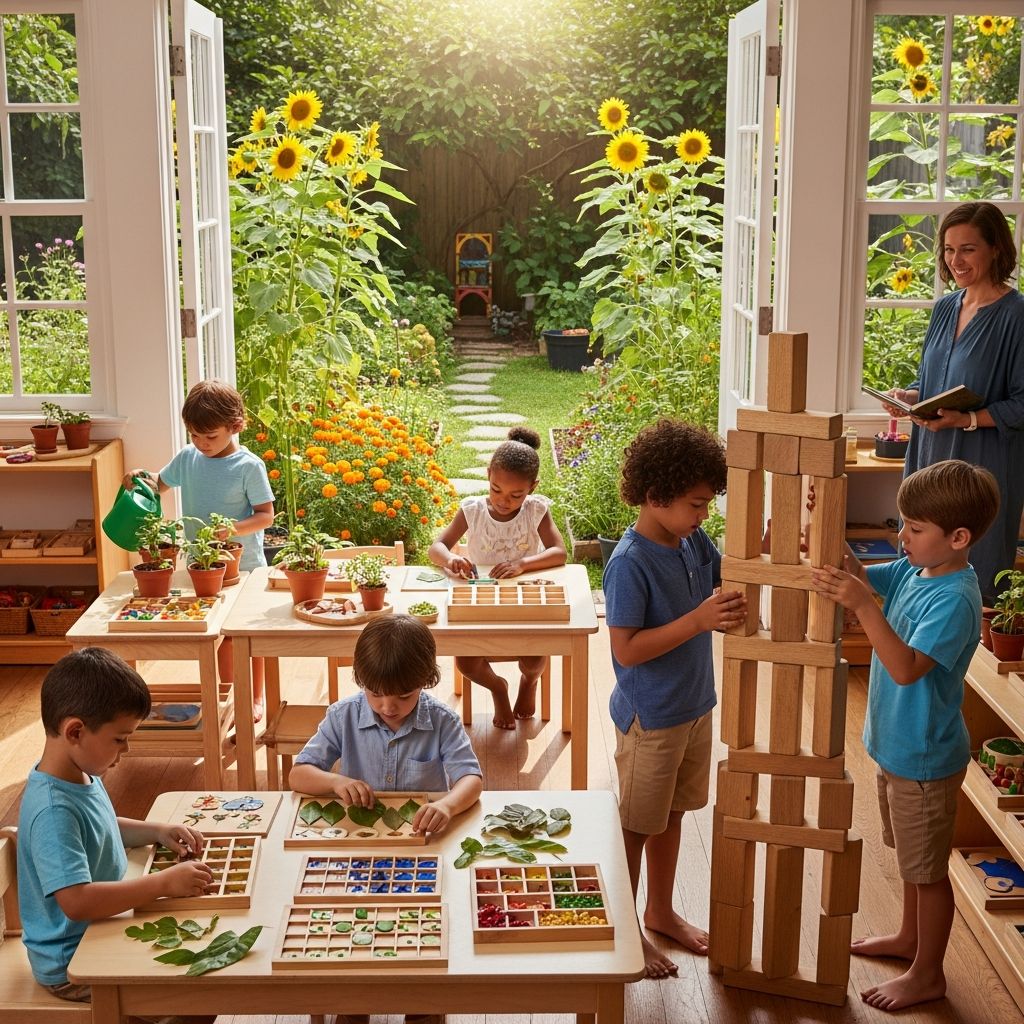
Summer offers families a unique opportunity to embrace child-led learning rooted in Montessori philosophy, emphasizing independence, respect for the child’s natural curiosity, and hands-on experiences with the environment. These approaches encourage children to explore at their own pace, building confidence through real-world tasks and sensory engagement. By integrating outdoor discoveries, practical chores, and creative play, parents can create memorable vacations that support physical, emotional, and intellectual growth without structured schedules.
Embracing Nature Through Guided Exploration
One of the cornerstones of Montessori education is connecting children directly with nature, which stimulates observation skills and a sense of wonder. During summer, transform everyday outings into profound learning moments by encouraging children to interact with their surroundings mindfully.
- Discovery Walks in Local Green Spaces: Venture into nearby parks or wooded areas, providing small baskets for collecting leaves, stones, or flowers. Guide children to note textures, colors, and shapes, fostering scientific inquiry without adult intervention.
- Creating Personal Nature Logs: Equip kids with simple notebooks and pencils to document findings through drawings or pressed specimens. This practice hones fine motor skills and sequential thinking as they record changes over time.
- Seasonal Plant Identification: Introduce safe, edible wild plants like berries or herbs, discussing their uses to spark interest in botany and sustainability.
These activities align with Montessori’s emphasis on prepared environments, where children freely choose materials that match their developmental stage, leading to deeper engagement and self-motivation.
Building Sensory Awareness Outdoors
Sensory experiences are vital in Montessori for refining perception and coordination. Summer’s warm weather is ideal for setting up outdoor zones that invite tactile, visual, and auditory exploration, promoting calm focus amid play.
| Activity | Materials Needed | Skills Developed |
|---|---|---|
| Mud and Water Play Areas | Soil, water tubs, natural add-ins like petals | Tactile discrimination, pouring precision |
| Stone and Shell Sorting Stations | Collected rocks, buckets | Classification, size comparison |
| Herb-Scented Discovery Bins | Fresh herbs, sensory bottles | Olfactory awareness, smell vocabulary |
Allow children to rotate between stations independently, observing how they experiment with mixing elements or building structures, which enhances problem-solving and creativity.
Cultivating Growth with Home Gardening Projects
Gardening embodies Montessori’s practical life curriculum, teaching responsibility, patience, and the life cycle through direct involvement. Start small to ensure success and sustained interest.
- Choose quick-yielding plants such as beans or cherry tomatoes for visible progress within weeks.
- Involve children in seed selection, soil preparation, and daily watering routines using child-sized tools.
- Harvest together, using produce in simple recipes to connect efforts to tangible outcomes.
This process not only imparts biology lessons but also instills a respect for living things, mirroring Montessori’s holistic view of the child as caretaker of their world.
Practical Life Skills for Everyday Independence
Montessori prioritizes real-life tasks to build competence and self-reliance. Summer’s flexible routine provides ample time to integrate these into family life seamlessly.
Begin with food preparation: children can wash vegetables, peel fruits with wavy cutters, or assemble snacks, developing hand-eye coordination and sequencing abilities. Extend to household care, like sorting laundry or polishing wooden toys with natural cloths. These repetitive actions, done purposefully, contribute to concentration and grace of movement.
Artistic Expression Using Natural Resources
Creativity flourishes when children use open-ended, earth-sourced materials, aligning with Montessori’s sensorial materials that avoid over-directiveness.
- Craft paints from berries, turmeric, or beetroot, experimenting with color blending on large papers.
- Assemble sculptures from twigs, pinecones, and vines, encouraging spatial reasoning.
- Design leaf collages or bark rubbings to capture nature’s patterns.
Provide minimal instruction, stepping back to let imagination guide the process, which nurtures originality and fine motor refinement.
Indoor Extensions for Balanced Days
To complement outdoor pursuits, curate indoor spaces with rotated activity shelves at child height, featuring items like threading beads, geometric puzzles, or language cards depicting summer themes.
Quiet baskets with modeling beeswax, lacing boards, or botanical picture books offer restorative breaks, supporting emotional regulation during hotter afternoons.
Family Bonding Through Shared Experiences
Montessori extends learning to family dynamics, promoting collaborative planning. Organize weekly family councils where children suggest outings or themes, such as beach days or library visits.
- Plan meal preps together, from grocery lists to cooking, reinforcing math through measuring.
- Initiate reading circles with chapter books read aloud nightly, building anticipation and literacy.
- Design scavenger hunts incorporating observation clues about plants, animals, or weather patterns.
These rituals strengthen relationships while modeling democratic decision-making.
Beach and Water-Based Learning Opportunities
If vacationing near water, leverage coastal environments for Montessori-aligned play. Shell hunts develop matching and grading skills; sand molding teaches volume and stability; wave observation introduces natural science concepts like erosion.
Pack portable trays for sorting finds or sketching seascapes, turning play into portable lessons.
Age-Adapted Activities for All Children
Tailor experiences to developmental stages for optimal challenge.
| Age Group | Key Focus | Example Activities |
|---|---|---|
| Toddlers (1-3) | Gross motor, basic sensorial | Barefoot grass walks, water pouring, large bead stringing |
| Preschool (3-6) | Fine motor, practical life | Gardening, food prep, nature journaling |
| Elementary (6+) | Research, abstraction | Map making, simple experiments, family book clubs |
This differentiation ensures every child finds accessible yet stretching opportunities.
Frequently Asked Questions
What essential materials do I need for Montessori summer activities?
Focus on natural, child-sized items: baskets, notebooks, watering cans, wavy knives, and sensory bins. Reuse household goods to keep it affordable and eco-friendly.
How do I encourage independence without frustration?
Observe your child’s readiness, introduce tasks gradually, and offer indirect support like modeling rather than doing it for them.
Can these activities work in urban settings?
Yes—use balconies for mini-gardens, parks for walks, and kitchen windows for herb pots. Adapt to your environment’s possibilities.
How much time should we dedicate daily?
Follow the child’s lead; unstructured blocks of 1-2 hours suffice, interspersed with free play and rest.
What if my child loses interest?
Rotate materials weekly and tie activities to their current fascinations, like insects or vehicles, for renewed engagement.
Wrapping Up the Summer with Reflection
As vacation ends, compile a family album of drawings, photos, and pressed leaves to review growth. This reflection reinforces achievements and sets a tone for ongoing learning.
(Word count: 1678)
References
- American Montessori Society: Principles of Montessori Education — American Montessori Society. 2023-01-15. https://amshq.org/Families/Articles/What-is-Montessori-Education
- The Montessori Method by Maria Montessori — Maria Montessori (translated edition). 2019-05-20. https://www.loc.gov/item/19007028/
- Benefits of Nature-Based Learning for Children — National Institute for Early Education Research. 2024-03-10. https://nieer.org/research-reports
- Practical Life Activities in Montessori — Association Montessori Internationale. 2022-11-05. https://montessori-ami.org/resource-library/practical-life
- Sensory Development in Early Childhood — Zero to Three (U.S. Dept. of Health & Human Services affiliate). 2025-02-14. https://www.zerotothree.org/resources/series/sensory-exploration