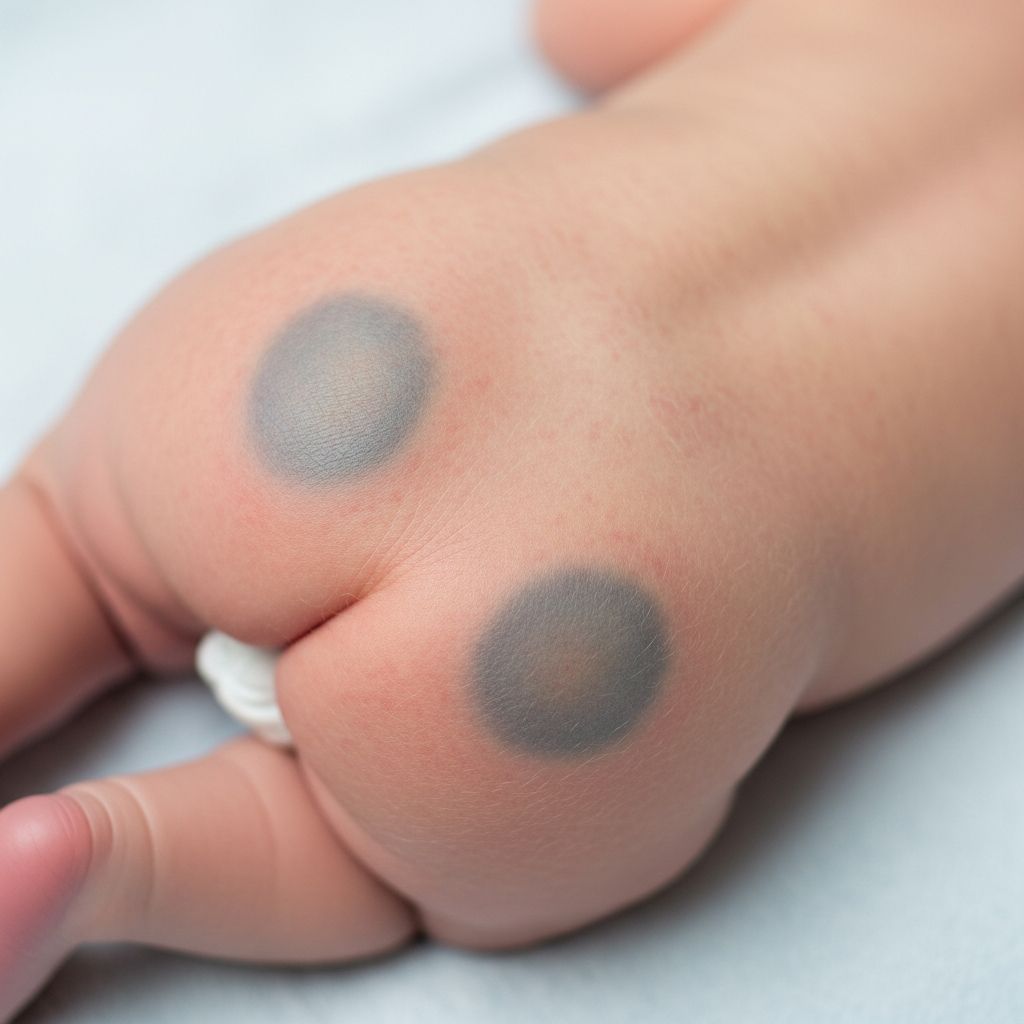
Recognizing Common Newborn Birthmarks: Understanding Mongolian Spots
When a baby enters the world, parents often observe various marks and discolorations on their skin. Among the most common of these is the Mongolian spot, a condition that affects a significant portion of newborns across different ethnic backgrounds. These distinctive bluish or grayish-purple patches typically appear on the lower back, buttocks, or other areas of the body. Despite their unusual appearance, Mongolian spots are entirely benign and require no medical intervention. Understanding what these marks are and how they develop can help new parents navigate one of the earliest observations they make about their newborns.
What Exactly Are Mongolian Spots?
Mongolian spots are flat birthmarks characterized by their blue-gray or slate-colored appearance. The term “Mongolian” reflects historical nomenclature rather than geographic origin, as these spots occur across populations worldwide. The distinctive coloration results from melanin-containing cells, known as melanocytes, that become trapped deeper within the skin layers during fetal development. Rather than clustering near the skin’s surface like typical freckles or moles, these cells remain embedded in the dermis, the middle layer of skin tissue. This deeper positioning creates an optical effect where light scatters through the overlying skin, producing the characteristic blue or purple hue reminiscent of a bruise.
Prevalence Across Different Populations
The incidence of Mongolian spots varies significantly based on ethnic and genetic background. Research indicates that approximately 90 percent of infants with African or Asian descent display these marks at birth or shortly thereafter. Similarly high rates appear in Hispanic and Native American populations. In contrast, Caucasian infants experience a substantially lower prevalence, with estimates ranging from 5 to 10 percent. This dramatic variation underscores the strong genetic component influencing the development of these birthmarks.
The Timeline of Development and Fading
Most Mongolian spots become visible during the first few weeks of life, though some may be present at birth. The timeline for these marks’ disappearance follows a relatively predictable pattern. In early childhood, typically between ages 3 and 5, many spots begin to fade gradually. By the time children reach early adolescence, most Mongolian spots have either disappeared completely or become significantly lighter. In rare cases, particularly when spots are extensive or located in unusual areas, some fading may continue into young adulthood. Most dermatologists concur that the vast majority of these marks resolve naturally without requiring any medical treatment.
Common Locations and Size Variations
While Mongolian spots most frequently appear on the lower back and buttocks, they can develop on virtually any body location. Common sites include the shoulders, arms, legs, and even the face in some cases. The size of these birthmarks varies considerably, ranging from small spots barely noticeable to the naked eye to large patches covering several square inches. Most commonly, parents encounter multiple smaller spots rather than one large marking. The number and size of birthmarks do not correlate with severity or indicate any underlying health concerns, as all Mongolian spots share the same benign nature regardless of their characteristics.
Medical Significance and Health Implications
One of the most important facts for parents to understand is that Mongolian spots carry absolutely no health risks or medical complications. These marks are not infections, are not contagious, and do not indicate any systemic condition or disease process. They do not cause pain, itching, or any physical discomfort to the infant. Pediatricians and dermatologists universally classify them as normal variants of infant skin development rather than pathological conditions requiring treatment. The marks neither affect growth and development nor impact any physiological function. Parents can be reassured that their presence is simply a normal and temporary feature of newborn skin.
Distinguishing Mongolian Spots from Other Birthmarks
Healthcare providers must occasionally differentiate Mongolian spots from other birthmark types that may require monitoring or intervention. Port-wine stains, for example, appear as red or purplish patches and carry a different prognosis than Mongolian spots. Café-au-lait spots, brown patches that do not fade, represent another distinct category of birthmarks. Hemangiomas, vascular birthmarks that may grow during infancy, require different clinical management than Mongolian spots. The distinguishing characteristics include color, texture, location, and natural history. Pediatricians perform these differentiations during routine newborn examinations, documenting findings in the medical record for future reference.
The Genetics Behind Melanocyte Migration
Understanding the biological mechanism behind Mongolian spot formation involves examining fetal skin development. During pregnancy, melanocytes originate in the neural crest tissue and migrate downward through developing skin layers toward the surface. In most individuals, these cells successfully reach the epidermis, the outermost skin layer, by birth. However, in infants destined to develop Mongolian spots, some melanocytes remain arrested in their migration process, becoming established in the deeper dermal layer. This incomplete migration appears genetically predetermined, explaining the strong hereditary patterns observed across populations. The exact genetic factors controlling this process remain an active area of dermatological research.
Parental Concerns and Communication with Healthcare Providers
New parents encountering Mongolian spots for the first time often experience understandable concern about the unusual appearance. Resemblance to bruising occasionally raises questions about potential injury or abuse, though careful examination by experienced healthcare providers quickly resolves such concerns. Open communication between parents and pediatricians regarding these marks ensures proper documentation and eliminates unnecessary anxiety. Pediatricians routinely photograph or document Mongolian spots during well-child visits, creating a baseline for comparison as the child grows. This documentation proves particularly valuable for childcare providers, teachers, and others who may observe the marks and wonder about their origin.
Cultural Perspectives on Mongolian Spots
Different cultures hold varying perspectives on Mongolian spots, reflecting historical traditions and beliefs. In some Asian cultures, these marks carry positive symbolic meanings, representing strength or good fortune. Some families view them as distinctive family characteristics passed through generations. Other cultural groups have folk explanations involving spiritual or supernatural elements. Modern medical understanding has significantly altered how families interpret these marks, though traditional beliefs continue influencing some communities. Healthcare providers benefit from understanding these cultural contexts to provide culturally sensitive education and support.
When Medical Evaluation Becomes Necessary
Although Mongolian spots themselves require no treatment, certain circumstances warrant medical evaluation. Spots that continue to darken significantly rather than fade during early childhood warrant pediatric assessment. Spots accompanied by other skin findings or systemic symptoms may indicate evaluation by a dermatologist. Very large or extensively distributed spots occasionally require documentation for medical records, particularly in cases where distinguishing them from other conditions proves challenging. Additionally, spots located on the face, hands, or other visible areas may prompt discussion about cosmetic options, though treatment remains entirely optional.
Treatment Options and Cosmetic Considerations
Since Mongolian spots fade naturally over time in the vast majority of cases, treatment is typically unnecessary. However, for the small percentage of spots that persist into adulthood or cause psychological distress, cosmetic options exist. Laser therapy, particularly pulsed dye or Nd:YAG lasers, can effectively lighten or remove persistent spots. Coverage with cosmetics offers a temporary alternative for special occasions. These options remain available should individuals desire intervention as they mature, though most spontaneous resolution renders treatment moot. Dermatologists guide individuals through decisions regarding cosmetic approaches when necessary.
Monitoring Changes Over Time
Parents benefit from establishing a simple monitoring routine for their child’s Mongolian spots. Periodic observations during routine baths or diaper changes allow documentation of gradual fading. Photographs taken at regular intervals provide objective evidence of changes over time. Most spots show noticeable lightening during the first few years of childhood, with the process accelerating around ages 3 to 5. Keeping records proves helpful for discussing developmental progression with pediatricians during well-child visits. This documentation approach normalizes the condition while maintaining appropriate oversight of the child’s skin health.
Reassurance and Parental Education Resources
Healthcare providers play a crucial role in educating parents about Mongolian spots and providing reassurance about their benign nature. Reliable medical resources available through pediatric offices, hospital systems, and reputable health websites offer evidence-based information. Connecting parents with other families who have experienced similar observations reduces anxiety and isolation. Support networks, whether online or community-based, allow parents to share experiences and questions. Access to quality educational materials transforms initial concern into informed understanding, enabling parents to make thoughtful decisions about their child’s care and development.
Long-Term Outlook and Life Course
The long-term prognosis for individuals with Mongolian spots remains uniformly positive. Most marks disappear during childhood without any intervention, requiring no ongoing medical attention. In the rare instances where spots persist into adulthood, they cause no health consequences or complications. Individuals with residual Mongolian spots into adulthood experience no increased risk of any medical condition or disease process. The marks do not transform into cancerous lesions or other concerning conditions. This excellent prognosis means parents can approach the condition with confidence, knowing their child will experience normal skin development and appearance as they grow.
Common Questions About Mongolian Spots
Are Mongolian spots present at birth in all cases?
While most Mongolian spots are visible at birth or appear within the first few weeks of life, some may not become apparent until slightly later. They typically manifest during the newborn period and early infancy.
Can Mongolian spots be permanently removed?
Most spots fade naturally during childhood without treatment. For persistent spots in older children or adults, laser therapy offers effective removal options, though this remains elective rather than medically necessary.
Do Mongolian spots indicate a health problem?
No. Mongolian spots are entirely benign birthmarks with no association with health conditions, developmental problems, or systemic diseases. They represent normal variation in infant skin development.
Will Mongolian spots affect my child’s appearance permanently?
Typically no. The vast majority of these marks fade completely during childhood, usually by early adolescence. Permanent presence occurs only in a small percentage of cases.
Should I be concerned if Mongolian spots appear in unusual locations?
Location does not affect the benign nature of these marks. Whether appearing on buttocks, shoulders, face, or other areas, Mongolian spots carry the same excellent prognosis and require no treatment.
Can Mongolian spots return after fading?
Once Mongolian spots fade, they do not return. The gradual lightening reflects the natural resolution process rather than temporary changes, making recurrence essentially impossible.
References
- Cutaneous Manifestations of Systemic Diseases in Children — American Academy of Pediatrics. 2024. https://pediatrics.aappublications.org
- Mongolian Spot: Clinical and Epidemiological Features — Journal of the American Academy of Dermatology. 2023. https://www.jaad.org
- Neonatal Dermatology: Birthmarks and Skin Conditions — UpToDate Clinical Resource. 2025. https://www.uptodate.com
- Pigmented Lesions in Infants and Children — DermNet New Zealand. 2024. https://dermnetnz.org
- Genetics of Melanocyte Development and Migration — Nature Genetics. 2023. https://www.nature.com/articles/ng