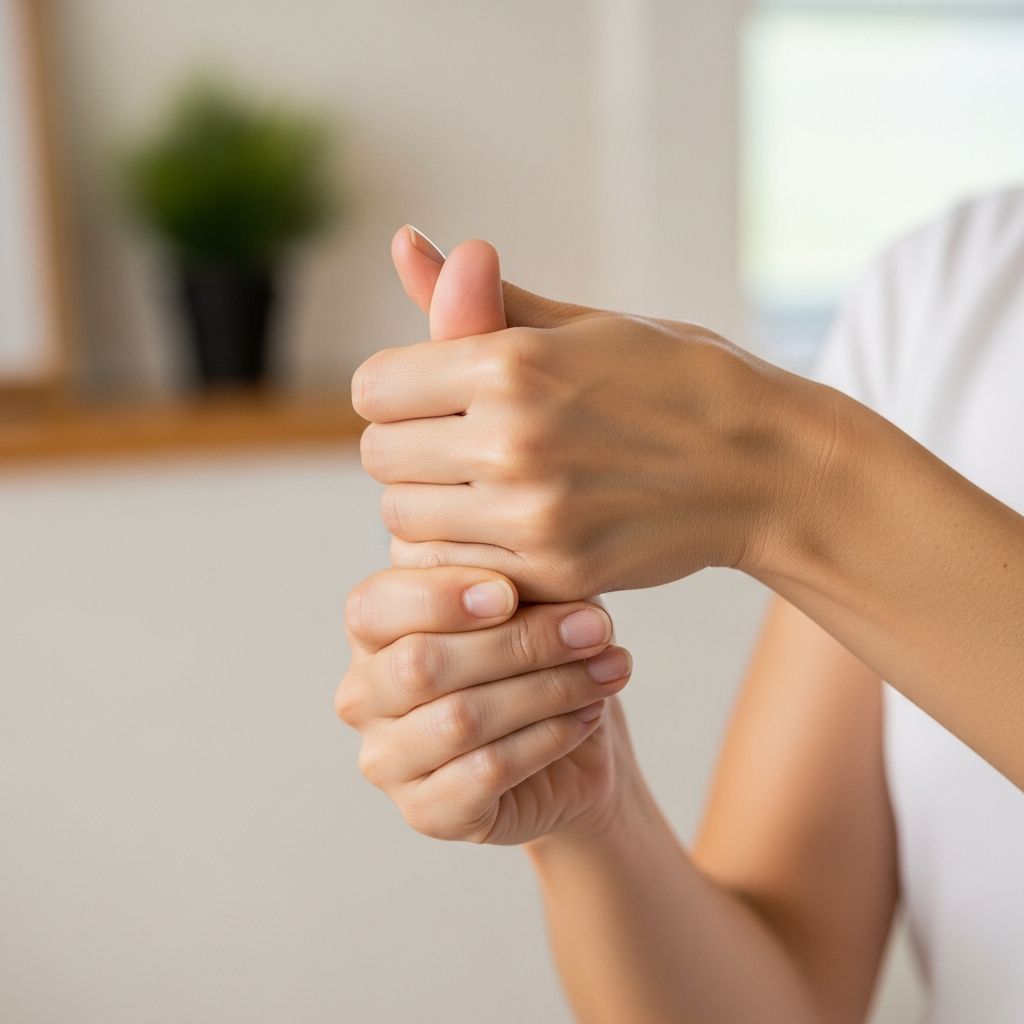
New mothers often face unexpected challenges beyond sleep deprivation, including sharp pain at the base of the thumb that disrupts daily baby care routines. This condition, commonly called **mommy thumb** or De Quervain’s tenosynovitis, stems from inflamed tendons controlling thumb movement, exacerbated by repetitive actions like lifting an infant.
Recognizing the Signs of Mommy Thumb
Early identification of mommy thumb allows for prompt intervention, preventing prolonged discomfort. Key indicators include:
- Aching or sharp pain radiating from the thumb base to the wrist and forearm, worsening with grasping or pinching.
- Visible swelling along the thumb side of the wrist, sometimes feeling like a firm lump.
- Stiffness that limits thumb and wrist motion, making tasks like bottle-holding or diaper changes agonizing.
- Weakened grip strength, leading to dropped objects or difficulty forming a fist.
These symptoms typically develop gradually from overuse but can intensify suddenly during hormonal shifts postpartum, affecting women disproportionately due to anatomical factors and caregiving demands. A simple diagnostic test involves tucking the thumb into the fist and deviating the wrist toward the pinky side; intense pain confirms tendon irritation.
Root Causes in New Parenthood
Mommy thumb arises when the abductor pollicis longus and extensor pollicis brevis tendons, housed in a narrow wrist sheath, become inflamed from friction due to repetitive strain. In postpartum life, common triggers encompass:
- Constantly cradling or lifting a baby, often in awkward arm positions.
- Breastfeeding or bottle-feeding postures that flex the thumb repeatedly.
- Diaper changes, clothing adjustments, and carrying car seats or strollers.
- Hormonal laxity in ligaments post-delivery, combined with fluid retention, heightening tendon vulnerability.
Beyond parenting, activities like texting, gardening, or manual labor contribute, but new moms report higher incidence due to unrelenting daily repetitions without adequate recovery periods[10].
Immediate Home Strategies for Pain Relief
Most cases resolve with conservative measures within weeks, focusing on reducing inflammation and promoting tendon rest. Start with these evidence-based approaches:
- Rest and Activity Modification: Avoid thumb-intensive tasks; use your non-dominant hand or enlist help for baby lifts.
- Ice Application: Apply a wrapped ice pack for 15-20 minutes, 3-4 times daily to constrict blood vessels and numb pain.
- OTC Anti-Inflammatories: Ibuprofen or naproxen (if breastfeeding-safe and doctor-approved) curbs swelling; follow dosage guidelines.
- Thumb Spica Splint: Immobilize the thumb and wrist during activities or overnight to prevent tendon gliding irritation; wear for 3-6 weeks.
Contrast therapy—alternating 3 minutes heat (warm towel) with 1 minute cold—enhances circulation and further alleviates stiffness.
Targeted Exercises to Restore Mobility
Once acute pain subsides (typically after 1-2 weeks of rest), introduce gentle exercises under professional guidance to glide tendons smoothly and build resilience. Perform 5-10 reps, 2-3 times daily:
- Tendon Glides: Fist to straight hand, then hook fist (fingers bent, thumb straight), table-top (fingers flat), and full fist. Hold each 5 seconds.
- Thumb Stretch: Gently pull thumb across palm with opposite hand, holding 15-30 seconds; repeat for wrist flexor stretch.
- Wrist Flexor/Extensor Stretch: Extend arm, pull fingers back or down with other hand for 30 seconds each direction.
- Grip Strengthening: Squeeze a soft stress ball or therapy putty progressively.
Consistency prevents recurrence; pelvic health therapists often tailor programs addressing whole-body posture.
Prevention Tips for Busy New Moms
Proactive habits minimize risk amid nonstop caregiving. Essential strategies include:
- Lifting baby close to your body with palms up, elbows tucked, avoiding thumb-only grips[10].
- Using supportive pillows for feeding to neutralize wrist angles.
- Alternating arms during carries and incorporating micro-breaks for hand stretches hourly.
- Maintaining core strength and posture to distribute load evenly, reducing wrist strain.
- Ergonomic tools like wide-grip bottles or slings that lessen thumb pressure.
Gradual return to pre-baby activities like typing ensures tendons adapt without overload.
Professional Interventions for Persistent Cases
If symptoms linger beyond 4 weeks or intensify, consult a physician. Options escalate as follows:
| Treatment | Description | Duration/Effectiveness |
|---|---|---|
| Physical/Occupational Therapy | Ultrasound, massage, customized exercises for strength and mobility | 4-6 weeks; 80% success rate |
| Corticosteroid Injection | Direct anti-inflammatory into tendon sheath; safe for breastfeeding | Immediate relief; 70-90% resolution |
| Surgery | Outpatient release of tendon compartment; minimal incision | 10-minute procedure; full recovery in 4-6 weeks |
Distinguish from carpal tunnel (median nerve compression) via Finkelstein’s test positivity specific to De Quervain’s. Rheumatoid arthritis or injury may mimic; imaging or bloodwork rules out differentials.
Frequently Asked Questions (FAQs)
Can mommy thumb affect dads or non-parents?
Yes, it’s De Quervain’s tenosynovitis from any repetitive thumb use like sports or manual work, though postpartum hormones elevate risk for moms.
How long does recovery take?
Home care yields improvement in 2-4 weeks; full healing with therapy averages 6 weeks, surgery 1-2 months.
Is splinting safe while breastfeeding?
Absolutely; choose breathable models and consult providers for fit to avoid skin issues.
Will mommy thumb recur after treatment?
Possible with resumed overuse; ongoing exercises and ergonomic habits reduce likelihood by 50%.
When is surgery necessary?
Rarely first-line; reserved for failures of conservative care after 3-6 months.
Long-Term Outlook and Lifestyle Integration
With diligence, nearly all women regain full function, resuming joyful parenting without hand limitations. Track progress weekly; if no change, escalate care promptly. Support networks—partners sharing loads, baby-wearing aids—empower recovery. Nutrition rich in anti-inflammatories (omega-3s, turmeric) and hydration aids tendon health. Mommy thumb, though disruptive, is manageable, allowing focus on precious early bonding moments.
(Word count: 1678)
References
- Mommy Thumb: Causes, Symptoms, and Treatment — Healthline. 2023. https://www.healthline.com/health/parenting/mommy-thumb
- Understanding and Treating ‘Mommy Thumb’ — Foundations Pelvic Health. 2024. https://www.foundationspelvichealth.com/pelvic-floor-journal/mommythumb
- Mothers thumb: Definition, symptoms, treatment, and more — Medical News Today. 2023-10-12. https://www.medicalnewstoday.com/articles/mothers-thumb
- Healing Mommy Thumb | Symptoms, Causes & Treatments — Indiana Hand to Shoulder Center. 2024. https://www.indianahandtoshoulder.com/blog/mommy-thumb-how-to-diagnose-and-treat-wrist-pain
- What is Mommy Thumb? | Causes of De Quervain’s Tenosynovitis — Orthopedic NJ. 2024-04-04. https://orthopedicnj.com/news/what-is-mommy-thumb
- Mommy Thumb: Causes & Treatment — Princeton Orthopaedic. 2023. https://www.princetonorthopaedic.com/pain-in-your-thumb-what-is-mommy-thumb/
- De Quervain tenosynovitis – Symptoms and causes — Mayo Clinic. 2024-08-14. https://www.mayoclinic.org/diseases-conditions/de-quervain-tenosynovitis/symptoms-causes/syc-20371332