Molluscum contagiosum is a common viral skin infection that causes small, raised bumps on the skin. It can look worrying, but it is usually harmless and often goes away on its own without leaving scars for most healthy people. Understanding what it is and how it spreads can help you stay calm, make smart choices, and know when to see a doctor.
What Exactly Is Molluscum Contagiosum?
Molluscum contagiosum is caused by a poxvirus that infects the top layer of your skin. The virus lives only in the skin and does not spread inside your body or into your organs. Anyone can get it, but it is especially common in:
- Children and teens
- People who have close skin contact in sports or activities
- People with dry or eczema-prone skin
- People with a weakened immune system
The bumps are not dangerous, but they are contagious and can be annoying, itchy, or embarrassing.
How the Bumps Look and Feel
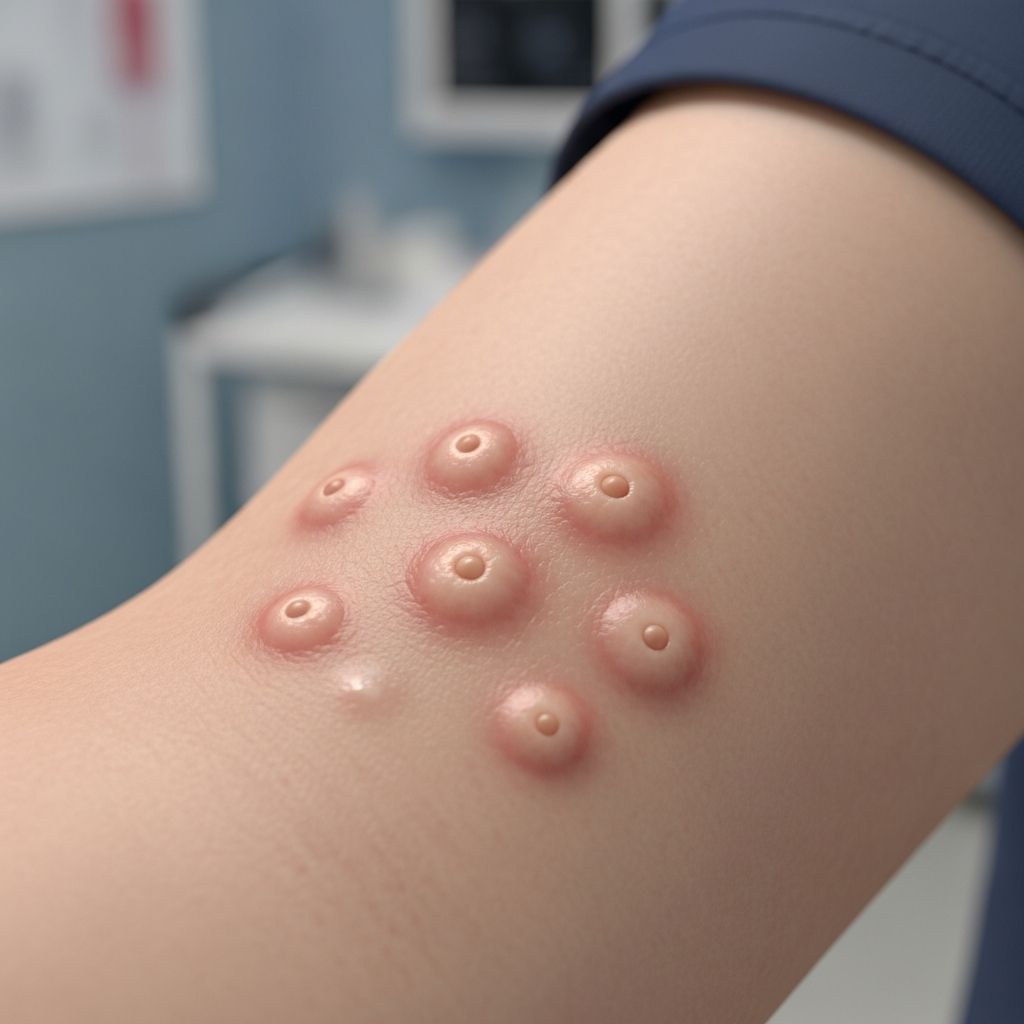
The spots caused by molluscum contagiosum have some very typical features. Doctors can usually recognize them just by looking.
| Feature | Typical description |
|---|---|
| Size | Usually tiny, from a pinhead up to about a pencil eraser (under 6 mm). |
| Color | Flesh-colored, white, or pink, often similar to your normal skin tone. |
| Shape | Round or dome-shaped, smooth surface. |
| Center | Often have a tiny dip or dimple in the middle. |
| Feel | Firm to the touch, sometimes itchy or slightly sore. |
The bumps can appear:
- On the face, neck, trunk, and limbs (common in kids and teens)
- Around the genitals, inner thighs, or lower abdomen (more common in sexually active teens and adults)
- Alone or in clusters, sometimes in a line where the skin has been scratched
They usually do not show up on the palms of the hands or the soles of the feet.
How Do You Catch Molluscum Contagiosum?
The virus spreads through direct contact or by sharing items that touched the bumps.
Common ways it spreads
- Skin-to-skin contact, such as hugging, wrestling, or other close contact sports
- Sexual contact when bumps are in the genital or inner thigh area
- Sharing towels, clothing, sports gear, or razors that touched a bump
- Scratching or shaving over bumps, which moves the virus to nearby skin
You cannot get molluscum contagiosum from:
- Breathing the same air as someone
- Casual distant contact like sitting in the same classroom
- Sharing food or drinks
Who Is at Higher Risk?
Anyone can get molluscum, but certain situations make it easier for the virus to spread and cause more bumps.
- Children and teens in schools, camps, or sports settings
- People with eczema or very dry skin, because the skin barrier is weaker
- People with a weakened immune system, such as from some medicines or illnesses
- People who are sexually active, especially with multiple partners
Is Molluscum Contagiosum Dangerous?
For most healthy teens, molluscum contagiosum is mild and self-limited, meaning the body clears it on its own without treatment. It usually disappears in:
- About 6–12 months for many people
- Sometimes up to 18 months or longer in some cases
Possible issues include:
- Itching and irritation around the bumps
- Redness or swelling if the area gets scratched or infected
- Spreading to more areas of your body from scratching or shaving
- Feeling self-conscious about how the spots look, especially on visible areas or genitals
In people with serious immune problems, the bumps may be more numerous, larger, and harder to clear, and these cases should be carefully managed by a doctor.
How Doctors Diagnose It
In most cases, a doctor or dermatologist can diagnose molluscum contagiosum simply by examining your skin.
- They look for the classic small, round, firm bumps with a dimple in the center.
- They usually do not need blood tests or scans.
- Very rarely, they might take a small skin sample (biopsy) if the diagnosis is unclear.
Be honest about sexual activity if bumps are near your genital area. This helps the doctor check for other infections and give you the right advice.
Do You Always Need Treatment?
Many teens do not need any medical treatment. For people with a healthy immune system, the bumps usually clear on their own over time. However, treatment might be suggested if:
- Bumps are on the face or genitals and are very visible or upsetting
- You have a chronic skin condition like eczema and the bumps are spreading quickly
- You have a weakened immune system and many or large bumps
- The itching, redness, or irritation is difficult to control
- You are very worried about spreading it to others
Medical Treatments You Might Be Offered
When treatment is needed, doctors choose options that aim to destroy the bumps or help your immune system clear the virus. Not every treatment is right for every person, and some are not ideal for very young children because they can be painful.
In-office procedures
- Cryotherapy (freezing): Liquid nitrogen is applied to each bump to freeze and destroy it. This can sting and may require several visits.
- Curettage: The doctor gently scrapes off or removes the central core of each bump with a small instrument. A numbing medicine is usually used first.
- Laser therapy: Special laser light is used to destroy many bumps, sometimes helpful in hard-to-treat or widespread cases.
Prescription and topical options
- Topical medicines: Creams or solutions applied directly to the bumps can irritate the area to trigger an immune response or peel the top layers of the skin.
- Berdazimer gel: A newer prescription gel that can clear or reduce bumps and is approved for use in people 1 year and older.
- Other agents: Doctors may use acids or blistering agents like cantharidin in controlled settings to speed removal.
Always use these medicines exactly as directed. Do not apply them to healthy skin or to sensitive areas unless your doctor says it is safe.
Home Care and Comfort Measures
Whether or not you have medical treatment, there are simple steps you can take to keep your skin comfortable and reduce spreading.
What you should do
- Keep the area clean and dry.
- Wash your hands often, especially after touching a bump.
- Use a moisturizer if you have dry or eczema-prone skin, as recommended by your doctor.
- Cover bumps with clothing or a breathable bandage during sports or close contact activities.
- Use your own towel and washcloth; wash them regularly in hot water.
What you should avoid
- Do not scratch, pick, or squeeze the bumps; this can cause infection and spread the virus.
- Avoid shaving over areas with bumps.
- Do not share towels, razors, or sports equipment that touches your skin.
- Avoid home “surgery” with needles, pins, or sharp objects—this can lead to serious infection.
Preventing Spread to Others
Even though molluscum contagiosum is mild, it is respectful to try to keep it from spreading to friends, teammates, and partners.
- Cover visible bumps during activities where skin contact is likely.
- Use a condom or barrier and avoid sexual contact involving areas with bumps; this lowers but does not fully remove the risk of spread.
- Do not share personal items like towels, razors, swimsuits, or gym clothing.
- Follow any school or sports rules about skin infections—your doctor can give you a note if needed.
Molluscum and Sexual Health
In sexually active teens, bumps in the genital or inner thigh area may be considered a sexually transmitted infection (STI). In that case, it is important to:
- Tell your healthcare provider about all sexual partners.
- Get checked for other STIs if your doctor recommends it.
- Inform partners so they can watch for signs or get advice.
- Use protection (like condoms) and avoid contact with visible bumps.
Remember: having molluscum contagiosum does not mean you did something wrong. It simply means you came into contact with the virus, which is very common.
When to See a Doctor
Make an appointment with a doctor, nurse practitioner, or dermatologist if you notice:
- Bumps near your eyes, genitals, or anus
- Lots of new bumps appearing quickly
- Red, hot, painful skin around the bumps that could mean infection
- Bumps that are not improving after many months
- A history of immune system problems or medicines that weaken your immune system
Bring questions with you. It is okay to ask about appearance, sports, sex, and how to talk to partners or parents about the condition.
Living With Molluscum Contagiosum
Waiting for the bumps to fade can be frustrating, especially if you feel embarrassed. Some tips for coping:
- Remind yourself that this infection is common and temporary.
- Wear clothing you like that also covers areas you feel self-conscious about.
- Talk to someone you trust—a friend, parent, school nurse, or counselor—about how you feel.
- If anxiety or low mood becomes intense, ask your doctor for mental health resources.
Frequently Asked Questions (FAQs)
Can molluscum contagiosum leave scars?
The bumps themselves usually heal without scarring, especially if you do not pick or scratch them. Scars are more likely if the skin gets infected or if bumps are aggressively removed.
How long am I contagious?
You are considered contagious as long as you have visible bumps. Once all bumps are gone and the skin has healed, the risk of passing the virus on is very low.
Can I still swim or play sports?
In many cases, yes. But you should cover bumps with clothing or a watertight bandage during sports or swimming and avoid sharing towels or equipment. Always follow your team or school rules.
Do over-the-counter wart removers work?
Some wart products may irritate the skin but are not made specifically for molluscum. Do not use any treatment without talking to a doctor first, especially on the face or genitals.
Can I get molluscum contagiosum again after it goes away?
Yes. Clearing the bumps does not guarantee lifelong immunity. You can catch the virus again from someone else or from contaminated objects.
References
- About Molluscum Contagiosum — Centers for Disease Control and Prevention (CDC). 2023-05-15. https://www.cdc.gov/molluscum-contagiosum/about/index.html
- Molluscum contagiosum — National Health Service (NHS). 2022-11-03. https://www.nhs.uk/conditions/molluscum-contagiosum/
- Molluscum contagiosum: Diagnosis and treatment — American Academy of Dermatology Association (AAD). 2024-01-10. https://www.aad.org/public/diseases/a-z/molluscum-contagiosum-treatment
- Molluscum contagiosum — Children’s National Hospital Health Library. 2021-06-28. https://www.childrensnational.org/get-care/health-library/molluscum-contagiosum
- Molluscum Contagiosum in Children: Symptoms, Treatment & Prevention — American Academy of Pediatrics / HealthyChildren.org. 2023-08-21. https://www.healthychildren.org/English/health-issues/conditions/skin/Pages/Molluscum-Contagiosum.aspx
- Molluscum contagiosum – Symptoms & causes — Mayo Clinic. 2023-10-14. https://www.mayoclinic.org/diseases-conditions/molluscum-contagiosum/symptoms-causes/syc-20375226
- Molluscum contagiosum — treatment and symptoms — Healthdirect Australia. 2022-09-01. https://www.healthdirect.gov.au/molluscum-contagiosum