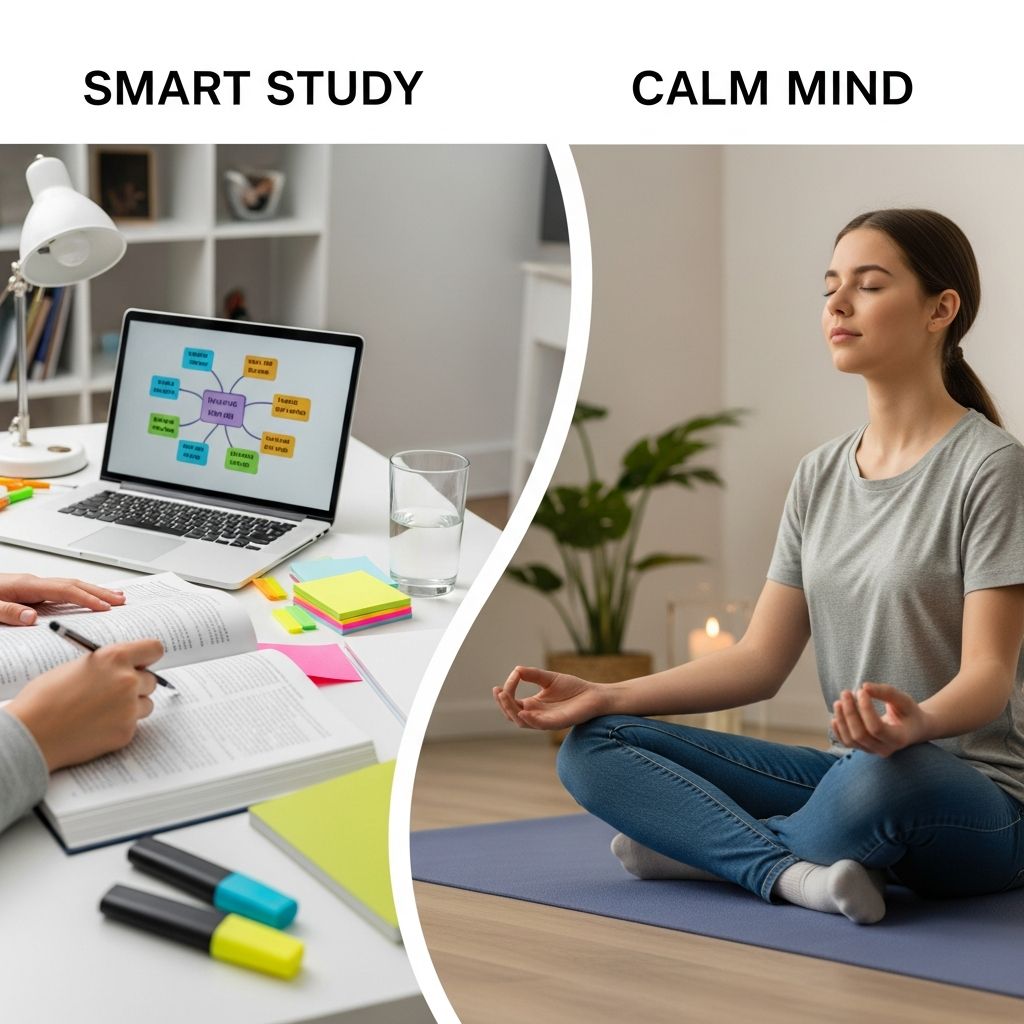
Tests are a normal part of school life, but they do not have to control your mood or your confidence. With the right habits, you can feel more prepared, less stressed, and better able to show what you truly know.
This guide breaks test success into clear steps: preparing early, caring for your body and brain, staying calm under pressure, and using smart strategies during and after each test.
Why Tests Feel So Stressful (and What That Means)
Feeling nervous before a test is common. A little stress can even sharpen your focus, but too much can make it hard to think clearly or remember what you studied.
- Normal stress response: Your body releases stress hormones that can speed up your heart and breathing.
- Too much stress: High anxiety can interfere with attention, memory, and problem-solving.
- Good news: Skills like planning, relaxation, and healthy routines lower test anxiety and improve performance.
Research shows that students who use simple coping strategies and prepare ahead of time report less anxiety and perform better than those who rely on last-minute cramming.
Building a Solid Study Routine Long Before Test Day
Effective test prep starts days or even weeks ahead, not the night before. Consistent study makes information stick and reduces last-minute stress.
Break Big Topics into Small, Doable Pieces
Large units or chapters can feel overwhelming if you look at them all at once. Instead, divide the material into smaller sections and cover a little bit each day.
- List the chapters, sections, or topics that will be on the test.
- Estimate how long each one will take to review.
- Assign a few topics to each day leading up to the test.
- Leave a final day for review and practice questions only.
Use Active Study Methods, Not Just Rereading
Just rereading notes may feel familiar, but it does not guarantee you can recall the information later. Active methods help your brain store and retrieve what you learn.
- Self-quizzing: Close your notes and write or say everything you remember, then check what you missed.
- Flashcards: Put key terms, formulas, or concepts on one side and explanations on the other.
- Teaching someone else: Explain the topic to a friend, family member, or even a stuffed animal.
- Practice problems: For math and science, solving extra problems is one of the best ways to prepare.
Cognitive research consistently shows that retrieval practice (testing yourself) and spacing study sessions over time lead to better long-term learning than cramming.
Plan Short, Focused Sessions
Long, endless study blocks often lead to distraction and burnout. Short, focused bursts work better for most people.
- Study for 25–40 minutes, then take a 5–10 minute break.
- During the break, move around, drink water, or stretch your body.
- Limit social media and messaging to your break times.
Organize Your Materials Early
Scrambling to find notes the night before adds stress you do not need. A little organization saves time and energy.
- Keep all notes, handouts, and worksheets for a subject in one binder or folder.
- Use highlighters or colored pens to mark key terms, formulas, and examples.
- Create a one-page summary sheet with the most important ideas and formulas.
Healthy Habits That Boost Test Performance
Your brain is part of your body. How you sleep, eat, move, and manage stress all affect how well you think, remember, and focus on a test.
Sleep: The Most Underrated Study Tool
Sleep is when your brain organizes and strengthens memories from the day. Teens need about 8–10 hours of sleep per night for good health and thinking ability.
- Avoid all-nighters; they reduce attention, reaction time, and memory.
- Try to keep a steady sleep schedule, even before big exams.
- Turn off bright screens 30–60 minutes before bed if possible.
Food and Hydration for Focus
Skipping meals or going to an exam hungry can make it harder to concentrate. Balanced nutrition supports both energy and mood.
- Eat a meal or snack that includes protein (eggs, yogurt, beans, nuts) and complex carbs (whole grains, fruit).
- Limit very sugary snacks right before the test to avoid a later energy crash.
- Drink water regularly during the day; mild dehydration can affect attention and mood.
Movement and Relaxation
Physical activity and stress-management techniques can reduce anxiety and improve concentration.
- Take a short walk, stretch, or do light exercise the day before and the morning of the test.
- Practice slow, deep breaths: inhale through your nose, exhale through your mouth.
- Try short mindfulness or relaxation audio sessions available through many health providers and hospitals.
Day-Before and Morning-of Test Checklist
As the test gets closer, focus on review, calm, and practical details rather than learning everything from scratch.
| Timing | What to Do | Why It Helps |
|---|---|---|
| The day before |
|
|
| Evening |
|
|
| Morning of the test |
|
|
Smart Strategies to Use During the Test
How you handle the actual test can matter just as much as how you studied. Use these steps to stay organized and calm.
Step 1: Scan the Whole Test First
- Glance through all pages to see how many questions there are and how they are divided.
- Notice which sections are worth the most points.
- Plan roughly how much time to spend on each part.
Step 2: Start with Questions You Know Well
Answering easier questions first can help build confidence and secure points quickly.
- Mark tougher questions with a small symbol or circle and come back to them later.
- Do not allow one hard question to use up all your time.
Step 3: Use Different Approaches for Different Question Types
- Multiple choice:
- Read the whole question before looking at the options.
- Try to think of the answer first, then check which option matches.
- Eliminate clearly wrong answers to improve your odds.
- Short answer:
- Underline key words in the question (such as “describe,” “compare,” or “list”).
- Answer exactly what is asked; avoid adding unrelated details.
- Essay questions:
- Take a minute to outline your main points before you start writing.
- Use the question itself in your first sentence to stay on track.
- Leave a little time for a quick reread to fix unclear parts.
- Math and science problems:
- Write out the steps instead of doing everything in your head.
- Label units and diagrams clearly.
- If time allows, quickly re-check calculations.
Step 4: Manage Your Emotions in the Moment
Even with good preparation, you might feel nervous when you sit down or if you see a question you do not recognize.
- Pause and take 3–5 slow, deep breaths if you feel panicky.
- Remind yourself: “I prepared for this. I can do one question at a time.”
- If your mind goes blank, move to another question and come back later.
Step 5: Use Any Extra Time Wisely
- Check that your name and answers are in the right places.
- Review questions you were unsure about, but do not change answers without a clear reason.
- Make sure you answered every required question, especially on the back of pages.
What to Do After the Test (Even If It Did Not Go Great)
Once a test is over, it can still help you. Every test is a chance to learn more about how you study and how your teacher asks questions.
Review Your Results with a Growth Mindset
A growth mindset means believing that your abilities can improve with effort, smart strategies, and support. Instead of thinking “I’m just bad at this,” focus on what you can change next time.
- Look for patterns: Did you miss more questions at the beginning, middle, or end?
- Notice if mistakes were from not understanding the material or from rushing and misreading.
- Ask your teacher if you can go over the test together to understand errors.
Adjust Your Study Plan
- If you knew the facts but missed problem-solving questions, add more practice problems next time.
- If you ran out of time, practice doing sets of questions under a time limit.
- If anxiety was the main problem, keep practicing relaxation techniques and talk with a trusted adult or health provider if it feels overwhelming.
When Test Anxiety Feels Too Big
Some stress is normal, but if tests make you feel sick, panicky, or hopeless, it is important to reach out for support.
- Talk with a parent, guardian, school counselor, teacher, or coach about how you feel.
- Ask if there are school resources, such as counseling services or study-skills workshops.
- If anxiety affects your sleep, appetite, or daily life, tell your health care provider. Many teen checkups include questions about stress, mood, and school pressure so you can get help early.
Health professionals and school staff can suggest accommodations or strategies if test anxiety is part of a larger learning or mental health challenge.
Quick Test Readiness Checklist for Teens
- I know what topics will be on the test.
- I have broken the material into smaller sections to review.
- I have practiced with sample questions or problems.
- I have slept at least 8 hours the night before.
- I ate something and drank water before the test.
- I brought all required materials (pencils, calculator, notes if allowed).
- I have a plan to handle stress, such as deep breathing or positive self-talk.
Frequently Asked Questions (FAQs)
Q: What if I feel totally unprepared the night before?
Focus on the most important topics, do a short review session, prepare your materials, and go to bed on time. You will remember more with sleep than by staying up late trying to cover everything.
Q: How can I study if my home is noisy or distracting?
Try using headphones with calm music, ask to use a quieter space (like a library or another room), or create specific “quiet times” with your family. Short, focused sessions can still be effective even in a busy environment.
Q: Are breaks during studying really necessary?
Yes. Short breaks help your brain reset, prevent burnout, and improve focus when you return to work. Many students find they remember more from several short sessions than one long one.
Q: What if I panic in the middle of a test?
Pause, close your eyes if allowed, and take several slow, deep breaths. Then turn to a question you feel more confident about to rebuild momentum. If panic keeps happening, talk with a counselor or health professional for more support.
Q: How do I talk to my teacher about a bad test grade?
Ask if you can meet briefly, explain that you want to understand your mistakes, and request feedback on how to study or prepare differently next time. Many teachers appreciate when students take responsibility and ask for guidance.
References
- Preparing for your teen’s health exam: What parents need to know — UCLA Health. 2023-08-10. https://www.uclahealth.org/news/article/preparing-your-teens-health-exam-what-parents-need-know
- When Your Teen Needs a Test, Procedure, or Surgery — University of Rochester Medical Center Health Encyclopedia. 2022-05-01. https://www.urmc.rochester.edu/encyclopedia/Content?contentTypeID=161&ContentID=7
- Medical Checkups for Adolescents — NewYork-Presbyterian Health Library. 2021-06-15. https://www.nyp.org/healthlibrary/articles/medical-checkups-for-adolescents
- When Your Teen Needs a Test, Procedure, or Surgery — Nationwide Children’s Hospital Health Library. 2022-03-10. https://www.nationwidechildrens.org/conditions/health-library/when-your-teen-needs-a-test-procedure-or-surgery
- Your Checkup Checklist: 13 Years Old — HealthyChildren.org (American Academy of Pediatrics). 2023-02-15. https://www.healthychildren.org/English/ages-stages/Your-Childs-Checkups/Pages/your-checkup-checklist-13-years-old.aspx
- Well-Child Visit: 16 Years — Nemours KidsHealth. 2022-07-20. https://kidshealth.org/en/parents/checkup-16yrs.html
- Well Visits for Teens 12 to 18 — Kaiser Permanente My Doctor Online. 2022-09-01. https://mydoctor.kaiserpermanente.org/ncal/structured-content/well-visits-for-teens-12-to-18-96998