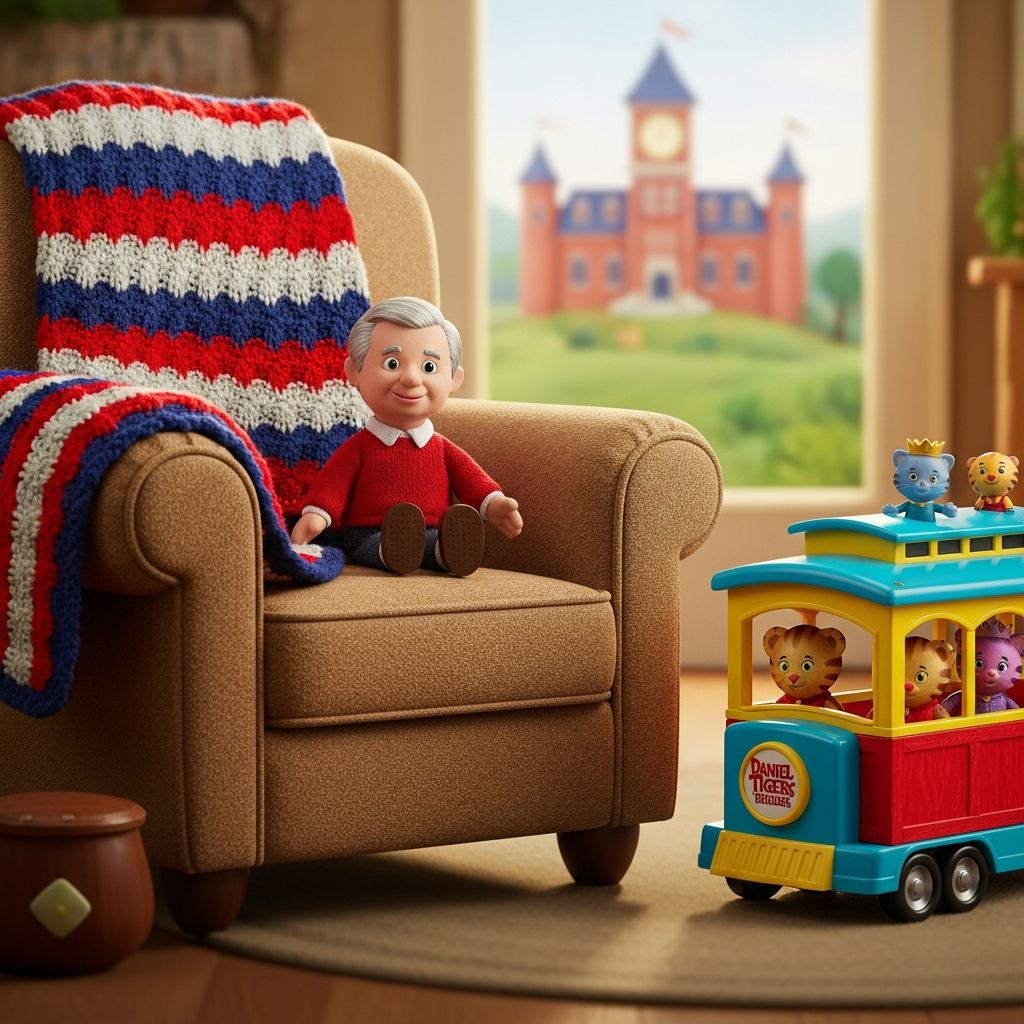
If your child adores Daniel Tiger’s Neighborhood, they are already immersed in the gentle, emotionally rich world Fred Rogers created. The animated series is a direct spin-off of Mister Rogers’ Neighborhood, built on the same values of emotional literacy, kindness, and curiosity.
This guide introduces key Mister Rogers episodes that resonate especially well with Daniel Tiger fans, explains how to watch them together, and offers conversation prompts so you can turn screen time into meaningful, developmentally rich moments.
Why Pair Mister Rogers with Daniel Tiger?
Daniel Tiger translates Fred Rogers’ puppets and messages into modern animation, but the emotional core is the same. Fred Rogers’ original program was developed with guidance from child psychologist Dr. Margaret McFarland, ensuring that each story reflected real children’s concerns and feelings.
- Shared characters: Daniel Tiger, King Friday, X the Owl, and others first appeared as puppets in the Neighborhood of Make-Believe.
- Common themes: both series focus on feelings, friendship, routines, and coping with change.
- Evidence-informed approach: Mister Rogers’ Neighborhood is widely cited by child-development experts as an example of media that supports emotional learning rather than overstimulation.
Pairing the animated series with Mister Rogers’ live-action episodes helps children see that the same lessons apply in both pretend worlds and real life.
Core Themes to Look For
Before choosing specific episodes, it helps to understand the core messages that run through Mister Rogers’ work.
| Core Theme | What Kids Learn | How It Connects to Daniel Tiger |
|---|---|---|
| Feelings are normal | All feelings are acceptable; actions can be guided and safe. | Daniel’s songs about being mad, sad, or scared echo Fred’s messages. |
| Curiosity and learning | It’s good to wonder, ask questions, and explore carefully. | Field trips and “how things are made” segments appear in both series. |
| Preparation and routines | Knowing what will happen next helps kids feel safe. | Daniel’s focus on bedtime, doctor visits, and new experiences grows from this. |
| Hard topics are talkable | Difficult realities (illness, conflict, divorce) can be discussed honestly. | Daniel frequently models talking to grown-ups about big worries. |
Episode Pathway 1: Understanding Mistakes & Self-Worth
Children who connect with Daniel’s big feelings will be especially moved by classic Mister Rogers stories about mistakes and feeling good enough.
Why this theme matters
Preschoolers are just beginning to compare themselves with others and can quickly slide from “I made a mistake” to “I am a mistake.” Fred Rogers devoted a number of episodes to reassuring children that their worth doesn’t depend on performance.
- Emotional goal: help kids separate what they do from who they are.
- Life skills: apologizing, trying again, and tolerating frustration.
- Daniel Tiger connection: songs like “Everyone makes mistakes sometimes” clearly echo this message.
What to talk about after watching
- Ask: “Have you ever felt like Daniel when something went wrong?”
- Share a simple story of a mistake you made and how you fixed it.
- Reinforce: “You are loved even when you make a mistake.”
Psychologists note that children’s self-esteem is shaped not just by praise, but by how adults respond when children fail or struggle, making these episodes especially valuable.
Episode Pathway 2: Friends, Fights & Making Up
Both Mister Rogers and Daniel Tiger spend considerable time on friendship conflicts—a daily reality in preschool and early elementary years.
Key lessons from classic episodes about friendship
- Disagreements are normal: Even close friends fight sometimes.
- Feelings under behavior: Bossiness or unkind words can hide hurt or fear.
- Repair matters: Coming back together with apologies and compromises is a learnable skill.
Research on social-emotional learning finds that media modeling of conflict resolution can help children learn language for apologizing and negotiating, particularly when adults watch with them and reinforce the skills afterward.
Conversation prompts for kids
- “Have you ever had a fight with a friend like that?”
- “What helped the characters feel better with each other at the end?”
- “What could you say next time you’re mad at a friend?”
Episode Pathway 3: Big Changes & Tough Topics
Fred Rogers became known for addressing topics most children’s shows avoided: divorce, death, disability, and frightening news events. While Daniel Tiger often approaches these themes more gently, pairing them with Mister Rogers episodes can open age-appropriate conversations.
Why this is helpful for Daniel Tiger fans
- Kids who already trust Daniel and the Neighborhood may feel safer exploring hard topics.
- Mister Rogers provides “slow, calm explanations” instead of dramatic imagery.
- Children learn it is okay to ask questions and say “I don’t understand.”
Child development experts emphasize that children are often aware of difficult events but lack the language to express their concerns; direct, honest, and simple explanations help reduce anxiety.
Tips for parents during these episodes
- Sit close; your presence is a source of safety.
- Pause the episode if your child looks overwhelmed and offer a hug.
- Use clear, concrete language; avoid euphemisms that can confuse children.
Episode Pathway 4: Everyday Routines & Real-World Visits
Mister Rogers frequently visited factories, workplaces, and neighbors’ homes to show how everyday things are made and how people do their jobs. These segments share the same spirit as Daniel’s trips to the doctor, bakery, or neighborhood store.
What these episodes teach
- Preparation reduces fear: Seeing what happens during a doctor visit or haircut can make the real experience less scary.
- Respect for workers: Children see that real people make their crayons, food, and clothing.
- Curiosity about systems: Kids learn to wonder how things work, not just accept them as magic.
How to extend the learning
- After a “how it’s made” segment, offer related play: toy tools, pretend bakery, or a drawing of the process.
- Use simple open-ended questions: “What part did you like watching the most?”
- Connect to your community: point out similar places (factories, shops, bus depots) when you’re out together.
Episode Pathway 5: Creativity, Music & Imagination
Many of the most beloved Mister Rogers segments feature music, art, and pretend play, including visits with musicians like Yo-Yo Ma or artists like Eric Carle. Daniel Tiger continues this tradition with songs, make-believe, and creative problem solving.
Benefits for young viewers
- Emotional expression: Children learn that drawing, music, or pretend play are healthy ways to show feelings.
- Focus and listening: Live performances encourage attention to tone, rhythm, and expression.
- Respect for the arts: Kids see art as real work done by real people, not just background noise.
Simple follow-up activities
- Offer crayons and paper and say: “Draw something from the episode that you liked.”
- Play a short piece of music and ask: “Does this sound happy, sad, or something else?”
- Encourage costume or puppet play inspired by the episode.
How to Watch Mister Rogers with Young Daniel Tiger Fans
Because Mister Rogers’ Neighborhood is paced more slowly and visually simpler than most modern kids’ shows, it can be a new experience for some children used to quicker editing and brighter animation.
Practical viewing tips
- Start with short segments: Watch 10–15 minutes at a time, especially with younger preschoolers.
- Create a ritual: A simple routine—snack, blanket, and a reminder that it’s “Mister Rogers time”—makes the slower pace feel special.
- Watch together: Co-viewing lets you explain, pause, and comfort as needed. Studies on educational TV repeatedly find stronger learning when adults engage alongside children.
- Echo familiar elements: Point out the trolley, the Neighborhood of Make-Believe, and characters your child already knows from Daniel Tiger.
Suggested Pairings: Daniel Tiger & Mister Rogers Themes
You can create your own “mini-marathons” by pairing Daniel Tiger episodes with Mister Rogers stories on similar topics.
| Child Concern | Daniel Tiger Focus | Mister Rogers Focus |
|---|---|---|
| Feeling like a mistake | Daniel worries he did everything wrong and needs reassurance. | Puppet Daniel Tiger and others talk openly about feeling like a mistake. |
| Fights with friends | Episodes about sharing, bossiness, and apologizing. | Make-Believe stories where characters disagree, calm down, and repair. |
| Big changes | New sibling, new routines, or first-time experiences. | Fred explains what to expect at the doctor, barber, or school. |
| Curiosity about jobs | Visiting neighbors’ workplaces in the cartoon town. | Real-world factory tours and neighbor interviews. |
Age-Appropriate Guidance
Not every Mister Rogers episode is right for every age. Because Fred Rogers addressed topics like death and serious illness directly, it helps to choose with your child in mind.
- Age 3–4: Focus on episodes about everyday routines, mistakes, and gentle factory visits. Keep viewing shorter and highly supported.
- Age 4–6: Introduce simple friendship conflicts and very basic hard topics, pausing to explain and reassure.
- Age 6+: Children may be ready for deeper conversations about divorce, disability, or news events, framed clearly and calmly.
Frequently Asked Questions (FAQs)
Where can I legally watch Mister Rogers’ Neighborhood?
Many full episodes and clips are available through official PBS platforms such as PBS KIDS’ video services and the Fred Rogers Productions site, which host curated collections of classic segments.
Is Mister Rogers’ Neighborhood still relevant for kids today?
Yes. Its focus on emotional literacy, respectful communication, and honest discussion of difficult topics aligns closely with current child-development recommendations and underpins modern shows like Daniel Tiger’s Neighborhood.
My child is used to fast-paced cartoons. Will they be bored?
Some children may initially find the slower pace unfamiliar, but many adjust when adults frame it as quiet, special time and watch alongside them. The calm rhythm can actually support attention and emotional regulation.
Are there episodes I should avoid with very young children?
With toddlers and young preschoolers, it is wise to preview episodes that deal with death, violent news, or intense conflict. Save those for when your child is older and ready for more complex conversations.
How often should we watch Mister Rogers versus Daniel Tiger?
There is no perfect ratio. Many families use Daniel Tiger for short, familiar viewing and add Mister Rogers a few times a week as a slower, co-viewed experience centered on conversation and connection.
References
- Watch – Mister Rogers’ Neighborhood — Fred Rogers Productions. 2024. https://misterrogers.org/watch/
- Watch Mister Rogers’ Neighborhood Videos — PBS KIDS. 2024. https://pbskids.org/videos/mister-rogers-neighborhood
- Mister Rogers’ Neighborhood: Daniel and Lady Aberlin — PBS KIDS. 2024. https://pbskids.org/videos/watch/mistakes-daniel-wonders-if-hes-a-mistake/34766
- The Messages of Mister Rogers’ Neighborhood — Fred Rogers Productions. 2022-03-01. https://www.misterrogers.org/the-messages/