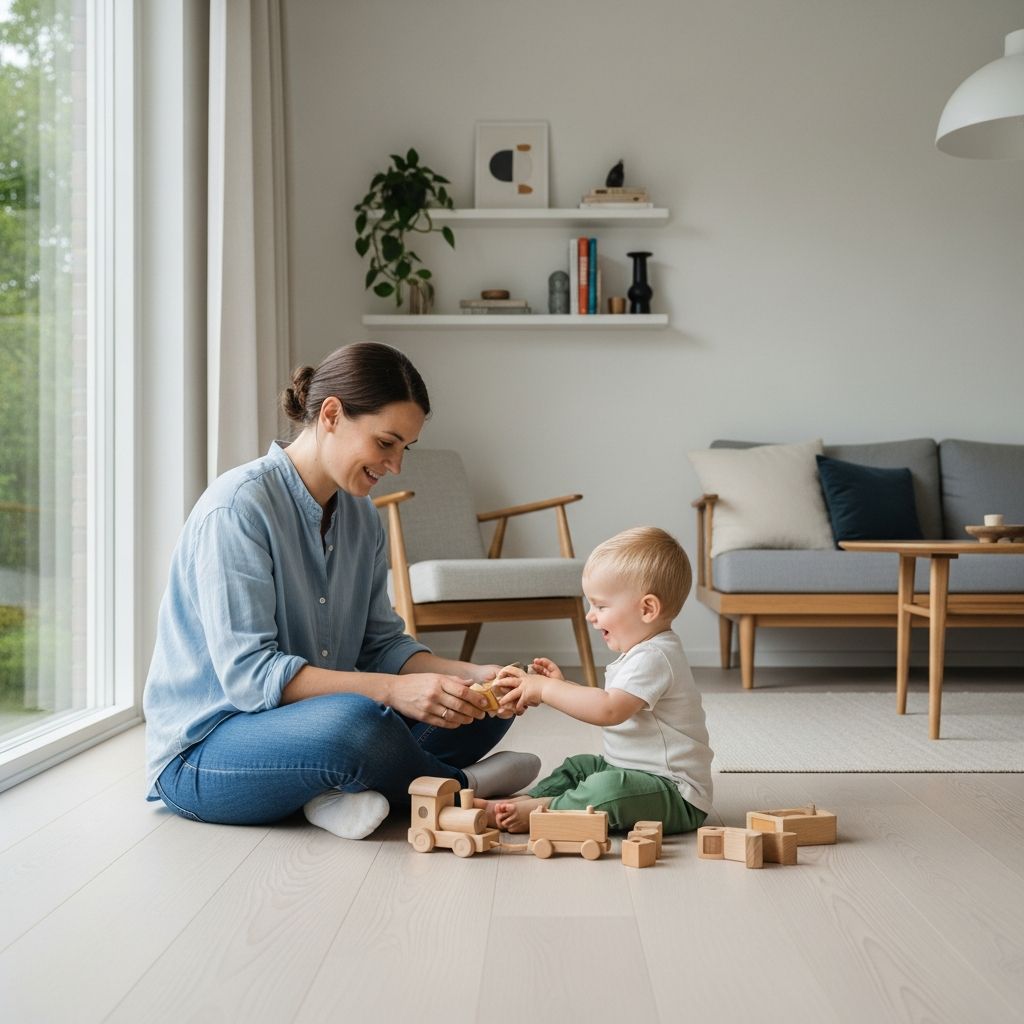
Minimalist parenting is not about bare white walls or saying no to every activity. It is about choosing what truly matters to your family and letting go of everything that drains your time, money, and energy without giving much back.
Why Families Feel So Overloaded
Most parents today are raising children in a culture of “more”: more toys, more activities, more pressure, more advice. The result is often less of what families actually crave—rest, connection, and confidence.
Minimalist parenting starts with acknowledging that the constant chase for “enough” stuff and experiences has a cost: cluttered spaces, packed calendars, and exhausted parents who feel like they are failing even when they are doing their best.
- Homes overflow with gear, gadgets, and toys that rarely get used.
- Schedules are filled with lessons, sports, and events that leave little time to simply be together.
- Parents experience decision fatigue from endless choices about products, programs, and parenting philosophies.
What Minimalist Parenting Really Means
Minimalist parenting is an intentional approach to raising children that focuses on quality over quantity in every area of family life. It is not a rigid set of rules, but a mindset that asks a simple question: “Is this adding value to our lives, or just adding noise?”
Instead of trying to optimize every moment with the “right” activity or purchase, minimalist parents prioritize emotional connection, unstructured time, and realistic expectations for both kids and adults.
Core principles of minimalist parenting
- Intentional choices: Deciding what to bring into your home and onto your calendar instead of letting outside expectations decide for you.
- Enough, not maximum: Seeking a level of stimulation, toys, and commitments that is sufficient and nourishing, not overwhelming.
- Connection first: Valuing time with one another over keeping up with trends or impressing others.
- Room to grow: Leaving space—physically and emotionally—for kids to explore, be bored, and develop resilience.
Benefits of Doing and Owning Less
When families slowly shift toward a “less but better” lifestyle, the changes can be surprisingly tangible. Parents often notice that stress levels drop, tempers shorten less quickly, and everyday life feels more manageable.
Children may respond with more creativity, fewer meltdowns, and a stronger sense of independence when their physical and emotional environments are less chaotic.
| Area | Without Intention | With Minimalist Parenting |
|---|---|---|
| Home environment | Cluttered rooms, constant tidying, visual noise | Fewer, more loved items; easier cleaning and more calm |
| Schedule | Rushed days, back-to-back activities, little recovery time | Protected downtime, thoughtful choices about commitments |
| Parent well-being | Guilt, burnout, decision fatigue | Clearer priorities, more confidence, less stress |
| Child development | Overstimulation, constant entertainment, limited autonomy | More imagination, boredom that sparks creativity, resilience |
Step One: Redefine “Good Parenting” for Your Family
Minimalist parenting begins inside your head, not inside your closets. It requires questioning the invisible checklist of what a “good” parent is supposed to do, buy, and provide.
Instead of measuring success by how busy, enriched, or perfectly decorated your family looks, you choose goals that actually match your values and circumstances.
Questions to clarify your family values
- What kind of memories do we want our children to have of their childhood?
- When do we feel most connected as a family?
- What do we want our children to learn about money, stuff, and success?
- What are our non-negotiables (sleep, time outside, shared meals, faith practices, etc.)?
Write your answers down and use them as a quiet filter whenever you face a new opportunity, purchase, or obligation. If it does not support your values, it may be worth declining.
Step Two: Simplify the Stuff (Without Going Extreme)
You do not have to become a strict minimalist to enjoy the benefits of a simpler home. The aim is not to own the fewest possible items, but to surround your family only with what is useful, meaningful, and reasonably manageable.
Clutter is not just visual; it also translates into mental load. Every toy, outfit, and gadget represents decisions, storage, and maintenance that someone—usually a parent—must handle.
Practical ways to declutter with kids
- Start small and visible: Choose one surface or one drawer instead of attacking an entire room.
- Use simple categories: Keep, donate, trash, and “not sure yet” are enough for most families.
- Rotate toys: Store a portion of toys out of sight and swap them every few weeks to renew interest without buying more.
- Invite older kids into decisions: Ask which items they use, love, or could happily pass on.
- Set compassionate limits: Instead of counting items, decide on boundaries such as “what fits in this bin” or “one shelf per child.”
If you feel guilty letting go of things, remind yourself that unused items do not honor the money or care that went into acquiring them. Passing them on, selling them, or donating them allows them to be appreciated again.
Step Three: Uncrowd the Schedule
Many families find that the busiest years are not the most meaningful ones. A packed schedule can give the illusion of opportunity and enrichment, while actually crowding out slow conversations, shared meals, and sleep.
Minimalist parenting treats time as the most valuable resource. Before adding another weekly commitment, you consider how it affects the energy and rest of everyone involved.
Guidelines for a more spacious calendar
- Limit recurring commitments: Aim for a manageable number of weekly activities per child, based on age and temperament.
- Protect margins: Leave white space between events so you are not constantly rushing or driving.
- Prioritize rest: Guard sleep and slow evenings as strongly as you would guard lessons or sports.
- Say no kindly: Practice phrases that let you decline invitations without long explanations, such as “That will not work for us this season.”
Over time, your children learn that it is normal and healthy to have unstructured time: afternoons spent building forts, reading, wandering outside, or simply being bored and figuring out what to do next.
Step Four: Design Calm Routines, Not Perfect Days
Minimalist parenting is not about crafting a perfect, productive day. It is about anchoring your family with a few predictable rhythms so that everyone feels more secure and less reactive.
Routines do not have to be elaborate. A simple flow that repeats most days can reduce nagging, tantrums, and the constant need to make small decisions.
Simple routines that support a simpler life
- Morning: Same wake-up window, a short checklist (dress, breakfast, brush teeth, pack bag), and one small moment of connection.
- After school: Snack, movement or outside time, homework window, then free play.
- Evening: Screen cutoff, tidy-up sprint, bedtime routine with the same few steps each night.
Think of routines as a gentle script everyone in the family knows. When the script is predictable, there is less room for arguments and far more room for the spontaneous, joyful moments you actually remember.
Money, Gifts, and Saying “Enough”
Minimalist parenting also reshapes how families think about money and gifts. Instead of equating love with buying, parents look for ways to express care through presence, attention, and shared experiences.
This does not mean children never receive presents. It simply means that gifts are thoughtful, aligned with values, and not the default answer to boredom, celebration, or guilt.
Ideas for more intentional giving
- Favor experiences—like museum passes, classes, or day trips—over bulky toys when possible.
- Choose open-ended items (blocks, art supplies, building sets) that can be used in many ways.
- Set clear expectations with relatives about what your home realistically has room for.
- Teach kids about saving, giving, and choosing instead of buying on impulse.
Over time, children raised with reasonable limits around stuff often develop more gratitude and a stronger sense of what they truly enjoy, instead of constantly craving novelty.
Handling Guilt, Comparison, and Outside Opinions
One of the hardest parts of minimalist parenting is not the decluttering or the schedule changes—it is managing the emotional side. Parents may worry that their kids are missing out, or feel judged for opting out of certain trends.
Minimalist parenting asks you to trust your knowledge of your own children more than the fear of falling behind. Every family has different needs, abilities, and resources, and there is no universal checklist that fits everyone.
- Remind yourself often that “different” is not the same as “deprived.”
- Seek out like-minded parents or online communities who value simplicity.
- Notice when comparison is driving a decision, and gently redirect your focus back to your actual child in front of you.
Minimalist Parenting with Babies vs. Older Kids
Minimalist principles look slightly different depending on the age and stage of your children. The common thread is that you adjust expectations to your reality and avoid overcomplicating what kids truly need.
With babies and toddlers
- Focus on a modest collection of gear that you actually use day to day.
- Choose a few safe, sensory-rich toys instead of crowded bins of plastic gadgets.
- Prioritize sleep routines and caregiver well-being over elaborate enrichment plans.
With school-aged kids and teens
- Involve them in decisions about activities, explaining trade-offs between time, energy, and money.
- Encourage them to maintain their spaces, edit their belongings, and think about needs vs. wants.
- Model boundaries with technology, social media, and consumer culture.
Frequently Asked Questions About Minimalist Parenting
Does minimalist parenting mean my kids will have very few toys?
No. Minimalist parenting is not a contest to see who can own the least. It is about having a realistic, manageable amount of toys and belongings that your children actually enjoy, can care for, and have space to use.
Will my child be less prepared than kids with packed schedules?
Children do not need a full calendar to grow into competent, interesting adults. Unstructured time helps them practice problem-solving, creativity, and self-direction. A thoughtful selection of activities, combined with free time, can prepare them just as well—often with less stress.
What if my partner or relatives love buying things for the kids?
Start with respectful conversations about your goals and limits. Share that your focus is on reducing clutter and stress, not rejecting generosity. Suggest experience gifts or smaller items, and create shared guidelines so everyone understands what works for your home.
Is minimalist parenting only for families with money?
Minimalism is not about purchasing a curated aesthetic; in many cases, it saves money by reducing impulse buys and constant upgrades. Families at every income level can benefit from thoughtful choices about where their limited time and resources go.
How do I begin if I already feel overwhelmed?
Start tiny. Choose one drawer, one shelf, or one evening a week to simplify. Celebrate small wins and resist the urge to overhaul everything at once. Minimalist parenting is a gradual shift in direction, not a dramatic makeover.
Taking the First Gentle Step
Minimalist parenting is less about perfection and more about alignment—aligning your daily choices with what you quietly know matters most. You are not aiming for an empty home or a rigid schedule; you are aiming for a family life that feels spacious enough to actually enjoy.
Pick one area—your morning routine, the toy shelf, the weekly calendar—and experiment with doing less. Notice what changes. Often the most surprising discovery is that when you subtract the excess, what remains feels richer, calmer, and more deeply connected.