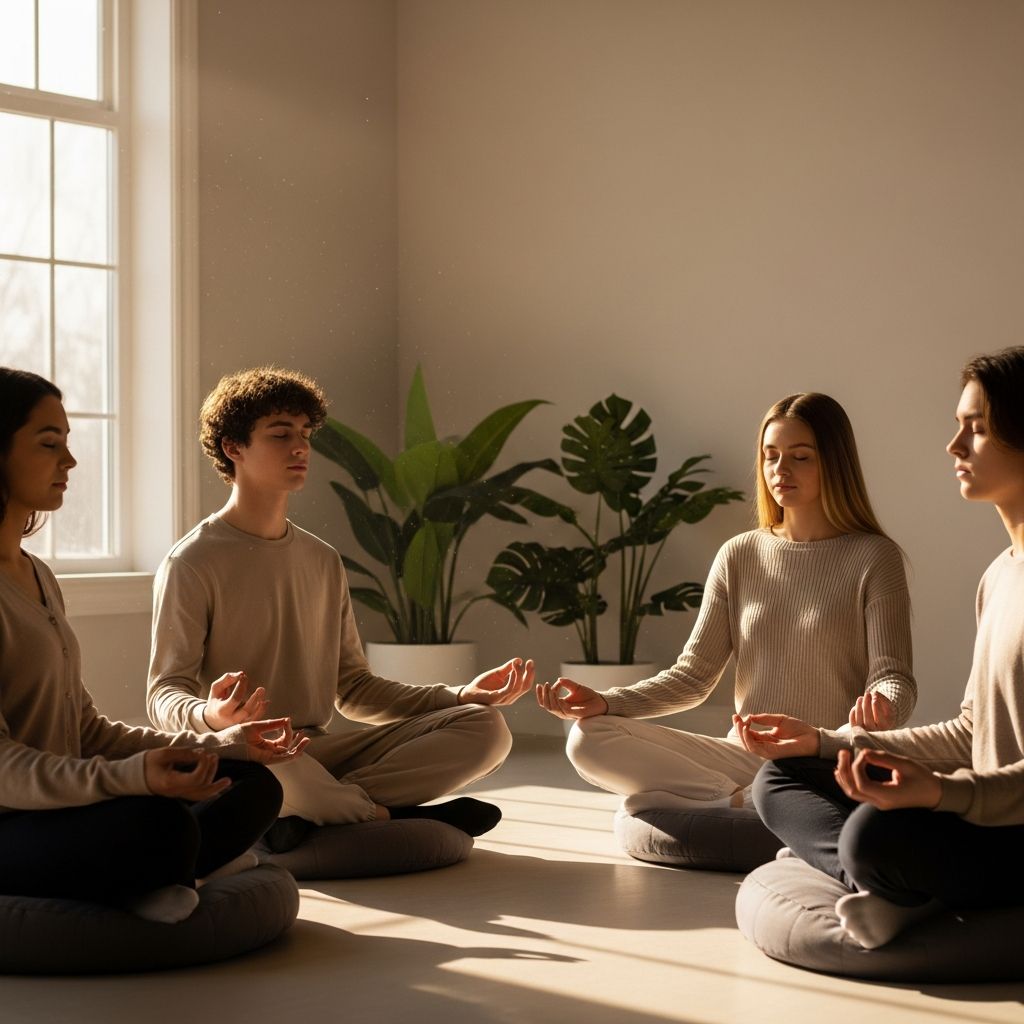
Mindfulness is a way of paying attention on purpose, in the present moment, and without judging yourself. It can help teens handle stress from school, friendships, family, social media, and big life changes by giving the mind a chance to slow down and reset.
This guide offers practical, teen-friendly mindfulness exercises you can start using right away, even if you have never tried anything like this before.
Why Mindfulness Matters for Teenagers
During the teen years, your brain and body are changing quickly. At the same time, expectations from school, sports, jobs, and relationships can feel intense. Mindfulness gives you tools to manage all of this more effectively.
| Challenge Many Teens Face | How Mindfulness Can Help |
|---|---|
| Racing thoughts and constant worry | Mindful breathing calms the body and nervous system, making it easier to think clearly. |
| Strong emotions and mood swings | Awareness practices help you notice emotions before they explode, so you can respond instead of react. |
| Difficulty focusing in class or while studying | Short, regular attention exercises train the brain to concentrate better. |
| Feeling overwhelmed or burned out | Mindful breaks give you a reset, reducing stress overload and emotional exhaustion. |
Research on mindfulness programs in schools has found that they can reduce depression, anxiety, stress overload, and intrusive thoughts in adolescents, while increasing optimism and emotion regulation skills.
Getting Started: Mindfulness Basics for Teens
You do not need special equipment, long sessions, or perfect silence to practice mindfulness. You only need:
- A few minutes of time
- A place where you feel reasonably safe and comfortable
- Willingness to pause and try something new
Before trying specific exercises, keep these basics in mind:
- Start small: 1–3 minutes is enough when you are just beginning.
- Be curious, not critical: If your mind wanders, gently bring it back without getting annoyed at yourself.
- Practice regularly: Short daily practice is more helpful than long sessions once in a while.
- Use everyday moments: Waiting in line, sitting on the bus, or getting ready for bed are all chances to practice.
Exercise 1: Mindful Breathing You Can Do Anywhere
Mindful breathing is one of the simplest and most powerful mindfulness tools. Studies in schools show that basic breathing practices help teens manage stress more effectively and interrupt automatic reactions.
How to Practice Mindful Breathing
- Sit or lie down in a comfortable position. You can close your eyes or keep them gently focused on one spot.
- Place a hand on your chest, your belly, or leave your hands resting in your lap.
- Breathe in slowly through your nose, noticing the air coming in.
- Breathe out slowly through your nose or mouth, noticing the air leaving.
- See if you can feel your chest or belly gently rise and fall.
- When your mind wanders (and it will), simply notice it and bring your attention back to the next breath.
Practice for 5–10 breaths at first. Over time, you can extend this to a few minutes.
Quick Breathing Variations
- Counted breathing: Inhale for a count of 4, exhale for a count of 6. Longer exhales help the body relax.
- Hand focus: Rest a hand on your belly and imagine your breath lifting and lowering your hand like a gentle wave.
- Word anchor: Silently say a calming word (like “here” or “peace”) on each exhale.
Exercise 2: Body Awareness Scan
A body scan is a way to check in with physical sensations from head to toe. This can help you notice tension before it turns into headaches, stomachaches, or irritability.
Steps for a Simple Body Scan
- Lie down or sit back in a chair with your feet on the floor.
- Take two or three slow breaths to arrive in the moment.
- Bring your attention to your feet. Notice temperature, pressure, or tingling without trying to change anything.
- Slowly move your attention up your legs, hips, stomach, chest, shoulders, arms, hands, neck, and face.
- At each area, silently name what you feel: “warm,” “tight,” “relaxed,” “nothing much,” or anything else.
- If you find tension, imagine your breath moving into that area on the inhale and softening it on the exhale.
Body-awareness practices like this can support teens in learning emotion regulation skills, making it easier to recognize and manage stress before it builds.
Exercise 3: Mindful Senses Check-In
When stress pulls you into worries about the future or regrets about the past, your senses can bring you back to now. This exercise is short, discreet, and useful in public places like hallways or buses.
Five-Sense Grounding
Look around and slowly notice:
- 5 things you can see (colors, shapes, light, or shadow)
- 4 things you can feel (your clothes, the chair, the floor under your feet)
- 3 things you can hear (near and far sounds)
- 2 things you can smell (or imagine a favorite smell)
- 1 thing you can taste (even if it’s just the taste in your mouth)
Take your time with each sense. If one of the senses is hard to notice in the moment, you can skip it or imagine a related memory, like a favorite food or place.
Exercise 4: Mindful Movement and Stretching
Mindfulness is not only about sitting still. Gentle movement and stretching with awareness can be powerful, especially if you find it hard to stay seated. Mindful movement has been shown to support teens’ focus and emotional balance by linking body awareness and attention.
Ideas for Mindful Movement
- Slow stretching: While stretching your arms, neck, or legs, pay close attention to how your muscles lengthen and release.
- Mindful walking: Walk a bit more slowly than usual. Notice how your feet lift, move through the air, and touch the ground.
- Sports warm-up with awareness: During your usual warm-up for sports or dance, focus closely on your breath and body sensations instead of your to-do list.
Move safely and within your comfort zone. If a movement hurts, ease off and return to a gentler version.
Exercise 5: Noticing Thoughts Without Getting Pulled In
Many teens say their biggest challenge is dealing with constant thoughts—about school, relationships, body image, or the future. Mindfulness does not try to stop thoughts; instead, it changes how you relate to them.
Watching Thoughts Like Clouds
- Sit comfortably and take a few slow breaths.
- Imagine your thoughts as clouds moving across the sky, or as messages passing on a screen.
- When a thought appears, silently label it, for example:
- “Remembering” (about the past)
- “Planning” (about the future)
- “Judging” (about yourself or others)
- Rather than arguing with the thought, gently return to the feeling of your breath.
Over time, this practice can reduce the power of difficult thoughts and lower emotional reactivity. Mindfulness-based interventions in adolescents have been associated with decreases in intrusive thinking and improved emotion regulation.
Exercise 6: Short Mindful Breaks During the School Day
Mindfulness does not have to be a long, separate activity. You can build tiny practices into your normal routine to support focus and reduce stress at school.
Ideas for 30–60 Second Mindful Breaks
- Before a test: Take 3 deep breaths, feeling your feet on the floor and the chair under you.
- Between classes: As you walk down the hall, focus on the sensation of walking and the rhythm of your steps.
- During homework: Set a timer for 20–25 minutes of focused work, then pause for 1 minute of slow breathing or stretching.
- After a tough conversation: Place a hand on your chest or belly, take a few calmer breaths, and notice what you feel without judging it.
Research suggests that mindfulness practices in academic settings can help teens focus better, manage emotions, and cope with stress more productively, which may also support academic performance.
Building a Personal Mindfulness Routine
Every teen is different, so your mindfulness routine should fit your life and personality. The key is consistency rather than perfection.
Steps to Create Your Own Routine
- Pick a regular time: Morning, after school, or before bed are common choices.
- Choose 1–2 core practices: For example, 3 minutes of breathing plus a quick body scan.
- Use reminders: Alarms, notes, or pairing practice with a daily habit (like brushing your teeth) can help.
- Track what helps: Notice what makes you feel calmer or more focused over a week or two.
- Adjust as needed: If something does not work for you, switch to another exercise instead of giving up.
When Mindfulness Is Not Enough
Mindfulness can support mental health, but it is not a replacement for professional help when you are really struggling. Studies show that mindfulness-based programs can reduce symptoms of anxiety and depression in teens, but some people still need additional support such as therapy or medical care.
Consider reaching out to a trusted adult or health professional if:
- You feel sad, hopeless, or numb most days
- Worry or fear makes it hard to go to school, sleep, or enjoy activities
- You have thoughts of harming yourself or feel like life is not worth living
- Your stress feels out of control, even after trying coping strategies
A mental health professional can help you decide whether mindfulness should be part of a broader treatment plan.
Frequently Asked Questions (FAQs)
How long before I notice benefits from mindfulness?
Some teens feel a bit calmer after a single breathing exercise, but more lasting changes—like better focus or less reactivity—usually come after regular practice over several weeks.
Do I have to sit still and meditate with my eyes closed?
No. Mindfulness can involve sitting, moving, walking, stretching, or even everyday activities like eating or listening. The important part is paying attention with curiosity instead of judgment.
What if my mind keeps wandering when I try to focus?Mind-wandering is completely normal. Each time you notice your attention drifting and gently bring it back, you are practicing the core skill of mindfulness and training your brain to focus.
Q: Can mindfulness help with anxiety or depression?
Research on mindfulness programs for adolescents shows reductions in symptoms of anxiety, depression, and stress for many participants, especially when combined with other supports like therapy.
Is mindfulness connected to any religion?
Mindfulness has roots in several contemplative traditions, but it is widely taught today in a secular, science-based way in schools, clinics, and hospitals. You can practice it regardless of your beliefs.
References
- Effects of mindfulness-based intervention on adolescents’ emotional regulation — Xie J, et al., International Journal of Environmental Research and Public Health. 2021-12-14. https://pmc.ncbi.nlm.nih.gov/articles/PMC8701759/
- Mindfulness for Teens: Benefits and Practice Tips — Psych Central. 2022-04-12. https://psychcentral.com/health/the-benefits-of-mindfulness-meditation-for-teens
- How mindfulness can benefit the modern teenager — University of British Columbia, Faculty of Medicine. 2018-05-09. https://www.med.ubc.ca/news/how-mindfulness-can-benefit-the-modern-teenager/
- Mindfulness practices shown to help teenagers deal with stress — Penn State University News. 2020-03-18. https://www.psu.edu/news/research/story/mindfulness-practices-shown-help-teenagers-deal-stress
- Introducing Mindfulness to Kids & Teens — McLean Hospital. 2020-07-01. https://www.mcleanhospital.org/library/galen-mindfulness-kids