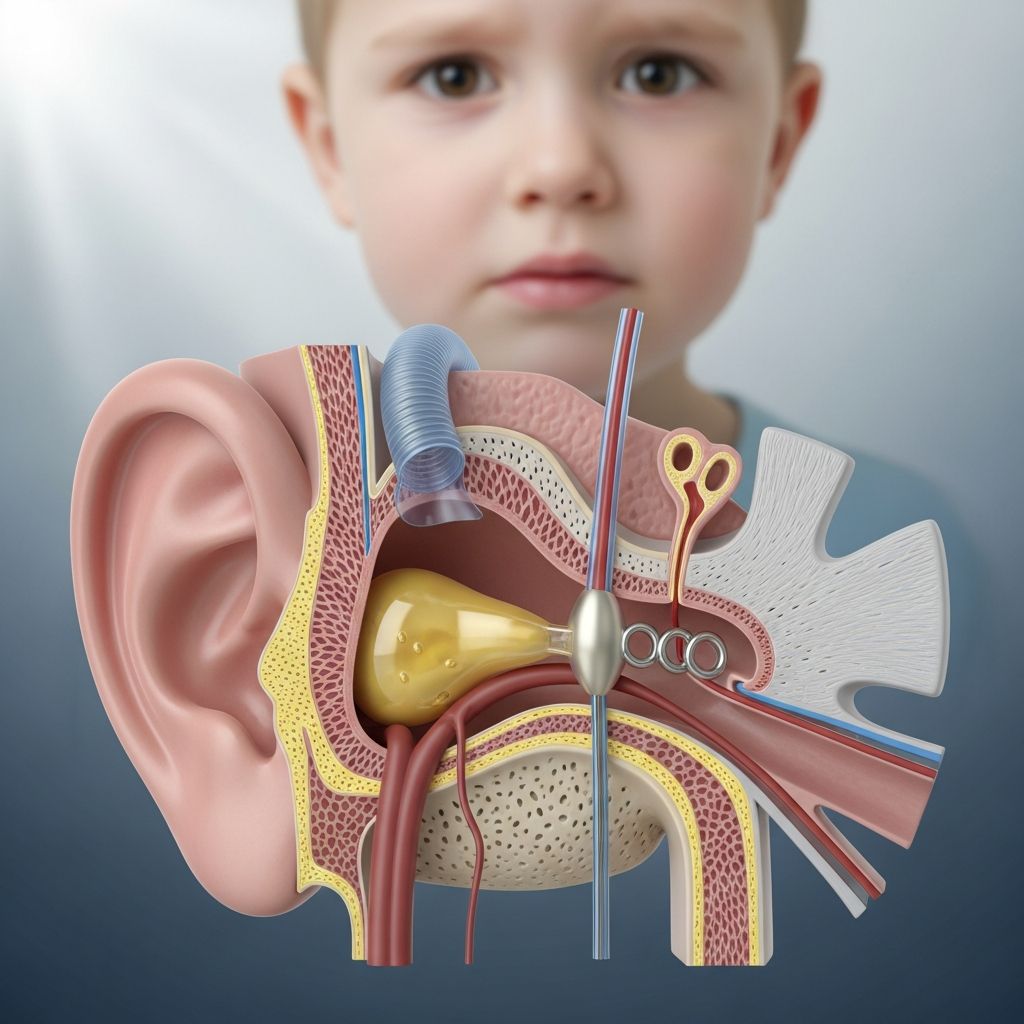
Middle ear infections are among the most frequent reasons children see a doctor, especially in the first few years of life. Understanding what is happening inside your child’s ear helps you respond calmly, seek timely care, and protect their long-term hearing and development.
This guide explains middle ear infections in clear, parent-friendly language, from early warning signs to treatment options and prevention strategies. It is for education only and does not replace medical advice from your child’s healthcare provider.
What Is a Middle Ear Infection?
A middle ear infection, also known as otitis media, happens when fluid builds up in the space behind the eardrum and becomes inflamed or infected by germs. This space normally stays filled with air and helps transmit sound from the eardrum to the tiny hearing bones.
When that space fills with fluid instead of air, pressure builds, the eardrum may swell, and your child often feels pain and may have temporary hearing problems. In many children, infections clear with time and simple care at home; in others, they recur or linger and require closer medical follow-up.
How the Ear Normally Works
To understand ear infections, it helps to picture the three main parts of the ear and how they work together to turn sound waves into signals the brain understands.
| Ear Part | Location | Main Role |
|---|---|---|
| Outer ear | Visible ear and ear canal | Catches sound waves and directs them toward the eardrum. |
| Middle ear | Air-filled space behind the eardrum | Contains tiny bones that move in response to sound and pass vibration inward. |
| Inner ear | Deep inside the skull | Turns vibrations into nerve signals that travel to the brain. |
The middle ear also connects to the back of the nose and upper throat through a narrow passage called the Eustachian tube. This tube opens and closes to balance air pressure and drain normal fluid away from the middle ear.
Why Children Get So Many Ear Infections
Children are more prone to middle ear infections than adults for several reasons related to anatomy, immune system maturity, and daily environment. Knowing these reasons can help you understand why ear infections sometimes seem to appear over and over again.
- Shorter, flatter Eustachian tubes: In young children, these tubes are narrower and more horizontal, making it easier for fluid and germs to become trapped and harder for drainage to occur.
- Immature immune system: Babies and toddlers are still developing immunity, so they catch colds and respiratory viruses more often, which can spread to the middle ear.
- Frequent respiratory infections: Daycare, preschool, and siblings increase exposure to viruses and bacteria that start in the nose and throat and may travel to the ears.
- Allergies and nasal congestion: Swelling in the nose and throat from colds or allergies can block the Eustachian tubes and prevent normal drainage.
Common Triggers and Risk Factors
Not every child with a cold will develop a middle ear infection, but certain situations make infections more likely. Identifying and, when possible, reducing these risk factors may lower your child’s chances of repeated ear problems.
- Frequent colds and upper respiratory infections.
- Exposure to cigarette smoke or vaping aerosol in the home or car.
- Attending group childcare, especially in crowded indoor settings.
- Using a bottle while lying flat, which can allow milk or formula to reach the back of the nose and Eustachian tube.
- Family history of repeated ear infections or structural differences in the face or skull.
- Seasonal viruses, particularly in fall and winter.
Types of Middle Ear Problems in Children
“Ear infection” is a broad phrase. Healthcare providers use more precise terms to describe what is happening inside the middle ear space. The type matters because it influences how your child is treated and monitored.
| Condition | What It Means | Typical Features |
|---|---|---|
| Acute middle ear infection | Sudden infection with fluid and inflammation behind the eardrum. | Quick onset of ear pain, fever, irritability, and trouble sleeping. |
| Middle ear fluid without active infection | Fluid remains trapped behind the eardrum after an infection or due to poor drainage. | Muffled hearing, feeling of fullness in the ear, usually little or no pain. |
| Recurrent ear infections | Several separate acute infections over months or a year. | Child recovers, then develops new episodes of ear pain and infection signs. |
| Chronic middle ear problems | Fluid or damage in the middle ear and eardrum lasting for a longer period. | Potential impact on hearing and speech if not monitored and managed. |
Signs and Symptoms Parents Often Notice
Some older children clearly tell you, “My ear hurts.” Babies and toddlers, however, communicate discomfort in more subtle ways. Being alert to patterns of behavior and physical signs can help you identify a possible ear infection early.
- Complaints of ear pain, a feeling of fullness, or “popping” in the ear (in older children).
- Increased fussiness, especially when lying down.
- Tugging, rubbing, or hitting the ear.
- Trouble sleeping or frequent nighttime waking.
- Reduced interest in feeding, or crying during sucking or swallowing.
- Temporary hearing difficulties, such as not responding when called or turning up the volume.
- Fever, often mild to moderate, though not always present.
- Fluid or pus draining from the ear, sometimes after a sudden decrease in pain.
- Balance problems or unsteadiness in some children.
How Ear Infections Are Diagnosed
If you suspect an ear infection, a visit to your child’s healthcare provider is essential for an accurate diagnosis. Only a physical exam can confirm what is happening behind the eardrum and whether treatment is needed.
- Ear exam with a lighted tool: The provider uses a small instrument with a light to look into the ear canal and view the eardrum for redness, bulging, fluid, or punctures.
- Air or puff test: A gentle puff of air may be used to see how well the eardrum moves, which helps show whether fluid is present behind it.
- Hearing checks: For repeated or long-lasting problems, simple hearing tests or a referral to a hearing specialist may be recommended.
Treatment Options: When Medicine Is Needed
The best treatment depends on your child’s age, the severity of symptoms, and whether there are repeated infections. Not every ear infection requires antibiotics, and many improve on their own with careful observation and pain relief.
- Observation or “watchful waiting”: For some children, especially older ones with mild symptoms, the provider may recommend close monitoring for a day or two to see if the infection improves without antibiotics.
- Antibiotics: If your child is very young, has significant pain or fever, or shows certain exam findings, the provider may prescribe antibiotic medicine to fight bacterial infection. It is crucial to give exactly as directed and complete the full course, even if your child feels better.
- Pain relief medicines: Over-the-counter medications recommended by your provider can help reduce ear pain and fever. Never give aspirin to children or use someone else’s prescription.
- Ear drops: In some situations, medicated ear drops may be used, particularly if there is a small opening in the eardrum or if tubes are present. Always follow your provider’s instructions.
At-Home Comfort Measures
In addition to any treatment recommended by your child’s doctor, simple steps at home can make your child more comfortable while the infection improves. These measures should be used alongside, not instead of, appropriate medical care.
- Offer extra cuddling, quiet activities, and reassurance, especially at bedtime.
- Use a warm (not hot) cloth held gently against the side of the face and outer ear for short periods to help ease discomfort.
- Encourage rest and fluids to help the body recover from infection.
- Keep your child’s head slightly elevated when resting, if age-appropriate and safe, to reduce pressure.
- Avoid inserting cotton swabs, oils, or home remedies into the ear canal unless a healthcare provider specifically instructs you to do so.
Possible Complications and Warning Signs
Most middle ear infections clear without lasting problems. However, untreated or severe infections can sometimes lead to complications. Recognizing warning signs early helps protect your child’s hearing and overall health.
- Persistent or worsening pain despite medicine.
- High fever that does not improve or returns after initially going down.
- Swelling, redness, or tenderness behind the ear, or the ear appearing pushed forward.
- Thick, foul-smelling drainage from the ear lasting more than a day.
- Ongoing hearing problems, speech delays, or unclear speech.
- Severe headache, neck stiffness, or unusual sleepiness—these require emergency evaluation.
Recurrent Infections and Ear Tubes
Some children experience ear infections repeatedly over months or years. Recurrent problems can be stressful for families and may temporarily affect hearing, which in turn can influence speech and learning if not monitored.
- Recurrent infections: If your child has several infections in a short period, the provider may discuss strategies such as preventive care, closer follow-up visits, and hearing checks.
- Ear tubes (tympanostomy tubes): In some cases, a specialist may recommend placing tiny tubes through the eardrum to help equalize pressure and let fluid drain. This is usually a brief surgical procedure done under anesthesia and often reduces the frequency of infections.
- Monitoring development: Children with repeated ear problems may benefit from regular checks of hearing, speech, and language milestones, with early support if delays are found.
Prevention Tips for Healthier Ears
Not all ear infections can be prevented, but certain everyday habits and health choices can lower your child’s overall risk. These strategies also support general wellness, making it easier for your child’s body to fight infections of all kinds.
- Keep your home and car smoke-free, and avoid secondhand exposure to tobacco or vaping products.
- Practice frequent handwashing and teach children to cover coughs and sneezes.
- Ensure your child receives recommended vaccinations, which can reduce infections that sometimes lead to ear problems.
- Breastfeed when possible, especially during the first months of life, as it provides antibodies that may help protect against infections.
- Avoid bottle-feeding while your baby lies flat; instead, hold your baby more upright during feeds.
- Work with your child’s provider to manage allergies or chronic nasal congestion.
When to Call the Doctor or Seek Urgent Care
Knowing when to seek care can be challenging, particularly late at night or during weekends. Use your instincts and err on the side of calling if you are unsure; your child’s healthcare team can guide you based on symptoms and age.
- Contact your child’s doctor if there is new ear pain, fever, or changes in behavior lasting more than a few hours.
- Seek prompt care if you notice ear drainage, hearing difficulties, or frequent infections over a short time.
- Go to urgent or emergency care if your child has severe pain, high fever, swelling behind the ear, trouble moving the neck, unusual confusion, or appears very unwell.
Frequently Asked Questions (FAQs)
1. Can my child fly with a recent ear infection?
Changes in air pressure during takeoff and landing can be uncomfortable when the middle ear already has fluid or inflammation. Whenever possible, discuss upcoming travel with your child’s healthcare provider, who can advise based on how recently the infection occurred and how your child is feeling.
2. Do ear infections cause permanent hearing loss?
Most simple middle ear infections cause only temporary hearing changes that improve once the fluid clears. However, frequent or long-lasting infections, or complications that damage the eardrum or middle ear bones, can pose a greater risk, so regular follow-up and hearing checks are important for children with ongoing problems.
3. Are ear infections contagious?
The middle ear infection itself is not contagious, but the colds and respiratory viruses that lead to ear infections can spread from person to person. Good hygiene, including handwashing and covering coughs, helps protect your child and others.
4. Should my child stay home from daycare or school?
If your child has fever, significant pain, or feels unwell, rest at home is usually best until symptoms improve and your provider gives guidance about returning. Children without fever who feel well and are taking any prescribed medicine as directed can often return to their usual activities, depending on local policies.
5. Do over-the-counter cold medicines help ear infections?
Most over-the-counter cold and cough products do not treat the underlying middle ear problem and are not recommended for young children without guidance. Pain relief medicines and the specific treatment plan from your child’s provider are the safest and most effective ways to manage ear infection discomfort.
6. When should I worry about my child’s speech or language?
If your child has repeated ear infections, does not seem to hear well, or is not meeting speech milestones for age, speak with your provider. Early hearing checks and referral to speech or hearing specialists, when needed, can make a meaningful difference in long-term communication skills.
Key Takeaways for Parents
- Middle ear infections are common in childhood but usually temporary and treatable.
- Pay attention to ear pain, changes in behavior, sleep difficulties, fever, and any ear drainage.
- Follow your child’s healthcare provider’s instructions for medicine, follow-up visits, and hearing checks.
- Healthy habits, smoke-free environments, and vaccinations help lower the risk of repeated infections.
By recognizing early signs, seeking appropriate care, and supporting your child with comfort measures and preventive habits, you can navigate middle ear infections with greater confidence and protect your child’s hearing and overall well-being.