Finger painting is one of the simplest ways to let young children explore color, texture, and creativity, but many parents hesitate because they picture paint on walls, clothes, and furniture. A few smart tweaks to the setup can transform finger painting into a calm, contained activity that everyone actually looks forward to.
This guide walks through practical, low-mess and mess-free approaches to finger painting, from bagged paint activities for babies to controlled tabletop projects for preschoolers, along with tips, FAQs, and SEO-friendly ideas for planning your next art session.
Why Finger Painting Matters (Even If You Hate Mess)
Before finding workarounds for the chaos, it helps to remember why finger painting is worth the effort at all. Young children learn through their senses, and working directly with paint offers benefits that go beyond making cute artwork for the fridge.
- Sensory development: The cool, slippery feel of paint and the pressure of pushing it around help children understand how their bodies interact with different textures.
- Fine motor skills: Smearing, tapping, poking, and swirling paint builds strength and coordination in the small muscles needed for writing, fastening buttons, and using utensils.
- Creativity and expression: With no right or wrong way to move their fingers, children learn to experiment, take risks, and express their ideas visually.
- Emotional regulation: Repetitive motion, color mixing, and sensation can be soothing for many kids and can provide a safe outlet after a long or overstimulating day.
Once parents feel confident that finger painting has real developmental value, it becomes easier to invest a little time in making the experience less messy and more manageable.
Two Approaches: Low-Mess vs. Truly Mess-Free
“Non-messy” means different things for different families. Some parents are comfortable with washable paint on a smock and table cover, while others need activities that keep paint fully contained because of space, sensory preferences, or safety concerns. Think of your options in two broad categories.
| Approach | What It Means | Best For | Cleanup Effort |
|---|---|---|---|
| Low-mess finger painting | Paint is used directly on paper or surfaces, but with clear boundaries, washable products, and protective layers. | Older toddlers, preschoolers, and families with access to a washable space (kitchen, patio). | Moderate: quick wipe-down of table, hands, and clothes. |
| Mess-free finger painting | Paint is fully contained in bags or under plastic so skin and surfaces stay clean. | Babies, cautious toddlers, small spaces, or times when a full cleanup is not practical. | Minimal: throw away or rinse the plastic and you are done. |
Most families end up using a mix of both styles, depending on the child’s age, the time of day, and how much energy the adults have for cleanup.
Essential Supplies for Non-Messy Paint Play
Putting together a simple finger painting kit makes it much easier to say “yes” when your child asks to paint. You do not need fancy tools; a few smart choices can significantly reduce the mess.
- Washable, non-toxic paint: Choose paints labeled non-toxic and washable. For babies who still mouth everything, many parents use edible alternatives such as yogurt tinted with natural food coloring or cornstarch-based homemade paint.
- Thick paper or cardstock: Regular printer paper becomes soggy quickly. Slightly thicker paper prevents tearing and warping when paint is spread around.
- Zip-top plastic bags or plastic sleeves: Gallon-size bags or clear document sleeves are perfect for mess-free setups where the paint stays sealed inside.
- Tape that peels off easily: Painter’s tape or masking tape helps secure bags or paper to the table so they do not slide around.
- Protective layer for your surface: A vinyl tablecloth, shower curtain liner, or even a flattened cardboard box underneath the activity keeps your table or floor clean.
- Apron or old shirt: A designated art smock is easier than worrying about regular clothes, even with washable paint.
Once these items are stored together in a box or bin, grabbing everything you need takes seconds instead of searching the house for supplies.
Mess-Free Finger Painting Ideas (Perfect for Babies)
Babies and young toddlers often love looking at paint but dislike (or should not yet have) direct contact with it. Contained-paint activities protect clothing and skin while still offering visual and tactile interest through pressure and motion.
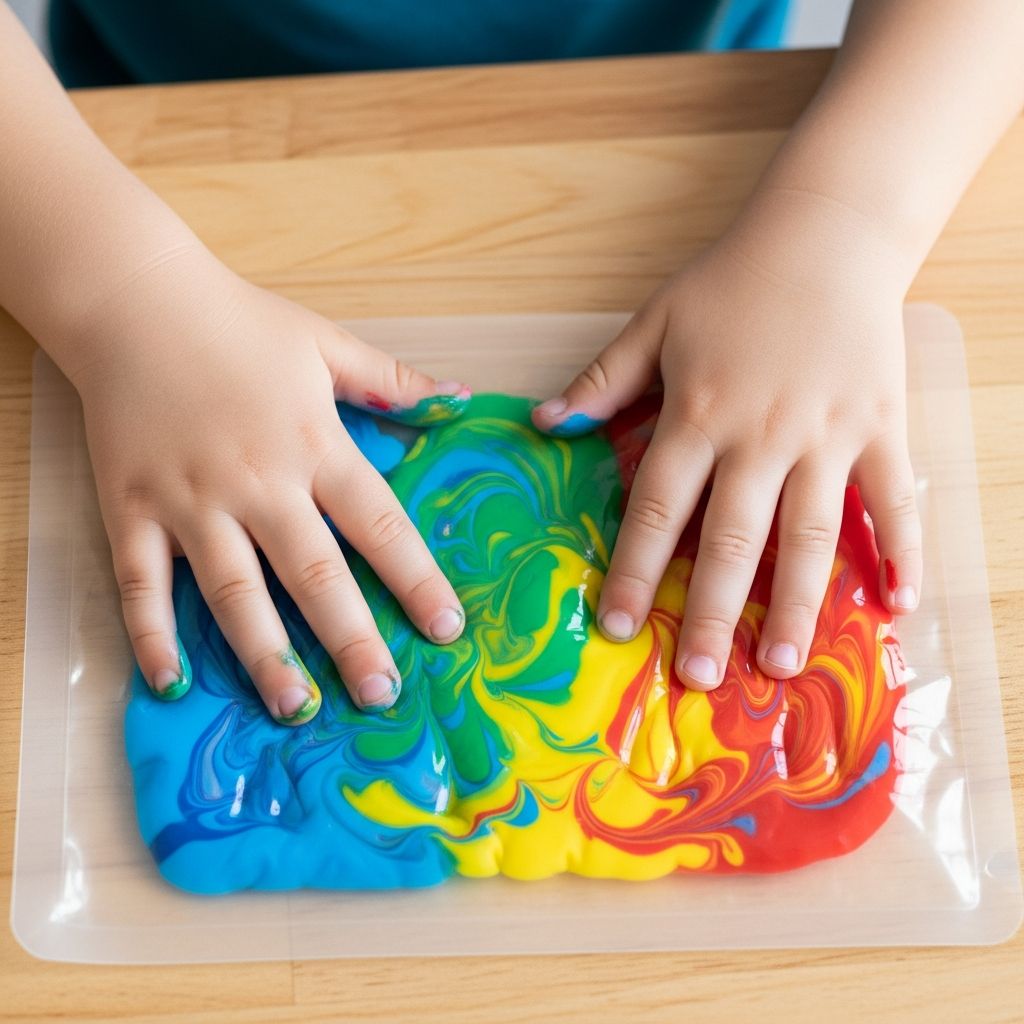
Paint-in-a-Bag Color Squish
This simple activity works well starting around the age when babies can sit with support and press their hands on a surface. Instead of touching wet paint, they press on a sealed bag to move color underneath.
- Place a blank sheet of paper on a flat surface.
- Squeeze a few small blobs of different colored paint onto the paper.
- Carefully slide the paper into a zip-top plastic bag or place a larger bag over the top of the paper.
- Seal the bag completely, pressing out extra air to prevent bubbles.
- Tape the edges of the bag to the table, tray, or floor so it cannot shift.
Babies can then pat, swipe, and press the bag. They see the colors swirl and blend without touching the paint. When finished, you can remove the paper, let it dry, and display the abstract artwork.
Window or Sliding Door Painting
Attaching a sealed bag of paint to a glass door or window creates a vertical canvas. The light shining through can make colors appear extra vivid and engaging.
- Fill and seal a paint bag as described above.
- Use painter’s tape to secure it to a low window or glass door at child height.
- Invite your child to stand or kneel and push the paint around with fingers, the palm of the hand, or even a toy car.
This setup is excellent for children who like standing activities and for parents who prefer to keep tables open for snacks or other tasks.
Texture Discovery Under Plastic
A variation involves placing textured items (like bubble wrap or cut-out foam shapes) under the paper before covering it with paint and plastic. Children press and feel the raised shapes while watching the paint move above them.
- Place bubble wrap, foam letters, or cardboard shapes on the table.
- Lay a sheet of paper over the textured items.
- Add paint and cover with a protective plastic layer or bag.
- Invite your child to search for “hidden bumps” while moving the paint around.
This game encourages curiosity and early problem-solving as children notice that pressing in different spots creates different results.
Low-Mess Finger Painting for Toddlers and Preschoolers
As children grow, many become more interested in the full sensory experience of paint on skin. Instead of eliminating mess entirely, the goal shifts to containing it to a limited area that is easy to clean.
Smart Setup for Controlled Chaos
A well-planned setup can make even “real” finger painting feel manageable. Spending three minutes preparing often saves twenty minutes of scrubbing afterward.
- Choose a washable zone: a kitchen table, bathtub wall, highchair tray, or outdoor patio is usually easier to clean than carpeted areas.
- Limit supplies: offer two or three colors at a time rather than the entire paint collection. Fewer choices mean less chance of tipped containers.
- Pre-portion paint: instead of handing over full bottles, spoon small amounts onto a palette, paper plate, or muffin tin sections.
- Establish simple rules: for example, “Paint stays on the paper and your hands,” or “When you are done, hands go straight to the sink.”
Explaining the rules positively before bringing out the paint sets a calm tone and gives children clear expectations.
Guided Finger Painting Activities
Open-ended play is valuable, but some lightly structured prompts can help keep the paint on the page and support specific skills like pattern recognition or pre-writing strokes.
- Path tracing: Draw thick lines, squiggles, or paths with a marker on paper. Invite your child to follow the lines with a painted finger, like driving a car along a road.
- Dot designs: Show how to tap fingertips up and down to create dots, then encourage your child to arrange dots into borders, shapes, or simple flowers.
- Shape outlines: Draw large circles, triangles, or hearts and let your child trace around them with paint, reinforcing shape recognition while working on control.
These playful tasks channel enthusiasm into practice with fine motor movements that later support writing and drawing.
Choosing Safer, Child-Friendly Paint Options
Parents are often concerned about what goes into art materials, especially for babies and toddlers who still explore with their mouths. While commercially produced children’s paints are typically labeled non-toxic, very young children benefit from extra caution.
- Infant stage: For babies under one, many caregivers rely on taste-safe options such as plain yogurt, pudding, or cornstarch-based mixtures tinted with small amounts of food coloring or natural powders (such as beet juice or turmeric for color). These can be used under plastic for mess-free art or directly on a highchair tray during supervised play.
- Toddlers and preschoolers: Water-based, washable finger paints are generally easier to remove from skin and fabrics. Check labels for age recommendations and ventilation suggestions.
- Surface protection: Even the safest paint can stain porous materials, so continue to use smocks and table covers, especially with strong colors like red and blue.
No matter what paint you choose, direct supervision is important, both for safety and to reinforce habits like washing hands after art time.
Time-Saving Cleanup Strategies
Cleanup is where many parents lose enthusiasm for art time. Planning the end of the activity before it starts leads to smoother transitions and less frustration for everyone involved.
- Prep a hand-washing station: Have a towel, soap, and washcloth ready at the sink, or keep a shallow bin of warm, soapy water nearby for quick rinsing.
- Layer surfaces: Place a disposable tablecloth or large sheet of paper on top of a reusable wipeable surface. When painting is over, roll up the top layer and throw it away or recycle it, leaving the clean layer underneath.
- Use drying racks or clothespins: Plan where wet artwork will go before you begin so you are not balancing dripping paper while searching for a spot.
- Set a clear ending cue: Warn children a few minutes before cleanup (“When this song ends, we’ll wash hands”) so they are more prepared to transition.
Over time, older toddlers and preschoolers can help with parts of the cleanup process, such as carrying their artwork to the drying area or wiping a portion of the table with a damp cloth.
Making Finger Painting a Calm Part of Your Routine
Rather than treating finger painting as a rare, high-pressure event, consider fitting short art sessions into your weekly rhythm. When painting feels ordinary instead of special and unpredictable, both children and adults tend to feel more relaxed about it.
- Start small: Ten minutes of focused, contained painting once a week is more sustainable than a huge project that leaves everyone exhausted.
- Repeat familiar setups: Reusing favorite routines (like the same tablecloth, paint colors, and cleanup steps) lets children know what to expect.
- Link to predictable times: Pair art time with moments when your child is usually calm and not hungry or overtired, such as mid-morning or early afternoon.
Consistent routines teach children that creativity is a normal part of daily life, not just a special occasion reserved for when adults have unlimited energy.
Fun Variations to Keep Things Interesting
Once you are comfortable with a basic non-messy setup, you can introduce small variations to keep your child engaged without greatly increasing the cleanup burden.
- Seasonal color themes: Choose colors that match the current season—pastels in spring, bright tones in summer, warm hues in autumn, and cool blues and whites in winter.
- Tools and textures: Offer occasional tools such as cotton swabs, toy cars, or the edge of a cardboard strip to drag through the paint for lines and patterns while still primarily using fingers.
- Simple “prompts”: Ask open-ended questions like “Can you make big circles and tiny dots?” or “What happens if you mix these two colors?” to guide exploration without dictating a final product.
These small twists maintain novelty for the child while relying on the same tried-and-true protective measures that keep your space clean.
Frequently Asked Questions About Mess-Free Finger Painting
How early can I start finger painting with my baby?
Babies can enjoy visual and sensory elements of paint as soon as they can focus on bright colors and track movement, often by a few months old. For very young infants, stick to fully contained activities such as paint sealed in bags or edible, taste-safe mixtures spread on a tray under close supervision.
What if my child hates getting messy?
Many children do not like the feel of wet or sticky substances on their skin, and that is completely normal. Mess-free options like sealed paint bags, paint under clear plastic, or using tools such as cotton swabs and toy cars can let them join the fun without touching the paint directly.
How do I prevent paint from leaking out of bags?
Use sturdy, good-quality zip-top bags and avoid overfilling them so that they close easily. Press out most of the air, double-check the seal, and secure the edges with tape to the table, window, or tray to prevent children from picking at the closure.
Can these activities work in small apartments?
Yes. Compact setups like a highchair tray activity, a single bag taped to a window, or a small table covered with a reusable mat take very little room. When the session is over, the supplies can be stored in a box or bin under a bed or in a closet.
How often should we do finger painting?
The ideal frequency depends on your schedule and your child’s interest level. Weekly or biweekly sessions are enough to support development and keep the activity feeling special, but short, more frequent sessions are also beneficial if they fit easily into your routine.
Encouraging Creativity Without Sacrificing Your Sanity
Non-messy and mess-free finger painting approaches allow families to keep the joyful parts of art—color, movement, experimentation—while reducing the stress that often accompanies paint. With a small set of thoughtful supplies, simple routines, and clear boundaries, parents can support their children’s creativity and development in a way that fits real life.
By reframing finger painting as a manageable, flexible option rather than a guaranteed disaster, more families can enjoy the benefits of hands-on art without spending the rest of the day cleaning up after it.