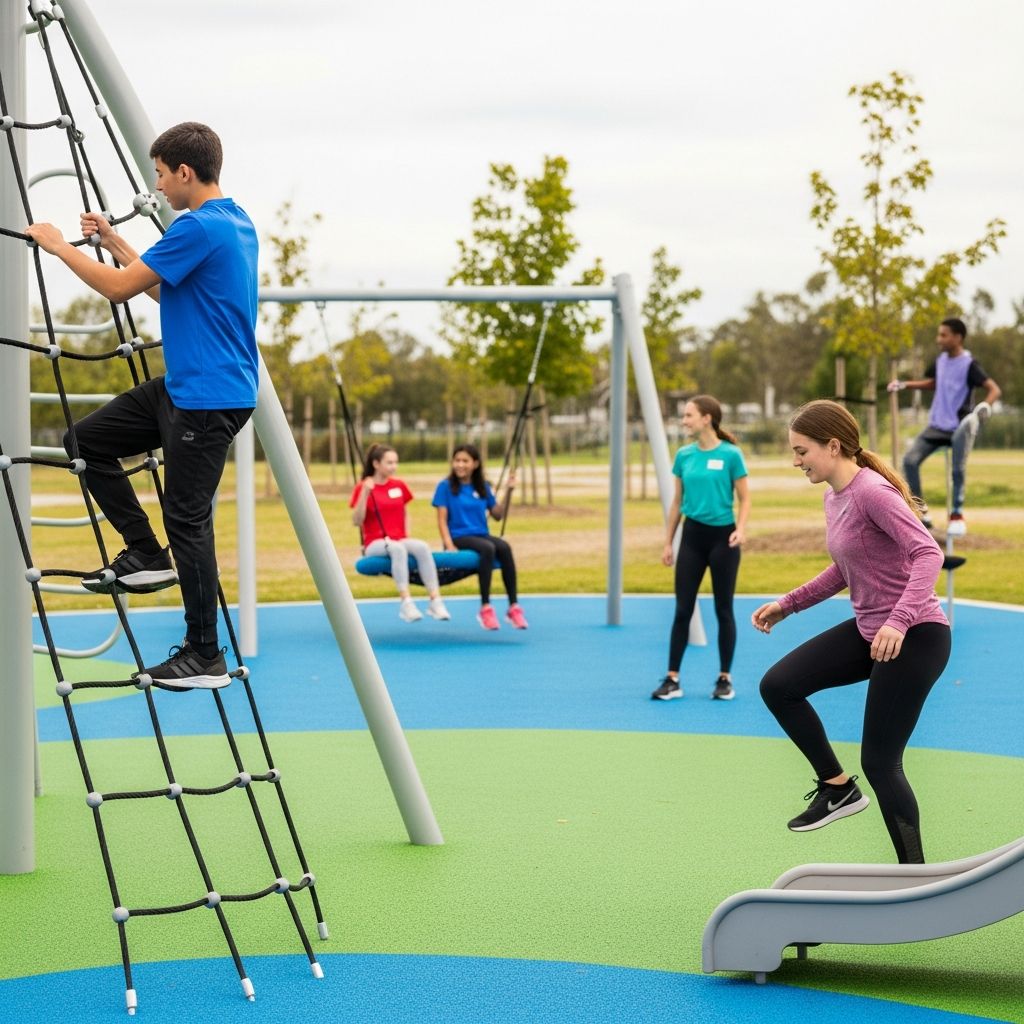
Playgrounds offer thrilling ways for teens to burn energy, build strength, and hang out with friends. Yet, these spots can turn risky fast, leading to injuries that sideline you from sports or school. Falls account for 44% of playground-related emergency visits, often resulting in fractures (36% of diagnoses). This guide breaks down hazards, shares prevention strategies, and outlines response steps to keep your playtime injury-free.
Why Teens Face Higher Playground Risks
Teens dive into more daring moves on playground gear, like flipping off swings or racing across monkey bars. Unlike younger kids, you have the strength for bolder feats but might skip caution for fun. Data shows monkey bars cause 36% of injuries, swings 28%, and slides 21%. Hard surfaces amplify damage—impact-absorbing materials cut fall injury odds by over half. Understanding these stats empowers you to play smarter.
Top Playground Injury Types Explained
Injuries vary by how they happen, but patterns emerge from emergency data. Here’s a breakdown:
- Fractures (36%): Broken bones top the list, especially forearm or elbow from monkey bar slips. Toddler fractures in the tibia occur from twists on slides.
- Contusions/Abrasions (20%): Bruises and scrapes from minor falls or collisions.
- Lacerations (17%): Cuts from sharp edges or rusty parts on old equipment.
- Sprains/Strains (12%): Twisted ankles or wrists from uneven landings.
- Concussions/Head Injuries: Bumps from swings or climbs, risky if unsupervised.
Serious cases include dislocations, internal injuries (5%), and rare strangulations from clothing.
Hazards Lurking on Playgrounds
Not all dangers are obvious. Spot these to stay ahead:
| Hazard | Risk Level | Example Equipment |
|---|---|---|
| Falls | High (44-80% of injuries) | Monkey bars, swings, slides |
| Equipment Failure | Medium (23%) | Broken swings, loose bolts |
| Entrapment/Entanglement | Medium (7%) | Drawstrings, small gaps |
| Collisions | Low-Medium (7%) | With peers or gear |
| Hard Surfaces | High Amplifier | Concrete, grass vs. mulch |
Broken structures, sharp protrusions, and poor maintenance spike risks at schools or parks.
Smart Prevention Tactics for Teens
You control a lot of your safety. Follow these evidence-based tips:
- Choose age-right gear—avoid toddler zones for intense play.
- Wear sneakers, skip drawstrings, helmets off (they snag).
- Check surfaces: Mulch, sand, or rubber mats beat concrete.
- One at a time on high-risk gear like monkey bars.
- Inspect for rust, cracks, or wobbles before climbing.
Supervision matters too—tell adults about hazards. Age-separated areas cut mismatches.
First Response: Handling Injuries On-Site
Injuries strike quick. Act fast:
- Stop Play: Secure the area to prevent more hurt.
- Assess: Check for bleeding, swelling, or odd limb shapes.
- RICE Method: Rest, Ice (20 mins), Compress, Elevate for sprains.
- ER Signs: Can’t bear weight, deformity, confusion, vomiting—go now.
For fractures, immobilize and call help. Stock first-aid kits save time.
Long-Term Effects and Recovery Insights
Minor scrapes heal fast, but fractures need 4-8 weeks in casts. Concussions sideline you from screens and sports—rest brain fully. Overuse from repeated falls leads to strains like tendonitis. Track symptoms post-injury; report lingering pain. Rehab builds back stronger—physical therapy helps.
Schools see nearly 50% severe playground injuries yearly, often from neglect. Push for fixes: Report broken gear.
Playground Stats at a Glance
| Category | Key Stat | Source |
|---|---|---|
| Annual ER Visits | >213,000 kids (mostly 2-9, but teens too) | |
| Peak Equipment | Monkey bars (36%) | |
| Surface Impact | Absorbing cuts risk 50% | |
| Age Group | 2-9 most, teens dare more |
Frequently Asked Questions (FAQs)
What if I suspect a fracture after falling off monkey bars?
Immobilize the limb, apply ice, and head to ER if swollen or deformed. X-rays confirm.
Are rubber mats always safe under swings?
Yes, they halve fall injuries vs. hard ground. Check depth (9-12 inches).
Can clothing cause playground strangulation?
Drawstrings snag—wear hoodies without. Top death cause.
How to avoid sprains on slides?
Feet first, no piling up. Supervise groups.
Should teens use playgrounds at all?
Absolutely—with smarts. Benefits outweigh risks when cautious.
Building a Safer Play Culture
Advocate for maintained parks: Monthly checks prevent 23% equipment fails. Communities with soft surfaces and signs see fewer ER trips. Teens, lead by example—safe play inspires friends. Combine with sports for balanced fitness, dodging summer overuse.
Over 200,000 U.S. kids hit ERs yearly from playgrounds. Drop that by choosing wisely. Gear up knowledge, play safe, recover quick if needed.
References
- Playground Injuries: Understanding The Risks — Pediatric Orthopedics. Accessed 2026. https://pediatricorthopedics.com/playground-injuries/
- Playground-Related Injuries Treated in the Emergency Department — Children’s Safety Network. 2009 data (updated infographic). https://www.childrenssafetynetwork.org/infographics/playground-related-injuries-treated-emergency-department
- The Most Common Back-to-School Injuries and How to Prevent Them — Wettermark Keith. Recent. https://wkfirm.com/the-most-common-back-to-school-injuries-and-how-to-prevent-them/
- Common Playground Hazards & How to Prevent Injuries — Law Injury. Recent. https://law-injury.com/blog/personal-injury/common-playground-hazards-that-lead-to-injuries/
- 5 Common Summer Injuries for Kids and How to Prevent Them — MedStar Health. Recent. https://www.medstarhealth.org/blog/5-common-summer-injuries-for-kids-and-how-to-prevent-them
- Playground Safety Children Younger Than 6 Years — Nationwide Children’s. Recent. https://www.nationwidechildrens.org/research/areas-of-research/center-for-injury-research-and-policy/injury-topics/sports-recreation/playground-safety-children-younger-than-6-years
- When to Go to the ER for a Playground Injury — Fort Smith Hospital. Recent. https://fortsmithhospital.com/when-to-go-to-the-er-for-a-playground-injury/