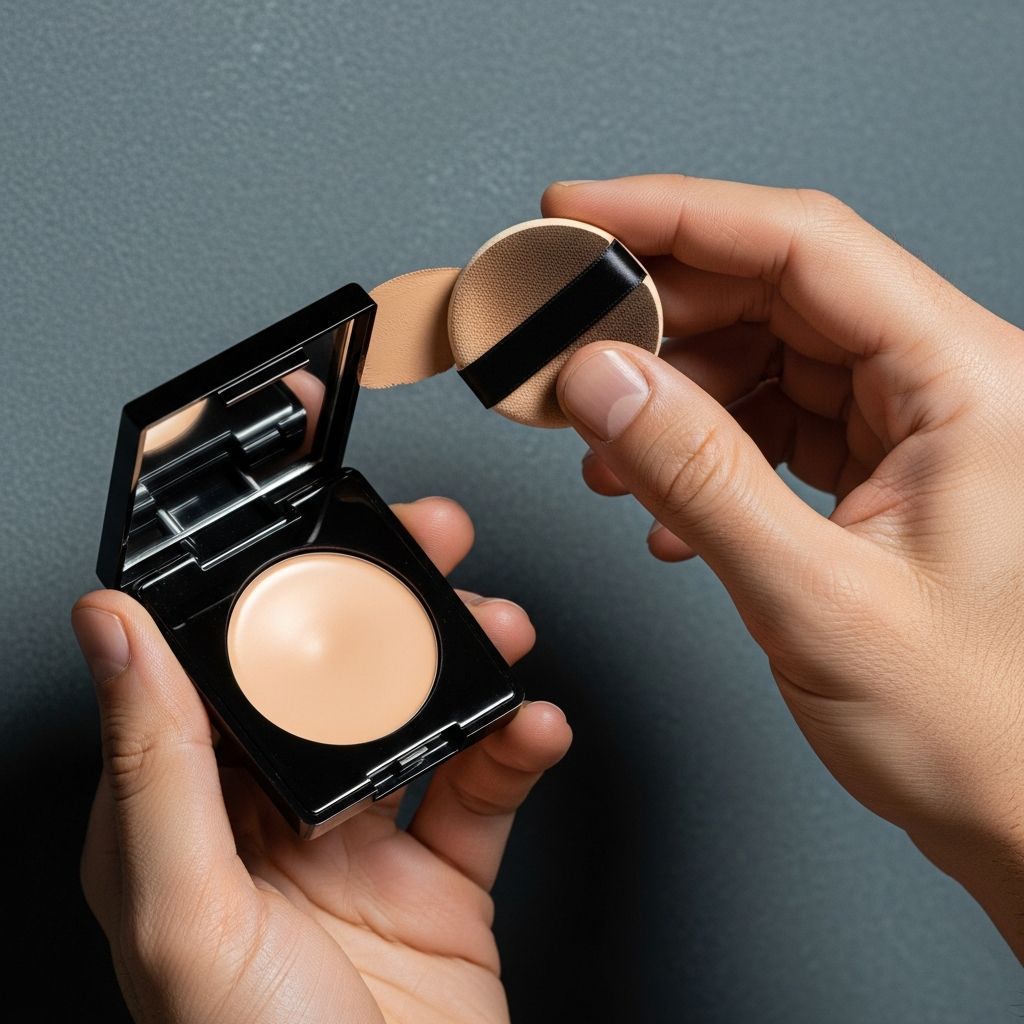
More men than ever are quietly adding concealer to their grooming routine. Used correctly, it does not look like makeup – it just makes you look like you slept, drank water, and never get blemishes. This guide walks you through everything you need to know to choose and apply concealer in a way that stays invisible in real life.
Why Concealer Belongs in a Man’s Dopp Kit
Concealer is a pigmented cream or liquid that targets specific problem areas instead of covering your entire face. It is especially useful for:
- Dark circles under the eyes from late nights, travel, or parenting
- Blemishes, breakouts, and post-acne marks
- Redness around the nose, on the chin, or from shaving irritation
- Minor discoloration such as sun spots or old scars
Modern concealer formulas are lightweight, easy to blend, and designed to look like skin when applied sparingly.
Understanding Your Skin Before You Buy
Getting a natural result starts long before you twist open a concealer pen. You need the right match for both skin type and skin tone.
Identify Your Skin Type
Your skin type influences which formulas will sit comfortably on your face.
- Oily or combination skin: Look for oil-free, long-wear, or matte concealers that resist shine.
- Dry skin: Choose creamy or hydrating formulas that will not cling to flakiness.
- Normal skin: You can use most textures; prioritize comfort and a believable finish.
- Sensitive skin: Aim for fragrance-free, tested-for-sensitive-skin products and patch test first.
Figure Out Your Undertone
Beyond light, medium, or dark, skin has an undertone – the subtle hue under the surface that affects how colors appear against it.
- Cool undertone: Skin leans pink, red, or bluish; you may burn easily.
- Warm undertone: Skin leans golden, yellow, or olive; you may tan more easily.
- Neutral undertone: A mix of both; most shades blend fairly well.
The goal is simple: choose a concealer that disappears into your jawline in natural daylight once blended.
Choosing the Right Concealer Shade and Formula
The right product should work quietly in the background, not scream “makeup.” Use this quick matrix as a guide.
| Concern | Best Shade Choice | Recommended Finish |
|---|---|---|
| Dark under-eye circles | One shade slightly lighter than your skin tone | Hydrating, natural or satin finish |
| Blemishes & redness | Exact match to face and neck | Natural or matte, buildable coverage |
| Brown spots or scars | Exact match or half-shade deeper | Medium coverage, cream or liquid |
| All-over dullness | Use tinted moisturizer or CC cream, then matching concealer | Lightweight, breathable, skin-like finish |
Common Types of Concealer Delivery Systems
- Twist or click pen: Discreet, portable, good for small areas like under eyes or around the nose.
- Stick concealer: Solid, convenient, often higher coverage; great for blemishes.
- Liquid tube with wand: Versatile and easy to blend for both under-eyes and redness.
If you are brand new to makeup, look for words like “natural finish,” “sheer-to-medium coverage,” or “blends easily” on the packaging. These are easier to work with and less likely to look heavy.
Prep: The Step Men Often Skip
Concealer looks best on skin that is clean, hydrated, and not flaky. A basic two-minute prep makes a large difference.
- Cleanse: Start with a gentle face wash to remove oil, sweat, and sunscreen.
- Moisturize: Apply a light moisturizer, especially under the eyes, and let it absorb fully.
- Optional: Primer: If you get very oily or need all-day wear, use a small amount of mattifying primer on areas where you will apply concealer.
On dry skin, concealer tends to cling and emphasize texture. A simple moisturizer step helps create a smoother canvas.
Step-by-Step: Natural Concealer for Men
Use these techniques to keep your concealer invisible in normal conversation range.
1. Less Product, More Blending
- Dot or swipe a small amount directly on the area you want to improve.
- Blend outward with a clean fingertip, small brush, or sponge until the edges disappear.
- Add more only if needed; it is easier to build coverage than to fix a heavy patch.
2. Under-Eye Dark Circles
The skin under your eyes is thin and moves constantly, so heavy product settles into lines. To avoid that:
- Use a hydrating eye cream and let it sink in first.
- Dot concealer just where the shadow is darkest, usually along the inner corner and a bit along the crease.
- Tap (do not rub) with your ring finger or a damp sponge until the transition into bare skin is seamless.
- If you still see darkness, add a second thin layer only where it is needed.
3. Blemishes, Redness, and Shaving Irritation
- Make sure the area is dry and any spot treatment has fully absorbed.
- Use an exact skin-tone match for these areas so they do not stand out.
- Apply a pinpoint dot of concealer directly on the blemish or red patch.
- Use a tiny brush or the edge of a clean finger to feather the concealer into the surrounding skin.
- Set with a light dusting of translucent powder to reduce shine and help it last.
Tools: Fingers vs Brushes vs Sponges
You can absolutely apply concealer with just your fingers, but a couple of basic tools can make blending faster and more precise.
- Fingertips
Body heat helps melt the product into your skin, giving a natural fusion. Great for quick, light application. - Makeup sponge
Use damp, not soaking. Gently bounce the sponge over concealer to diffuse edges without wiping away coverage. - Small synthetic brush
Ideal for pinpoint concealing spots, redness along the nostrils, or fine lines near the eyes.
Keeping It Undetectable All Day
For most men, the goal is not a full beat; it is an undetectable upgrade. These habits keep your secret safe.
- Set only where needed: A fine, translucent powder over concealed areas controls midday shine.
- Blot, do not pile on: If you get oily, use blotting paper or a clean tissue instead of adding more product repeatedly.
- Check in natural light: Indoor bathroom lighting can hide streaks; a quick glance near a window catches lines of demarcation.
- Blend into facial hair: If you have stubble or a beard, gently tap product where skin meets hair so there is no abrupt color change.
Concealer as Part of a Simple Men’s Makeup Routine
Concealer works even better when it is part of a minimal routine rather than the lone product.
- Tinted moisturizer or CC cream to even overall skin tone with a light veil of coverage.
- Concealer just on areas that still stand out – darkness, spots, or redness.
- Brow gel to keep brows tidy and subtly framed.
- Clear lip balm to avoid dry, cracked lips and keep the face balanced.
This combination keeps you looking like yourself on video calls, at events, or in photos – just slightly upgraded.
Common Mistakes Men Make With Concealer
Most bad concealer experiences come down to a few fixable errors.
- Using a shade that is way too light
This highlights the area instead of disguising it, especially under the eyes. - Applying on unmoisturized, flaky skin
The product clings to dry patches and looks obvious. - Rubbing instead of tapping
Dragging the skin moves the product around and removes coverage rather than blending it. - Skipping powder on oily areas
Without a light set, concealer can crease or slide in the T-zone. - Packing on too many layers
Heavy buildup is easier to spot than a small imperfection. Stop when it looks better, not when it looks erased.
Discreet Touch-Ups on the Go
Some concealer pens and sticks are designed to live in your pocket or gym bag for quick adjustments.
- Pat away sweat or oil first with a tissue.
- Add a small amount only where the coverage has faded.
- Blend with clean fingers; in most cases you will not need powder for a short outing.
Frequently Asked Questions (FAQs)
Will people be able to tell I am wearing concealer?
If your shade is correct, you prep your skin, and you use thin layers blended into the surrounding skin, concealer is effectively invisible in everyday life. Most people just register that you look more rested and even-toned.
Is concealer bad for my skin or will it clog my pores?
Modern concealers are generally safe when you choose non-comedogenic formulas appropriate for your skin type and remove them thoroughly at night. Using a gentle cleanser and, if needed, micellar water or a mild makeup remover helps prevent clogged pores and irritation.
Can I wear concealer without any other makeup?
Yes. Many men only use concealer on specific areas. The key is making sure the color blends into your natural skin tone around the edges so there is no obvious border between concealed and bare skin.
How do I find my shade without visiting a makeup counter?Test a few options along your jawline in natural light and let them sit for a minute. The shade that seems to disappear and matches both your face and neck is the best choice. Some brands also offer virtual shade-matching tools to narrow down options.
Q: What if my dark circles are still visible after concealer?
Extremely deep circles may need a two-step approach: improving sleep and hydration, addressing underlying causes such as allergies, and then using a lightweight corrector or brightening formula under concealer. Very heavy discoloration may not vanish completely, but it can be softened to look less tired.
References
- Choosing and Applying Men’s Concealer Like a Pro — NuNorm. 2023-07-10. https://www.nunorm.com/blogs/behind-nunorm/choosing-and-applying-mens-concealer-like-a-pro
- The Ultimate Guide To Men’s Makeup — AEDIT. 2021-09-14. https://aedit.com/aedition/the-ultimate-guide-to-mens-makeup
- Cosmetics and Skin Care Products — U.S. Food and Drug Administration (FDA). 2023-08-24. https://www.fda.gov/cosmetics/cosmetics-products
- Insufficient Sleep and Risk of Chronic Disease — Centers for Disease Control and Prevention (CDC). 2017-05-02. https://www.cdc.gov/sleep/about_sleep/chronic_disease.html
- A Guide to Makeup for Men — e.l.f. Cosmetics. 2023-05-18. https://www.elfcosmetics.com/blogs/the-elf-word/mens-makeup-guide