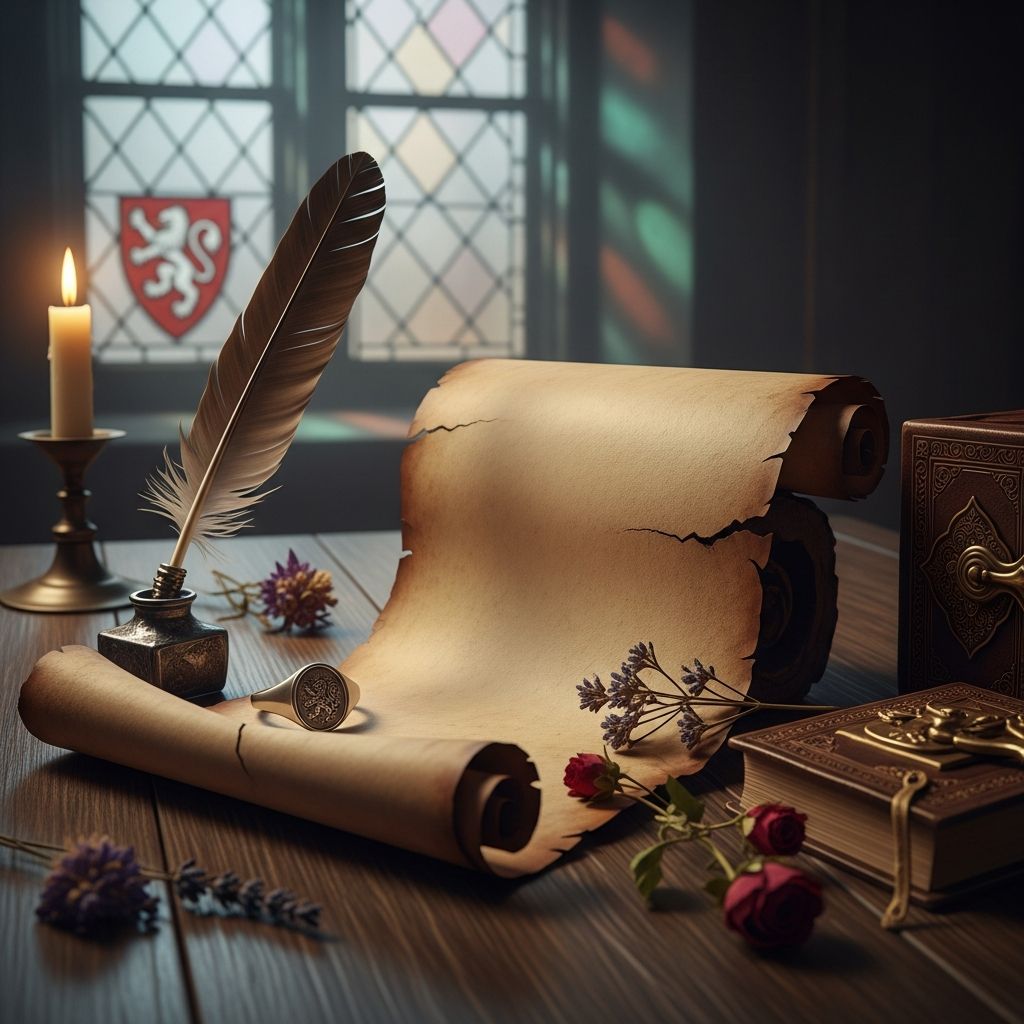
Medieval last names are more than labels; they are tiny historical records that preserve clues about occupation, place, character, and family connections from centuries ago. They grew slowly out of everyday needs in villages, market towns, and manors, eventually becoming the hereditary surnames many people still carry today.
Why Medieval People Needed Last Names
Early in the Middle Ages, most Europeans used a single given name, often drawn from a small pool of traditional choices. As populations grew, especially after the 11th century, having many people named John, William, Alice, or Margaret in the same community created confusion. Villagers and officials began adding extra descriptions to distinguish one person from another, and those practical labels later hardened into surnames.
- Growing populations in towns and countryside made one-name identification impractical.
- Governments and local lords needed clearer records for taxes, landholding, and legal disputes.
- Contacts between different languages and cultures encouraged new naming habits.
Over time, descriptive bynames such as “John the miller” or “Alice from the hill” shortened and shifted into the fixed family names familiar today.
Four Major Roots of Medieval Last Names
Although medieval surnames can be wonderfully varied, most fall into four broad groups. Understanding these categories makes it easier to decode what a historical surname might originally have signified.
- Occupational surnames: based on work or social role.
- Locative surnames: taken from landscapes, villages, or regions.
- Patronymic and family-based surnames: derived from a parent or ancestor.
- Descriptive and nickname-based surnames: drawn from physical traits or personality.
Occupational Surnames
Occupational names arose when people were identified by the craft, trade, or social function that defined their daily lives. In a world where specialisation was limited but important, the blacksmith, miller, reeve, or shepherd stood out clearly to neighbours.
- Craft-based names might refer to metalwork, woodworking, textiles, or food production.
- Service and status names could refer to officials, servants, or members of religious communities.
- Some occupational surnames became extremely widespread because the underlying jobs were common in every village.
| Category | Sample surname | Original meaning |
|---|---|---|
| Metalwork | Smith | Worker in metal, especially a blacksmith |
| Food production | Baker | Person who baked bread and other staples |
| Textiles | Weaver | Maker of cloth on a loom |
| Animal care | Shepherd | Guardian of sheep flocks |
| Local office | Reeve | Manorial or local official who oversaw day-to-day duties |
Because medieval work was often hereditary or long term, these labels could naturally pass from parent to child even before surnames became formally fixed.
Locative and Place-Based Surnames
Locative surnames point to landscapes, settlements, or specific landmarks connected to a person. When someone left their village or distinguished themselves by the land they held, a place became part of their identity. Many nobles and landholders in particular linked their names to estates and manors.
- Some names refer directly to a town, region, or country.
- Others describe natural features such as hills, woods, rivers, or clearings.
- Prepositions and endings indicating “from” or “of” often signaled these place-based origins.
| Type of place | Sample surname | Probable origin |
|---|---|---|
| Village | Atwood | Someone who lived “at the wood” |
| Landscape feature | Hill | Dweller on or near a hill |
| Clearing | Field | Resident near an open field or meadow |
| Water | Brook | Person living by a small stream |
| Settlement name | Lincoln | Someone associated with the town of Lincoln |
Place-based surnames can assist modern researchers in tracing earlier geographic roots, although migration, spelling drift, and the reuse of place names mean the trail is not always straightforward.
Patronymic and Clan-Based Surnames
Another common medieval strategy for naming a person was to anchor identity in family connections. Patronymic surnames identify someone as the child or descendant of a particular ancestor. In many regions these began as flexible descriptions, then gradually solidified into fixed hereditary surnames.
- Prefixes or suffixes meaning “son of” or “child of” are a hallmark of this style.
- In some cultures, these labels updated each generation; in others, a single ancestor name became the permanent family surname.
- Matronymic surnames, derived from a mother’s name, also appeared but were less common.
| Pattern | Example form | Underlying idea |
|---|---|---|
| Simple “son of” | Johnson | Child of a man named John |
| Former patronymic | Richardson | Originally a descriptor, later a hereditary surname |
| Occasional matronymic | Marian’son (now rare) | Child of a noted mother named Marian |
For genealogists, these surnames can hint at the given names that dominated a region or lineage in a particular century.
Nicknames and Descriptive Surnames
Not all medieval last names were polite or neutral. Many emerged from colourful nicknames that captured a striking feature of someone’s appearance, temperament, or behaviour. What began as casual jokes or convenient descriptors could eventually mark entire descendant lines.
- Appearance-based surnames might describe size, hair colour, or complexion.
- Personality-based surnames could reflect bravery, cheerfulness, shyness, or stubbornness.
- Some names preserved humorous or ironic comments that made sense only within a specific community.
Because they preserve everyday humour and observation, descriptive surnames offer a rare glimpse of how medieval neighbours actually viewed one another.
How Surnames Became Hereditary
In the early medieval period, descriptive names could change over a person’s lifetime or differ between records: the same man might appear as “Thomas the mason” in one charter and “Thomas by the mill” in another. Only gradually did families start to pass a stable surname across generations, creating the modern notion of a fixed last name.
- Elites and landholders tended to stabilise surnames first, especially those tied to estates and titles.
- Townsfolk, skilled workers, and rural free tenants adopted hereditary surnames over the following centuries.
- In some regions, peasants and day labourers held fluid or no surnames until comparatively late.
The pace of change varied by region, but by the later Middle Ages in much of Western Europe, hereditary surnames had become common enough that they outlived local feudal structures and continued into the early modern world.
Spelling, Language Change, and Variation
One of the striking features of medieval surnames is their slippery spelling. Before standardised orthography, clerks wrote names as they heard them, and regional accents, different mother tongues, and limited literacy all shaped how words were recorded. Over centuries, these choices transformed some surnames almost beyond recognition.
- The same family might appear under several spellings in parish rolls and tax lists.
- Foreign names were often adapted to match local pronunciation and letters.
- Political and cultural shifts, such as conquests or royal marriages, introduced new naming fashions.
| Cause | Effect on surnames |
|---|---|
| Oral transmission | Names changed sound when carried between dialects. |
| Clerical recording | Different scribes wrote the same name differently. |
| Language contact | Foreign elements were blended or translated. |
| Social aspiration | Families altered spellings to seem grander or more “modern.” |
Modern researchers and writers can use variant spellings creatively to evoke different periods or regions while drawing on the same core name idea.
Social Status and What a Name Revealed
Medieval surnames did not merely label people; they signaled status, wealth, or dependence. A title-bearing or territorial surname suggested ties to land and lordship, while an occupational surname could place a family firmly in the skilled or unskilled labouring classes. Over generations, surnames might outlive the status they once indicated, but traces of social hierarchy remain visible.
- Territorial names linked to castles, manors, or regions often marked nobles and major landholders.
- Service-based names might imply dependence on a particular household or estate.
- Some surnames captured upward mobility when apprentices took a master’s surname, blending craft identity and social aspiration.
Because of these associations, a careful reading of surnames in a document can provide a rough sketch of who wielded power and who worked for whom in a medieval community.
Using Medieval Surnames in Fiction and Worldbuilding
Writers of historical novels and fantasy often turn to medieval surnames to lend authenticity and depth to their worlds. Instead of picking names at random, grounding characters in the logic of medieval naming makes a setting feel more coherent and believable.
- Match surname type to character role: a soldier might bear a martial or occupational name, while a village healer could have a nature-linked or descriptive surname.
- Vary naming patterns by region or culture in your setting to mirror real-world diversity.
- Experiment with archaic spellings or regional forms to suggest language history and local flavour.
When building a fictional world, it helps to establish simple rules: perhaps one culture favours patronymics, another relies strongly on place-names, and a third uses titles that later become surnames. Consistency behind the scenes translates into subtle realism on the page.
Tips for Genealogy and Family History Research
People tracing their family trees increasingly want to know not only where their ancestors lived but also what their surnames can reveal about medieval roots. While surname meaning alone cannot prove descent, it provides helpful clues and starting points.
- Begin with recent records and work backwards; attach meaning to a surname only after confirming locations and dates.
- Look for recurring name patterns, such as repeated occupations or place-names, that line up with documented family movements.
- Remain cautious about simplified “surname dictionaries” that offer one fixed meaning when many names had multiple sources.
Combining documentary research with a nuanced understanding of medieval naming customs offers the best chance of linking a modern surname to a genuine historical context.
Sample Medieval-Style Surnames by Theme
The following list groups imaginative medieval-style surnames by their underlying inspiration. These examples are designed to be evocative rather than tied to specific historical individuals, making them useful for creative projects or as inspiration for understanding real medieval naming logic.
| Theme | Example surname | Concept conveyed |
|---|---|---|
| Occupation | Cartwright | Artisan who built and repaired carts |
| Occupation | Fletcher | Craftsperson who made arrows |
| Landscape | Underwood | Dweller beneath or within woodland |
| Landscape | Eastbrook | Resident by a stream to the east of a main settlement |
| Family | Edmundson | Descendant of a man named Edmund |
| Family | Haroldson | Child of Harold, once a common given name |
| Descriptive | Longstride | Person known for long or fast walking |
| Descriptive | Goodheart | Reputation for kindness or generosity |
By mixing and matching elements from these themes and altering spellings, it is possible to design a wide array of plausible medieval-style surnames for many settings.
Frequently Asked Questions About Medieval Last Names
Did everyone in the Middle Ages have a surname?
No. Usage varied by time, place, and social rank. The nobility and wealthier townspeople generally adopted stable surnames earlier, while many rural labourers and marginal individuals either used flexible descriptions or went unnamed in surviving documents. In some regions, fixed surnames did not become universal until well after the medieval period.
Are modern surnames always identical to their medieval forms?
Rarely. Spelling drift, language change, administrative reforms, and migration all altered the appearance of names over the centuries. Even when the sound remained similar, letters were rearranged, swapped, simplified, or embellished to fit new standards and fashions.
Can one medieval surname have more than one origin?
Yes. Certain surnames are so tied to basic words—like “hill,” “ford,” or “green”—that they could have arisen independently in multiple places. Two families sharing the same surname do not automatically share a common medieval ancestor; documentary evidence is necessary to confirm any connection.
How accurate are popular lists of “medieval last names” online?
They can be fun starting points, but they often simplify or romanticise complex history. Many lists mix genuinely medieval surnames with later inventions, modernised spellings, or purely literary creations. For serious research, it is best to combine such lists with primary records and scholarly studies of medieval naming practices.
What is the best way to invent believable medieval-style surnames?
Start by choosing which of the four main roots you want to emphasise: occupation, place, family, or description. Then select plain, sturdy words from everyday life—materials, tools, creatures, landmarks—and either use them directly or modify them slightly to echo older spellings. Keeping names grounded in simple vocabulary makes them sound more historically plausible than overly ornate inventions.
Bringing Medieval Names Into the Present
Medieval last names hide in plain sight on modern mailboxes, business signs, and digital contact lists. Behind each one stands a story—of someone who worked a trade, tilled a field, crossed a border, or left such a strong impression that neighbours summed them up in a single vivid phrase. Exploring these names opens a gateway into the everyday worlds of the past.
Whether the goal is to write convincing historical fiction, enrich a fantasy setting, or trace family roots, understanding how medieval surnames arose and evolved gives names back some of the texture and meaning they once possessed. In doing so, it turns familiar labels into living connections with people who walked the streets and fields of the Middle Ages.