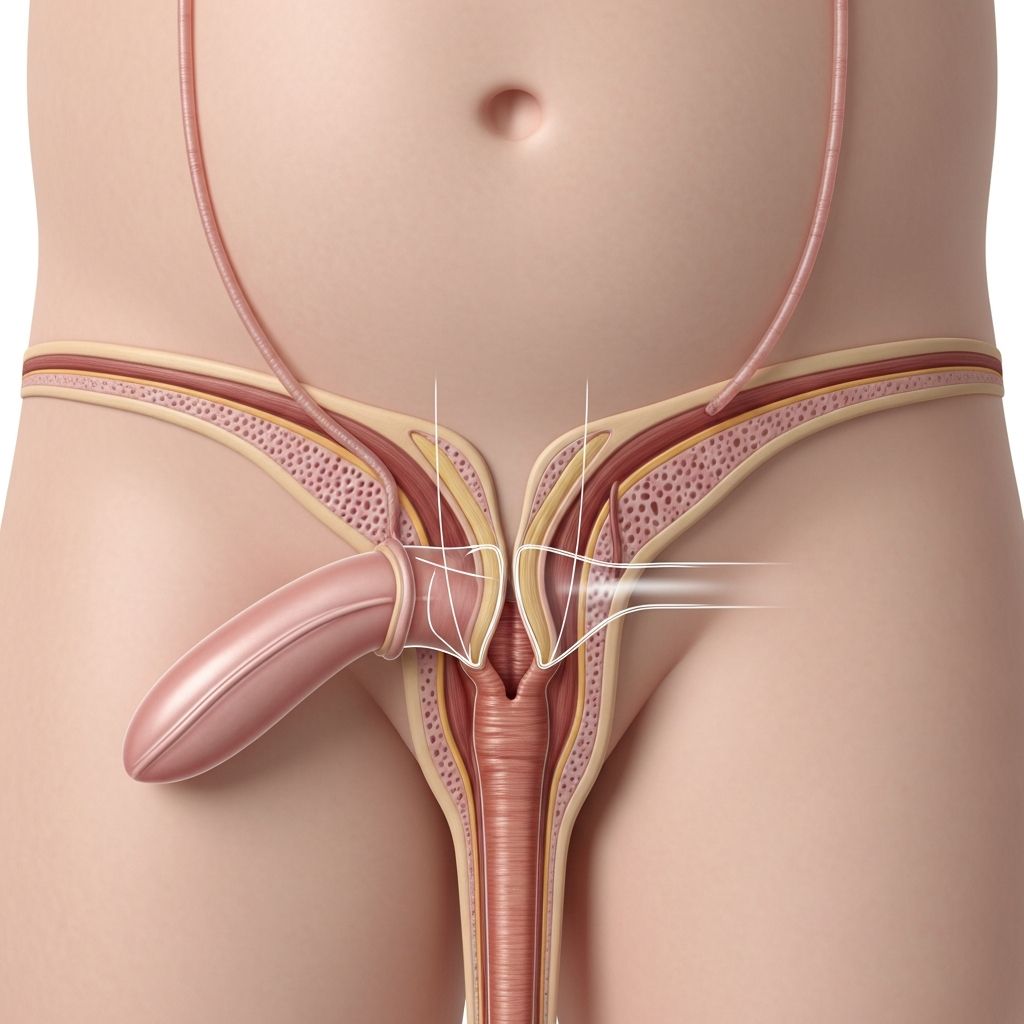
Meatal stenosis is a urologic condition in which the opening where urine exits the body becomes too narrow, making it harder for a child to pee comfortably and in a straight stream. In most cases, it occurs in boys and is treatable with a quick, highly effective procedure.
This guide explains what parents need to know about meatal stenosis, from early signs to treatment and recovery, using clear, family-friendly language.
What Is Meatal Stenosis?
The meatus is the small opening at the end of the urethra, where urine leaves the body. Meatal stenosis means this opening has become abnormally narrow.
When the meatus is too small, urine can:
- Spray or shoot upward instead of going straight
- Come out as a thin or weak stream
- Take longer to empty the bladder completely
In children, this problem is most often seen in circumcised boys between toddler age and early school years.
How Common Is Meatal Stenosis?
The exact number of children who develop meatal stenosis is not known, but studies suggest that a noticeable minority of circumcised boys may develop some degree of narrowing. One large review estimated that around 8–10% of males may experience meatal stenosis at some point in life, though not all will have symptoms or need surgery.
In girls and in uncircumcised boys, the condition is uncommon and usually linked to other medical issues.
Why Does Meatal Stenosis Happen?
Meatal stenosis usually develops because of irritation and inflammation around the urethral opening that leads to scar tissue.
Main triggers in children
- Circumcision-related irritation: After circumcision, the tip of the penis (glans) is more exposed. Rubbing from diapers and contact with urine, wipes, or soaps can cause inflammation. Over time, healing may create a small, tight scar at the meatus.
- Chronic diaper rubbing: Constant friction in a wet diaper can irritate the meatus, especially if diapers are very snug or changed infrequently.
- Catheters or tubes: A urinary catheter placed for surgery or illness can sometimes irritate the opening if left in place for a long time.
- Local injury: A direct injury to the penis (for example, a straddle injury) can damage the tissue around the opening and later scar down.
Less common causes
- Inflammatory skin conditions that affect the genital area
- Repeated endoscopic procedures through the urethra in older children or adults
- Congenital (present at birth) narrowing, which is unusual but can occur, especially in girls
Who Is Most at Risk?
Any child can theoretically develop meatal stenosis, but some are more likely than others.
| Child group | Risk level | Main reasons |
|---|---|---|
| Circumcised boys (ages 3–7) | Higher | Post-circumcision irritation, diaper friction, healing that leads to scarring |
| Uncircumcised boys | Low | Foreskin protects the meatus; stenosis is rare unless other problems exist |
| Girls | Rare | Usually congenital or related to other urologic or gynecologic issues |
| Children with long-term catheters | Increased | Ongoing contact and friction from the tube at the urethral opening |
Typical Signs and Symptoms in Children
Parents often first notice symptoms when a child starts toilet training or begins standing to pee. The child may have trouble aiming or complain that peeing feels different.
Changes in the urine stream
- Upward or high-arching stream that hits the toilet seat or wall
- Spraying or splitting of urine instead of a single straight stream
- Narrow, thin, or weak stream compared with other boys of similar age
- Needing to stand very close to the toilet to avoid missing
Symptoms your child may feel
- Burning or pain during urination, sometimes described as stinging
- Straining or pushing to get the pee started or to keep it flowing
- Needing to pee often or feeling an urgent need to go right away
- Feeling not fully empty after using the toilet
Other possible signs
- A drop of blood at the tip of the penis or in underwear after peeing
- Bed-wetting or daytime accidents in a child who was previously dry
- Urinary tract infections (UTIs), especially if the bladder is not emptying well
Not every child will have all of these symptoms. Some children may only have a funny-looking stream and no discomfort.
When Should Parents Call the Doctor?
Contact your child’s doctor or a pediatric urologist if you notice any of the following:
- Consistently upward or spraying urine stream
- Complaints of pain or burning when peeing
- Blood at the tip of the penis or in the diaper/underwear
- New accidents or wetting in a toilet-trained child
- Repeated urinary tract infections with no clear cause
Seek urgent or emergency care if your child:
- Cannot pee at all
- Has severe pain in the lower belly or side
- Has fever and vomiting along with urinary symptoms
How Meatal Stenosis Is Diagnosed
Diagnosis rarely requires complex tests. A specialist can usually confirm meatal stenosis with a simple exam and history.
What the doctor will do
- Ask about your child’s symptoms, including stream direction, strength, frequency, pain, and any UTIs
- Review medical and surgical history, including circumcision and catheter use
- Examine the penis or genital area, looking closely at the size and shape of the meatus
In many cases, the meatal opening will appear visibly small or slit-like, supporting the diagnosis.
Possible additional tests
- Urinalysis and urine culture to look for infection if there is pain, fever, or blood in the urine
- Uroflow (flow rate) testing in older children to measure how quickly urine comes out
- Post-void residual ultrasound to check how much urine remains in the bladder after peeing
Most children do not need invasive tests. The doctor will only order more studies if something about the symptoms or exam suggests a different or more complex problem.
How Is Meatal Stenosis Treated?
For children with clear symptoms and confirmed narrowing, the standard treatment is a small procedure to widen the opening. In some mild or early cases, doctors may try medical management first, but surgery is usually the most reliable solution.
Medical treatment options
- Topical steroid creams: In selected cases, a steroid cream applied to the meatus can reduce inflammation and may soften the scar, helping widen the opening over time. This is more often used in older patients or those with milder narrowing.
- Skin care and irritation control: Gentle cleansing, frequent diaper changes, and avoiding harsh soaps can reduce ongoing irritation and may help prevent further narrowing.
If symptoms persist, or the opening remains very small, a minor surgical procedure is recommended.
Surgical treatment: Meatotomy or meatoplasty
The most common and effective treatment for meatal stenosis in children is a meatotomy or meatoplasty.
- Meatotomy: The surgeon makes a small cut to open and widen the meatus. This is often done under local anesthesia in the clinic in older, cooperative children, or under general anesthesia in younger children.
- Meatoplasty: A slightly more involved procedure that reshapes the meatus and surrounding tissue. It is still considered minor surgery and is also highly successful.
These procedures typically take only a few minutes and have a very high success rate, with low risk of the problem returning.
What Parents Can Expect on Surgery Day
Each hospital or clinic has its own routine, but most families can expect a similar experience.
Before the procedure
- Your child may need to avoid food and drink for several hours if general anesthesia is planned.
- The staff will review allergies, medications, and medical history.
- You will sign consent forms and have a chance to ask questions.
During the procedure
- The area is cleaned and numbed with local anesthetic; some children also receive light sedation or general anesthesia.
- The surgeon makes a small incision to widen the opening and may place one or two dissolving stitches.
- The entire process is usually completed in under 30 minutes.
Right after surgery
- Your child will be monitored briefly in a recovery area.
- Most children go home the same day.
- Mild discomfort or burning with the first few urinations is common but short-lived.
Recovery at Home and Aftercare
Healing after meatotomy or meatoplasty is usually quick. Many children notice an immediate improvement in stream direction and strength.
Home care tips
- Give prescribed pain medicine or over-the-counter acetaminophen/ibuprofen as directed.
- Apply ointment (such as petroleum jelly or antibiotic ointment) to the tip of the penis as instructed to reduce friction and prevent the edges from sticking together.
- Encourage your child to drink fluids to keep urine dilute, which reduces stinging.
- Use loose clothing or larger diapers for a few days to minimize rubbing.
What is normal during healing?
- Mild swelling or redness at the tip of the penis
- Stinging with urination for a day or two
- A small spot of blood on the diaper or underwear the first day
When to call the surgeon or doctor
- Increasing redness, swelling, or pus at the site
- Fever, or your child seems very unwell
- Refusal to pee for many hours due to pain
- Any concern that the opening looks smaller again
Most children can return to usual play within a day or two, though rough play, bike riding, or straddle toys may be limited briefly based on the surgeon’s advice.
Possible Complications and Long-Term Outlook
Serious complications from meatal stenosis treatment are uncommon. When performed by an experienced pediatric urologist, meatotomy or meatoplasty is considered a safe and reliable procedure.
Potential short-term risks
- Minor bleeding
- Infection at the surgical site
- Temporary discomfort with urination
Long-term outcomes
- Most children have a normal, straight urine stream after healing.
- The procedure rarely needs to be repeated; recurrence of significant narrowing is unusual.
- Meatal stenosis treated in childhood does not usually affect fertility or sexual function later in life.
Can Meatal Stenosis Be Prevented?
There is no guaranteed way to prevent meatal stenosis, but parents can reduce some risk factors, especially in circumcised boys.
- Gentle hygiene: Clean the penis with water and mild, fragrance-free soap. Avoid scrubbing or using harsh cleansers.
- Frequent diaper changes: Keeping the area dry limits prolonged contact with urine and stool.
- Protective ointment: After circumcision, applying petroleum jelly as directed can reduce friction from diapers.
- Prompt evaluation: If you notice an odd urinary stream or discomfort, seek medical advice early to prevent long-term irritation.
Decisions about circumcision are personal and often based on cultural, religious, and family preferences. While meatal stenosis is more common in circumcised boys, many circumcised children never develop the condition. Parents can discuss individual risks and benefits with their child’s healthcare provider.
Frequently Asked Questions (FAQs)
Q1: Is meatal stenosis dangerous?
Meatal stenosis is usually not life-threatening, but it can cause discomfort, make toilet training harder, and, if severe, contribute to urinary tract infections or bladder problems over time. Treating it early helps prevent these issues.
Q2: Can my child outgrow meatal stenosis without treatment?
True meatal stenosis caused by scarring does not typically resolve on its own. Because the problem is a tight ring of scar tissue, the opening usually stays small until it is widened medically or surgically. Mild irritation without scarring may improve, but confirmed stenosis is usually treated.
Q3: Does treatment always require surgery?
Not always, but minor surgery is the most common and reliable treatment for symptomatic meatal stenosis in children. In selected cases, especially in older patients or very mild narrowing, a doctor may try topical steroid cream and close monitoring. Your child’s urologist will recommend an approach based on symptoms and exam findings.
Q4: Will my child need to stay overnight in the hospital?
In most cases, meatotomy or meatoplasty is done as an outpatient procedure. Children typically go home the same day once they are awake, comfortable, and able to drink fluids.
Q5: How soon will my child’s pee stream look normal?
Many parents notice an immediate change in the direction and strength of the urine stream the first time the child pees after surgery, though mild stinging is common for a day or two. The area usually looks and feels much better within about a week.
References
- Meatal Stenosis – Pediatric Urology — Golisano Children’s Hospital, University of Rochester Medical Center. 2022-06-01. https://www.urmc.rochester.edu/childrens-hospital/pediatric-urology/conditions/meatal-stenosis
- Meatal Stenosis | Clinical Keywords — Yale Medicine. 2023-04-10. https://www.yalemedicine.org/clinical-keywords/meatal-stenosis
- Meatal Stenosis: Causes, Symptoms, Diagnosis & Treatment — Cleveland Clinic. 2023-09-05. https://my.clevelandclinic.org/health/diseases/16295-meatal-stenosis
- Meatal Stenosis – UCSF Department of Urology — UCSF Health. 2021-11-15. https://urology.ucsf.edu/patient-info/children/urinary-tract-obstruction/meatal-stenosis
- Meatal Stenosis: MedlinePlus Medical Encyclopedia — MedlinePlus, U.S. National Library of Medicine. 2023-06-20. https://medlineplus.gov/ency/article/001599.htm
- What to Know About Meatal Stenosis — WebMD. 2022-08-30. https://www.webmd.com/children/what-to-know-about-meatal-stenosis
- Meatal Stenosis | Nemours KidsHealth — Nemours Foundation. 2023-02-01. https://kidshealth.org/en/parents/meatal-stenosis.html