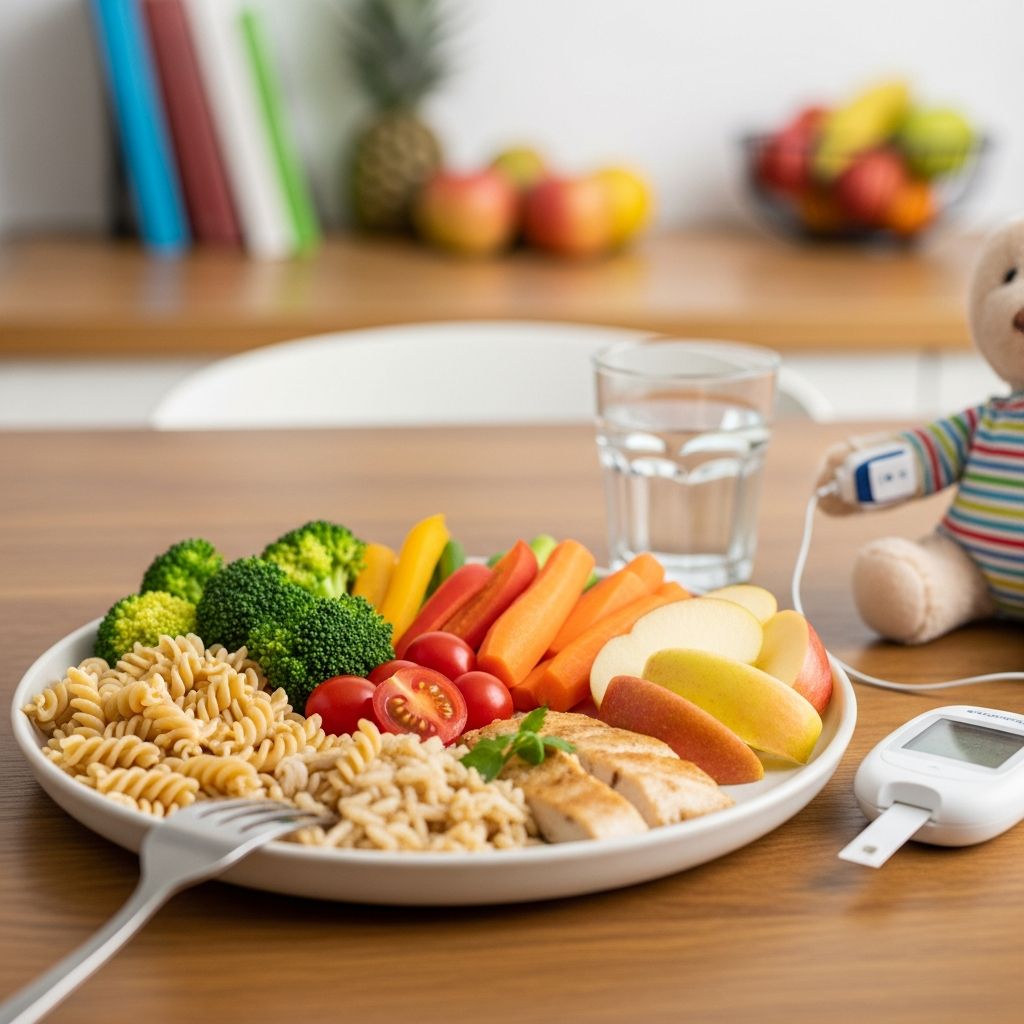
Creating effective meal plans for children with diabetes is crucial for maintaining stable blood sugar levels while supporting growth and energy needs. These plans emphasize balanced nutrition, precise carbohydrate tracking, and family involvement to make healthy eating sustainable and enjoyable.
Understanding the Role of Nutrition in Pediatric Diabetes
Diabetes in children, whether type 1 or type 2, requires careful attention to diet because food directly influences blood glucose. Carbohydrates break down into glucose, impacting blood sugar the most, while proteins and fats help stabilize these levels. A well-designed plan ensures kids get enough calories for development without spikes or drops in glucose.
Key principles include incorporating a mix of macronutrients at every meal: about half of daily calories from carbs, paired with proteins and healthy fats to slow digestion. This approach prevents rapid blood sugar rises and promotes satiety. Non-starchy vegetables, whole grains, lean proteins, and limited sugars form the foundation.
Building a Foundation: Core Components of a Child’s Meal Plan
A solid meal plan is personalized by a registered dietitian, considering age, activity level, medication, and growth requirements. It typically features three balanced meals and two to three snacks daily to meet caloric needs and avoid hypoglycemia.
- Carbohydrates: Focus on high-fiber options like whole grains, fruits, and vegetables to provide steady energy.
- Proteins: Include lean meats, eggs, beans, and dairy for muscle repair and blood sugar stability.
- Fats: Choose healthy sources such as nuts, avocados, and olive oil to enhance nutrient absorption.
- Fiber: Boost intake from veggies and whole grains to improve glucose control and digestion.
Work with healthcare providers to determine daily carb totals, often 45-75 grams per meal depending on age, with snacks at 15-30 grams.
Mastering Carbohydrate Counting for Better Control
Carb counting is a cornerstone skill for families. It involves tallying grams of carbs in foods to match insulin doses accurately. Tools like food labels, apps (e.g., MyFitnessPal), and digital scales aid precision.
Common carb sources include breads, pasta, rice, fruits, milk, and sweets. Limit added sugars, as they offer little nutrition. Teach kids to read labels: total carbs minus fiber gives net carbs. For homemade meals, estimate based on ingredients.
| Food Category | Examples | Typical Carb Serving (grams) |
|---|---|---|
| Grains | Whole wheat bread (1 slice), oatmeal (1/2 cup cooked) | 15-30 |
| Fruits | Apple (medium), berries (1 cup) | 15-25 |
| Dairy | Low-fat milk (1 cup), Greek yogurt (6 oz) | 12-20 |
| Vegetables | Broccoli (1 cup), carrots (1/2 cup) | 5-10 |
| Proteins | Chicken breast (3 oz), eggs (2) | 0-5 |
This table provides quick references; adjust based on your child’s plan.
Sample Daily Meal Structures by Age Group
Tailor plans to developmental stages. Younger children need consistent small portions, while older kids may handle larger meals with more activity.
For Ages 0-3 Years
Approximate total: 210g carbs. Breakfast: 45g (oatmeal with fruit); Lunch/Dinner: 45-60g each (veggie stir-fry with rice, lean protein); Snacks: 15g x3 (yogurt, cheese sticks).
For Ages 4-8 Years
Approximate total: 240g carbs. Breakfast: 60g (whole grain toast with peanut butter); Lunch: 60g (turkey wrap with veggies); Dinner: 75g (grilled fish, quinoa, salad); Snacks: 15g x3 (nuts, apple slices).
These are starting points; monitor blood sugar and adjust with professional guidance.
Portion Control and Healthy Swaps for Everyday Eating
Portion awareness prevents overeating. Use visual cues: a fist for carbs, palm for protein, thumb for fats. Swap sugary drinks for water or low-fat milk to cut empty carbs.
- Replace soda with infused water.
- Opt for whole fruit over juice.
- Choose baked over fried snacks.
Involve kids in measuring to build skills. Stock low-carb options like veggies with hummus or cheese for quick grabs.
Practical Tips for Family Meals and Snacks
Make diabetes-friendly eating a family affair. Plan grocery lists around whole foods, prep snacks ahead, and eat together. Avoid skipping meals, even during weight management—reduce portions instead.
Snack ideas: Apple with nut butter (20g carbs), veggie sticks with yogurt dip (10g), whole grain crackers with cheese (15g). During activities, pack 15-45g carb snacks to sustain energy.
Navigating School, Activities, and Travel
Share plans with school staff, including carb counts and menus. Pack labeled lunches with snack reminders. For sports, time carbs around exercise to prevent lows.
Travel tip: Carry portion charts, glucose tabs, and apps. Pre-measure snacks in baggies.
Tools and Resources to Simplify Planning
Leverage apps for logging, digital scales for accuracy, and food logs for dietitian reviews. Bookmark carb lists and recipe sites for inspiration.
Encourage experimentation: Try new veggies or grains together to keep meals exciting.
Frequently Asked Questions (FAQs)
Can kids with diabetes eat sweets?
Yes, in moderation as part of daily carb allowance. Pair with protein/fat for balance.
How often should snacks be offered?
Two to three times daily, every 2-3 hours, with 15-30g carbs to maintain levels.
What if my child refuses veggies?
Blend into smoothies/sauces, involve in picking/prepping, and model eating them.
Does exercise change meal needs?
Yes, add carbs pre/post-activity; monitor closely to avoid lows.
How to handle birthday parties?
Pre-carb count treats, offer alternatives like fruit skewers, check blood sugar before/after.
Long-Term Success: Mindset and Support
Focus on positivity: Praise efforts, avoid food policing, and give age-appropriate choices. Regular check-ins with dietitians ensure adjustments for growth or changes.
Balanced plates using the Diabetes Plate Method—half non-starchy veggies, quarter protein, quarter carbs—simplify decisions.
References
- Diabetes type 2 – meal planning: MedlinePlus Medical Encyclopedia — MedlinePlus. 2023-10-15. https://medlineplus.gov/ency/article/007429.htm
- Best Diet for a Child with Type 1 Diabetes — Children’s Health. 2024-05-20. https://www.childrens.com/health-wellness/what-is-the-best-diet-for-a-child-with-type-1-diabetes
- Meal Planning for Children with Diabetes — Stanford Children’s Health. 2023-08-10. https://www.stanfordchildrens.org/en/topic/default?id=meal-planning-for-children-with-diabetes-90-P01950
- Eating Smart When Your Child Has Diabetes — Nemours KidsHealth. 2024-02-28. https://kidshealth.org/en/parents/meal-plans-diabetes.html
- Type 1 Diabetes and Your Child: Meals and Snacks — University of Maryland Medical System. 2023-11-05. https://www.ummhealth.org/health-library/type-1-diabetes-and-your-child-meals-and-snacks
- Nutrition and Meal Planning — Dartmouth Health Children’s. 2024-01-12. https://childrens.dartmouth-health.org/diabetes-education/nutrition-and-meal-planning