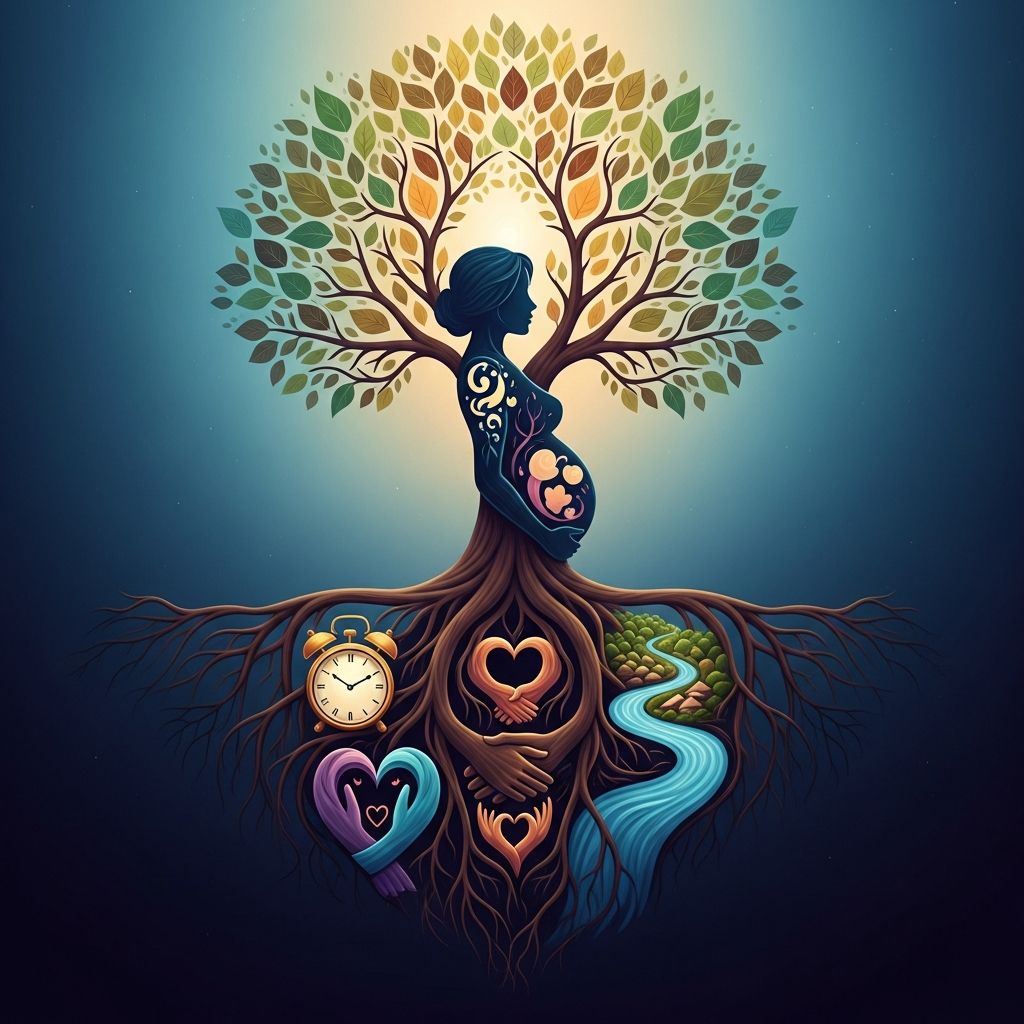
Motherhood represents one of life’s most profound transitions, encompassing biological, psychological, and social dimensions that reshape a woman’s existence in unexpected ways. Far from a singular experience, it demands recognition of its full spectrum to truly honor and support those navigating it.
Understanding Matrescence: The Biological Revolution
The process known as **matrescence** marks the physiological overhaul accompanying the shift into motherhood, akin in scope to the turbulence of adolescence. During this phase, hormonal surges and neural rewiring prepare the body and brain for caregiving responsibilities, altering everything from sensory perception to emotional regulation.
Research highlights how these changes mirror puberty’s intensity, with brain plasticity enabling adaptations for heightened vigilance and bonding. For instance, the amygdala enlarges to sharpen threat detection, while oxytocin pathways strengthen attachment instincts. These shifts, while adaptive, can manifest as fatigue, mood fluctuations, and identity flux, underscoring motherhood’s foundational biological demands.
- Hormonal cascades: Estrogen and progesterone levels plummet post-birth, influencing mood and energy.
- Neural remodeling: Gray matter in social cognition areas reduces temporarily, prioritizing efficiency in maternal tasks.
- Sensory enhancements: Improved smell and hearing aid infant monitoring but may overwhelm.
These transformations persist beyond the postpartum period, embedding lasting physiological imprints that redefine physicality and resilience.
Psychological Layers: Identity in Flux
Beyond biology, motherhood triggers a psychological metamorphosis, where self-concept evolves amid joy, loss, and reinvention. New mothers often grapple with surrendering autonomy for interdependence, navigating a ‘two-in-one’ existence where personal desires intertwine with a child’s needs.
This era evokes a spectrum of emotions—from euphoric bonding to profound grief over pre-mother selves. Studies describe it as a ‘surrendering’ phase, stripping familiar routines to forge new ones, compounded by sleep loss and relentless demands. Yet, it fosters growth, prompting reflections on one’s upbringing and crafting bespoke parenting philosophies.
| Emotional Phase | Common Experiences | Potential Outcomes |
|---|---|---|
| Initial Euphoria | Intense love, awe at newborn | Strong bonding foundations |
| Disorientation | Identity loss, overwhelm | Resilience building |
| Integration | Balanced self-mother fusion | Empowered identity |
Each phase underscores motherhood’s experimental nature—strategies honed with one child may falter with the next, demanding adaptability and self-compassion.
Societal Pressures and the Motherhood Myth
Cultural narratives often glorify motherhood as instinctive bliss, marginalizing its struggles and fostering isolation. Media portrayals emphasize perfection, ignoring matrescence’s raw realities and perpetuating guilt for ‘imperfect’ experiences.
In truth, modern mothers juggle careers, relationships, and self-care amid inadequate support systems. Single parents, in particular, navigate amplified challenges, drawing from personal histories to redefine family dynamics. This disconnect highlights the need for honest discourse, validating diverse paths from joyful to arduous.
- Social media’s curated images distort expectations.
- Lack of policy support (e.g., paid leave) exacerbates stress.
- Stigma around mental health discourages seeking help.
Navigating Challenges: From Overwhelm to Empowerment
Motherhood’s trials—exhaustion, relational strains, identity crises—feel intensified without acknowledgment. Yet, framing them as neither ‘bad’ nor simplistic enables empowerment. Support networks, therapy, and community shatter isolation, transforming hardship into catalysts for growth.
Reframing past traumas surfacing in matrescence allows breaking cycles, blending inherited wisdom with innovation. Multi-child families exemplify this, where accumulated insights refine approaches, turning chaos into mastery.
Voices of Experience: Real Stories of Transformation
Personal accounts illuminate motherhood’s nuances. One mother recounts single parenting’s lessons in reciprocity, where teaching yields mutual learning. Another reflects on identity extension, not erasure, embracing fuller lives post-transition.
“Motherhood revealed my depths—strengths I never knew, woven into nurturing another life.”
These narratives affirm complexity, urging collective empathy over judgment.
Building Supportive Ecosystems for Mothers
Empowering mothers requires systemic shifts: extended parental leave, affordable childcare, mental health integration in pediatrics. Community groups and peer mentoring bridge gaps, fostering solidarity.
Individually, practices like mindfulness, boundary-setting, and partner equity mitigate burnout. Celebrating matrescence as growth, not deficit, reorients perspectives toward abundance.
Frequently Asked Questions (FAQs)
What is matrescence, and how does it differ from postpartum recovery?
Matrescence is the broader transition to motherhood, involving ongoing brain and identity changes, unlike postpartum’s focus on initial physical healing.
Is it normal to feel a loss of self after becoming a mother?
Yes, this identity shift is common, paralleling adolescence, and evolves into integrated self-motherhood with time and support.
How can society better support new mothers?
Through policies like paid leave, destigmatized mental health care, and authentic representations in media.
Does motherhood get easier with more children?
Experience refines skills, but each child brings unique dynamics, requiring continual adaptation.
What role does personal history play in mothering?
It surfaces reflections and opportunities to evolve parenting styles beyond replication.
Embracing the Full Spectrum
Motherhood’s richness lies in its contradictions—painful yet purposeful, chaotic yet clarifying. By amplifying diverse voices and science, we cultivate understanding that honors every mother’s path.
References
- Matrescence: On the Metamorphosis of Pregnancy, Childbirth and Motherhood — Lucy Jones. 2024-03-15. https://penguinrandomhouse.com/books/751398/matrescence-by-lucy-jones/
- Brain structure and function in early parenthood — Orchard et al. Proceedings of the National Academy of Sciences (PNAS). 2023-10-10. https://www.pnas.org/doi/10.1073/pnas.2307191120
- Maternal Mental Health Leadership Alliance Report — 2024 Maternal Mental Health Leadership Alliance. 2024-05-01. https://www.mmhla.org/reports
- WHO Guidelines on Maternal Mental Health — World Health Organization. 2022-06-20. https://www.who.int/publications/i/item/9789240054560
- Postpartum Support International Guidelines — Postpartum Support International. 2025-01-15. https://www.postpartum.net/