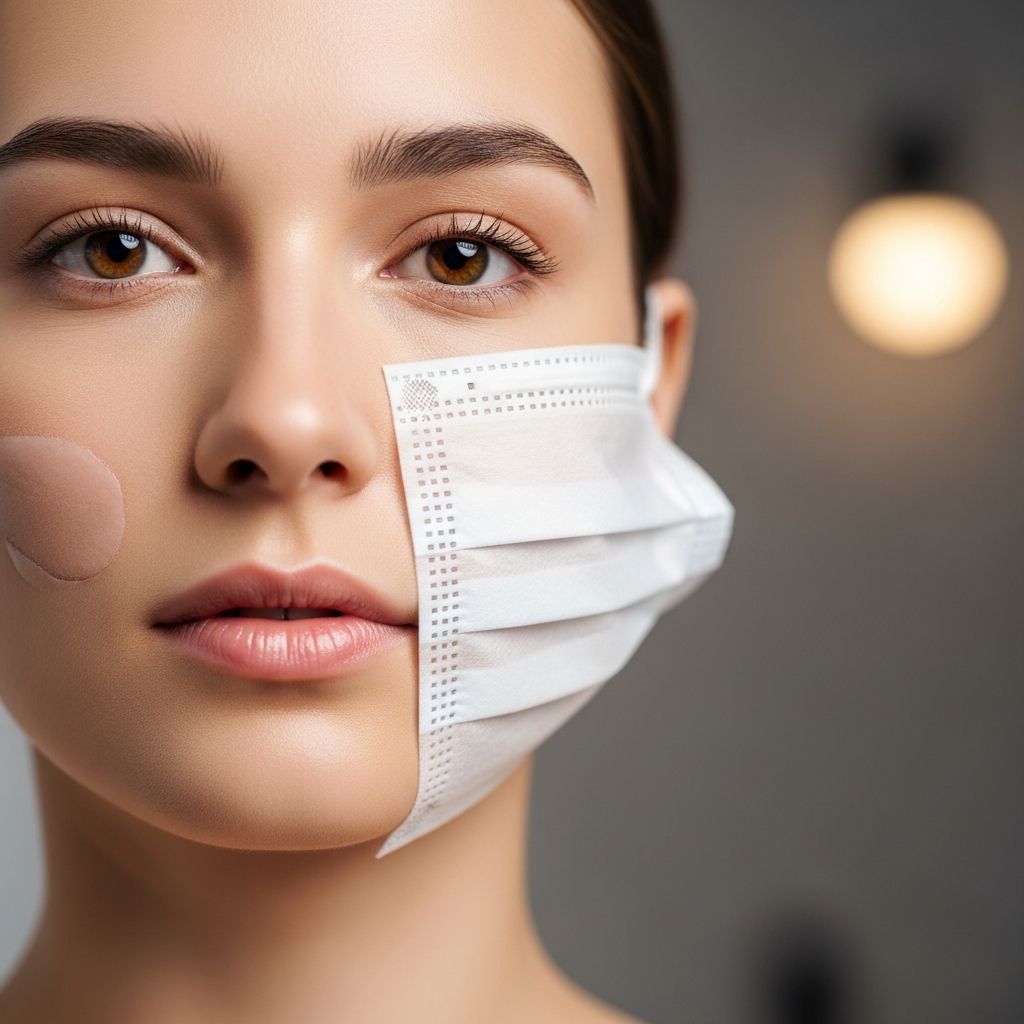
Prolonged mask wearing creates unique skin challenges, leading to a condition known as maskne, which combines acne breakouts with irritation in masked areas. Dermatologists identify it as acne mechanica, triggered by friction, heat, and moisture trapping. This guide explores its mechanisms, daily management tactics, and recovery paths for smoother skin.
Decoding the Science of Mask-Induced Skin Issues
Masks form a barrier that alters the skin’s natural environment. Heat from breathing and body warmth builds up, softening sebum and dead skin cells, which then clog pores. This occlusion fosters bacterial growth, particularly Propionibacterium acnes, sparking inflammation and pimples.
Friction from mask edges rubs against cheeks, nose, and chin, irritating follicles and prompting acne formation. Moisture from sweat and exhalation adds humidity, ideal for microbes thriving in this warm, damp space. Unlike typical acne, maskne often includes redness and dermatitis-like symptoms.
Studies confirm irritant contact dermatitis as the primary culprit, stemming from mask materials or prolonged dirty wear. Those in healthcare or high-mask-use professions face heightened risks due to extended exposure.
Recognizing Maskne Versus Other Facial Reactions
Not all mask-area eruptions are acne. Contact dermatitis mimics maskne with red, itchy rashes, often from elastic or nickel allergies. Allergic reactions show linear patterns, unlike acne’s clustered pimples.
Distinguish by symptoms: maskne features whiteheads, blackheads, and cysts; dermatitis brings blisters or widespread redness. Persistent cases may scar if untreated, emphasizing early identification. Self-diagnosis risks mistreatment—professional evaluation clarifies.
Everyday Habits to Prevent Breakouts
Prevention starts with mask selection. Opt for cotton or silk liners over rough fabrics to minimize friction. Change masks daily or when damp, avoiding reuse of soiled ones that harbor bacteria.
- Choose breathable, non-tight masks to reduce heat buildup.
- Apply a lightweight, non-comedogenic moisturizer pre-mask to fortify the skin barrier.
- Take ‘mask breaks’ in safe areas for air circulation.
Skincare simplifies with gentle routines. Cleanse twice daily using salicylic acid or chamomile-infused products to dissolve oil without stripping. Avoid heavy makeup under masks, as it exacerbates clogs.
Building an Effective Anti-Maskne Skincare Routine
A targeted regimen counters maskne’s effects. Morning: Gentle cleanser, antioxidant serum, hydrator, SPF. Evening: Double cleanse, treatment, repair cream.
| Step | Time | Key Ingredients | Benefits |
|---|---|---|---|
| Cleanse | AM/PM | Salicylic acid, calendula | Removes debris, soothes |
| Treat | PM | Benzoyl peroxide (2-5%), retinoids | Kills bacteria, unclogs |
| Moisturize | AM/PM | Hyaluronic acid, ceramides | Repairs barrier |
| Protect | AM | Sunscreen | Prevents post-acne marks |
Patch-test new products on the inner arm. Consistency yields results in 1-2 weeks.
Over-the-Counter Solutions for Quick Relief
Benzoyl peroxide (2-5%) targets bacteria and inflammation effectively for mild cases. Salicylic acid exfoliates pores, ideal for sensitive skin. Spot-treat active lesions nightly.
Soothing masks with clay or tea tree oil absorb excess oil weekly. Hydrocolloid patches draw out pimples overnight, reducing scarring risk. If no improvement in two weeks, escalate care.
When Home Care Isn’t Enough: Professional Interventions
Severe cystic acne or scarring warrants dermatologist input. Prescriptions like topical retinoids (e.g., Retin-A) accelerate cell turnover but may irritate initially—pair with masks cautiously.
Oral antibiotics or anti-inflammatories control stubborn infections. Steroid injections shrink large cysts rapidly. For post-mask hyperpigmentation, chemical peels or lasers even tone. Telehealth offers quick access.
Post-Mask Recovery: Restoring Skin Balance
Even after reduced masking, residues linger. Week 1-2: Fewer breakouts with gentle care. By month 1, redness fades; full recovery spans 2-3 months.
Oily or sensitive types recover slower; support with hydration, nutrition, sleep. Avoid over-exfoliation to prevent barrier damage.
Lifestyle Factors Influencing Skin Resilience
Hydration, balanced diet, and stress management aid healing. Limit dairy/sugar if breakout-prone. Exercise promotes circulation but cleanse post-sweat.
Professional facials boost recovery timelines. Track progress with photos for motivation.
Frequently Asked Questions
Can maskne cause permanent scars?
Untreated severe cases risk scarring; prompt treatment minimizes this.
How long does recovery take?
1-2 weeks for mild relief, 2-3 months fully.
Is benzoyl peroxide safe for all skin types?
Start low (2%); test sensitive skin.
Does switching masks help?
Yes, breathable fabrics reduce friction.
When to see a dermatologist?
No improvement in 2 weeks or cystic acne.
References
- Tackling Breakouts Caused by Maskne — Suncoast Skin Solutions. 2023. https://www.suncoastskin.com/tackling-breakouts-caused-by-maskne/
- What Is Maskne and What Causes It? — NewYork-Presbyterian Health Matters. 2023. https://healthmatters.nyp.org/what-is-maskne-and-what-causes-it/
- Maskne: What Is It and How Do You Prevent It? — Yale Medicine. 2023-04-02. https://www.yalemedicine.org/news/maskne-acne-from-masks
- Mask Acne (Maskne): 5 Treatment Tips — Eternal Dermatology. 2023. https://www.eternaldermatology.com/mask-acne-a-k-a-maskne-5-treatment-tips/
- Combating Maskne and Post-Mask Skin Concerns — Skincare Institute. 2023. https://skincareinstitute.net/combating-maskne-and-post-mask-skin-concerns-in-the-new-normal/
- Maskne: A side effect of wearing face mask — PMC – NIH. 2022-12-12. https://pmc.ncbi.nlm.nih.gov/articles/PMC9730977/
- 6 Tips to Avoid ‘Maskne’ — Rush University System for Health. 2023. https://www.rush.edu/news/6-tips-avoid-maskne