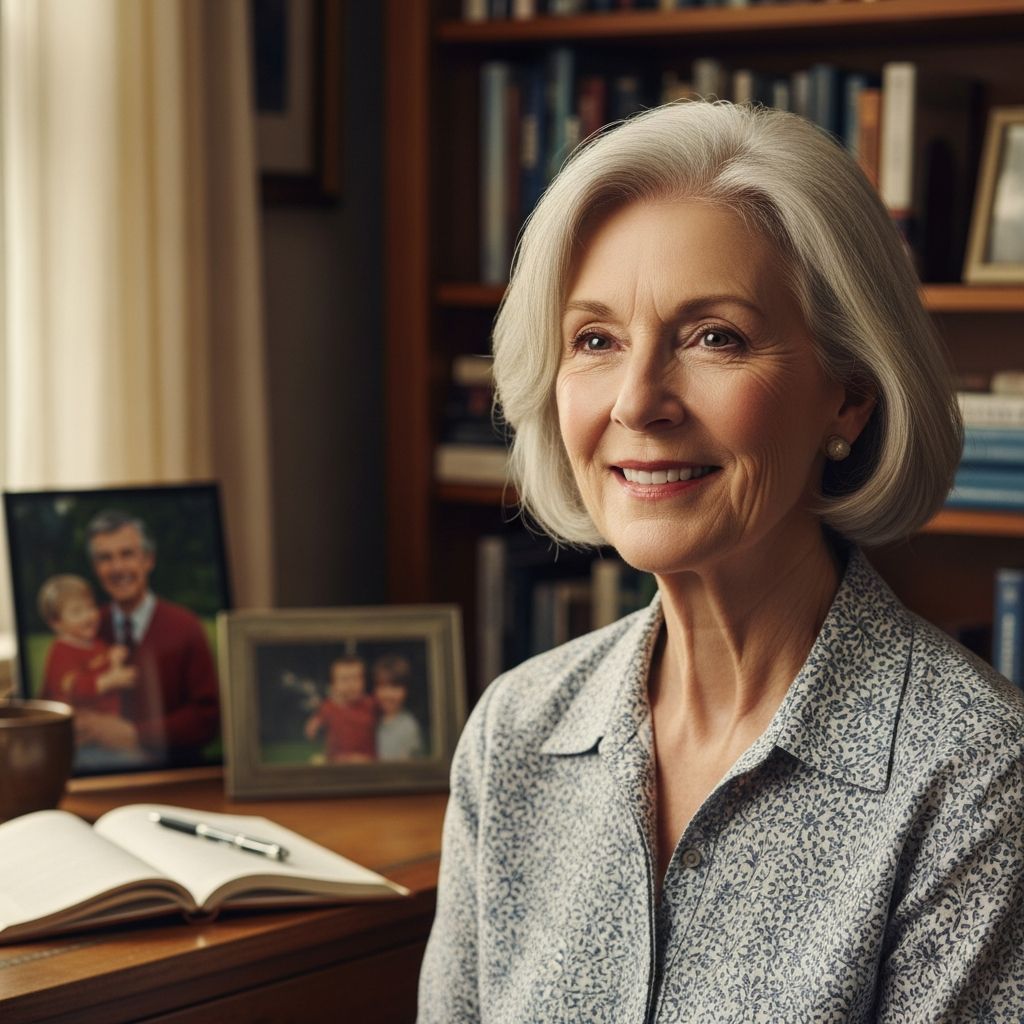
Dr. Margaret McFarland was a pioneering figure in child psychology whose work profoundly influenced generations of children and parents through her collaboration with Fred Rogers on Mister Rogers’ Neighborhood. As a professor, center director, and advisor, she brought scientific rigor to television, ensuring content resonated with young minds’ emotional needs.
Early Life and Academic Foundations
Born on July 3, 1905, Margaret Beall McFarland pursued a career rooted in understanding human development from an early age. She earned her Ph.D. in psychology from Teachers College, Columbia University in 1938, focusing on developmental psychology. This education equipped her with tools to analyze how children process emotions, relationships, and environments.
McFarland’s approach emphasized observation over assumption. She believed in immersing herself in children’s worlds to grasp their perspectives, a method that defined her professional life. Her training led her to the University of Pittsburgh, where she became a professor in the Department of Psychiatry at the School of Medicine.
Establishing the Arsenal Family and Children’s Center
In a landmark achievement, McFarland co-founded the Arsenal Family and Children’s Center in Pittsburgh alongside luminaries like Dr. Benjamin Spock and Erik Erikson. This institution served as a hub for innovative child care and family support programs, prioritizing real-world interactions over theoretical models.
The center’s philosophy centered on fostering secure attachments between parents and children. McFarland’s programs encouraged mothers to recognize their competencies, building trust through shared activities like cooking or crafting. This hands-on methodology influenced countless families and professionals in the field.
- Key Features of the Arsenal Center:
- Observation-based learning environments for children aged 3-5.
- Parent education workshops emphasizing emotional attunement.
- Collaborations with medical and psychological experts for holistic care.
- Long-term studies on family dynamics and child outcomes.
Through this center, McFarland demonstrated that child development thrives when adults model genuine engagement, a principle she later imparted to Fred Rogers.
Meeting Fred Rogers: A Transformative Partnership
In the early 1950s, Fred Rogers, then a seminary student and aspiring television producer, sought McFarland’s guidance for a counseling course involving child observation. Their initial meeting sparked a decades-long collaboration that redefined children’s media. Rogers, with his background in music and ministry—a Bachelor of Music and ordination as a Presbyterian minister—found in McFarland a mentor who translated complex theories into practical wisdom.
They met weekly, dissecting scripts, songs, and visuals. Rogers took meticulous handwritten notes and recorded sessions on audiocassettes, preserving her insights. McFarland advised on minutiae, such as Rogers entering his TV house from left to right to align with children’s reading direction, ensuring intuitive comprehension.
Revolutionizing Children’s Television
When Rogers developed Mister Rogers’ Neighborhood in 1966, McFarland became its chief consultant, reviewing content until her death in 1988. She urged Rogers to appear on camera rather than hide behind puppets, stressing the need for children to distinguish reality from fantasy: “Fred, the children need to see you”. This shift made the show a direct emotional bridge to viewers.
McFarland’s influence permeated episodes on tough topics like death, divorce, and anger. She taught Rogers that “attitudes are caught, not taught,” advocating demonstrations of authentic passion over instruction. For instance, guests like Yo-Yo Ma simply played their instruments, modeling joy in creation.
| Topic | McFarland’s Guidance | Show Implementation |
|---|---|---|
| Divorce | Validate feelings without bias | Episodes explaining family changes calmly |
| Emotions | Name and normalize them | Songs like “Mad/Glad/Sad” |
| Creativity | Model love for process | Guests “loving the clay” in crafts |
| Fantasy vs. Reality | Clear boundaries | Rogers on-screen transitions to Neighborhood of Make-Believe |
Her input extended to Rogers’ parenting books and videos, embedding child development science into accessible media.
Core Principles That Shaped Generations
McFarland’s teachings boiled down to empathy, authenticity, and respect for a child’s pace. She viewed creativity as bridging “what is and what might be,” encouraging Rogers to affirm children’s inner worlds. In sessions, she built parental trust by valuing their skills first—discussing baking before delving into concerns.
One iconic anecdote involved inviting a sculptor to the Arsenal Center not to teach techniques, but to “love the clay,” showing children the essence of artistic passion. This mirrored her belief in experiential learning, where children absorb emotions through observation.
McFarland also co-founded the Department of Child Development and Child Care at the University of Pittsburgh, training future educators. Her students, including Family Communications leaders like Bill Isler, carried her legacy forward.
Personal Traits and Lasting Legacy
Modest and behind-the-scenes, McFarland called herself Rogers’ “counterpart to the creative person”. Despite her influence, she shunned spotlight, focusing on impact. She drove spiritedly and maintained weekly meetings until age 83, succumbing to myelofibrosis on September 12, 1988. Rogers credited her as his major professional influence.
Her work endures in modern parenting and media. Studies affirm her methods: secure attachments reduce anxiety, and emotional naming aids regulation (American Psychological Association guidelines on child development). Mister Rogers’ Neighborhood reruns continue educating, proving timeless relevance.
Modern Applications of McFarland’s Wisdom
Today’s parents can apply her principles daily. Encourage play without outcomes, discuss feelings openly, and model enthusiasm. Digital media echoes her call for authenticity amid flashy content.
- Practical Tips Inspired by McFarland:
- Listen actively before advising.
- Use simple language for complex emotions.
- Share your genuine interests with kids.
- Validate all family structures.
Educators integrate her ideas in curricula, emphasizing social-emotional learning (SEL), now a standard in U.S. schools per Department of Education frameworks.
Frequently Asked Questions
What was Margaret McFarland’s role in Mister Rogers’ Neighborhood?
She served as chief consultant, reviewing scripts weekly and advising on child-appropriate content, language, and themes from 1966 until 1988.
How did McFarland influence Fred Rogers’ on-screen presence?
She convinced him to appear personally, helping children differentiate reality from fantasy.
What institutions did McFarland co-found?
The Arsenal Family and Children’s Center and the University of Pittsburgh’s Department of Child Development and Child Care.
Did McFarland work only with Rogers?
No, she mentored students, collaborated with Spock and Erikson, and supported numerous families through her center.
Why is McFarland’s work still relevant?
Her emphasis on emotional intelligence prefigures modern SEL programs and parenting advice.
Broader Impact on Child Psychology
McFarland’s career bridged academia, practice, and media. At Pittsburgh, she advanced psychiatry’s child focus. Her Arsenal Center pioneered integrated care, influencing policy like Head Start programs. Rogers’ global reach—over 100 countries—amplified her voice.
Posthumously, a 2018 New York Times “Overlooked” obituary highlighted her. Documentaries and books, like those on Rogers’ production, feature her clips, showing warm, insightful exchanges.
In family dynamics, her anger management insights—via Rogers—taught labeling emotions constructively. For divorce, she guided neutral, reassuring narratives, easing transitions.
McFarland’s ethos: Trust children’s competence, honor parents’ roles, communicate authentically. This triad underpins resilient upbringings.
References
- Margaret McFarland and Fred discuss the relationship — Mister Rogers’ Neighborhood. N/A. https://www.misterrogers.org/videos/margaret-mcfarland/
- A story about the Mister Rogers’ “Moving” book — Carl Kurlander Substack. N/A. https://carlkurlander.substack.com/p/a-story-about-the-mister-rogers-moving
- Anger & Family Relationships: Fred Rogers & Margaret McFarland — Daisy May and Me. N/A. https://daisymayandme.com/blogs/daisy-may-and-me/anger-family-relationships
- Margaret McFarland — Mister Rogers’ Neighborhood. N/A. https://www.misterrogers.org/articles/margaret-mcfarland/
- How a Child Psychologist Mentored Mr. Rogers — Teachers College, Columbia University. 2020-01-01. https://www.tc.columbia.edu/articles/2020/january/how-a-child-psychologist-mentored-mr-rogers/
- Margaret McFarland — Wikipedia. 2026-02-02. https://en.wikipedia.org/wiki/Margaret_McFarland