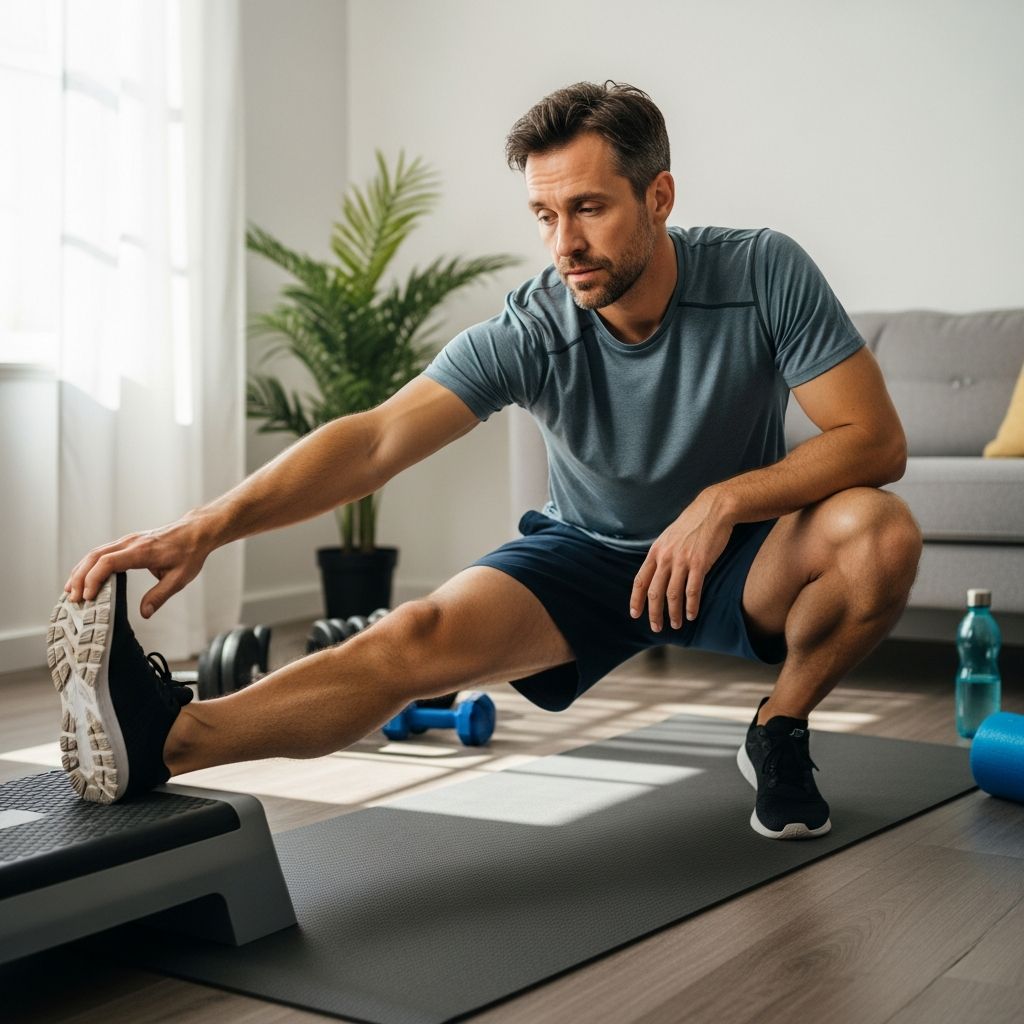
Long days at work, short nights of sleep, and endless kid-wrangling can turn a dad’s lower back and hips into a constant ache. This guide breaks down why that happens and how to fix it with short, realistic stretching sessions that fit into even the busiest schedule.
Why Dads’ Backs And Hips Protest So Much
Modern fatherhood often means a lot of sitting followed by sudden bursts of heavy, awkward lifting: car seats, strollers, squirming toddlers, and bags of groceries. That mix of inactivity and strain tightens the hip flexors in the front of your hips and overloads your lower back muscles. Over time, your body compensates with poor posture, an exaggerated lower-back arch, and stiff hamstrings, all of which make bending, picking up kids, and even sleeping more uncomfortable.
The goal of good stretching is not to turn you into a gymnast. Instead, it is to restore enough mobility that everyday tasks feel smoother: getting off the floor, playing on the ground with your kids, and standing up after a long car ride without feeling 20 years older than you are.
How Stretching Actually Helps
Stretching signals muscles and connective tissues to relax and lengthen, which reduces the constant tug-of-war between tight hip flexors in the front and overworked back muscles in the rear. When both sides calm down, your spine can sit in a more neutral, comfortable position. That translates into fewer twinges when you twist, bend, or lift.
Think of stretching as maintenance for your body, the same way you maintain a car. You would not wait for the engine to seize before changing the oil. Likewise, a few minutes of consistent stretching each day can prevent the big, dramatic blowups—like a back spasm from simply tying your shoes.
Smart Safety Rules Before You Start
- Warm up briefly by walking around the house or marching in place for 2–3 minutes.
- Move into each stretch slowly and stop well before sharp or shooting pain.
- Breathe steadily; never hold your breath while stretching.
- Use support (a wall, couch, or chair) for balance when needed.
- If you have a history of serious back injury, surgery, or nerve pain down your legs, check with a healthcare professional first.
Core Stretching Principles For Busy Dads
To get the most benefit in the least time, focus on three big areas: hip flexors, hamstrings, and the lower back itself. These regions strongly influence each other. Tightness in any one of them tends to pull the rest out of alignment, so a well-rounded mini-routine always includes a bit of each.
Consistency matters more than intensity. A gentle 7–10 minute session done most days will do more for your comfort and mobility than a heroic, 40-minute stretch marathon you attempt once every few weeks and then abandon.
Lower Back Stretch: Child’s Pose Reach
This variation of a floor stretch gently decompresses the lower spine while also opening the sides of the torso.
How to do it
- Kneel on a soft surface with your knees slightly wider than hip-width and your big toes touching behind you.
- Sit your hips back toward your heels and reach your arms forward, lowering your chest toward the floor.
- Once comfortable, walk both hands slightly to the right to stretch the left side of your lower back for 20–30 seconds, then walk hands to the left.
Tips for dads
- If your knees are sensitive, place a folded towel or pillow under them.
- Use this stretch after floor play with your kids as a short “reset” before standing up.
Lower Back Stretch: Supported Knee-To-Chest
This stretch eases tension in the lower back and glutes without much effort, making it ideal at the end of a long day.
How to do it
- Lie on your back with both legs extended and your head supported by a small pillow if needed.
- Bring one knee toward your chest, holding behind the thigh or shin, and keep the opposite leg relaxed on the floor.
- Draw the knee gently closer until you feel a comfortable stretch in your lower back and buttock. Hold 20–30 seconds, then switch sides.
Tips for dads
- If grabbing the leg strains your shoulders, loop a towel or belt around your thigh and hold the ends instead.
- Use this stretch before bed to calm your back after a day of carrying kids or sitting at a desk.
Hip Flexor Stretch: Half-Kneeling Hip Release
This is the cornerstone stretch for tight hip flexors, especially if you sit often or drive long distances.
How to do it
- Kneel with your right knee on the floor and your left foot in front, so both knees are at about 90 degrees.
- Engage your glutes and gently tuck your tailbone under, as if trying to zip up tight jeans.
- Without arching your lower back, slowly shift your entire body forward until you feel a stretch in the front of your right hip. Hold 20–30 seconds, then switch sides.
Tips for dads
- Place a cushion under the back knee if the floor feels too hard.
- For a deeper stretch, raise the arm on the kneeling side overhead and slightly reach it toward the opposite side.
Hip Flexor Stretch: Couch Lunge
This stretch uses your couch or a chair to intensify hip opening while letting you hold onto something for balance.
How to do it
- Stand facing away from the couch. Place the top of your right foot on the seat behind you, with your left foot about a step forward.
- Gently bend your front knee and lower into a lunge until you feel a strong but manageable stretch in the front of the right thigh and hip.
- Keep your chest tall and your tailbone slightly tucked. Hold 20–30 seconds, then change sides.
Tips for dads
- Use the back of the couch or a wall for balance if you feel unsteady.
- Start with a smaller bend in the front knee and gradually deepen the lunge over several sessions.
Hamstring Stretch: Standing Hinge With Support
Tight hamstrings often yank on the pelvis, which in turn stresses the lower back. This standing stretch targets the back of the thighs without forcing you to touch your toes.
How to do it
- Stand facing a countertop, sturdy table, or back of a couch. Place your hands lightly on the surface.
- Step your feet slightly back and keep a soft bend in your knees.
- Hinge at your hips (not your lower back) by sending your butt backward while your chest lowers toward the floor until you feel a stretch in the back of your thighs. Hold 20–30 seconds.
Tips for dads
- Keep your spine long; imagine reaching your tailbone behind you and the top of your head forward.
- Use this move when you find yourself standing around in the kitchen waiting for the microwave.
Glute And Hip Stretch: Seated Figure-Four
When the muscles around the hips are tight, they can pull on the lower back with every step. This seated stretch is friendly to stiff bodies and office chairs alike.
How to do it
- Sit toward the front of a sturdy chair with your feet flat on the floor.
- Place your right ankle on top of your left knee, creating a “4” shape with your legs.
- Keep your back straight and gently lean forward from the hips until you feel a stretch deep in the right hip and butt. Hold 20–30 seconds, then repeat on the other side.
Tips for dads
- Press down lightly on the elevated knee if more stretch feels comfortable; do not push if there is pain.
- This is a great mid-workday stretch you can sneak in during long video calls.
Core Activation: Gentle Pelvic Tilt
Strength and mobility work best together. This small movement teaches your deep core and glutes to support your lower back instead of leaving it to do all the work.
How to do it
- Lie on your back with knees bent, feet flat on the floor, and arms resting by your sides.
- Gently flatten your lower back into the floor by tightening your abdominal muscles and slightly tucking your tailbone.
- Hold for 5–8 seconds while breathing calmly, then relax. Repeat 8–10 times.
Tips for dads
- Aim for control, not intensity; this should feel like a subtle engagement, not a crunch.
- Do this before your stretching routine to wake up your core or after as a stabilizing finisher.
Sample 10-Minute Daily Routine
Use this as a plug-and-play routine for mornings, evenings, or a work break. Adjust the hold times to fit the time you have.
| Move | Area Focused | Suggested Duration |
|---|---|---|
| Pelvic Tilt | Core and lower back support | 8–10 repetitions |
| Child’s Pose Reach | Lower back and sides | 20–30 seconds per side |
| Half-Kneeling Hip Release | Front of hip (hip flexors) | 20–30 seconds per side |
| Standing Hinge With Support | Hamstrings and back of hips | 20–30 seconds |
| Seated Figure-Four | Glutes and outer hips | 20–30 seconds per side |
If you have extra time or feel particularly tight, add the Couch Lunge at the end for an additional 20–30 seconds per side.
Everyday Habits That Protect Your Back
Stretches work best when your daily habits are not constantly undoing them. Simple changes to how you stand, sit, and lift can dramatically reduce stress on your spine and hips.
- Alternate the hip you carry your child on instead of always favoring one side.
- When lifting, bend at the hips and knees, bringing your chest toward your thighs while keeping your back neutral, then stand using your legs and glutes.
- Adjust your work setup so the top of your screen is near eye level and your hips are slightly above your knees when seated.
- Set a reminder to stand, move, or stretch lightly at least once every 45–60 minutes during the day.
Making Your Routine Actually Stick
Many dads know stretching would help but struggle to turn it into a habit. The key is to attach stretching to routines you already do automatically, so it feels less like an extra task and more like a natural part of your day.
- Pair stretches with toothbrushing, morning coffee, or your kids’ bedtime routine.
- Keep a yoga mat or folded blanket visible in the living room as a cue to drop into a quick stretch while watching TV.
- Start with just 5 minutes instead of aiming for a perfect, long session; once the habit is in place, adding more time is easy.
FAQ: Lower Back And Hip Flexor Stretches For Dads
How often should I stretch my lower back and hips?
Aim for at least 4–5 short sessions per week. Daily stretching is ideal, but even consistent, near-daily sessions of 7–10 minutes can noticeably reduce stiffness and improve comfort when lifting, playing, and working.
Can stretching alone fix my lower back pain?
Stretching can dramatically reduce pain caused by muscle tightness and poor movement habits, but it is not a cure-all. Combining stretching with light strengthening for your core and glutes, plus better posture and lifting mechanics, offers the best long-term relief. Persistent or severe pain should be evaluated by a medical professional.
Is it normal to feel sore after stretching?
Mild soreness or a feeling of “worked” muscles can be normal, especially if you have not stretched in a long time. Sharp, stabbing, or radiating pain is a warning sign to ease off, modify the stretch, or consult a professional.
What if I am too stiff to get into some of these positions?
Use cushions, towels, or a chair to elevate your body until the position feels manageable. Focus on small, gentle ranges of motion at first and gradually increase depth as your body adapts. Being stiff is precisely why you are stretching; the goal is not perfection but steady improvement.
When is the best time of day to stretch?
The best time is the one you can stick with consistently. Many dads find mornings helpful to shake off overnight stiffness, while evenings help unwind after work and childcare. You can also split your routine: a few moves in the morning and a few at night.
From Stiff To Steady: A Dad-Friendly Goal
You do not need advanced yoga skills or an hour-long routine to feel better. A handful of simple stretches, done regularly and paired with smarter everyday movement, can transform how your back and hips feel. The payoff is not just less pain; it is more energy, more freedom to move, and more moments on the floor, in the yard, or at the playground with your kids without worrying what your lower back will say about it later.