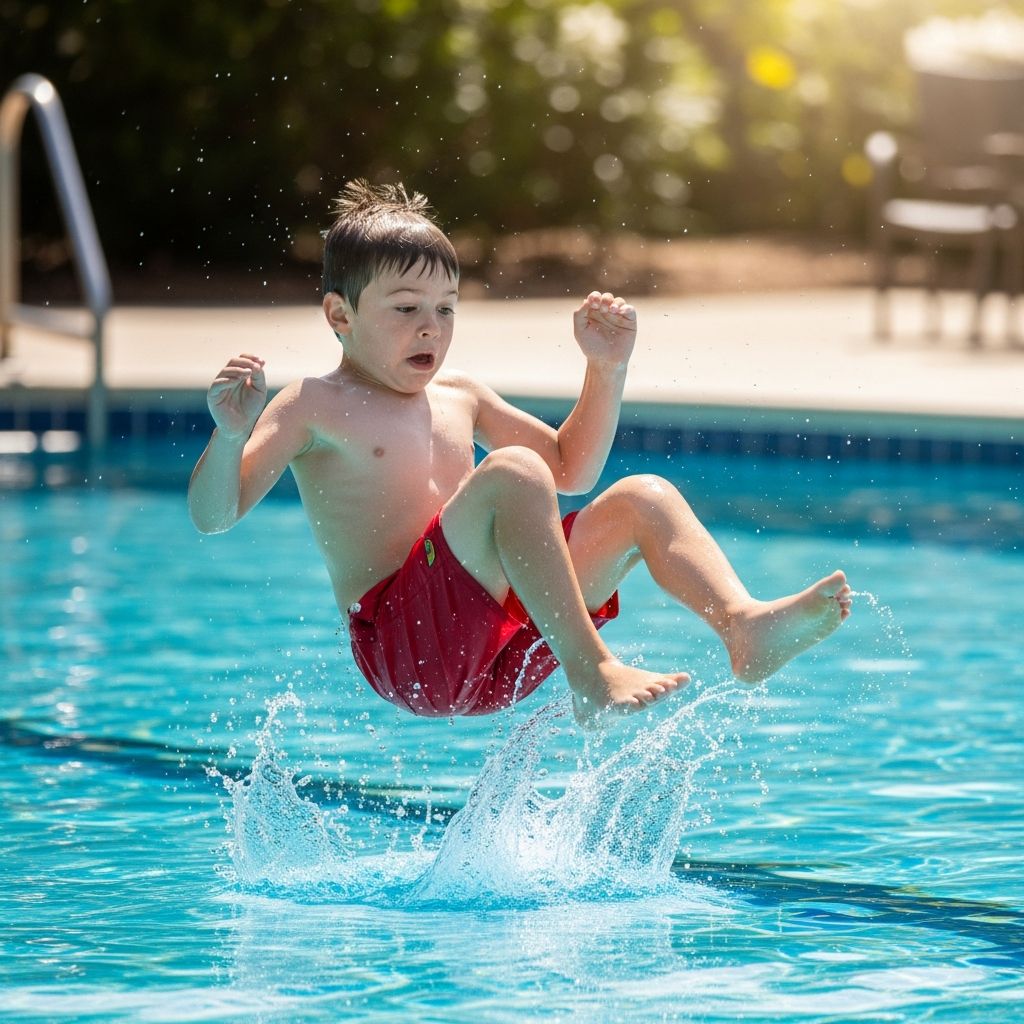
A short clip of a little boy attempting a dramatic backflip into a swimming pool has captured the attention of parents everywhere. What was meant to be a cool stunt becomes a clumsy splash, and that is exactly why families love it so much.
The Viral ‘Backflip’ That Wasn’t
The heart of the story is simple: a confident little boy stands at the edge of the pool, announces that he is going to do a backflip, and then delivers something closer to a sideways flop than a polished dive. His enthusiasm, not his form, is what makes the moment unforgettable.
Parents watching the scene can practically hear the familiar chorus: “Mom! Dad! Watch this!” That one phrase sums up childhood summers—kids wanting to impress, to show off, and to be seen. The backflip may be technically unsuccessful, but from a parenting perspective, it is an absolute win.
- The boy believes he is doing something impressive and brave.
- The family is close enough to see, record, and cheer him on.
- The final splash is harmless, hilarious, and very replayable.
Why Parents Find It So Relatable
Parents connect with this video because it mirrors countless everyday scenes that never make it online. Whether it is an uneven cartwheel, a wobbly bike ride, or a wild cannonball, kids constantly test their limits and proudly invite adults to watch.
The charm of the backflip fail lies in how normal it feels. There is no danger, no serious embarrassment, and no lecture. Instead, there is laughter, encouragement, and the understanding that childhood is supposed to look a little bit messy.
- Kids rarely perform stunts the way they picture them in their heads.
- Parents cheer anyway, valuing effort over perfection.
- Shared laughter becomes part of the family’s unofficial highlight reel.
From Epic Stunt to Gentle Splash
In the video’s big moment, the boy bends his knees, twists his body, and then seems to forget exactly how a backflip works. The result is a partial turn and a less-than-graceful entry into the water. Instead of the clean arc he probably imagined, the move looks more like a sideways tumble.
What stands out, however, is not technique but attitude. He commits fully to the jump, unbothered by the possibility of failing. That unfiltered confidence is one of the sweetest parts of early childhood—and one of the biggest reasons adults love watching kids attempt ambitious stunts.
- His body does not coordinate perfectly, but his courage is fully intact.
- The pool cushions the landing, turning the failed flip into safe fun.
- The moment is funny without being mean-spirited or risky.
What Kids Learn From Funny Fails
Although the video is shared mainly for laughs, moments like this are quietly educational. Kids learn that it is okay to try something new and not nail it right away. They also discover that even when things do not look like they did in their imagination, they can still be proud of the effort.
Parents who respond with warmth and humor teach children that mistakes are not disasters. Instead, they are part of a normal learning curve. This attitude helps kids build resilience, self-confidence, and a willingness to keep experimenting.
- Trying and failing in a safe environment fosters healthy risk-taking.
- Lighthearted reactions prevent kids from feeling ashamed or scared.
- Re-watching the clip may even help the child laugh at themself.
The Role of Parents as the Audience
The video also highlights how important parents’ attention is to young children. Many kids would rather perform a wobbly trick for an engaged parent than do a perfect move with no one watching. Being the trusted audience is part of the emotional job of caregiving.
When parents put down distractions long enough to watch “just one more jump,” they validate their child’s excitement. The recording of the backflip attempt turns into proof that the adults were there, present and paying attention.
- Children often measure success by whether someone they love is watching.
- Videos like this become tangible memories for both kids and adults.
- Shared viewing later can spark conversations about growth and change.
Pool Safety While Kids Show Off
Even though the video is lighthearted, it naturally raises the topic of pool safety. Letting kids experiment and perform tricks is fun, but adults still need to keep boundaries and basic rules in place. A safe environment makes room for silly fails without serious injury.
Clear rules do not have to ruin the mood. They can be framed as part of learning “real” stunts over time. Combining supervision with guidance allows children to feel adventurous while parents feel comfortable.
- Always have an adult within arm’s reach of younger swimmers.
- Discourage flips or dives in shallow water or near pool edges.
- Teach kids to wait their turn and check for people in the landing zone.
Fun Versus Risk: A Quick View
The best pool memories usually strike a balance between energetic play and thoughtful safety rules. A quick comparison helps show how families can keep that balance without overreacting to small slip-ups like the boy’s almost-backflip.
| Fun Element | Potential Risk | Simple Safety Strategy |
|---|---|---|
| Trying new jumps or flips | Awkward landings or bumps near the edge | Allow only in deeper water with an adult close by |
| Running starts | Slipping on wet surfaces | Set a “no running near the pool” rule |
| Group splash games | People landing too close to each other | Teach spacing and take turns jumping |
| Recording videos | Adult attention drifting to the screen | Record briefly, then refocus on direct supervision |
Why These Clips Spread So Quickly
Videos like the little boy’s backflip attempt travel quickly because they feel genuine and unpolished. Viewers instinctively recognize that this is not a staged stunt with perfect choreography; it is simply real life.
In an online world filled with filters and highly edited content, small, sincere moments become refreshing. Parents enjoy seeing that other families’ days are full of the same minor mishaps and giggles as their own.
- The humor is gentle and family-friendly.
- The scene could easily take place in almost any backyard or community pool.
- The focus is on childhood joy rather than on embarrassment.
Turning a Funny Moment Into a Memory
For the child in the video, this backflip attempt may one day be a story told at family gatherings. As children grow older, they often enjoy seeing the clips that once made their parents laugh. It becomes a way of tracking how far they have come.
Parents can use these videos as a chance to celebrate growth over time. Perhaps, years from now, the same child will pull off a real, clean backflip—and the family will know exactly where it all started.
- Saving small clips helps build a timeline of childhood milestones.
- Rewatching past attempts can motivate kids to keep practicing.
- Laughter shared in the moment becomes nostalgia later on.
Encouragement Over Perfection
One of the quiet themes of the video is how important encouragement is compared with technical success. A child who hears, “Nice try, that was brave,” is more likely to keep exploring than a child who hears only corrections.
When adults focus on bravery, effort, and enthusiasm, kids internalize the idea that trying matters. That mindset benefits them not only in physical play but also in school, friendships, and future goals.
- Comment on the child’s courage and creativity.
- Offer gentle tips only after acknowledging effort.
- Let kids know that fun counts even when form is imperfect.
FAQs About Kids, Pools, and Silly Stunts
Is it normal for kids to overestimate their abilities in the pool?
Yes, it is very common. Children often imagine themselves performing advanced moves long before their bodies and coordination are ready. With close supervision and clear rules, this phase can be both safe and entertaining.
How can parents respond when a trick does not go as planned?
A calm, upbeat reaction usually works best. Check quickly that the child is not hurt, then laugh with them, not at them, and offer encouragement. If needed, use the moment to suggest simpler moves to practice first.
Should kids be allowed to try flips in the pool?
That depends on the child’s age, skill level, and the specific pool. In many cases, risky tricks in shallow water should be avoided altogether. Safer alternatives include jumps, pencil dives, or supervised practice with a swim coach in an appropriate environment.
What safety rules work well without ruining the fun?
Simple, consistent rules tend to be most effective. Examples include no running, no pushing, no flips in shallow water, and an adult must always be nearby. When kids understand that rules exist to protect fun—not to end it—they are more likely to cooperate.
Why do these short, funny videos matter to parents?
They remind families that childhood does not need to be polished to be meaningful. A slightly awkward jump or a splashy landing can carry more emotional weight than a perfect performance, because it reflects real life and real connection.
Making the Most of Imperfect Moments
The little boy’s not-quite-backflip stands as a small but memorable example of how much joy can be packed into a single second of video. The scene blends humor, bravery, parental attention, and safe play into something that feels instantly recognizable to many families.
Parents do not need flawless tricks or choreographed routines to create meaningful memories. Often, the stories that last the longest are the ones where things did not go exactly as planned—where a backflip became a funny splash and everyone around the pool ended up smiling.