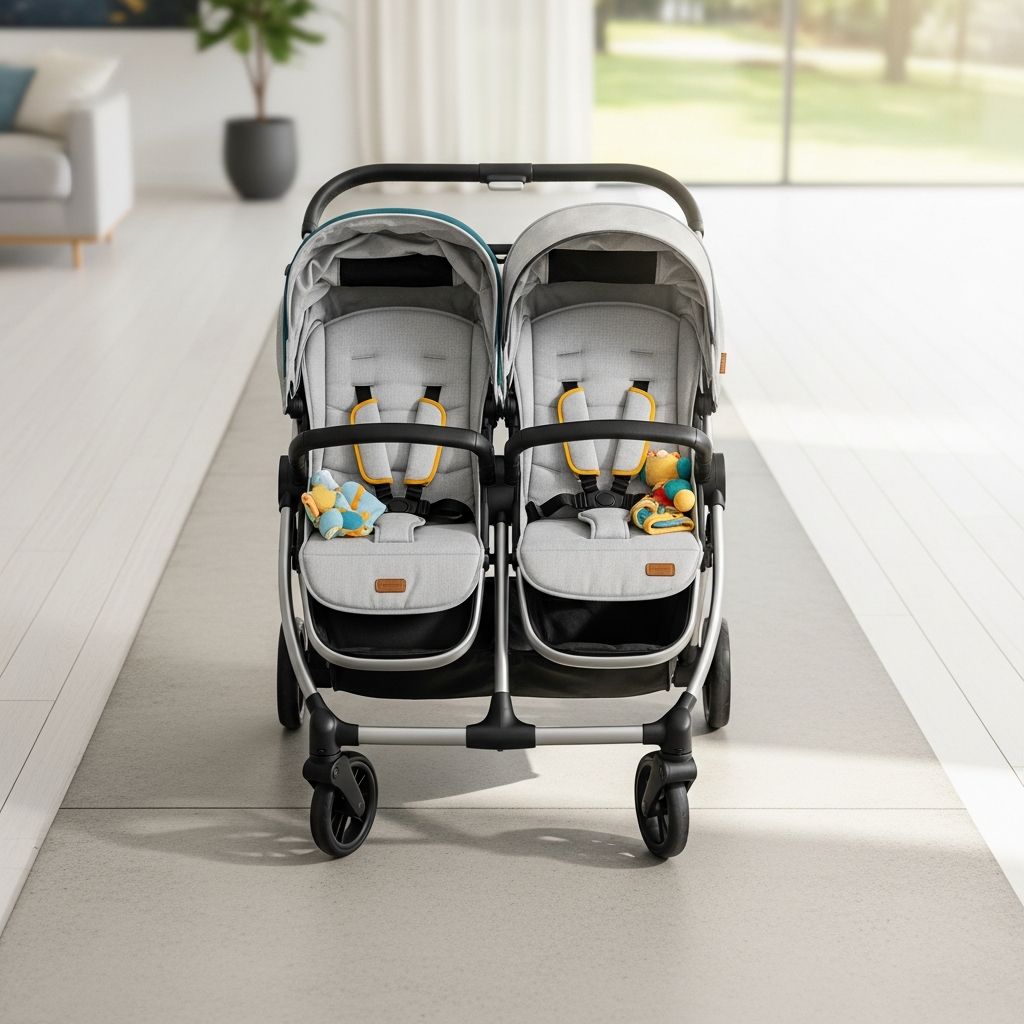
When you suddenly go from pushing one child to managing two, a lightweight double stroller can feel like the difference between staying home and actually getting out the door. Instead of wrestling with bulky gear, the right stroller lets you run errands, travel, and enjoy the park with both kids comfortably in tow.
This guide walks through what a lightweight double stroller is, the features that actually matter, and how to decide if a compact model fits your lifestyle, budget, and storage space.
What Makes a Double Stroller “Lightweight”?
Not all double strollers are built the same. Many full-size models are sturdy but heavy, which can be hard to lift into a trunk or carry up stairs. A lightweight double stroller aims to keep the benefits of a two-child setup while trimming down bulk and simplifying daily use.
In general, a stroller is considered lightweight when its frame, fabric, and folding mechanism are designed to be:
- Noticeably easier to lift and carry than traditional full-size doubles.
- Compact enough to fit in smaller car trunks, closets, or apartment entryways.
- Simple to set up and fold without complicated steps or excessive force.
Main Styles: Side-by-Side vs. Tandem
Before diving into features, it helps to understand the two common layouts for double strollers. Each style has trade-offs, especially when you try to keep things lightweight and portable.
Side-by-side and tandem (front-and-back) strollers both work well for families with two little ones, but one may suit your daily routes better than the other.
Side-by-Side Layout
Side-by-side strollers place both seats next to each other, which often feels balanced and straightforward to push. Kids can see each other, and neither child feels like they are riding “behind” the other.
- More equal seating; both children have similar legroom and view.
- Simple to load and unload because each seat has its own open access.
- Can feel wide in narrow aisles, small elevators, or tight doorways.
Tandem (Front-and-Back) Layout
Tandem strollers line the seats one behind the other, making the footprint narrower but usually longer. This style is popular for city living where doorways, sidewalks, and public transit can be cramped.
- Easier to squeeze through standard doors and busy store aisles.
- Can feel a bit like steering a “stroller train” because of the added length.
- Sometimes one seat has a better view than the other, which matters for older toddlers.
Quick Comparison of Key Dimensions
The table below highlights how the two common layouts often differ in daily use. Exact numbers vary by model, but the general patterns hold for many lightweight double strollers.
| Feature | Side-by-Side Double | Tandem Double |
|---|---|---|
| Overall width | Wider; may challenge narrow doors and aisles. | Narrower; usually fits standard doorways more easily. |
| Overall length | Shorter front-to-back; feels more compact when turning. | Longer; can feel like steering a longer cart. |
| Child visibility | Equal view and access for both children. | One child may sit behind or lower than the other. |
| Weight distribution | Evenly balanced side to side. | Weight stretches front to back, affecting turning. |
| Maneuverability in crowds | Can be tricky in very tight spaces. | Generally easier in narrow, crowded areas. |
Essential Features to Look For
Lightweight should not mean stripped-down or uncomfortable. A smart double stroller balances reduced weight with thoughtful details that keep kids content and caregivers less stressed.
When comparing options, pay special attention to the following core elements.
Comfort for Each Child
Two children often have very different needs, especially if one is older and more active while the other still naps frequently. Individual comfort settings help you avoid constant negotiating and mid-walk meltdowns.
- Independent recline so one child can rest while the other sits upright.
- Adjustable footrests for better leg support on longer walks.
- Padded seats and harness straps to reduce rubbing and slouching.
Canopies and Sun Protection
Parents quickly learn that sun angle and weather never stay consistent for both seats at once. Separate canopies allow you to respond to changing light and wind for each child individually.
- Canopies that adjust separately for each seat rather than as a single piece.
- Extension panels or visors to shield low sun without draping blankets.
- Ventilation panels or peek-a-boo windows to keep air flowing and check on kids.
Harnesses and Safety Basics
Safety harnesses and stable frames are non-negotiable in any stroller, but especially when carrying two children at once. A lightweight design should still feel robust and secure on everyday surfaces like sidewalks, ramps, and park paths.
- Five-point harnesses that are easy for adults to secure but hard for toddlers to escape.
- Lockable brakes that engage firmly and are simple to operate even in sandals.
- A frame that does not flex excessively when both seats are occupied.
Why Weight and Fold Matter So Much
The number on the scale only tells part of the story. How a stroller feels in your hands when you lift, fold, or carry it can be just as important as its official weight. Small design touches often make the difference between something you love and something you avoid using.
Think about all the moments beyond “just walking”: lifting the stroller into the trunk, getting it up porch steps, or folding it while one child is on your hip and the other is trying to dart away.
Folding Mechanism
Lightweight doubles often promote quick folds, but the actual sequence matters. A fold that sounds simple on paper can feel complicated when you are juggling snacks, backpacks, and cranky toddlers.
- One-step or two-step folds that can be done without kneeling on the ground.
- A fold that locks securely so the stroller does not partially open in your trunk.
- A self-standing fold if you live in a small home and need to store the stroller upright.
Carrying and Storage
Where the stroller lives when you are not using it matters. Apartment dwellers, frequent travelers, and families with compact cars should prioritize slim profiles and easy lifting over extra-heavy features they will never use.
- Grab handles or obvious places to hold when lifting the folded stroller.
- A footprint that fits in your car with at least some groceries or gear.
- Enough structural protection that the stroller does not get damaged when stacked with luggage.
Storage Space and Parent Conveniences
Two kids usually means twice the gear: diapers, snacks, water bottles, layers of clothing, and toys. Lightweight models cannot always match the cavernous baskets of heavier strollers, but some do a good job of organizing essentials without adding too much bulk.
Consider how and where you carry your regular load. An under-seat basket is important, but extra pockets can keep frequent-use items within easy reach.
- A basket that remains usable even when both seats recline.
- Seat-back pockets for pacifiers, tissues, or a compact pack of wipes.
- A parent console or cup holders for drinks, keys, and your phone.
Matching the Stroller to Your Lifestyle
There is no single “best” lightweight double stroller, because family routines vary so widely. Before getting attached to a specific model, picture your most common outings and where you struggle now.
Thinking through a few real-life scenarios often reveals which features will genuinely help and which are nice-to-have extras.
Urban and Apartment Living
If you rely on elevators, public transportation, or tight hallways, bulk is your enemy. For these families, a slimmer profile and agile steering often matter more than ultra-large baskets or heavy suspension systems meant for rough trails.
- Choose a narrow frame that can reliably pass through typical storefront doors.
- Prioritize effortless steering and quick turns over extra-wide tires.
- Look for a fold that you can manage with minimal floor space in your entryway.
Suburban and Car-Centric Families
When most outings start with a drive, trunk space and weight become key considerations. A stroller that is slightly bigger but still manageable may be worth it if it adds enough comfort and storage for full days out.
- Measure your trunk opening before purchasing and compare with folded dimensions.
- Decide whether you prefer a simple, always-double stroller or a model that can convert between single and double.
- Consider how often you will lift the stroller and whether all caregivers can manage it comfortably.
Travel and Vacation Use
For families who fly or take frequent road trips, a truly compact double stroller can be worth keeping just for travel. Many parents maintain a more robust everyday stroller and a slimmer, easy-fold model that shines in airports and hotels.
- Look for a folded size that fits in overhead bins or tight rental car trunks, according to airline and car rental guidelines.
- Consider how easily the stroller can be carried up jet bridges or stairs.
- Choose durable fabrics that handle sand, sunscreen, and the occasional snack explosion.
Balancing Budget, Quality, and Longevity
Double strollers span a wide range of price points. Lightweight models are sometimes more affordable, but premium designs with upgraded materials and advanced features can be pricier. It helps to think in terms of cost per year of use rather than the sticker price alone.
Assess how long you expect to use the stroller, and how many children may benefit from it over time. A sturdy, repairable frame can often be passed between siblings or even shared with friends or relatives.
- Check maximum weight limits per seat to estimate how long older kids can ride.
- See whether replacement parts like wheels, canopies, and harness pads are available.
- Evaluate the warranty and any service options for long-term support.
Signs a Lightweight Double Stroller Might Be Right for You
Not every parent needs a double stroller, and some can get by with a single stroller plus a baby carrier or ride-on board. Still, a dedicated double often simplifies life with two small children, especially when you are out for longer stretches.
You may benefit from a lightweight double stroller if you recognize several of the situations below.
- You have twins or siblings close in age who both tire quickly on longer walks.
- You regularly manage outings alone and need everyone securely contained.
- You find bulky, heavy strollers discouraging and avoid going out because of them.
- You travel often and want one compact solution that works in airports, hotels, and city streets.
Practical Tips Before You Buy
Shopping online makes stroller research much easier, but certain checks are worth doing in person when possible. A stroller that looks perfect in photos may feel different when you actually push and fold it.
Use this quick checklist to test models in a store or at least to evaluate options more critically while browsing.
- Push the stroller with weight in both seats, turning corners and backing up.
- Practice folding and unfolding several times in a row.
- Check that seat belts are simple for adults to operate but secure for kids.
- Simulate your usual load by placing a diaper bag or a few items in the basket.
- Lift the folded stroller as if you were putting it into your car or up your front steps.
Frequently Asked Questions
Do I really need a double stroller if my older child can walk?
Many parents underestimate how far everyday outings can feel to small legs. A lightweight double allows an older child to hop in when tired, reducing complaints and speeding up errands. It also gives you a safe place to seat both kids in crowded areas while you focus on directions, payments, or conversations.
Is a lightweight double sturdy enough for daily use?
A well-designed lightweight stroller relies on smart engineering rather than just eliminating material. Look for strong joints, high-quality fabrics, and clear weight limits. As long as you use it within those guidelines, a compact double can absolutely stand up to daily walks, school runs, and weekend outings.
Can I use a lightweight double stroller from birth?
Some lightweight doubles accommodate infant car seats or fully reclining seats suitable for newborns, while others are intended only for babies with stronger head and neck control. Always read age and weight recommendations and follow safe sleep and travel guidelines when using car seats with strollers.
Will a double stroller fit in my small trunk?
This depends entirely on your vehicle and the stroller dimensions. Before purchasing, compare your trunk opening and depth with the folded measurements provided by the manufacturer. If in doubt, bring a tape measure to the store or try placing the floor model into your car.
How long will my children actually use a double stroller?
Children vary widely, but many families find that doubles remain useful until the oldest is around preschool or early elementary age. Short neighborhood walks may not require it, but busy outings, travel days, and long events often convince even independent walkers to accept a seat and a snack.
Making Peace with the Gear
Managing two young children always involves trade-offs between convenience, comfort, and clutter. A thoughtful lightweight double stroller cannot solve every parenting challenge, but it can remove many small daily frictions. When pushing feels smooth, folding feels simple, and both kids are reasonably happy, it becomes much easier to say yes to getting outside, meeting friends, or taking that trip you have been postponing.
Rather than chasing the single “perfect” stroller, focus on the model that best fits your home, travel patterns, and energy level. The right choice is the one that makes your real life easier, not just the one with the longest feature list.