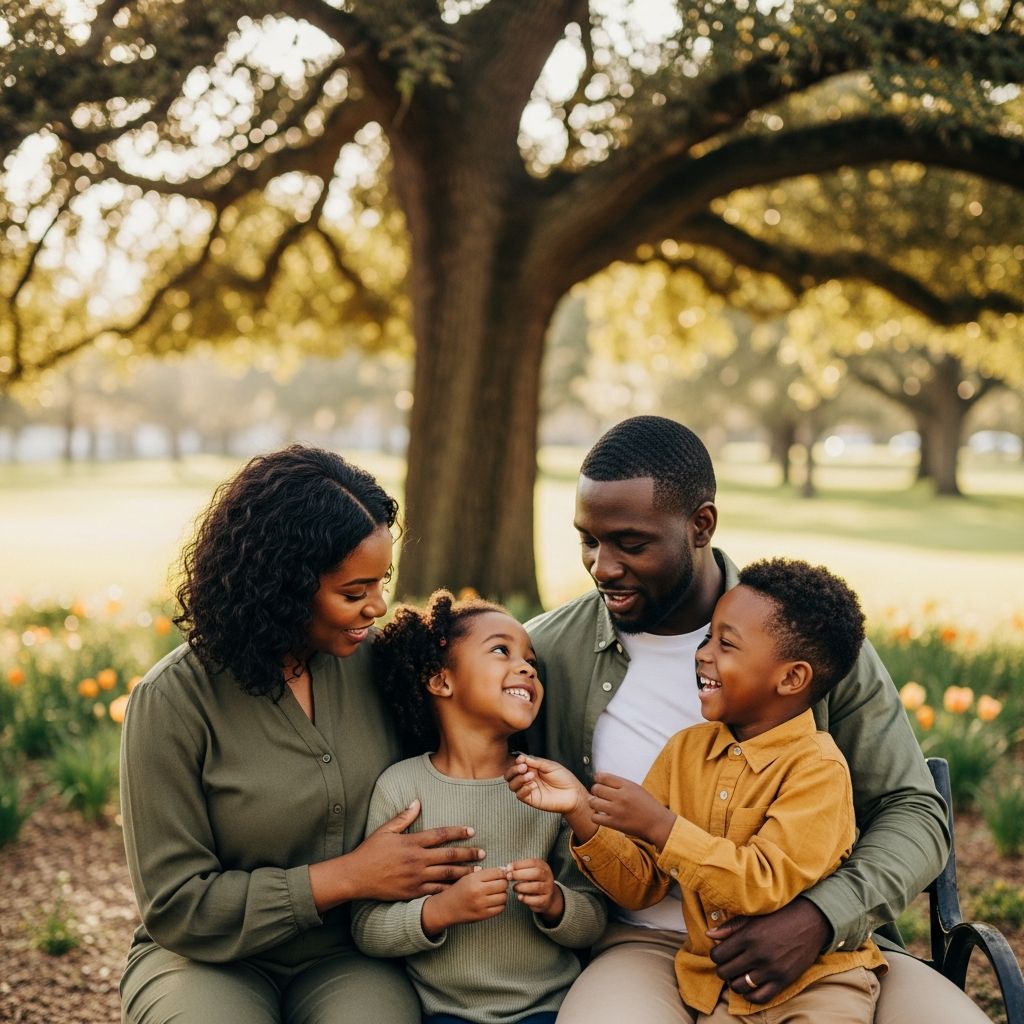
Empowering Black children to grow into sovereign individuals requires intentional parenting that challenges oppressive systems and celebrates their inherent worth. This approach prioritizes autonomy, cultural rootedness, and collective healing over conformity to mainstream expectations.
Understanding Sovereignty in Black Childhood
Black children enter the world with innate sovereignty—a natural right to self-determination that societal structures often seek to erode. Parents committed to liberation view their role not as molders of clay, but as nurturers of existing beings with unique potentials. This mindset shifts from control to collaboration, recognizing that true freedom begins at home.
In practice, sovereignty means allowing children to lead their learning and daily rhythms without the rigid schedules imposed by conventional systems. For Black families, this is especially vital, as traditional education frequently reinforces hierarchies that marginalize non-white experiences. By affirming children’s agency early, parents lay the foundation for lifelong resilience.
- Encourage self-directed exploration to build confidence.
- Validate emotions and curiosity as strengths, not disruptions.
- Model boundary-setting to teach respectful interdependence.
Decolonizing Education Through Unschooling
Unschooling emerges as a powerful tool for decolonizing Black education, rejecting the factory-model schooling designed for compliance rather than liberation. Unlike homeschooling, which mirrors school curricula, unschooling trusts children to pursue interests organically, fostering critical thinking untethered from Eurocentric standards.
Deschooling precedes this—a vital unlearning phase where families dismantle ingrained beliefs about education’s necessity for success. Black parents often grapple with this transition, knowing systems built without their children’s thriving in mind demand skepticism. Akilah Richards emphasizes unschooling as healing work, particularly for communities of color, amplifying voices long silenced.
| Approach | Description | Benefits for Black Families |
|---|---|---|
| Traditional Schooling | Standardized curriculum, grades, compliance | Limited; risks cultural erasure and discipline disparities |
| Homeschooling | Parent-led replication of school | More control but retains coercive elements |
| Deschooling | Unlearning school norms | Frees mindset from performance pressure |
| Unschooling | Child-led, interest-driven learning | Promotes sovereignty and cultural relevance |
Navigating Cultural Clashes in Mainstream Schools
Even with alternatives, many Black children attend schools where behaviors deemed normal at home—expressive communication, questioning authority—are pathologized. Research highlights stark disparities: Black students face suspension rates over three times higher than white peers for similar infractions, funneling them toward the school-to-prison pipeline.
Parents bridge this gap by explicitly teaching code-switching while preserving home values. Conversations about racial dynamics prepare children to recognize bias without internalizing it. One strategy involves family debriefs after school incidents, turning challenges into activism opportunities.
- Discuss peer influences and ‘white-liberal racism’ subtly embedded in progressive spaces.
- Enroll in supplementary programs teaching African diaspora history.
- Build networks of like-minded families for mutual support.
Liberation Parenting: Free Parents Raise Free Children
Parenting for liberation is holistic: adults must pursue their own freedom to model it authentically. This tri-fold commitment—I am free, my children are free, we fight for collective freedom—transforms family dynamics into sites of mutual growth.
Black mothers, in particular, navigate unique pressures, balancing protection with empowerment. They instill ‘woke’ awareness—critical consciousness of racial histories—alongside freedom to express unapologetically. Daily practices include ‘mad question asking,’ prompting deep inquiry to unstuck limiting beliefs.
Success metrics evolve too: not grades or accolades, but fulfillment, relational health, and contribution to communal thriving. This redefinition counters capitalist individualism, prioritizing intergenerational healing.
Building Community and Cultural Anchors
Isolation amplifies challenges; robust communities provide affirmation. Black families seek affinity spaces—after-school groups, HBCU tours, cultural workshops—countering school deficits. These anchors reinforce identity, countering narratives of expendability.
Podcasts like Fare of the Free Child and gatherings foster global dialogues, proving unschooling’s resonance beyond borders. Parents organize co-ops blending play, history, and skill-sharing, creating microcosms of liberated living.
Practical Tools for Everyday Liberation
Implement sovereignty daily with these strategies:
- Consent-Based Routines: Involve children in decisions, from meals to bedtimes.
- Nature and Play Immersion: Unstructured outdoor time rebuilds innate curiosity.
- Storytelling Circles: Share ancestral narratives to root identity.
- Conflict Resolution Workshops: Teach non-hierarchical problem-solving.
- Media Literacy: Curate content celebrating Black excellence.
Track progress via family journals, noting growth in autonomy and joy.
Overcoming Societal Pushback
Unconventional paths provoke discomfort; relatives or peers may question ‘lax’ parenting. Reframe as intentional, citing evidence of thriving unschooled youth. Legal frameworks support homeschooling variants in most U.S. states, with growing acceptance of autonomy models.
For schools, advocate via PTAs or policy changes, positioning children as change agents. This dual stance—preparation and transformation—equips families for impact.
Frequently Asked Questions (FAQs)
What is the difference between unschooling and homeschooling?
Unschooling is child-led learning based on interests, while homeschooling follows structured curricula like traditional school. Unschooling emphasizes freedom and real-world relevance.
How do Black children benefit from deschooling?
Deschooling helps unlearn coercive habits, reclaiming time for self-discovery and countering systemic biases that prioritize compliance over creativity.
Can unschooling prepare kids for college or careers?
Yes, many unschooled Black youth excel via self-motivation, portfolios, and alternative paths, achieving fulfillment beyond conventional metrics.
What if family pressures against non-traditional education?
Share resources like Akilah Richards’ book, demonstrate child outcomes, and set loving boundaries while inviting dialogue.
How to address school discipline disparities at home?
Teach critical analysis of incidents, role-play responses, and connect with advocacy groups to build resilience and agency.
Challenges and Realities of Liberation Work
Financial strains, time demands, and emotional labor mark this path. Yet, the ROI—vibrant, sovereign children—outweighs costs. Longitudinal studies affirm self-directed learners’ advantages in adaptability and innovation, vital for Black futures navigating inequities.
Families iterate: what works evolves with ages and contexts. Flexibility ensures sustainability, turning parenting into joyful co-creation.
References
- Episode 325: Akilah Richards on Unschooling & Raising Free People — Tilt Parenting. 2023-04-04. https://tiltparenting.com/2023/04/04/akilah-richards/
- What’s lost when black children are socialized into a white world — Evidence-Based Mentoring. N/A. https://www.evidencebasedmentoring.org/whats-lost-when-black-children-are-socialized-into-a-white-world/
- Raising A Child Who is Both Woke and Free — St. Louis Mom. N/A. https://stlouismom.com/parenting-perspectives/raising-a-child-who-is-both-woke-and-free/
- What Does Parenting For Liberation Look Like? Tricia Greene Brown Interview — Mater Mea. N/A. https://matermea.com/parenting-for-liberation-tricia-greene-brown-interview/